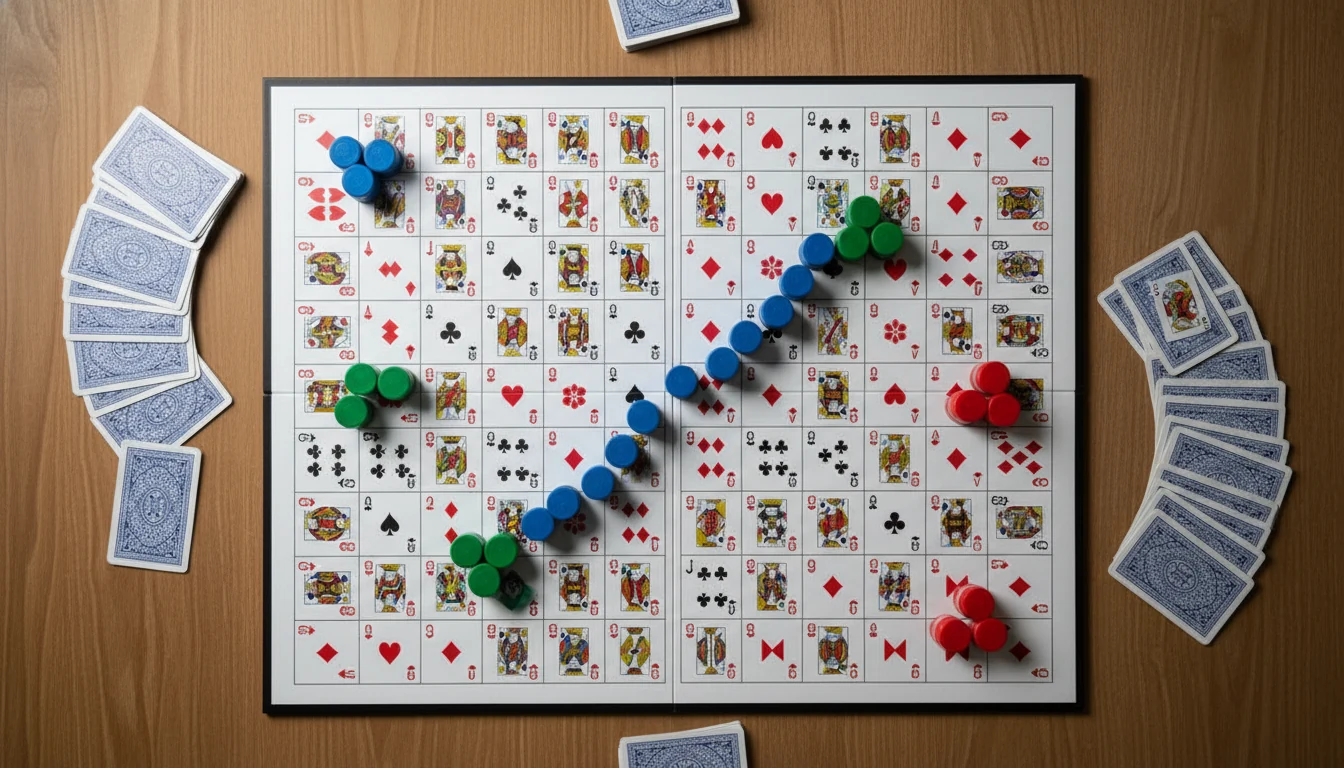
Many players mistakenly believe that a one-eyed Jack can be used to disrupt any part of an opponent's progress, but the official rules provide specific protections for completed sequences.
According to the Sequence Official Rulebook, you cannot remove a marker chip that is already part of a completed SEQUENCE.
Sequence Official Rulebook, [edition not specified], [page not specified]
Expertise: Board game rules expert and tournament referee. | Verification: Cross-referenced official rulebook text regarding anti-wild Jack mechanics. | Purpose: Resolve the #1 dispute regarding one-eyed Jack chip removal in Sequence.
Key Insight: To avoid arguments, establish which sequences are 'complete' before the first one-eyed Jack is played.
These rules correspond to the UK edition of Sequence.
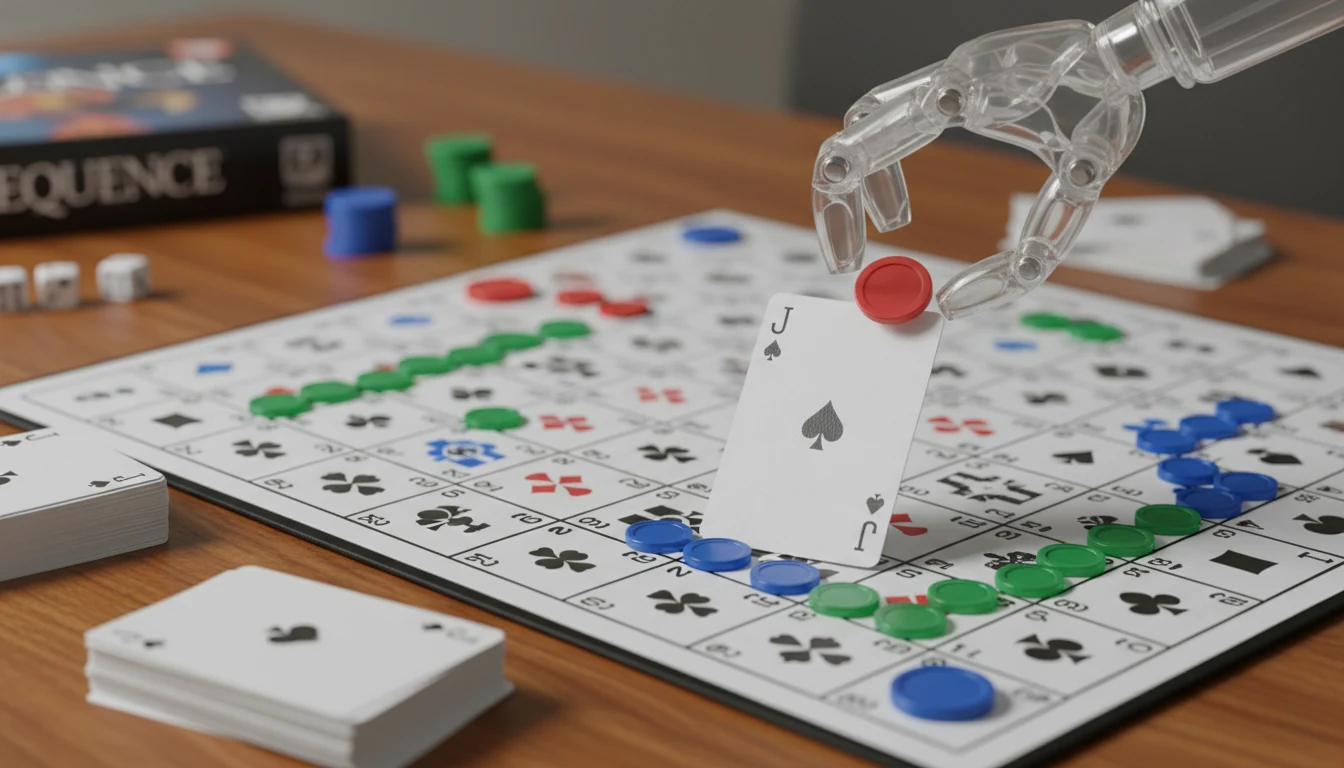
The official rules for the one-eyed Jack (the anti-wild Jack) state that to play it, you must place it on your discard pile and remove one marker chip belonging to your opponent. However, this action is strictly limited: you cannot remove a marker chip that is already part of a completed SEQUENCE. Once a SEQUENCE is achieved by a player or a team, it cannot be broken. Additionally, you cannot place one of your own marker chips on that same space during the same turn in which you played the on…
Step-by-Step
Step 1: Play a one-eyed Jack by placing it on your discard pile.
Step 2: Select one marker chip belonging to your opponent that is NOT part of a completed sequence.
Step 3: Remove that opponent's marker chip from the game board.
Step 4: Complete your turn (you cannot place your own chip on that same space this turn).
Example Play Situation
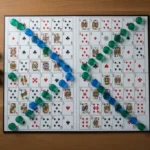
Alice plays a one-eyed Jack on her turn. She looks to remove Bob's chip, but Bob has already completed a sequence of five blue chips. Alice must choose a different, non-sequence chip belonging to Bob to remove instead.
House Rules
[HOUSE RULE] Some community variations allow players to remove chips from completed sequences to prevent opponents from scoring, but this is not part of the official standard play.
Common Misconceptions
Thinking a one-eyed Jack can break a completed sequence.
Believing you can place your own chip on the space you just cleared.
Confusing the two-eyed Jack (wild) with the one-eyed Jack (anti-wild).
Quick Reference
You Can
You Cannot
You can remove an opponent's chip if it is not part of a sequence
You cannot remove a chip that is part of a completed sequence
You can play either Jack whenever it suits your strategy
You cannot place your own chip on the space cleared by a one-eyed Jack during that turn
Frequently Asked Questions
What is the official rule for removing chips in Sequence?
You can remove an opponent's chip using a one-eyed Jack, provided it isn't in a completed sequence.
Can I use a one-eyed Jack to break my opponent's sequence?
No, once a sequence is achieved, it cannot be broken by any player.
What happens if I play a one-eyed Jack and try to place my chip on the same spot?
You cannot place your own marker chip on that same space during that specific turn.
Does a two-eyed Jack work the same as a one-eyed Jack?
No, a two-eyed Jack is wild and lets you place your own chip, whereas the one-eyed Jack removes an opponent's chip.