Sequence Official Rulebook, [edition not specified]
Expertise: Board game rules expert and tournament referee. | Verification: Cross-referenced official Sequence rulebook text regarding Jack functionality. | Purpose: Resolve the #1 dispute regarding Jack usage and chip removal in Sequence.
Key Insight: To avoid arguments, clarify that a one-eyed Jack is a 'removal' action, not a 'replacement' action, before the first Jack is played.
These rules correspond to the US edition of Sequence.
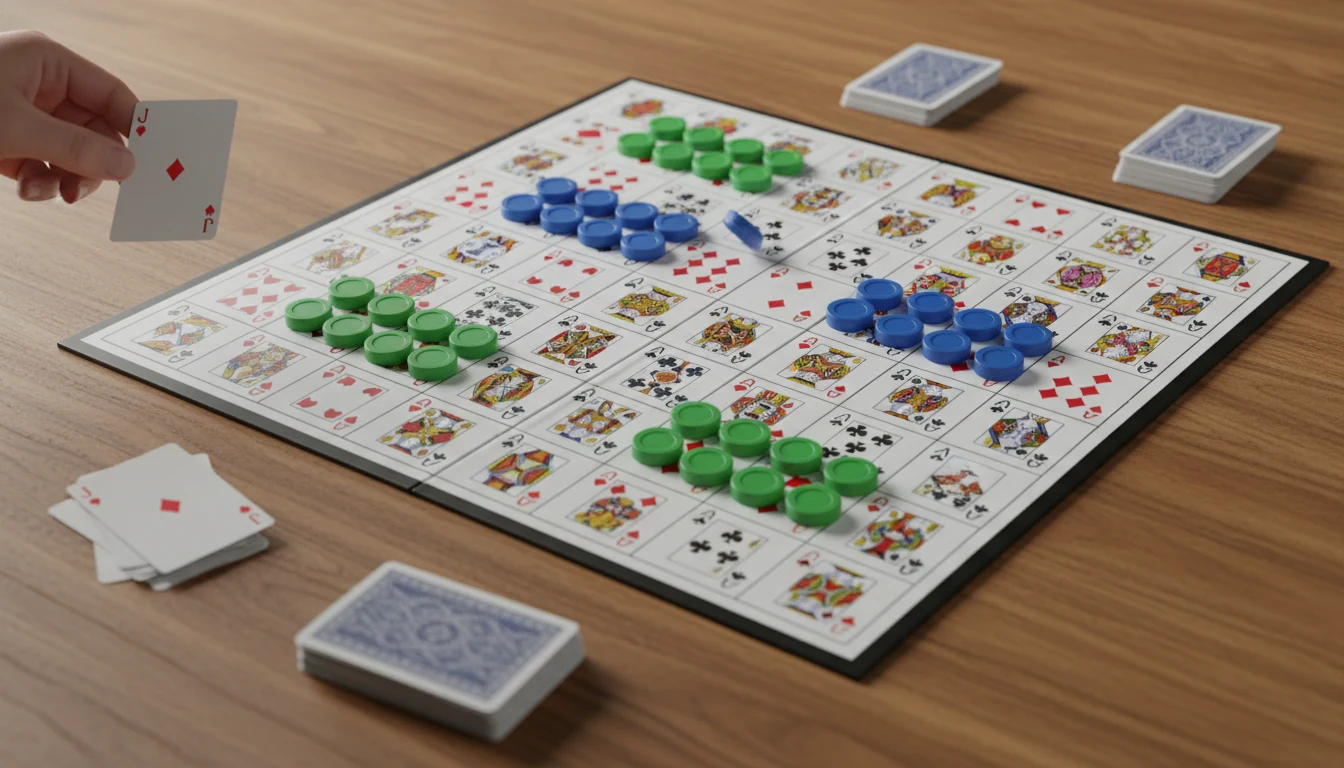
Regarding the use of Jacks to interact with opponent chips, the official rules distinguish between two types of Jacks. To play a one-eyed Jack (the anti-wild), you must place it on your discard pile and remove one marker chip from the game board belonging to your opponent. This action completes your turn. Crucially, the rules state that you cannot place one of your marker chips on that same space during this turn. You are also prohibited from removing a marker chip that is already part of a c…
Step-by-Step
Step 1: Play a one-eyed Jack from your hand by placing it on your discard pile.
Step 2: Select one marker chip belonging to an opponent that is not part of a completed Sequence.
Step 3: Remove that opponent's marker chip from the game board.
Step 4: Complete your turn (you cannot place your own chip on that space this turn).
Example Play Situation
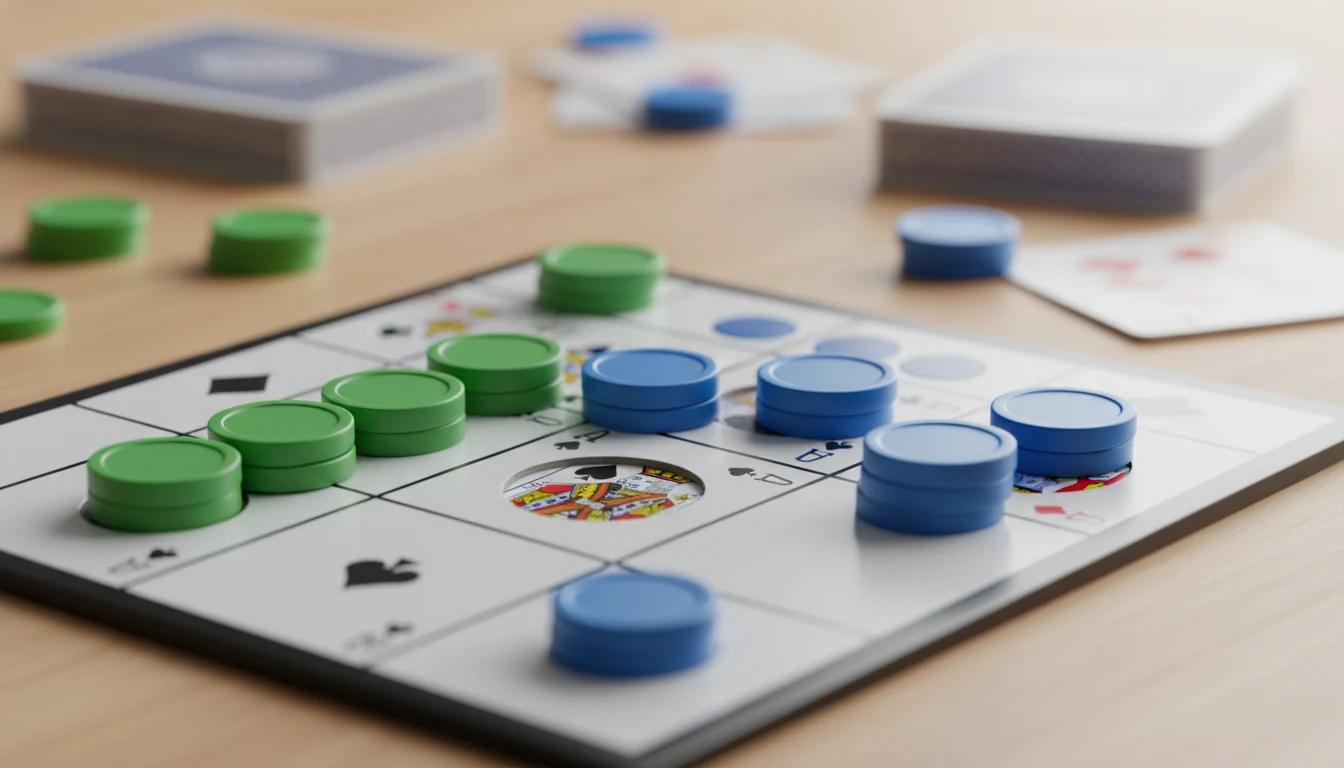
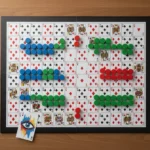
Alice plays a one-eyed Jack from her hand and places it on her discard pile. She chooses to remove Bob's blue marker chip from the board. Bob's turn follows, and Alice does not place her own green chip on that empty space.
Common Misconceptions
Thinking a one-eyed Jack lets you 'steal' a space by placing your chip on top of an opponent's.
Believing you can remove a chip that is part of a completed Sequence.
Confusing the two-eyed Jack (wild) with the one-eyed Jack (anti-wild).
Quick Reference
You Can
You Cannot
You can remove an opponent's marker chip using a one-eyed Jack
You cannot place your own marker chip on the space you just cleared with a one-eyed Jack
You can use a two-eyed Jack to place your own marker chip on an open space
You cannot remove a marker chip that is part of a completed Sequence
Frequently Asked Questions
What is the official rule for playing a Jack in Sequence?
Two-eyed Jacks are wild (place your chip); one-eyed Jacks are anti-wild (remove opponent's chip).
Can I place my chip on the space where I removed an opponent's chip?
No, the rules state you cannot place your marker chip on that same space during that turn.
Is it allowed to remove a chip that is part of a completed sequence?
No, you cannot remove a marker chip that is already part of a completed SEQUENCE.
What happens if I play a one-eyed Jack?
You discard the Jack and remove an opponent's chip, which completes your turn.