Categories
Board Games Card Play Rules

Phase 10 Official Rules: How to Hit Other Players’ Phases

Many players wonder if they can strategically interfere with an opponent's progress by playing cards onto their completed phases.

Yes, according to the Phase 10 Official Rulebook, you can add cards to other players' phases through the 'hitting' mechanic.

Phase 10 Official Rules, [edition not specified], [page not specified]

Expertise: Board game rules expert. | Verification: Cross-referenced official PDF manual content. | Purpose: Resolve the #1 confusion regarding hitting opponents' cards in Phase 10.
Key Insight: To avoid arguments, ensure everyone agrees that a player must be 'Phase-down' before they can start hitting.

These rules correspond to the US edition of Phase 10.

Official Rule Breakdown

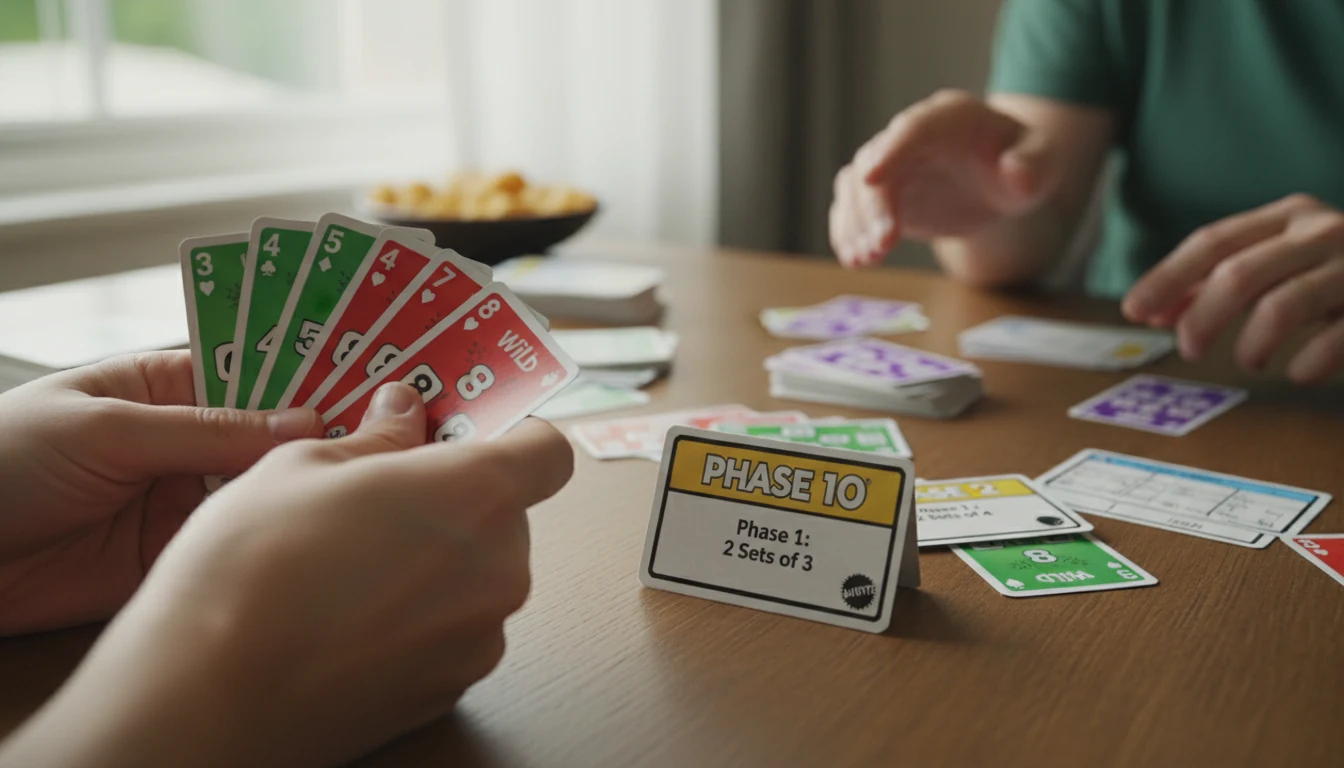
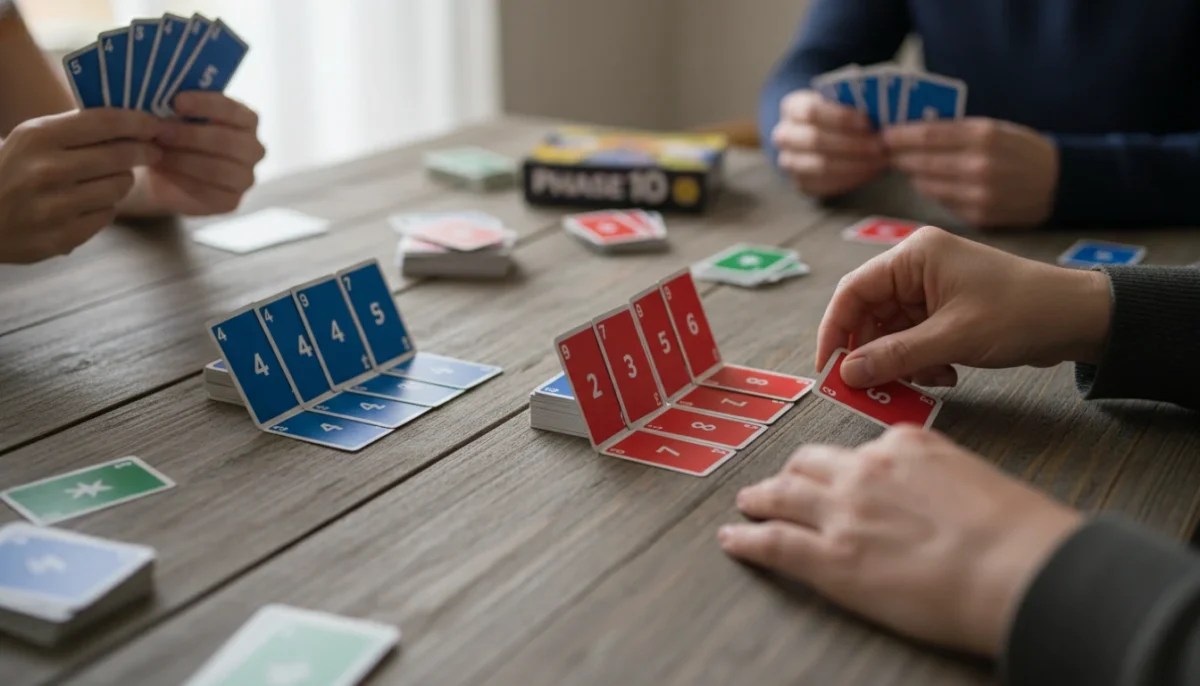
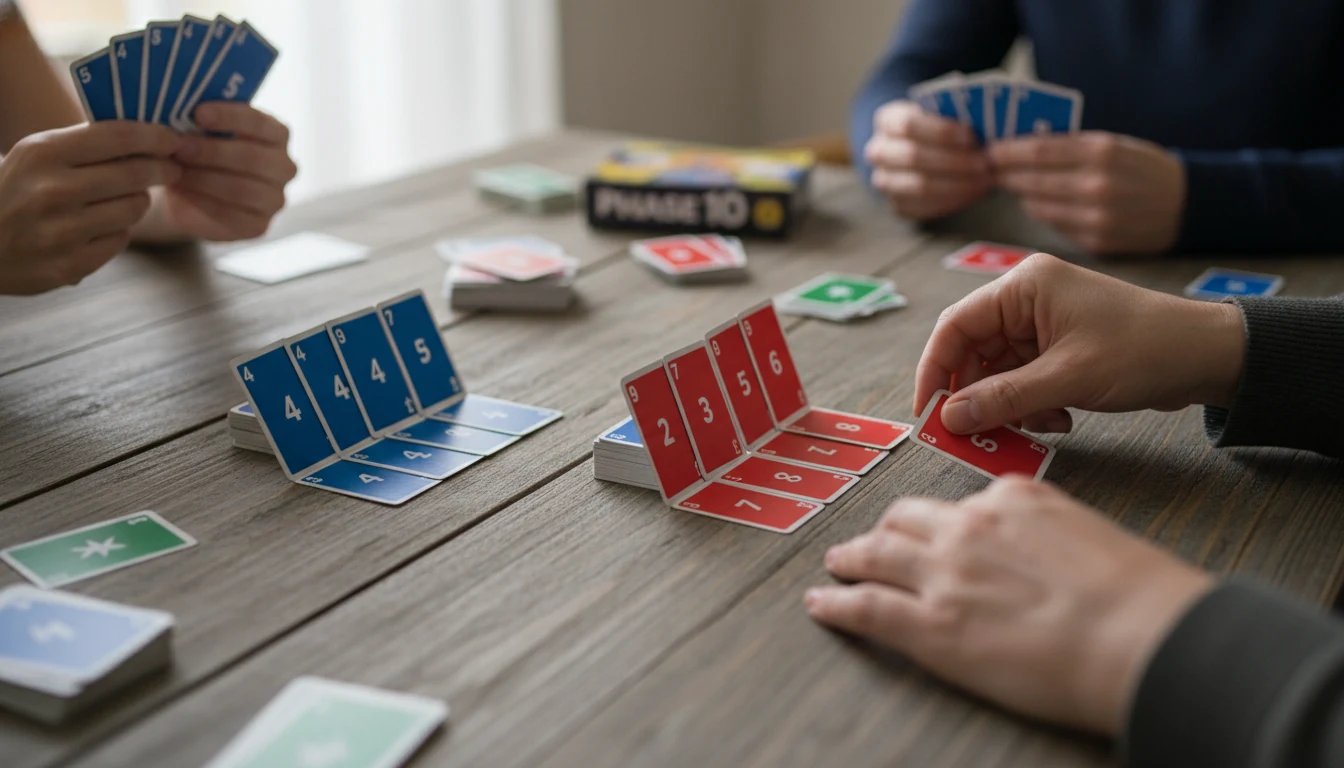
According to the Phase 10 Official Rulebook, 'hitting' is the method used to get rid of leftover cards after making a Phase. A hit is performed by placing a card directly onto a Phase that has already been laid down on the table. This can be done to your own cards, another player's cards, or both. To be a valid hit, the card must properly fit the existing combination; for example, adding a '2' to a player's existing run of '3, 4, 5, 6' or adding a '4' to a set of '4s'. You may only perform a hit during your turn, and you must have already laid down your own Phase before you are eligible to hit.

Step-by-Step

  1. Step 1: Successfully lay down your own Phase face-up on the table.
  2. Step 2: On your turn, draw a card from either the draw pile or the discard pile.
  3. Step 3: Identify a card in your hand that fits an existing Phase on the table (yours or an opponent's).
  4. Step 4: Place that card directly onto the existing Phase to perform a 'hit'.

Example Play Situation

Alice successfully lays down her Phase 1. On Bob's next turn, Bob draws a '5' and sees that Alice has a set of '5s' on the table. Bob places his '5' onto Alice's set to perform a hit.
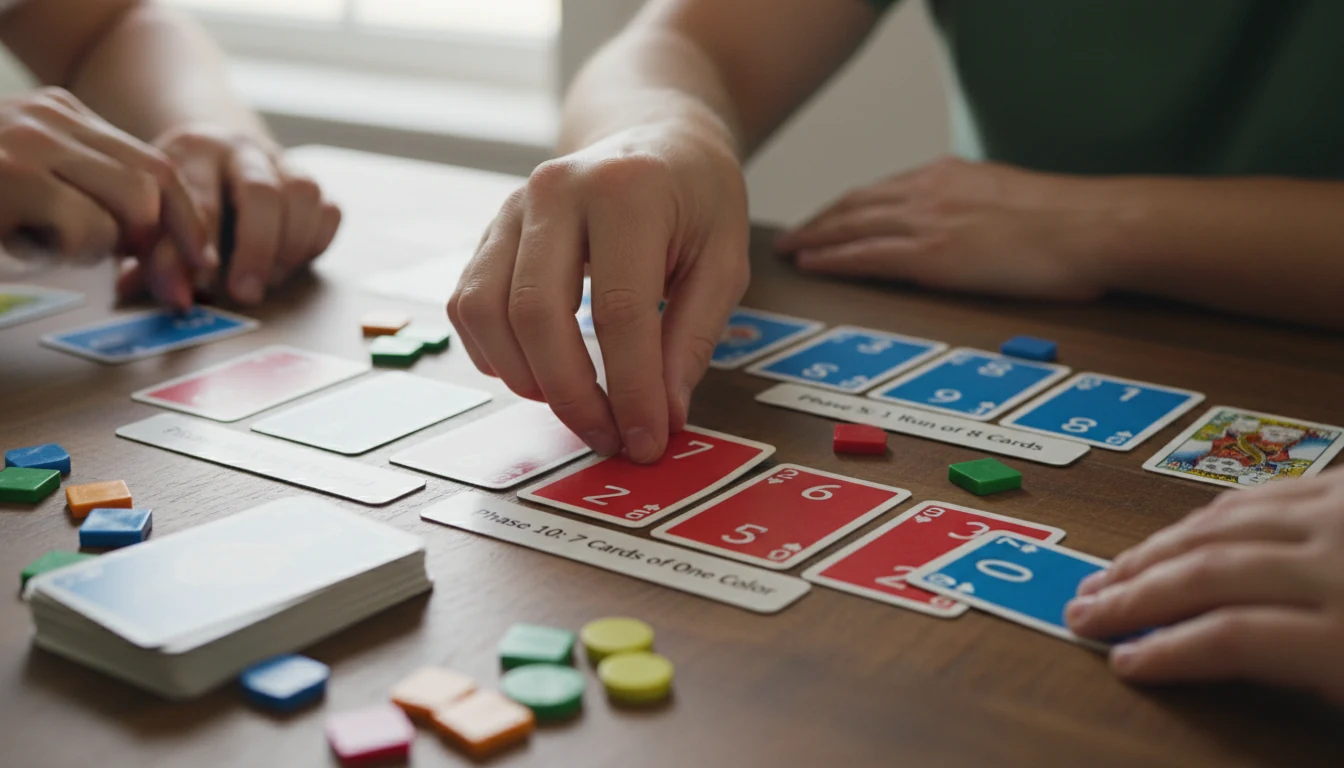
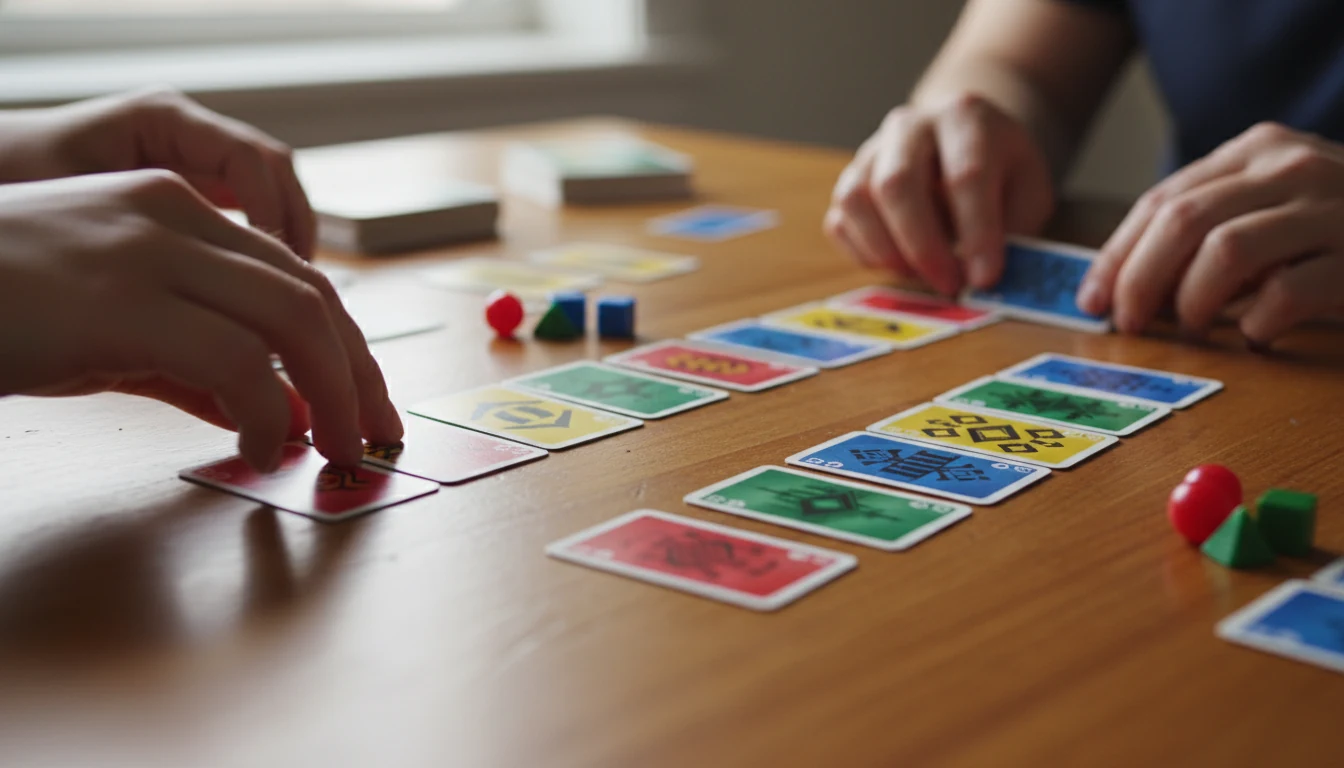
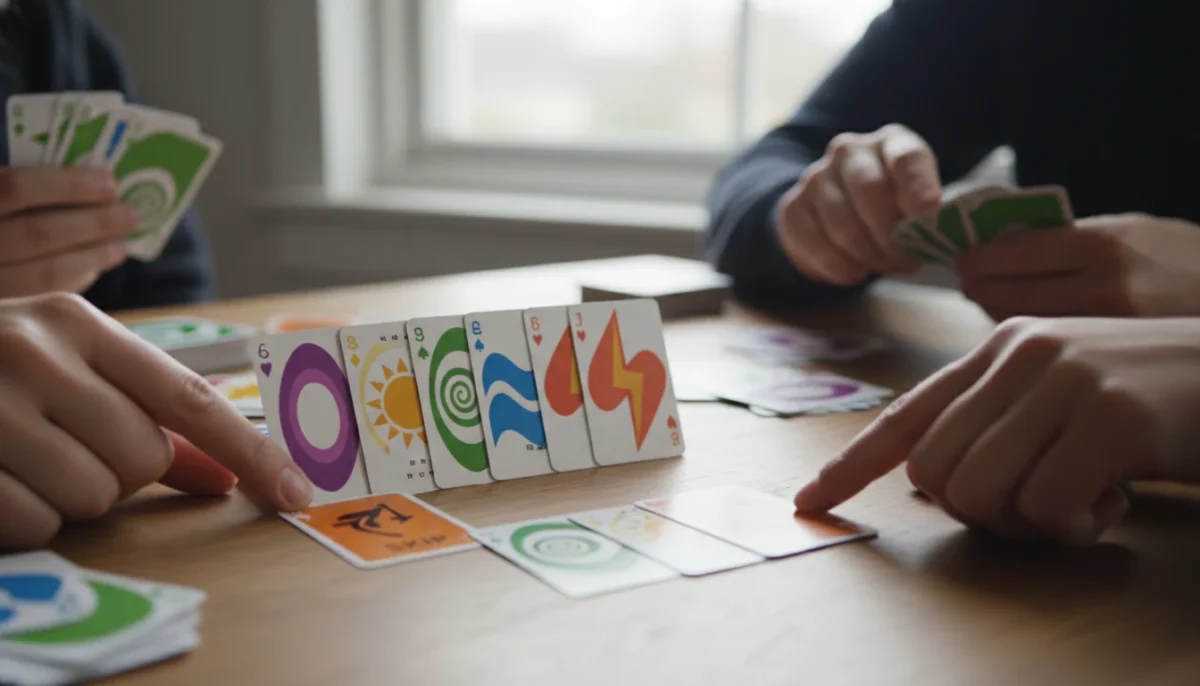
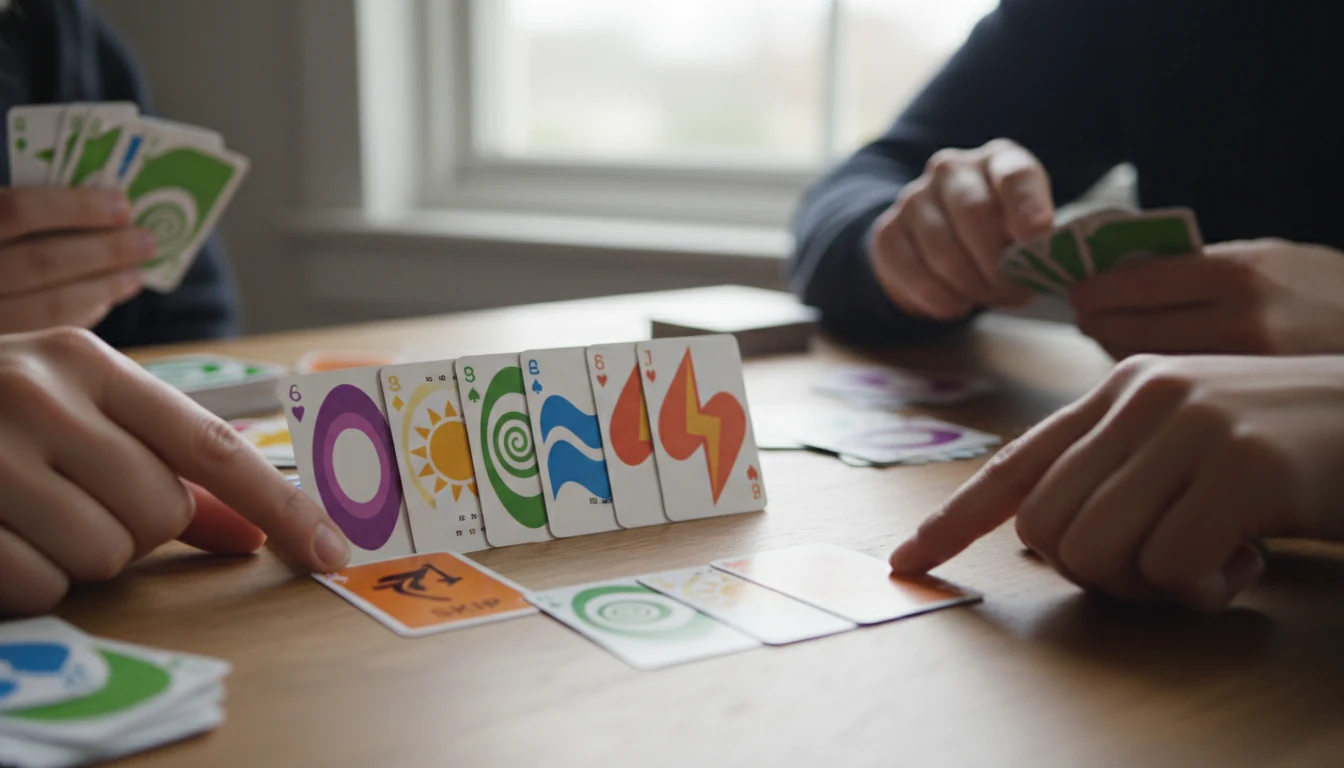
Phase 10 rules rule situation

House Rules

[HOUSE RULE] Some groups play with a variation where players can play cards from other players' completed phases, but this is not part of the official rules.

Common Misconceptions

  • Thinking you can hit a Phase before you have laid down your own Phase.
  • Believing you can play a card that doesn't fit the sequence or set of the existing Phase.
  • Assuming you can only hit your own cards.

Quick Reference

You CanYou Cannot
You can hit your own cardsYou cannot hit a Phase before laying down your own
You can hit another player's cardsYou cannot hit a Phase with a card that does not fit the set or run
You can hit both your cards and an opponent's cardsYou cannot hit during another player's turn

Frequently Asked Questions

What is the official rule for hitting in Phase 10?
You can place a card onto an existing Phase if it fits the set or run, including opponents' Phases.
Can I hit an opponent's Phase if I haven't finished mine yet?
No, you must have your own Phase laid down before you can perform a hit.
Is it allowed to add a Wild card to someone else's Phase?
Yes, you can add a Wild card to any valid card situation to complete a hit.
What happens if I try to hit a Phase with a card that doesn't fit?
The hit is invalid; you cannot play a card that does not properly fit the existing combination.
Categories
Board Games Card Play Rules

Phase 10 Official Rules: Can You Go Out Without a Phase?

Many players mistakenly believe they can win a hand by simply emptying their hand, regardless of whether they have completed their current Phase.

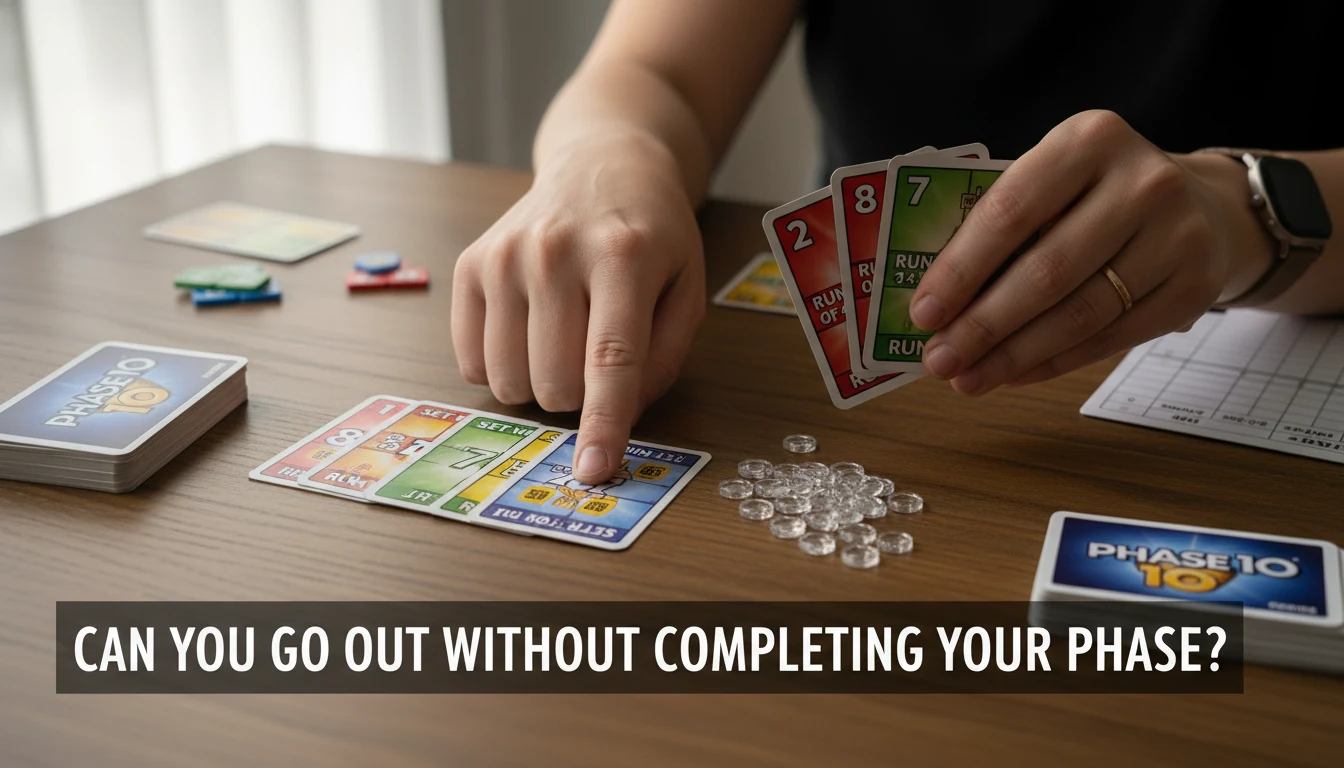
No, according to the Phase 10 Official Rulebook, you cannot 'go out' to win a hand unless you have first successfully laid down your required Phase.

Phase 10 Official Rules [edition not specified]

Expertise: Board game rules expert. | Verification: Cross-referenced official Phase 10 manual text. | Purpose: Resolve the common misconception regarding the sequence of laying a Phase versus going out.
Key Insight: To avoid arguments, ensure players clearly lay their Phase face-up on the table before they start hitting or discarding.

These rules correspond to the US edition of Phase 10.

Official Rule Breakdown

According to the Phase 10 Official Rulebook, the process of finishing a hand is strictly sequential. First, a player must be able to make a Phase with the cards in their hand and lay that Phase down, face-up, on the table. Only after laying down a Phase can a player attempt to 'go out' as soon as possible. To go out, a player must get rid of all remaining cards by either discarding them or by 'hitting' (placing a card onto an existing Phase already on the table). If a player empties their hand without having laid down their Phase, they have not completed the required objective for that hand.

Step-by-Step

  1. Step 1: Collect the necessary cards in your hand to meet the requirements of your current Phase.
  2. Step 2: Lay the Phase down face-up on the table before discarding any cards.
  3. Step 3: Once the Phase is laid down, attempt to get rid of all remaining cards in your hand.
  4. Step 4: Complete the 'go out' process by discarding cards or hitting existing Phases on the table.

Example Play Situation

Alice has completed Phase 1 by laying down two sets of three. She then uses her remaining cards to hit existing Phases on the table. Once Alice has no cards left in her hand, she has successfully 'gone out.' Bob, however, discards all his cards but forgot to lay down his Phase first; therefore, Bob has not gone out and must try for the same Phase again in the next hand.

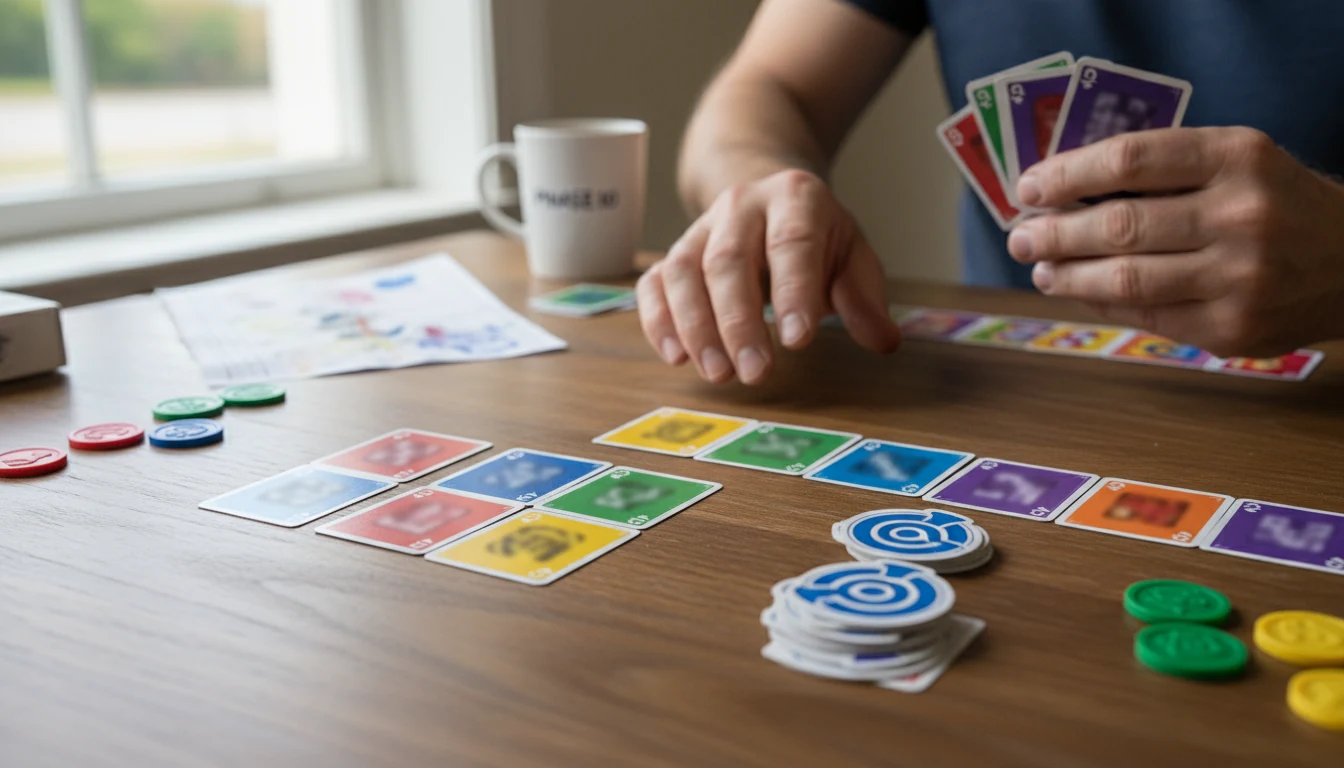
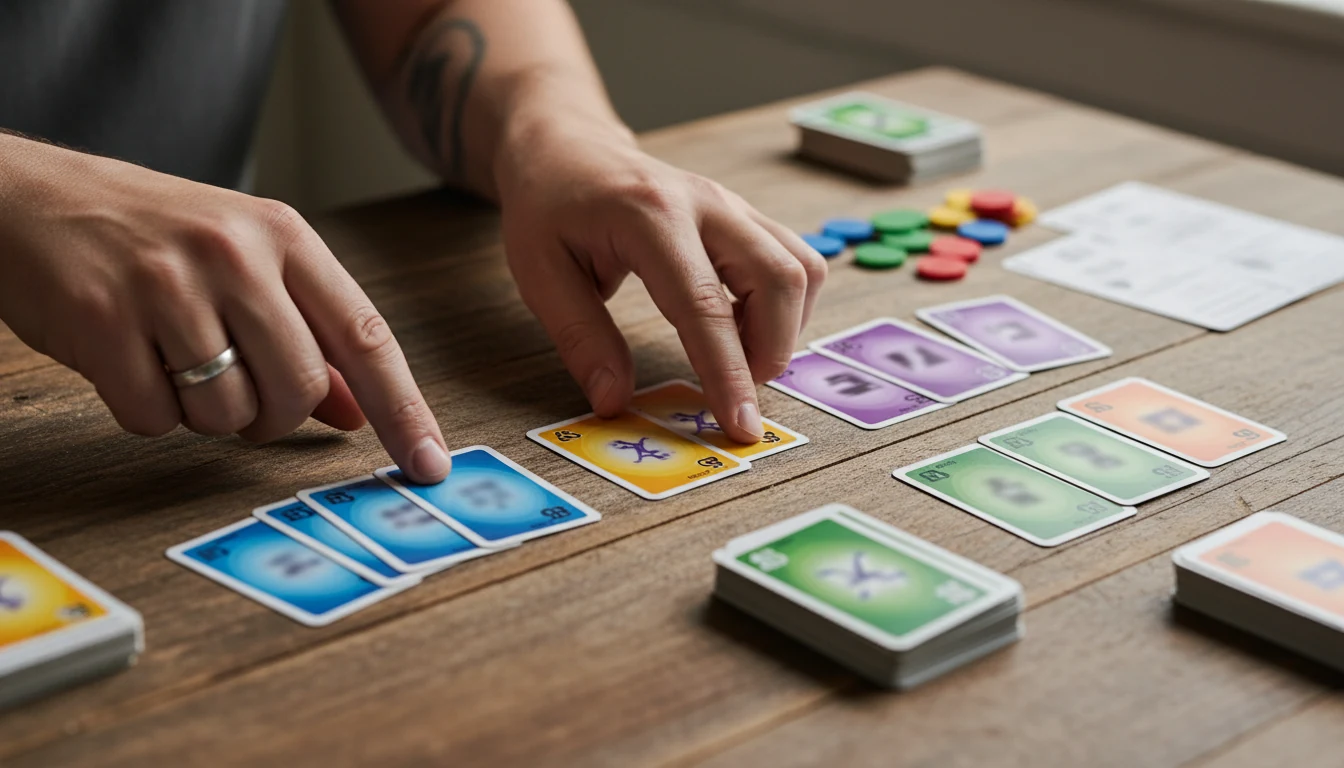
Phase 10 rules rule situation

Common Misconceptions

  • Thinking you can win the hand just by having zero cards left.
  • Believing you can go out before laying down your Phase.
  • Assuming you can use 'Skip' cards to complete a Phase.

Quick Reference

You CanYou Cannot
Lay down your Phase face-up before discardingDo not attempt to go out before laying down your Phase
Hit existing Phases to get rid of leftover cardsDo not use Skip cards to make a Phase
Use Wild cards to complete sets or runsDo not lay down more than one Phase per hand

Frequently Asked Questions

What is the official rule for going out in Phase 10?
You must lay down your Phase first, then discard or hit existing Phases to empty your hand.
Can I discard all my cards and win if I haven't made my Phase?
No, you must successfully lay down your Phase before you can attempt to go out.
Is it allowed to hit another player's Phase to go out?
Yes, you may hit your own cards, another player's cards, or both to get rid of your hand.
What happens if I empty my hand but didn't lay down my Phase?
You fail to complete the Phase and must try for that same Phase again in the next hand.
Categories
Board Games Card Play Rules

Phase 10 Official Rules: Adding Cards to Laid Down Sets

Many players wonder if they can add extra cards to a Phase they have already laid down to make it larger or more complete.

According to the Mattel Official Rulebook, you may lay down more than the minimum requirements of a Phase, but only if the additional cards can be directly added to the cards already in the Phase.

Phase 10 Official Rules, Mattel Edition, [page not specified]

Expertise: Board game rules expert and content writer. | Verification: Cross-referenced official Mattel rulebook text regarding Phase laying mechanics. | Purpose: Resolve confusion regarding the legality of adding extra cards to completed Phases.
Key Insight: To avoid arguments, ensure players agree that 'extending' means the card must fit the existing sequence or number group.

These rules correspond to the UK edition of Phase 10.

Official Rule Breakdown

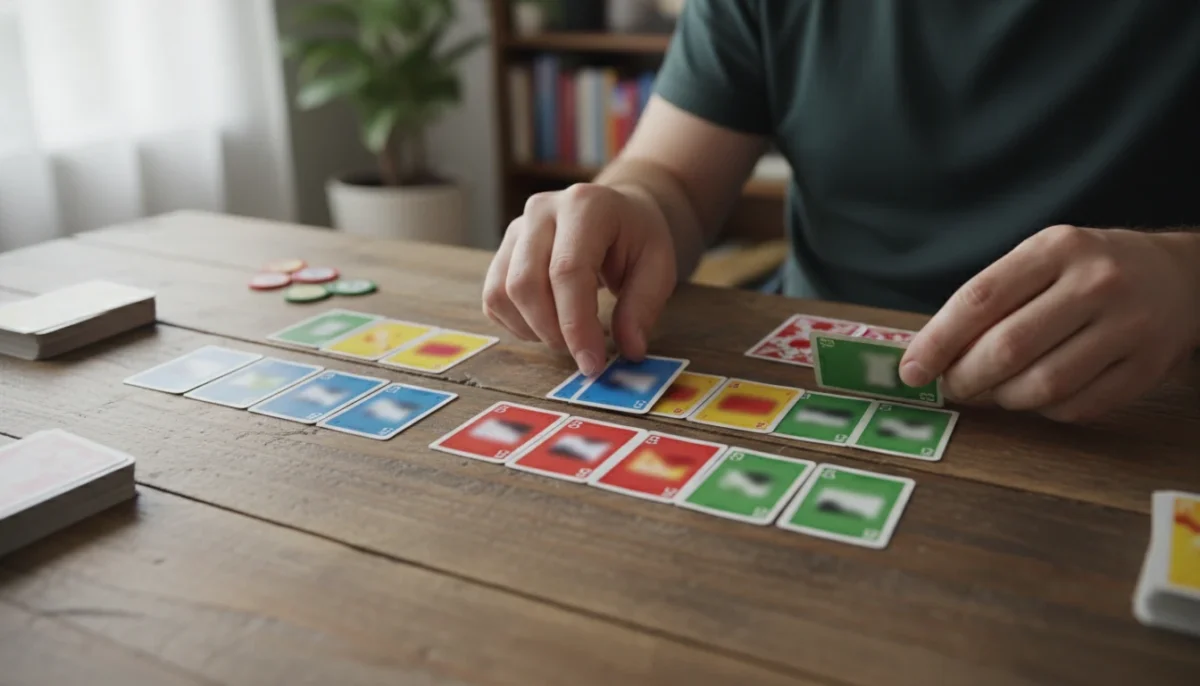
Regarding the ability to add cards to a Phase, the official rules state that while you must meet the minimum requirements for a Phase, you are permitted to lay down more than the minimum if the additional cards can be directly added to the cards already in the Phase. For example, if you lay down three '5s' and three '7s' to complete Phase 1, and you also hold two additional '5s' in your hand, you may immediately lay those down with the existing '5s' during the same turn. However, you cannot add cards that do not fit the existing structure; for instance, if you have completed Phase 1, you cannot add a set of '10s' because Phase 1 specifically requires exactly two sets, and adding a third set would violate the Phase's structure.

Step-by-Step

  1. Step 1: Form the minimum required combinations (sets or runs) for your current Phase in your hand.
  2. Step 2: Lay the Phase down face-up on the table before discarding.
  3. Step 3: Check if any remaining cards in your hand can be directly added to the sets or runs already laid down.
  4. Step 4: Lay down those additional cards in the same turn if they extend the existing combinations.

Example Play Situation

Alice is working on Phase 1. She lays down three '5s' and three '7s' to meet the requirement of two sets of 3. Because she also has two extra '5s' in her hand, she immediately lays them down to extend her first set. Bob, however, has a set of '10s' but cannot add them because they do not extend the '5s' or '7s' already on the table.

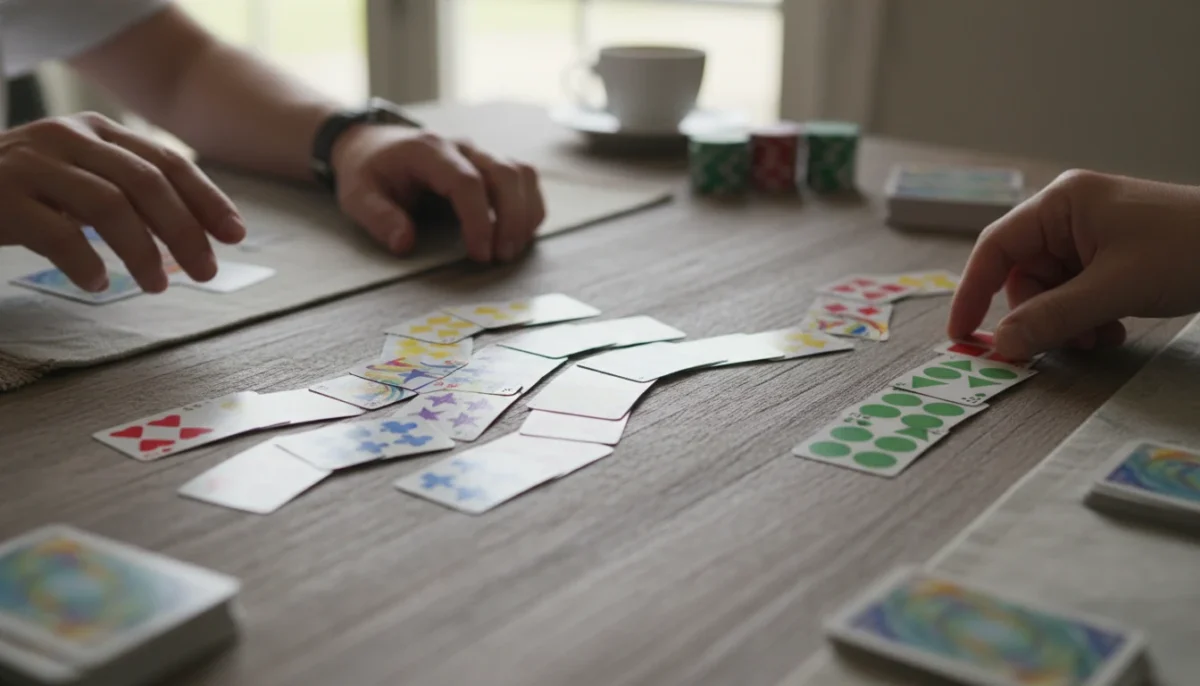
Phase 10 rules rule situation

House Rules

[HOUSE RULE] Some groups play a variation where 'hitting' (discarding cards onto a completed Phase) is mandatory to end a hand, though official rules focus on the Phase completion and the subsequent discard.

Common Misconceptions

  • Thinking you can add a third set to a Phase that only requires two sets.
  • Believing you can add cards to a Phase in a later hand once it is already on the table.
  • Attempting to add cards that don't match the existing numbers or sequences.

Quick Reference

You CanYou Cannot
You can add extra cards if they extend an existing setYou cannot add cards that create a new, unrequired combination
You can add extra cards if they extend an existing runYou cannot add cards that do not directly connect to the laid-down cards
You can lay down more than the minimum requirements in one turn

Frequently Asked Questions

What is the official rule for adding cards to laid down sets in Phase 10?
You can add extra cards only if they directly extend the sets or runs already in the Phase.
Can I add a third set of cards to my Phase 1 if I have them?
No, you can only add cards that directly extend the existing sets or runs required for that Phase.
What happens if I have extra cards that don't fit my Phase?
You must discard those cards to end your turn instead of laying them down.
Do I have to lay down the whole Phase at once?
Yes, you must have the entire Phase in your hand before laying it down face-up.
Categories
Board Games Card Play Rules

Phase 10 Skip Card Rules: Official Rules & Disputes

Many players mistakenly believe they can target the same person with multiple Skip cards in a single round, but the official rules impose a strict limit.

No, you cannot use multiple Skip cards against the same player in a single round, according to the Phase 10 Official Rulebook.

Phase 10 Official Rules, [edition not specified]

Expertise: Board game rules expert. | Verification: Cross-referenced official rulebook text regarding Skip card mechanics. | Purpose: Resolve the #1 stacking confusion from player forums regarding Skip card frequency.
Key Insight: To avoid arguments, establish the 'one skip per player' rule before the first hand begins.

These rules correspond to the UK edition of Phase 10.

Official Rule Breakdown

Regarding the use of Skip cards in Phase 10, the official rules state that Skip cards have the sole purpose of causing another player to lose a turn. While you may discard a Skip card immediately or save it for a later turn, there is a critical restriction: only one Skip card against each player per 'round' may be used. A 'round' is defined as once around the table. Additionally, Skip cards cannot be used to complete any Phase and cannot be picked up from the discard pile.

Step-by-Step

  1. Step 1: Draw a card from either the draw pile or the discard pile.
  2. Step 2: On your turn, choose to discard a Skip card from your hand.
  3. Step 3: Select a player to lose their turn.
  4. Step 4: Ensure the selected player has not already been targeted by a Skip card in the current round.

Example Play Situation

Alice draws a Skip card and decides to save it. Later in the round, Bob plays a Skip card targeting Charlie. When Alice's turn comes, she wants to use her Skip card on Charlie again, but she cannot because Charlie has already been skipped this round.

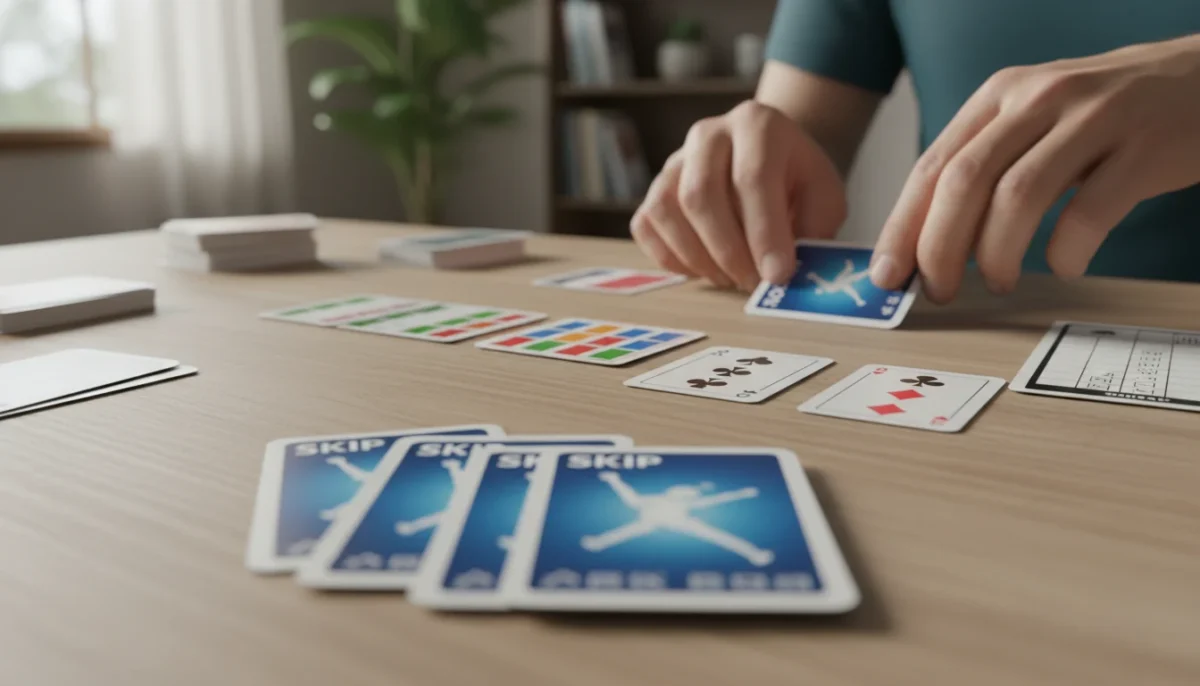
Phase 10 rules rule situation

Common Misconceptions

  • Using a Skip card to complete a Phase
  • Picking up a Skip card from the discard pile
  • Targeting the same player with multiple Skips in one round

Quick Reference

You CanYou Cannot
Discard a Skip card to make a player lose a turnUse a Skip card to help complete a Phase
Save a Skip card for a later turnPick up a Skip card from the discard pile
Skip the first player if the dealer starts the discard pile with a Skip cardUse more than one Skip card against a single player per round

Frequently Asked Questions

What is the official rule for Skip cards in Phase 10?
Skip cards cause a player to lose a turn, but you can only use one per player per round.
Can I use a Skip card to complete Phase 8?
No, Skip cards may never be used in making any Phase.
Is it allowed to pick up a Skip card from the discard pile?
No, a Skip card may never be picked up from the discard pile.
What if the dealer puts a Skip card in the discard pile first?
The first player's first turn is automatically skipped.
Categories
Board Games Card Play Rules

Phase 10 Skip Card Official Rules & How to Play

Many players mistakenly believe Skip cards can be used to complete a Phase or be picked up from the discard pile.

According to the Phase 10 Official Rulebook, Skip cards serve only one purpose: to cause another player to lose a turn.

Phase 10 Official Rules [edition not specified]

Expertise: Board game rules expert. | Verification: Cross-referenced official rulebook text. | Purpose: Resolve the #1 confusion regarding Skip card utility in Phase 10.
Key Insight: To avoid arguments, ensure everyone agrees on when a 'round' begins before the first Skip card is played.

These rules correspond to the UK edition of Phase 10.

Official Rule Breakdown

The official rules specify that Skip cards have a singular function: to force another player to lose their turn. When a player draws a Skip card, they have the option to discard it immediately or save it for a later turn. However, a Skip card may never be used to contribute to making Phase 8 or any other Phase. Additionally, Skip cards cannot be picked up from the discard pile. A critical limitation is that only one Skip card may be used against each individual player per 'round' (defined as one full circuit around the table). If the dealer begins the discard pile with a Skip card, the first player's turn is automatically skipped.

Step-by-Step

  1. Step 1: Draw a card from either the draw pile or the discard pile.
  2. Step 2: If the card is a Skip card, decide to discard it immediately or save it for a later turn.
  3. Step 3: On a subsequent turn, discard the Skip card onto the discard pile.
  4. Step 4: Choose the specific player who will lose their turn.

Example Play Situation

Alice draws a Skip card and decides to save it. Two turns later, Alice discards the Skip card and chooses Bob to lose his turn. Bob must now skip his turn and cannot draw or discard.

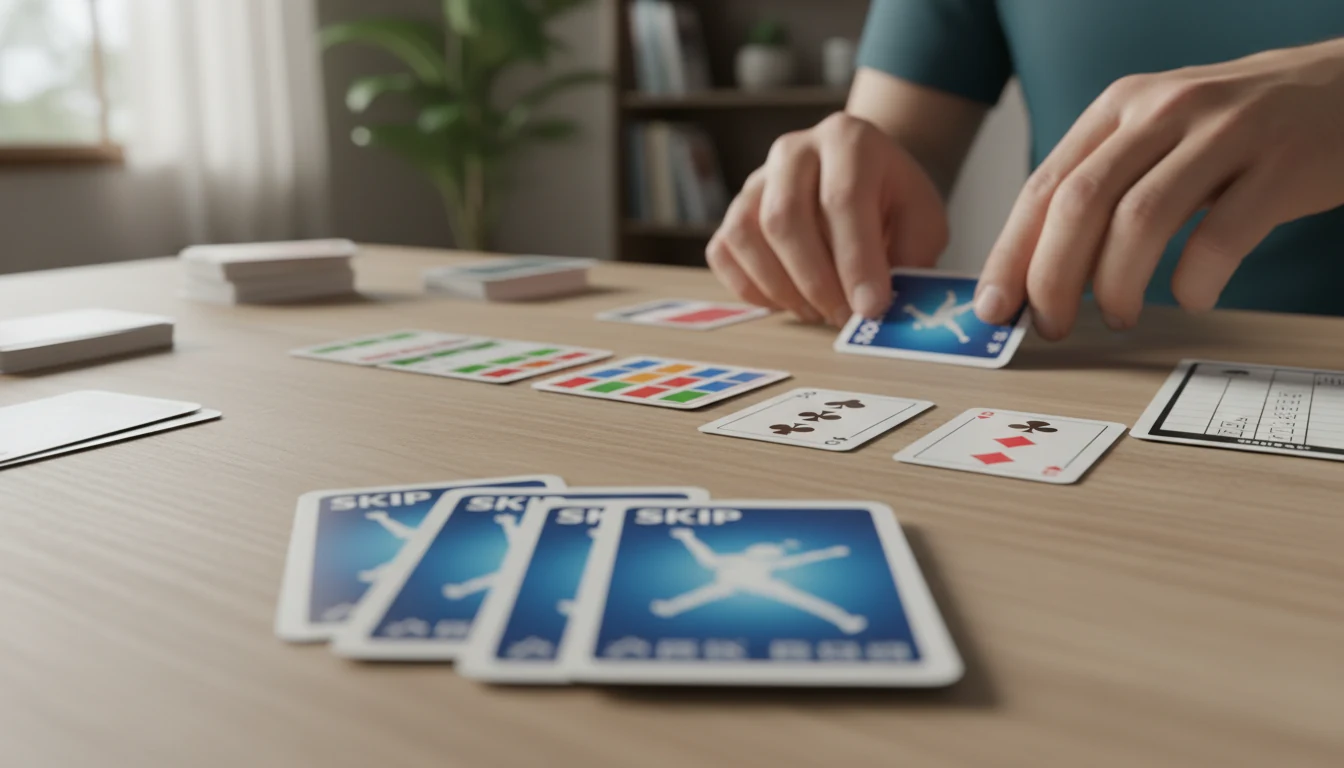
Phase 10 rules rule situation

Common Misconceptions

  • Using a Skip card to complete a Phase
  • Picking up a Skip card from the discard pile
  • Using multiple Skip cards against the same player in one round

Quick Reference

You CanYou Cannot
Discard the Skip card to make a player lose a turnUse a Skip card to complete any Phase
Save a Skip card to use on a later turnPick up a Skip card from the discard pile
Skip the first player if the dealer starts the pile with a Skip cardUse more than one Skip card against the same player per round

Frequently Asked Questions

What is the official rule for Skip cards in Phase 10?
They are used only to make another player lose their turn and cannot be used in Phases.
Can I use a Skip card to help me finish Phase 8?
No, Skip cards may never be used in making Phase 8 or any other Phase.
What happens if the dealer puts a Skip card on the discard pile to start?
The first player's first turn is automatically skipped.
Is it allowed to pick up a Skip card from the discard pile?
No, a Skip card may never be picked up from the discard pile.
Categories
Board Games Card Play Rules

Phase 10 Official Rules: How to Hit and Add Cards

Many players mistakenly believe they can only interact with their own completed phases, but the rules allow for strategic 'hitting' on any phase on the table.

According to the Phase 10 Official Rulebook, you can add cards to any phase already laid down on the table, whether it is your own or another player's.

Phase 10 Official Rules [edition not specified]

Expertise: Board game rules expert. | Verification: Cross-referenced official PDF manual and trusted secondary rule sources. | Purpose: Resolve the #1 confusion regarding hitting other players' phases.
Key Insight: To avoid arguments, ensure everyone agrees on the 'hitting' rule before the first hand begins.

These rules correspond to the US edition of Phase 10.

Official Rule Breakdown

The process of adding cards to existing phases is known as 'Hitting.' According to the official manual, you may make a hit by putting a card directly on a phase already laid down on the table. This card must properly fit with the cards already down, such as adding a '4' to an existing set of '4s' or a '2' to a run of '3, 4, 5, 6.' Crucially, before you can perform a hit, your own Phase must already be laid down. You may hit your own cards, another player's cards, or both, and you may only do so during your turn (Phase 10 Official Rulebook, [page not specified]).

Step-by-Step

  1. Step 1: Successfully lay down your own Phase on the table.
  2. Step 2: On a subsequent turn, draw a card from the draw pile or discard pile.
  3. Step 3: Identify a card in your hand that can be directly added to an existing Phase (yours or an opponent's).
  4. Step 4: Place the card onto the existing Phase to 'hit' it.
  5. Step 5: Discard one card from your hand to end your turn.

Example Play Situation

Alice has already laid down her Phase 1. On her turn, Bob draws a card and sees a '7' in his hand. Since Bob's own Phase is already on the table, he can legally place that '7' onto Alice's existing set of '7s' to make a hit.

Phase 10 rules rule situation

House Rules

[HOUSE RULE] Some groups play with a variation where players can play additional cards on top of other completed phases for strategic advantages, though this is not part of the standard rulebook.

Common Misconceptions

  • Thinking you can only hit your own phases
  • Attempting to hit a phase before your own phase is laid down
  • Adding a card that does not logically fit the existing set or run

Quick Reference

You CanYou Cannot
You can hit your own cardsYou cannot hit a phase if your own phase is not yet laid down
You can hit another player's cardsYou cannot hit a phase if the card does not properly fit the sequence or set
You can add Wild cards to any valid situationYou cannot hit during someone else's turn

Frequently Asked Questions

What is the official rule for hitting in Phase 10?
You can add cards to any laid-down phase if your own phase is already on the table.
Can I add a card to an opponent's phase?
Yes, you can hit another player's cards as long as you have already laid down your own phase.
What happens if my own phase isn't on the table yet?
You are not allowed to make a hit until your own Phase has been successfully laid down.
Do I have to hit my own cards only?
No, you have the option to hit your own cards, another player's cards, or both.