Categories
Board Games Classic Games

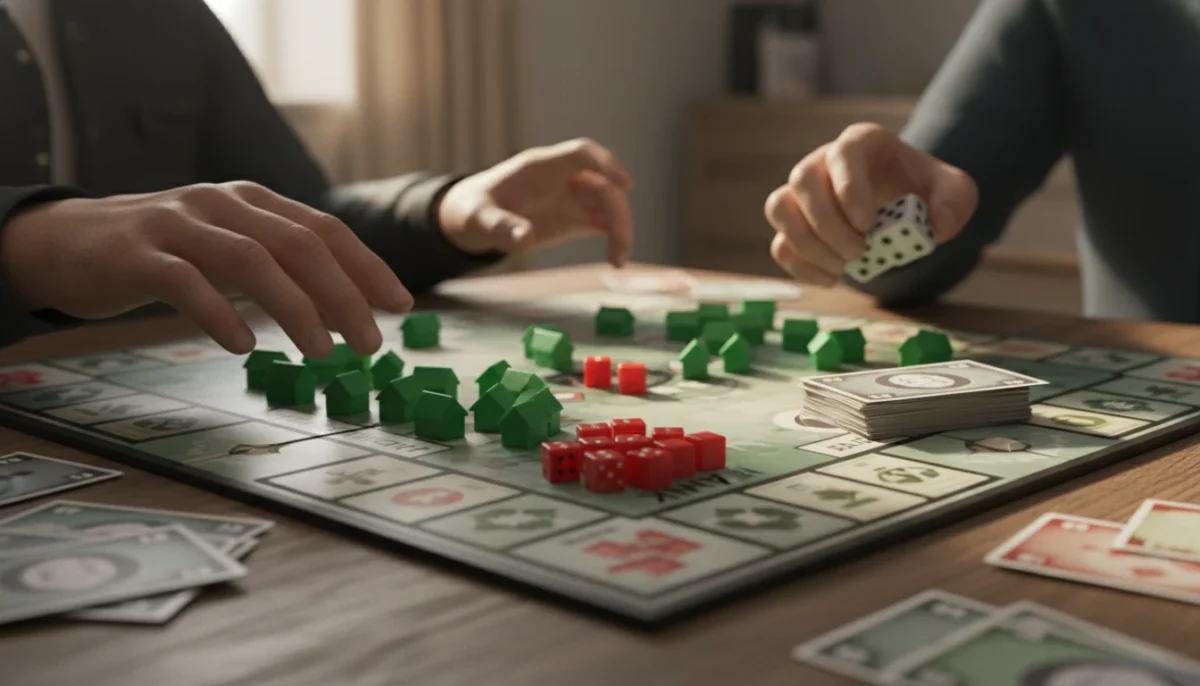
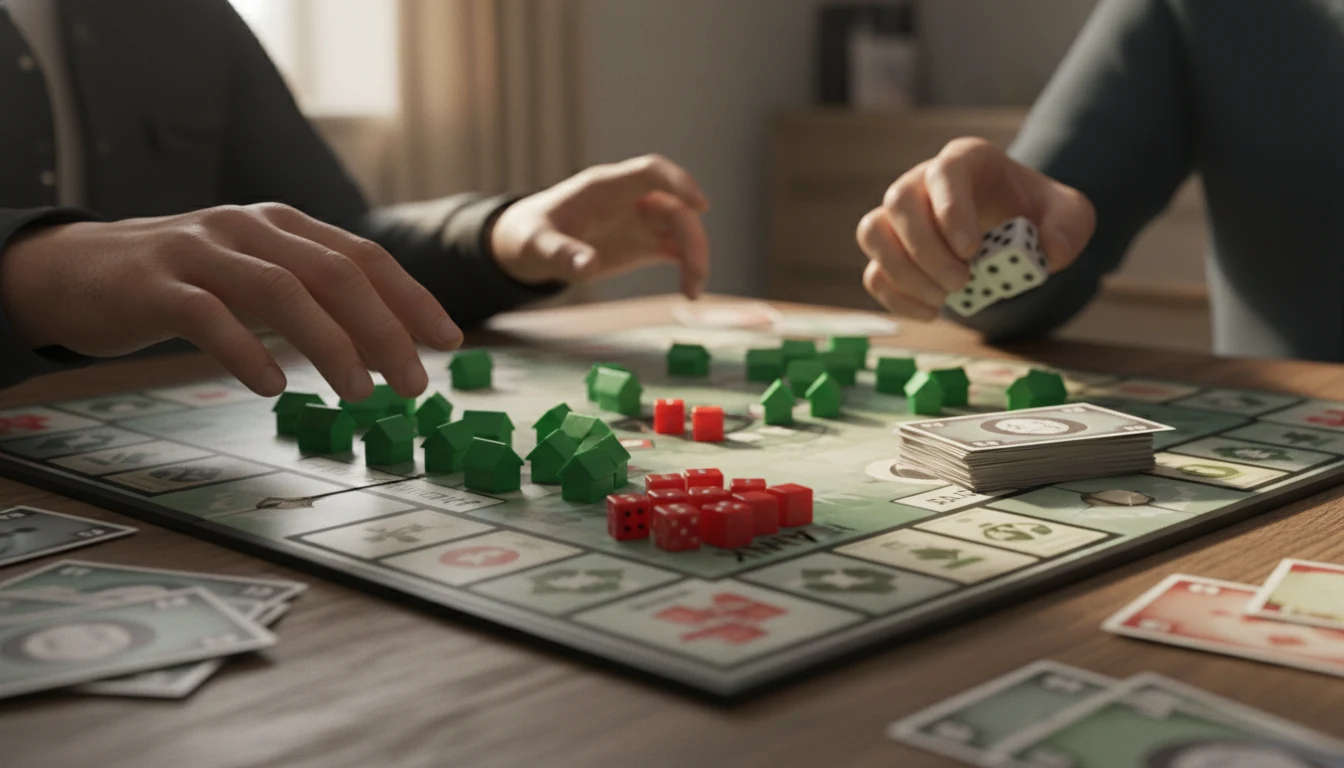
Monopoly House and Hotel Shortage Official Rules

Many players mistakenly believe they can simply buy more hotels when the bank runs out, but the official rules require a specific auction process instead.

Yes, according to the Monopoly Official Rulebook, if there is a shortage of houses or hotels, the Banker must auction the available buildings to the highest bidder.

Monopoly instructions.pdf, [edition not specified]

Expertise: Board game rules expert. | Verification: Cross-referenced official rulebook text for Building Shortages. | Purpose: Resolve the #1 shortage dispute from player forums.
Key Insight: To avoid arguments, establish that the Banker will run an auction immediately if two players demand the last building.

These rules correspond to the US edition of Monopoly.

Official Rule Breakdown

When a building shortage occurs, players cannot simply purchase houses or hotels as they normally would. According to the official rules, if there are no Houses left in the Bank, you must wait for other players to return theirs before you can buy any. Similarly, if a limited number of Houses or Hotels is left and two or more players wish to buy more than the Bank has, the Banker auctions them off to the highest bidder, starting at the lowest price shown on the relevant Title Deed(s). (Source: Monopoly instructions.pdf, Building Shortages section).

Step-by-Step

  1. Step 1: Identify that the Bank has insufficient Houses or Hotels for all interested players.
  2. Step 2: Determine the starting price based on the lowest price shown on the relevant Title Deed(s).
  3. Step 3: The Banker conducts an auction for the available buildings.
  4. Step 4: The highest bidder wins the auction and receives the building(s).

Example Play Situation

Alice and Bob both want to buy the last available Hotel. Since the Bank cannot provide one to both, the Banker starts an auction at the price listed on the Title Deed. Bob bids $500 and Alice bids $600, so Bob wins the Hotel by being the highest bidder.
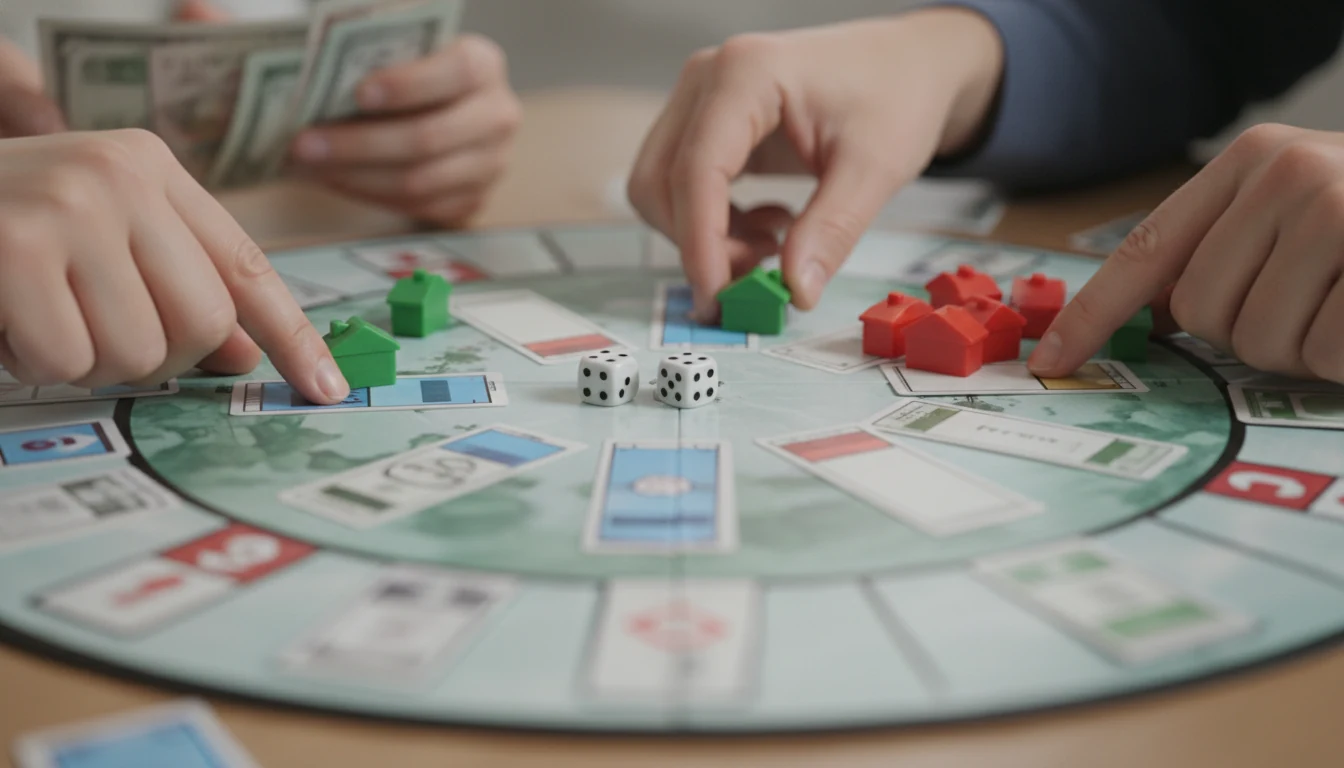
Monopoly rules rule situation

Common Misconceptions

  • Waiting for the Bank to magically refill without other players selling buildings
  • Assuming the first person to ask for a building gets priority during a shortage
  • Thinking you can buy hotels from other players directly

Quick Reference

You CanYou Cannot
Wait for players to return houses to the BankBuy buildings directly from other players
Participate in a Banker-led auction for limited buildingsSkip the auction if multiple players want the same limited building
Sell buildings back to the Bank at half price

Frequently Asked Questions

What is the official rule for building shortages in Monopoly?
The Banker auctions limited houses or hotels to the highest bidder.
Can I buy a house from another player if the Bank is empty?
No, houses and hotels must be sold to the Bank, not to other players.
What if two players want the last hotel at the same time?
The Banker must auction that hotel to the highest bidder.
Is it allowed to build houses if the Bank has none left?
No, you must wait until other players return houses to the Bank.
Categories
Board Games Card Play Rules

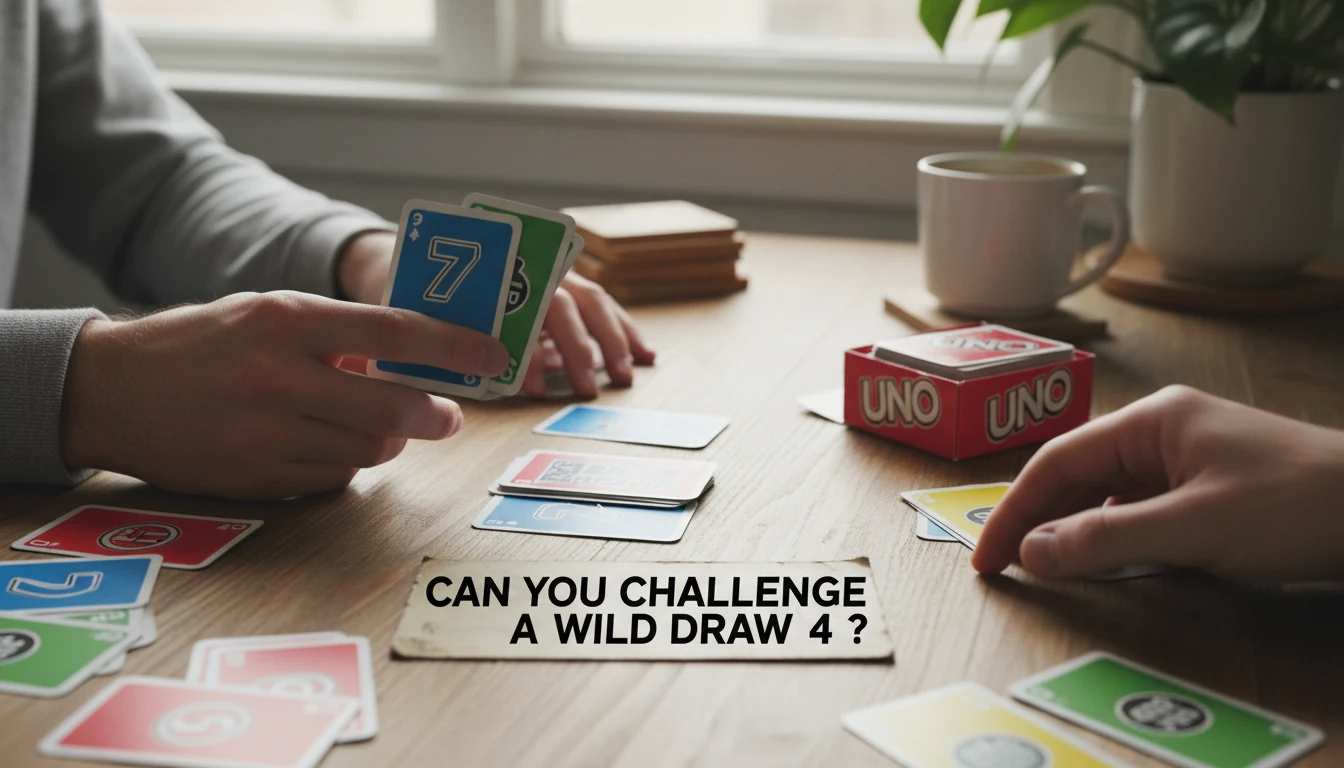
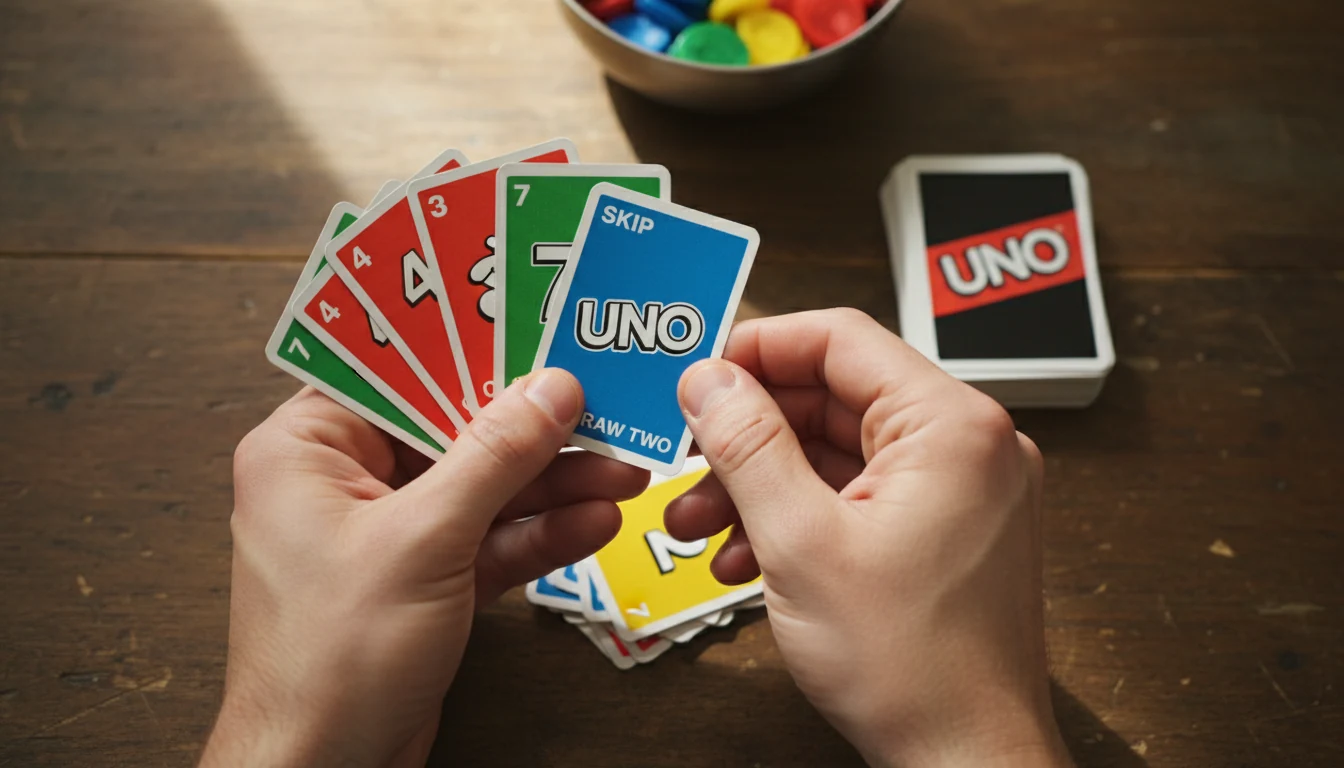
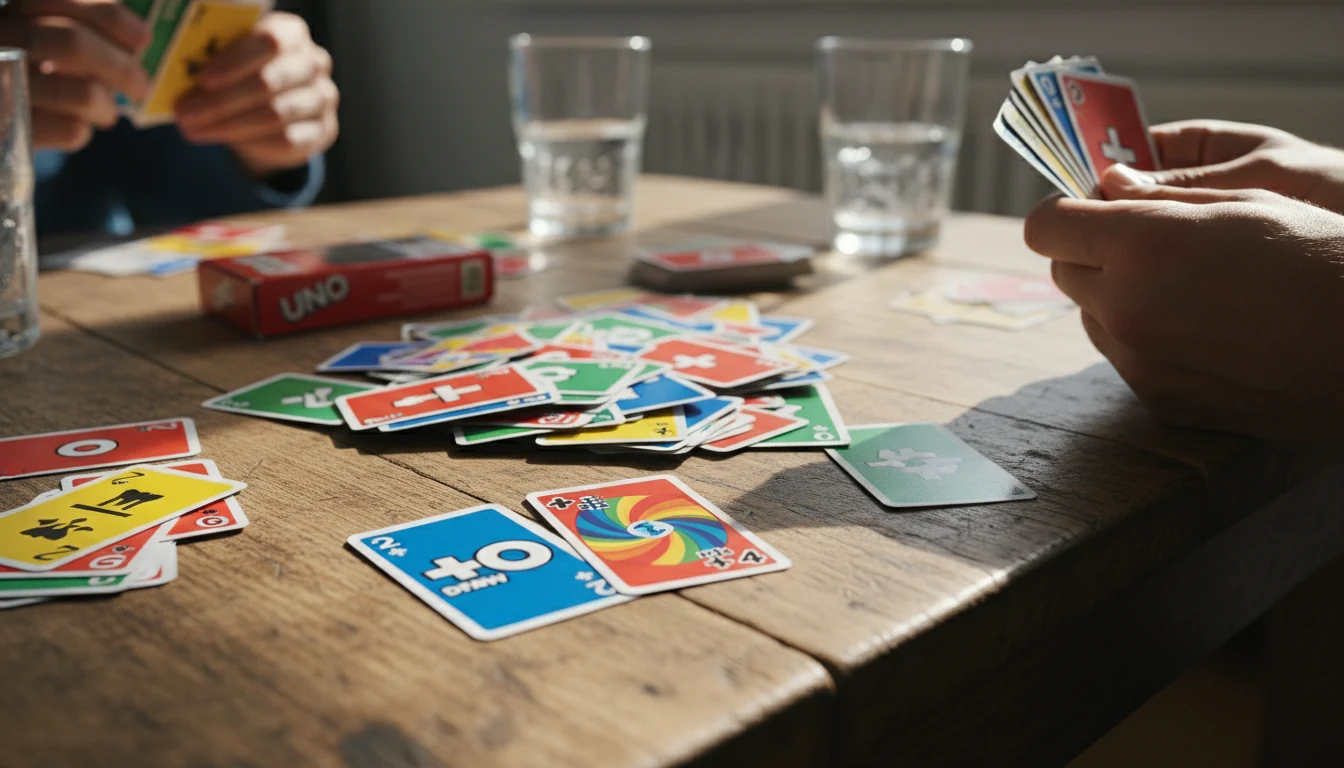
Uno Wild Draw 4 Challenge Rules: Official & House Rules

Many players mistakenly believe they can challenge any Wild Draw 4 card, but the official rules specify that a challenge is only permitted if you suspect the card was played illegally.

Yes, according to the Mattel Official Rulebook, you may challenge a Wild Draw 4 if you suspect the player played it illegally by having a matching color card in their hand.

Uno Basic Official Rulebook, [edition not specified], [page not specified]

Expertise: Board game rules expert and content writer. | Verification: Cross-referenced official PDF manuals from Mattel. | Purpose: Resolve the #1 dispute regarding Wild Draw 4 challenge penalties.
Key Insight: To avoid arguments, establish the '6-card penalty' for incorrect challenges before the first Wild Draw 4 is played.

These rules correspond to the US edition of Uno.

Official Rule Breakdown

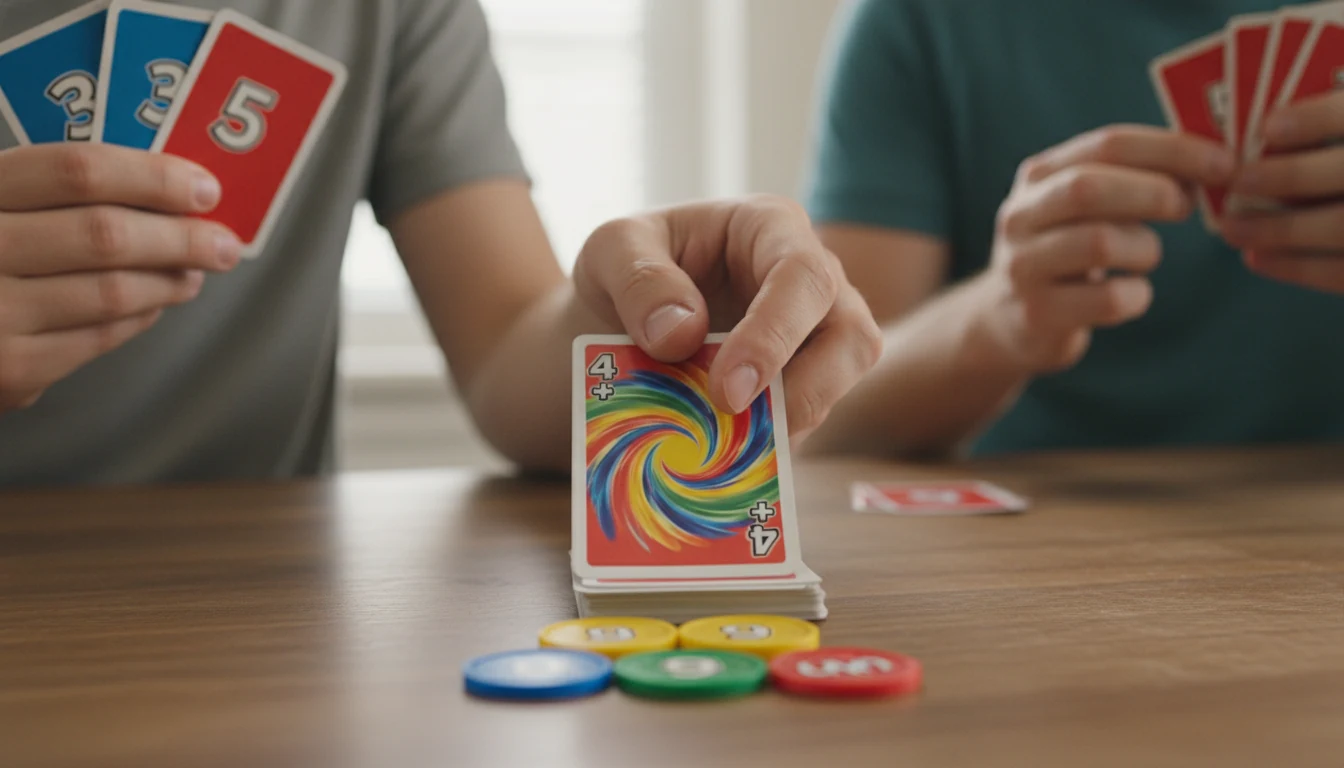
According to the Mattel Official Rulebook (Uno Basic), a player may play a Wild Draw 4 card even if they have a matching number or word card of a different color in their hand. However, if you suspect that a player has played a Wild Draw 4 card illegally (meaning they actually possessed a card that matched the color of the card previously played), you may challenge them. Upon a challenge, the player must show their hand to the challenger. If the challenged player is found guilty of playing the card illegally, they must draw the 4 cards. If the challenger is incorrect and the player is innocent, the challenger must draw the 4 cards plus an additional 2 cards, for a total of 6 cards.

Step-by-Step

  1. Step 1: Suspect the player played a Wild Draw 4 card illegally (they had a matching color card).
  2. Step 2: Declare a challenge to the player.
  3. Step 3: The challenged player shows their hand to the challenger.
  4. Step 4: Determine guilt: if guilty, the player draws 4; if innocent, the challenger draws 6.

Example Play Situation

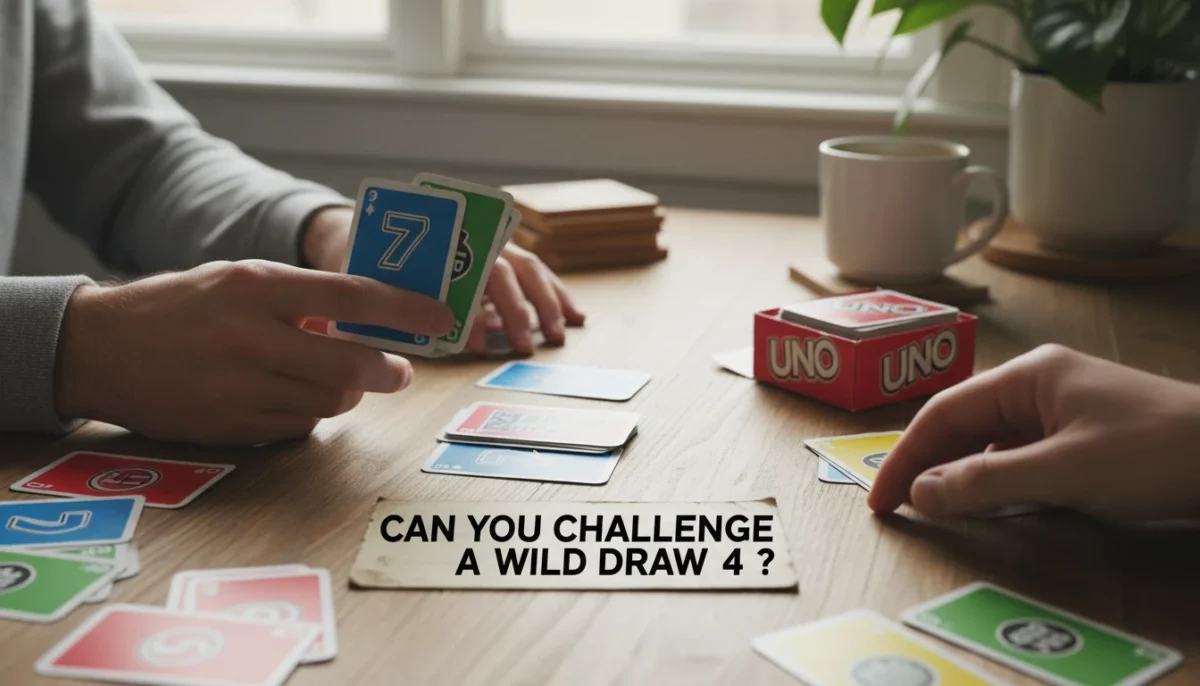
Alice plays a Wild Draw 4. Bob suspects Alice had a Blue card that could have been played instead, so Bob challenges. Alice shows her hand and reveals she had a Blue 3. Because Alice is guilty, she must draw the 4 cards.

Uno rules rule situation

House Rules

[HOUSE RULE] In the 'Progressive UNO' variant, players can play consecutive Wild Draw 4 cards; the next player must play another Wild Draw 4 to make the next person draw 8 cards.

Common Misconceptions

  • Challenging just because you don't like the card
  • Thinking you can challenge a Wild Draw 4 if you have a matching color card yourself
  • Believing the penalty for an incorrect challenge is only 4 cards

Quick Reference

You CanYou Cannot
Challenge only if you suspect an illegal playDo not challenge if the player is legally allowed to play the card
Require the challenged player to show their handDo not assume the penalty is always 4 cards
Draw 6 cards if your challenge is incorrect

Frequently Asked Questions

What is the official rule for challenging a Wild Draw 4 in Uno?
You may challenge if you suspect the player had a matching color card in their hand.
Is it allowed to challenge a Wild Draw 4 if I just want to avoid drawing cards?
No, the challenge must be based on the suspicion that the player played the card illegally.
What happens if I challenge a Wild Draw 4 and I am wrong?
You must draw the 4 cards plus 2 additional cards, totaling 6 cards.
Can I challenge a Wild Draw 4 if the player has a matching number but a different color?
No, the player is allowed to play the Wild Draw 4 even if they have a matching number of a different color.
Categories
Board Games Card Play Rules

Skip-Bo Official Rules: Starting Building Piles with Wilds

Many players mistakenly believe that only a number 1 card can initiate a new pile, overlooking the utility of the wild cards.

Yes, according to the Mattel Official Rulebook, a SKIP-BO card can be used to start a building pile.

Skip-Bo Official Rulebook, [edition not specified]

Expertise: Board game rules expert. | Verification: Cross-referenced official rulebook text regarding building pile initiation and wild card functionality. | Purpose: Resolve the #1 dispute regarding wild card usage in Skip-Bo building piles.
Key Insight: To avoid arguments, confirm that SKIP-BO cards are officially designated as both starters and substitutes before the first deal.

These rules correspond to the UK edition of Skip-Bo.

Official Rule Breakdown

Regarding the ability to start a building pile with a wild card, the official rules state that only a 1 or a SKIP-BO card can start a BUILDING pile. Because SKIP-BO cards are wild, they possess the unique ability to start a building pile and can also be played as any other number during the sequential build from 1 through 12. Once a pile reaches 12 cards, it is removed and a new one begins. (Source: Skip-Bo Official Rulebook, [page not specified]).

Step-by-Step

  1. Step 1: Identify a SKIP-BO card in your hand or the top card of your STOCK pile.
  2. Step 2: Place the SKIP-BO card into the center play area to initiate a new BUILDING pile.
  3. Step 3: Continue the pile by playing subsequent cards in numerical sequence (e.g., 2, 3, 4…) from your STOCK pile, DISCARD pile, or hand.

Example Play Situation

Alice has a SKIP-BO card in her hand. She places it in the center to start a new BUILDING pile. On her next turn, Bob plays a number 2 from his STOCK pile onto Alice's pile to continue the sequence.

Skip-Bo rules rule situation

Common Misconceptions

  • Thinking only the number 1 card can start a pile
  • Believing wild cards can only be used as numbers and not as starters
  • Assuming building piles must be started by a specific player

Quick Reference

You CanYou Cannot
Use a SKIP-BO card to start a building pileStart a building pile with any number other than 1 or a SKIP-BO card
Use a number 1 card to start a building pileBuild piles out of numerical sequence
Play SKIP-BO cards as any other number

Frequently Asked Questions

What is the official rule for starting a building pile in Skip-Bo?
You must use either a number 1 card or a SKIP-BO wild card to begin a pile.
Can I use a SKIP-BO card to start a pile?
Yes, SKIP-BO cards are wild and can be used to start a building pile.
Is it allowed to play a wild card as a number later in the sequence?
Yes, SKIP-BO cards can be played as any other number in the 1-12 sequence.
What happens if I don't have a 1 or a wild card?
You cannot start a new building pile until you acquire a 1 or a SKIP-BO card.
Categories
Board Games Card Play Rules

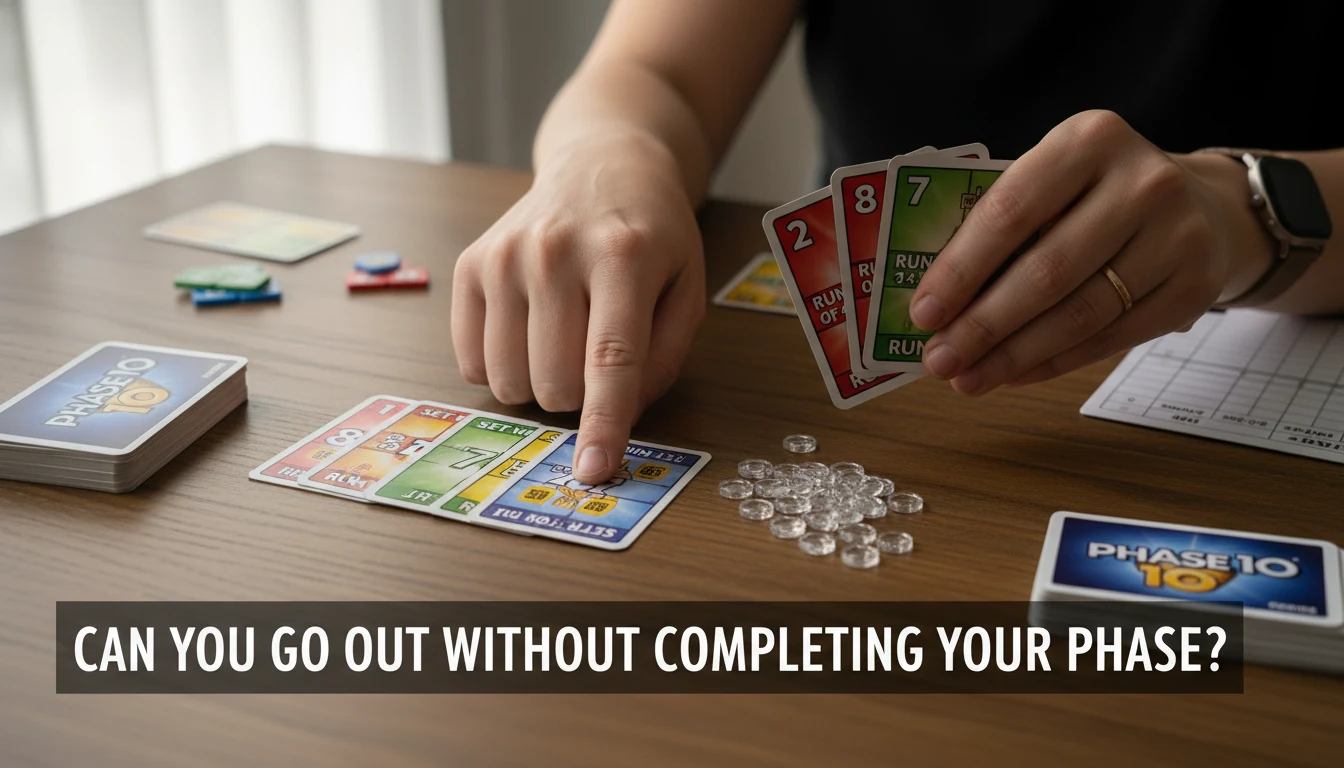
Phase 10 Official Rules: Can You Go Out Without a Phase?

Many players mistakenly believe they can win a hand by simply emptying their hand, regardless of whether they have completed their current Phase.

No, according to the Phase 10 Official Rulebook, you cannot 'go out' to win a hand unless you have first successfully laid down your required Phase.

Phase 10 Official Rules [edition not specified]

Expertise: Board game rules expert. | Verification: Cross-referenced official Phase 10 manual text. | Purpose: Resolve the common misconception regarding the sequence of laying a Phase versus going out.
Key Insight: To avoid arguments, ensure players clearly lay their Phase face-up on the table before they start hitting or discarding.

These rules correspond to the US edition of Phase 10.

Official Rule Breakdown

According to the Phase 10 Official Rulebook, the process of finishing a hand is strictly sequential. First, a player must be able to make a Phase with the cards in their hand and lay that Phase down, face-up, on the table. Only after laying down a Phase can a player attempt to 'go out' as soon as possible. To go out, a player must get rid of all remaining cards by either discarding them or by 'hitting' (placing a card onto an existing Phase already on the table). If a player empties their hand without having laid down their Phase, they have not completed the required objective for that hand.

Step-by-Step

  1. Step 1: Collect the necessary cards in your hand to meet the requirements of your current Phase.
  2. Step 2: Lay the Phase down face-up on the table before discarding any cards.
  3. Step 3: Once the Phase is laid down, attempt to get rid of all remaining cards in your hand.
  4. Step 4: Complete the 'go out' process by discarding cards or hitting existing Phases on the table.

Example Play Situation

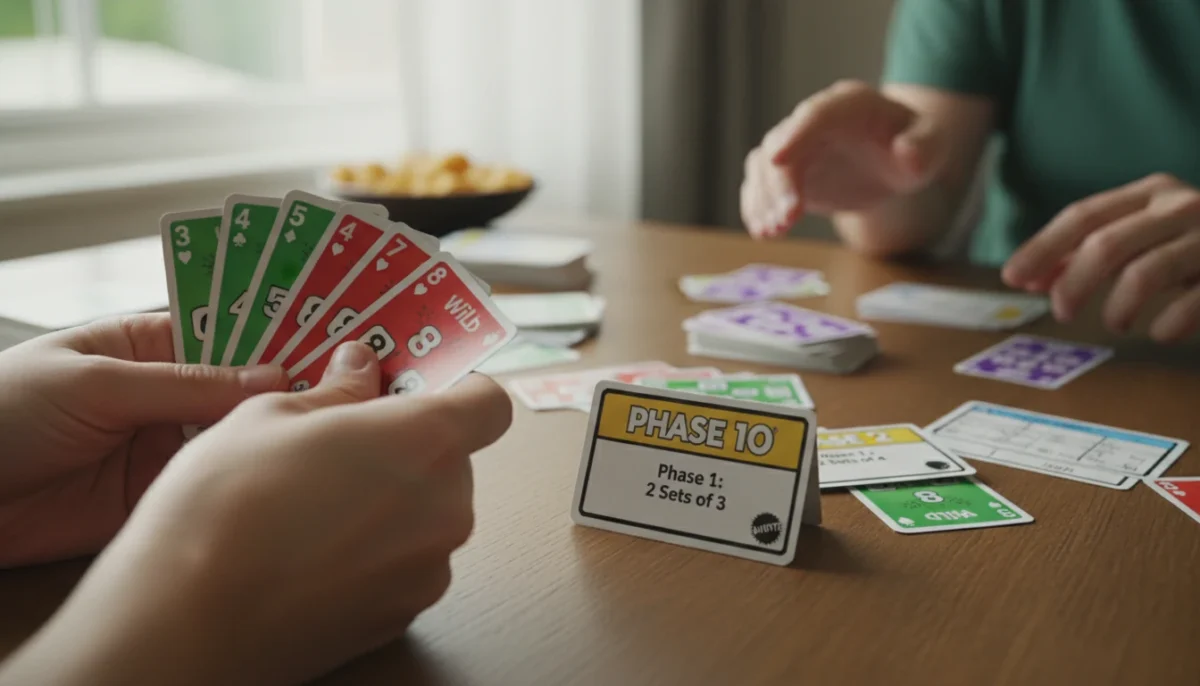
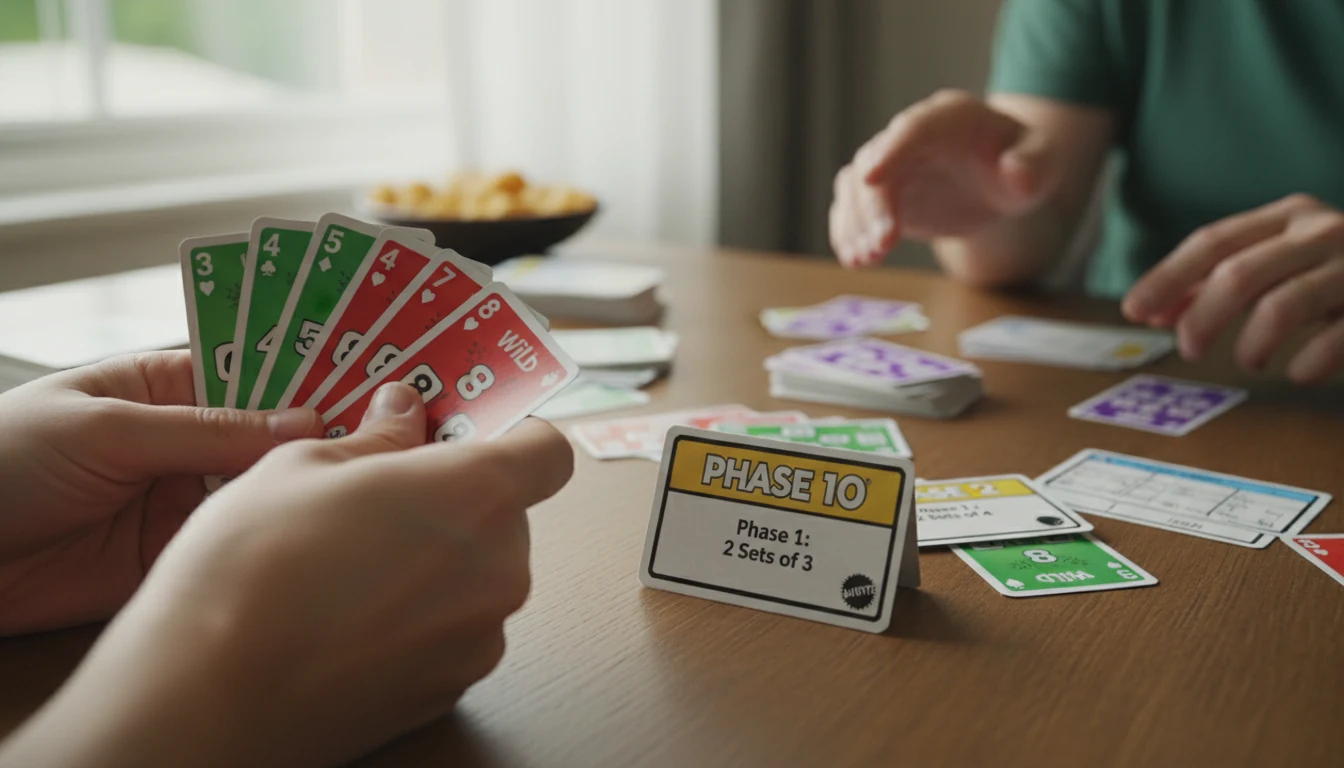
Alice has completed Phase 1 by laying down two sets of three. She then uses her remaining cards to hit existing Phases on the table. Once Alice has no cards left in her hand, she has successfully 'gone out.' Bob, however, discards all his cards but forgot to lay down his Phase first; therefore, Bob has not gone out and must try for the same Phase again in the next hand.

Phase 10 rules rule situation

Common Misconceptions

  • Thinking you can win the hand just by having zero cards left.
  • Believing you can go out before laying down your Phase.
  • Assuming you can use 'Skip' cards to complete a Phase.

Quick Reference

You CanYou Cannot
Lay down your Phase face-up before discardingDo not attempt to go out before laying down your Phase
Hit existing Phases to get rid of leftover cardsDo not use Skip cards to make a Phase
Use Wild cards to complete sets or runsDo not lay down more than one Phase per hand

Frequently Asked Questions

What is the official rule for going out in Phase 10?
You must lay down your Phase first, then discard or hit existing Phases to empty your hand.
Can I discard all my cards and win if I haven't made my Phase?
No, you must successfully lay down your Phase before you can attempt to go out.
Is it allowed to hit another player's Phase to go out?
Yes, you may hit your own cards, another player's cards, or both to get rid of your hand.
What happens if I empty my hand but didn't lay down my Phase?
You fail to complete the Phase and must try for that same Phase again in the next hand.
Categories
Board Games Rules & Disputes

Ticket to Ride Double Route Rules: Official Rules Guide

Many players mistakenly believe that all double-routes on the board remain available for use during a two-player game.

No, according to the Days of Wonders Official Rulebook, in 2 or 3 player games, only one of the Double-Routes can be used.

Ticket to Ride Official Rulebook [edition not specified]

These rules correspond to the UK edition of Ticket to Ride.

Official Rule Breakdown

Regarding the use of Double-Routes in Ticket to Ride, the official rules state that some cities are connected by Double-Routes. While a player can claim either of the two routes between cities, one player cannot claim both routes to the same cities. Crucially, in 2 or 3 player games, only one of the Double-Routes can be used. Once a player claims one of the two routes between cities, the other route is closed to all other players.

Example Play Situation

Alice is playing a two-player game and decides to claim the first Double-Route between two cities. Because it is a two-player game, the second route of that Double-Route is immediately closed to Bob, even though it remains physically on the board.

Ticket to Ride rules rule situation

Common Misconceptions

  • Both routes in a Double-Route can be claimed in a 2-player game
  • A single player can occupy both routes of a Double-Route
  • Double-Routes are always fully available regardless of player count

Quick Reference

You CanYou Cannot
Claim one of the two routes in a Double-RouteClaim both routes of a Double-Route to the same cities
Close the alternative route to other players in 2 or 3 player gamesUse the second Double-Route if the player count is 2 or 3

Frequently Asked Questions

What is the official rule for Double-Routes in Ticket to Ride?
Only one route of a Double-Route can be used in 2 or 3 player games.
Can I claim both routes between the same two cities?
No, one player cannot claim both routes to the same cities.
What happens to the other route in a Double-Route during a 2-player game?
The other route is closed to all other players once one is claimed.
Do Double-Routes work differently in 4-player games?
The restriction specifically applies to 2 or 3 player games.
Categories
Board Games Rules & Disputes

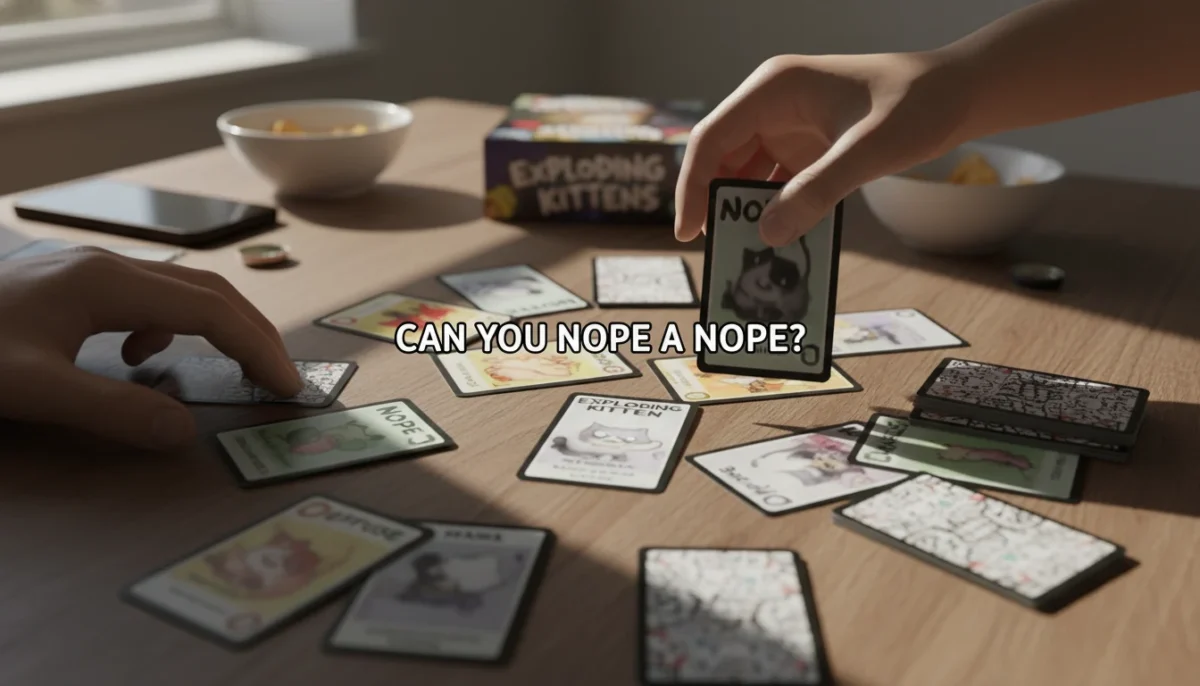
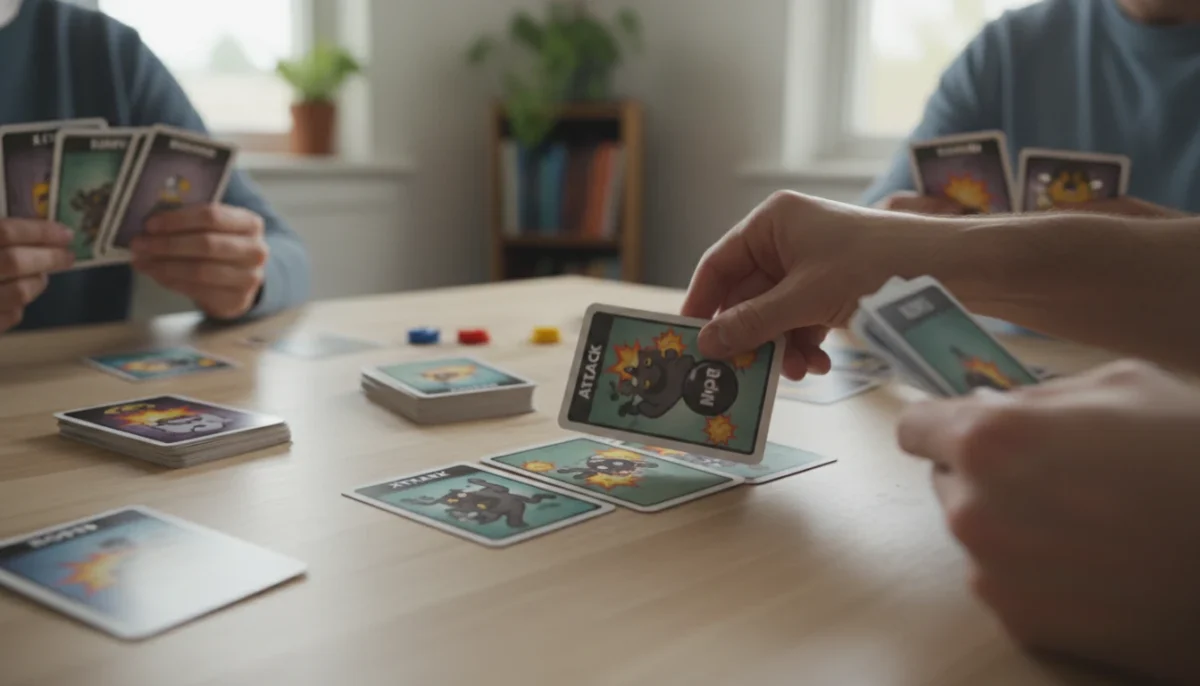
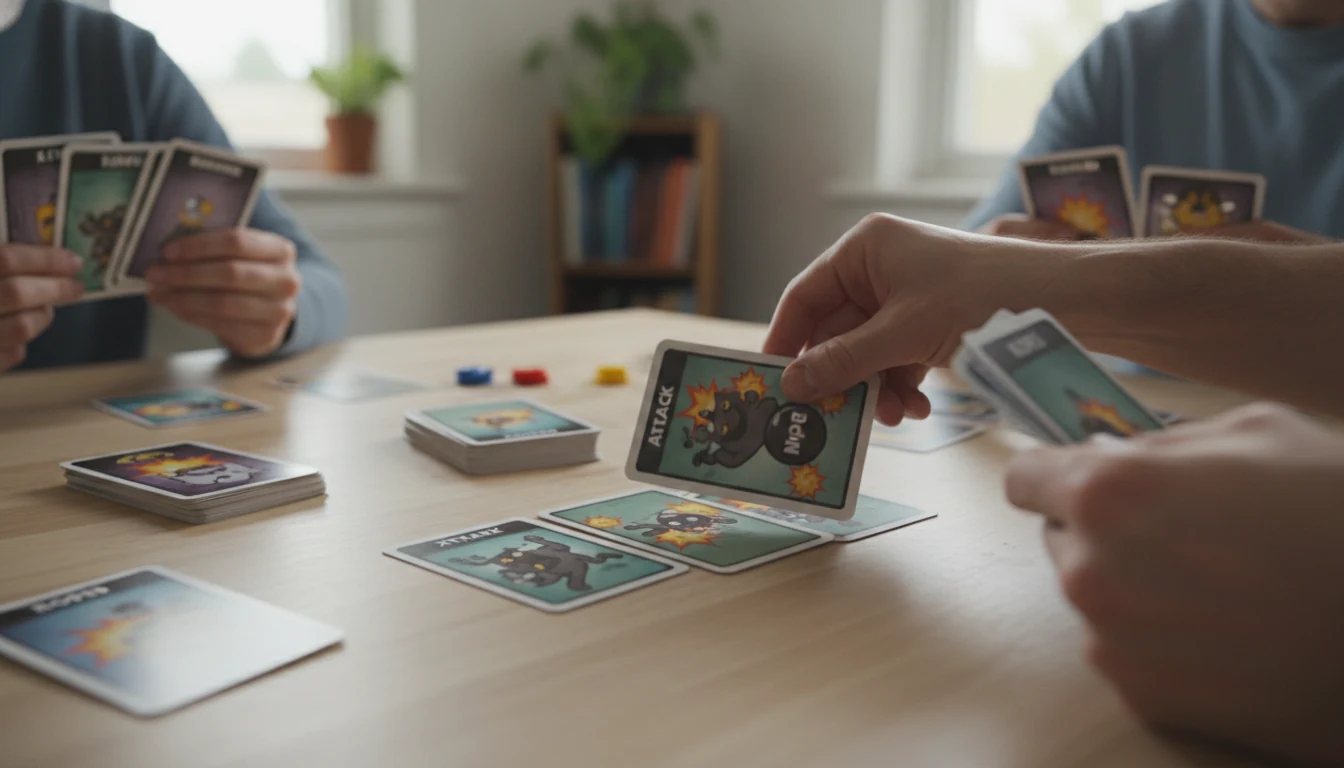
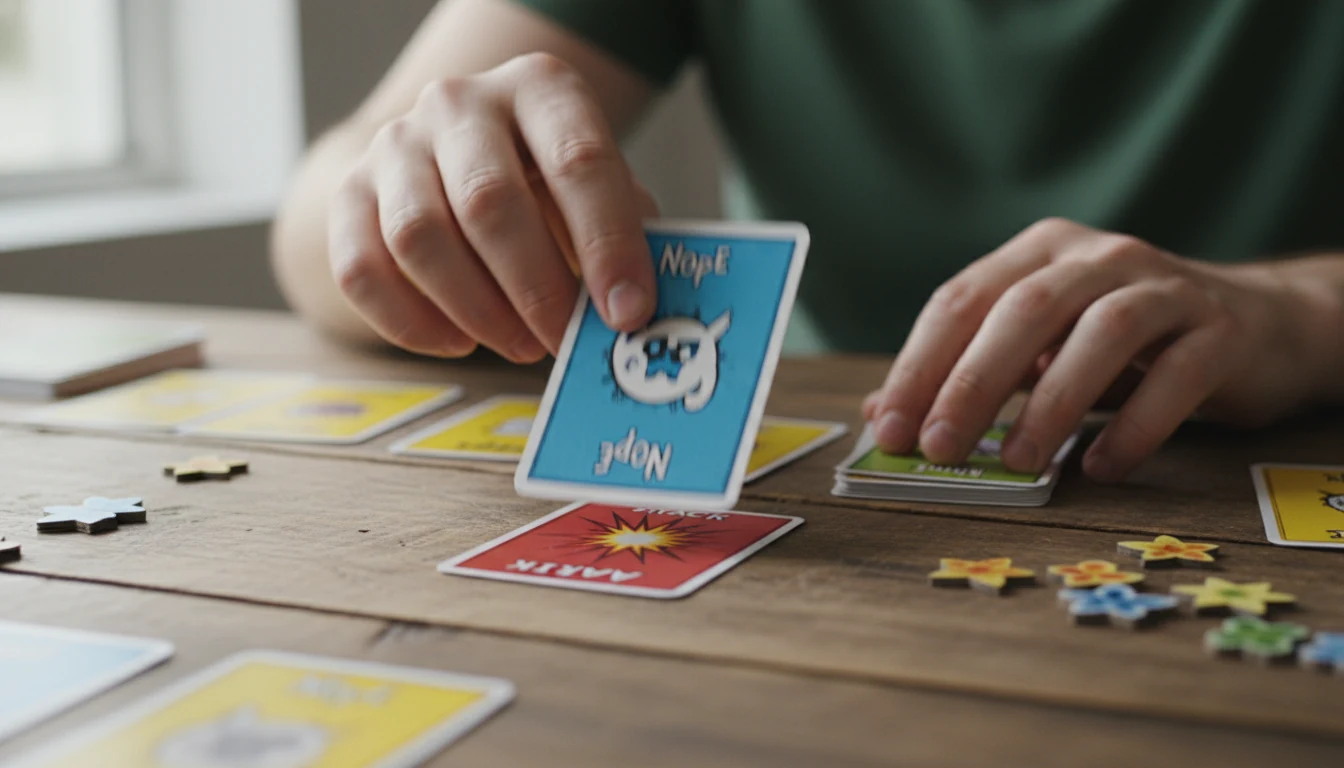
Exploding Kittens Official Rules: Can You Nope a Nope?

Many players wonder if the chain of negation can continue indefinitely or if a Nope card is a one-time use only.

Yes, according to the Exploding Kittens Official Rulebook, you can play a Nope on another Nope.

Exploding Kittens-rules.pdf [page not specified]

These rules correspond to the US edition of Exploding Kittens.

Official Rule Breakdown

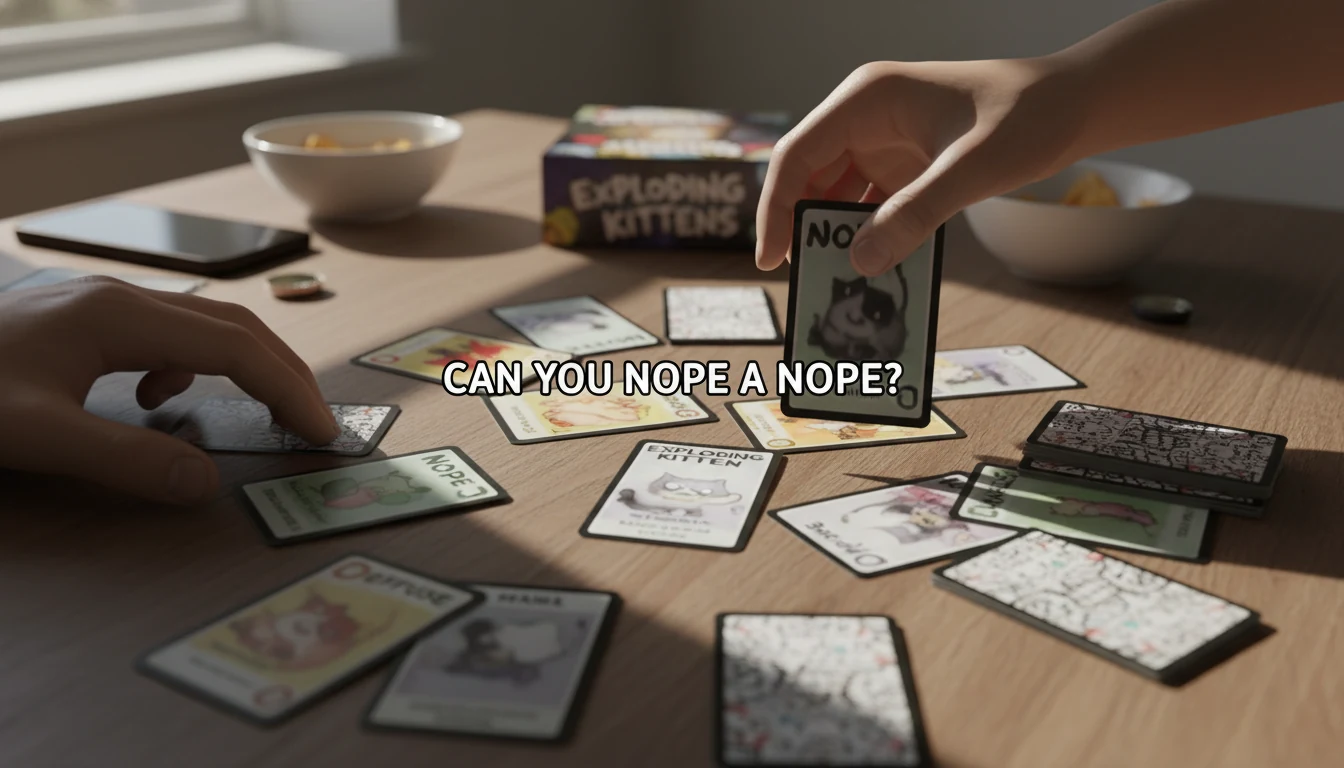
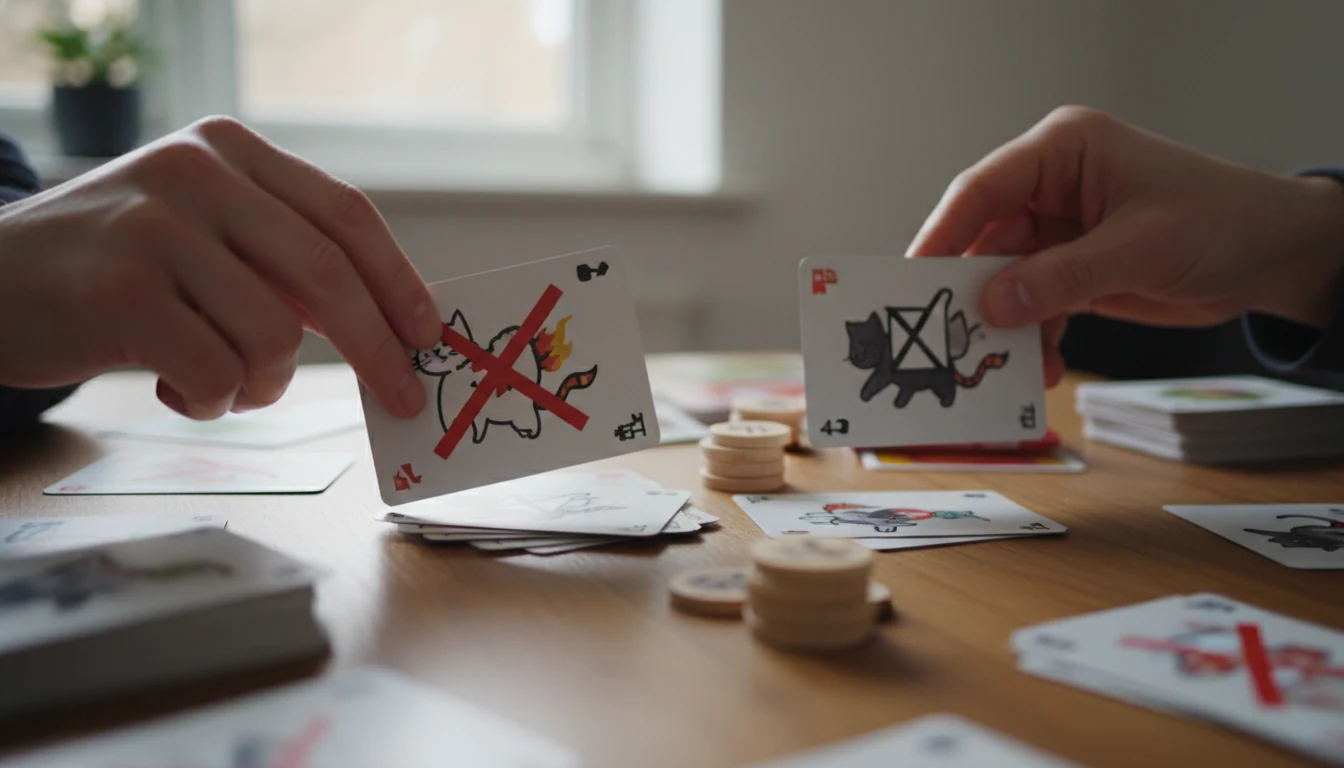
Regarding the ability to play a Nope on a Nope, the official rules state that you can play a Nope on another Nope to negate it and create a Yup, and so on. A Nope card can be played at any time before an action has begun, even if it is not your turn, to stop any action except for an Exploding Kitten or a Defuse Card. Any cards that have been noped are lost and must be left in the Discard Pile.

Example Play Situation

Alice plays a Skip card to end her turn. Bob immediately plays a Nope card to stop her action. Alice then plays her own Nope card to negate Bob's Nope, effectively turning it into a Yup.

Exploding Kittens rules rule situation

Common Misconceptions

  • Thinking a Nope card can stop an Exploding Kitten
  • Thinking a Nope card can stop a Defuse Card
  • Believing you can only play a Nope on your own turn

Quick Reference

You CanYou Cannot
Play a Nope on another Nope to create a YupUse a Nope to stop an Exploding Kitten
Play a Nope at any time before an action beginsUse a Nope to stop a Defuse Card
Use a Nope to stop a Special Combo

Frequently Asked Questions

What is the official rule for playing a Nope in Exploding Kittens?
You can play a Nope on another Nope to negate it and create a Yup.
Can I use a Nope card if it is not my turn?
Yes, you can play a Nope at any time before an action has begun.
Does a Nope card work on an Exploding Kitten?
No, you cannot use a Nope to stop an Exploding Kitten or a Defuse Card.
What happens to cards after they are noped?
Any cards that have been noped are lost and must be placed in the Discard Pile.
Categories
Board Games Card Play Rules

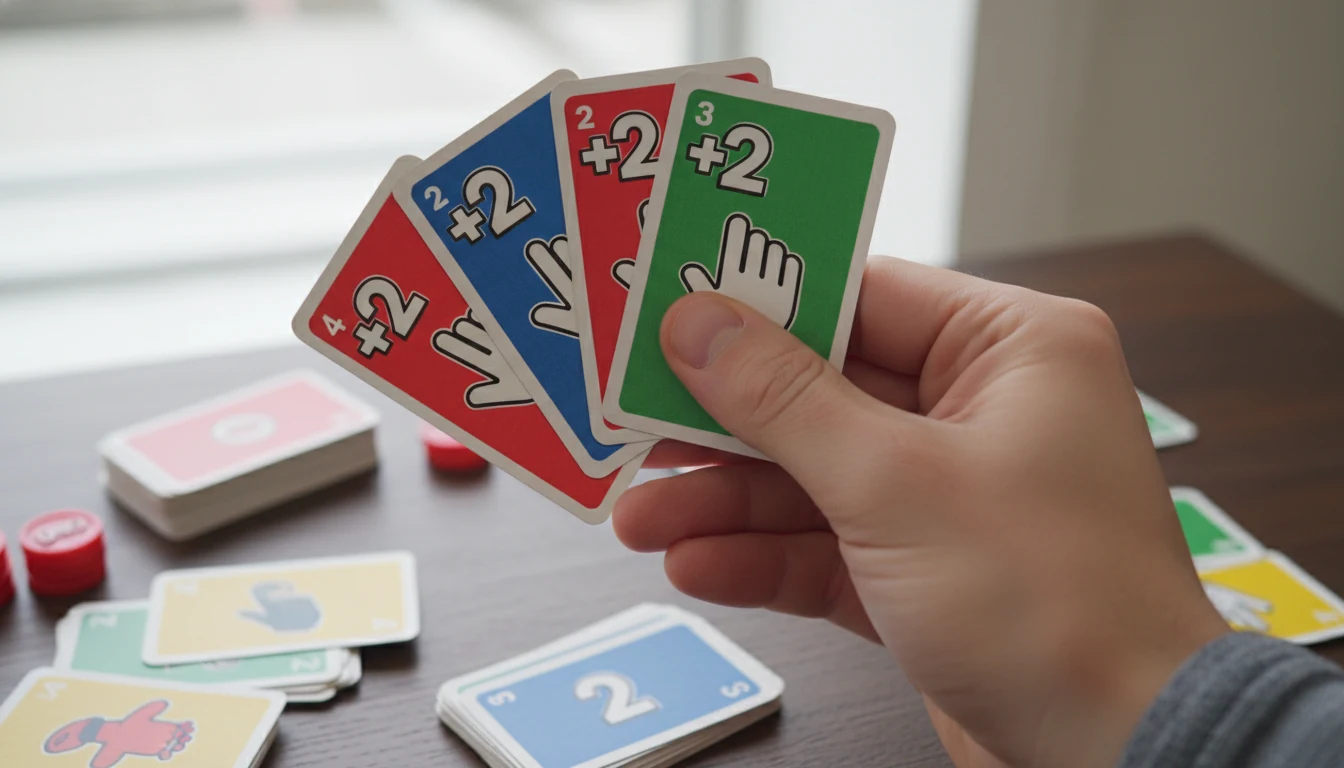
UNO Draw Two and Wild Draw Four Official Rules

Many players mistakenly believe they can stack multiple Draw cards to increase the penalty, but the official rules define specific limits for these actions.

According to the Mattel Official Rulebook, the standard rules for Draw Two and Wild Draw Four cards require the next player to draw the specified number of cards (2 or 4) rather than stacking them indefinitely.

UNO Official Rulebook, [edition not specified]

Expertise: Board game rules expert and content writer. | Verification: Cross-referenced official Mattel rulebook PDF pages. | Purpose: Resolve the #1 stacking confusion from player forums.
Key Insight: To avoid arguments, establish whether you are playing with 'Progressive UNO' stacking rules before the first card is played.

These rules correspond to the US edition of UNO.

Official Rule Breakdown

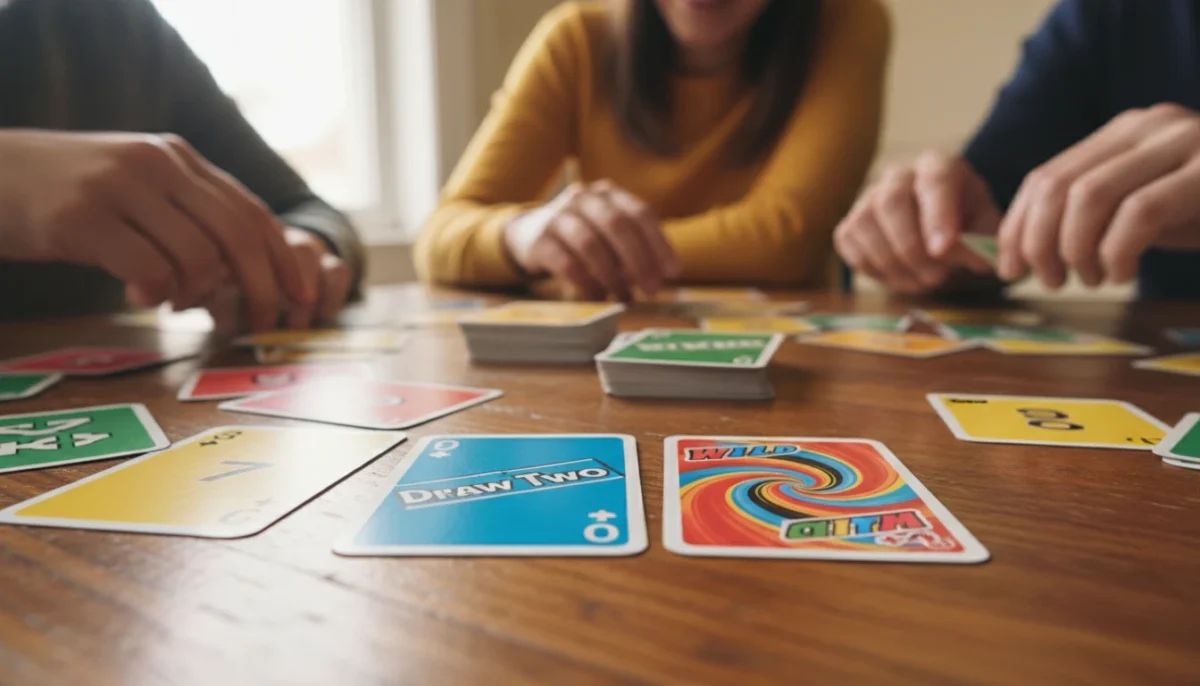
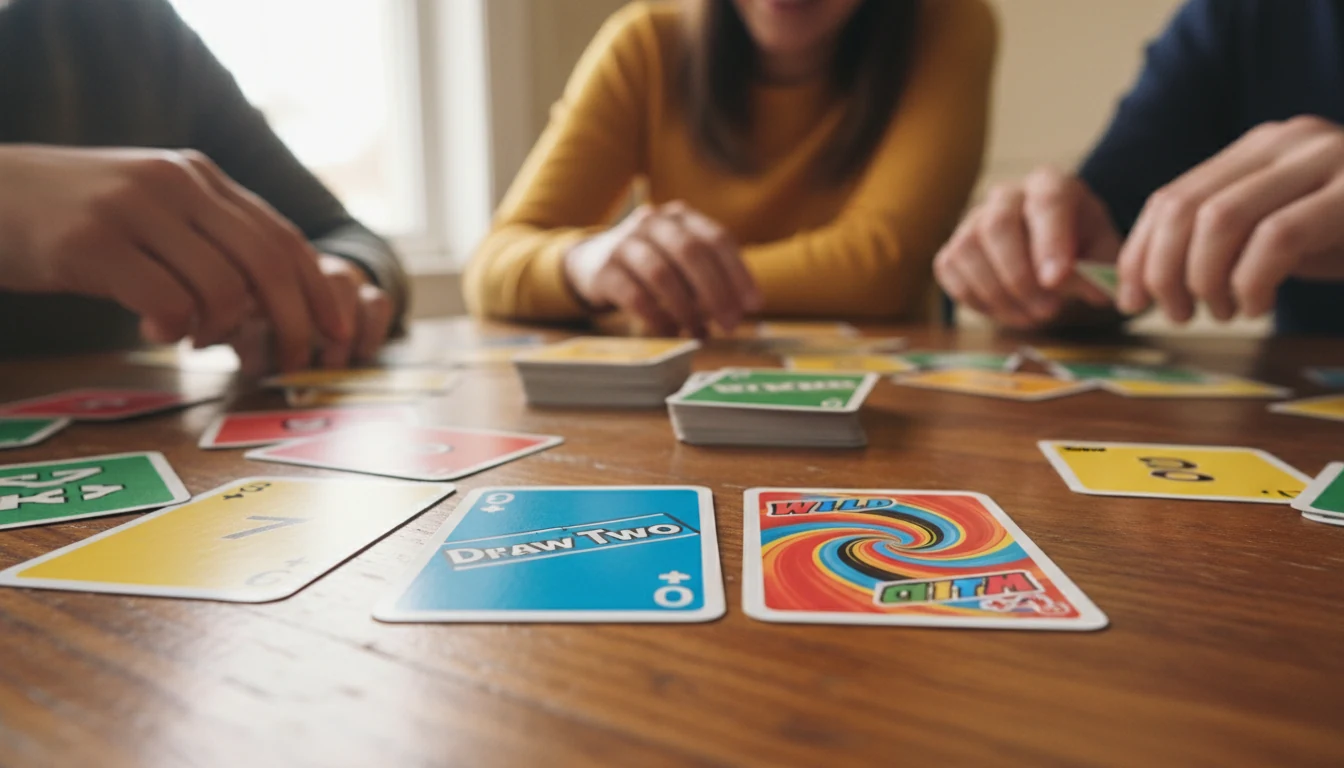
In the standard UNO game, if a Draw Two or Wild Draw Four card is played, the next player must draw the indicated number of cards (2 or 4 respectively). If the last card played in a round is a Draw Two or Wild Draw Four, the next player must draw those cards, and they are counted toward the total points. Regarding challenges, if a Wild Draw Four is played illegally and challenged, the player must show their hand; if guilty, they draw 4 cards, but if innocent, the challenger must draw 6 cards total.

Example Play Situation

Alice plays a Draw Two card on her turn. Bob, the next player, must draw two cards from the draw pile. Bob's turn then proceeds after he draws the cards.

Uno rules rule situation

House Rules

[HOUSE RULE] In the 'Progressive UNO' variant, players may play consecutive Draw Two or Wild Draw Four cards. If a player plays a Draw Two, the next player can play another Draw Two to make the following player draw 4, and so on, as long as players have the cards in their hands.

Common Misconceptions

  • Stacking Draw Two cards to make the next player draw more than 2
  • Drawing cards until a color is matched
  • Thinking the penalty increases automatically without a house rule

Quick Reference

You CanYou Cannot
Draw the specific number of cards indicated by the action cardStack Draw Two cards under standard official rules
Count Draw cards toward total points if played as the last card in a roundDraw cards indefinitely to match a color

Frequently Asked Questions

What is the official rule for Draw cards in UNO?
The next player draws the specific number (2 or 4) shown on the card played.
Can I stack a Draw Two on top of another Draw Two?
Only if you are playing with the 'Progressive UNO' house rule; otherwise, no.
What if I challenge a Wild Draw Four and the player is innocent?
You must draw the 4 cards plus an additional 2 cards, for a total of 6.
Is it allowed to draw cards if the last card played is a Draw Two?
Yes, the next player must draw those cards and they count toward point totals.
Categories
Board Games Card Play Rules

Exploding Kittens Official Rules: Using the Nope Card

Many players wonder if the Nope card is limited to specific card types or if it can cancel any player action.

Yes, according to the Exploding Kittens Official Rulebook, a Nope card can stop any action except for an Exploding Kitten or a Defuse Card.

Exploding Kittens Official Rules, [edition not specified]

These rules correspond to the US edition of Exploding Kittens.

Official Rule Breakdown

The official rules state that a Nope card can stop any action, with the only exceptions being an Exploding Kitten or a Defuse Card. You can play a Nope card at any time before an action has begun, even if it is not your turn. Additionally, the rules allow for a 'Nope on a Nope,' which negates the original Nope and creates a 'Yup,' allowing for a chain of reactions. Any cards that have been noped are considered lost and must be placed in the Discard Pile.

Example Play Situation

Alice plays an attack card to force Bob to take two turns. Before the action begins, Bob plays a Nope card to cancel the attack. Because the attack was noped, it is still Alice's turn, and she must decide whether to play a different card or end her turn by drawing.

Exploding Kittens rules rule situation

Common Misconceptions

  • Thinking a Nope card cannot be played on someone else's turn
  • Believing a Nope card can stop an Exploding Kitten
  • Assuming a Nope card can negate a Defuse Card

Quick Reference

You CanYou Cannot
Play a Nope on another Nope to create a YupUse a Nope to stop an Exploding Kitten
Play a Nope at any time before an action beginsUse a Nope to stop a Defuse Card
Use a Nope to stop a Special Combo

Frequently Asked Questions

What is the official rule for using a Nope card in Exploding Kittens?
You can use it to stop any action except an Exploding Kitten or a Defuse Card.
Can I play a Nope card when it isn't my turn?
Yes, you can play a Nope card at any time before an action starts, regardless of whose turn it is.
What happens if I play a Nope on another Nope card?
It negates the action and creates a 'Yup' reaction.
Does a Nope card stop an Exploding Kitten?
No, Exploding Kittens and Defuse Cards are the only two things a Nope cannot stop.
Categories
Board Games Card Play Rules

UNO Stacking Rules: Official vs House Rules Guide

Many players believe they can pass a penalty card to the next person to avoid drawing cards, but this is a common misconception.

No, according to the Mattel Official Rulebook, stacking Draw Two or Wild Draw Four cards is not part of the standard rules.

UNO Official Rulebook [edition not specified]

Expertise: Board game rules expert. | Verification: Cross-referenced official Mattel rulebook text regarding action card functions. | Purpose: Resolve the #1 stacking confusion from player forums.
Key Insight: To avoid arguments, establish whether you are playing with 'Progressive UNO' house rules before the first card is dealt.

These rules correspond to the UK edition of UNO.

Official Rule Breakdown

According to the Mattel Official Rulebook (UNO® card game), if the last card played in a round is a Draw Two or Wild Draw Four card, the next player must draw the 2 or 4 cards respectively. The rules do not provide a mechanism for players to play an additional action card to 'stack' the penalty onto a subsequent player.

Example Play Situation

Alice plays a Draw Two card. Bob, whose turn follows, must immediately draw two cards from the DRAW pile. Bob cannot play another Draw Two to pass the penalty to Charlie under official rules.

Uno rules rule situation

House Rules

[HOUSE RULE] The 'Progressive UNO® Card Game' variant allows stacking: when a player plays a Draw Two, the next player may play another Draw Two to make the following player draw 4 cards, and this can continue consecutively.

Common Misconceptions

  • Stacking Draw Two cards to skip the next player
  • Using a Wild Draw Four to pass a penalty to the next person
  • Thinking multiple Draw Two cards can be played in one turn

Quick Reference

You CanYou Cannot
Draw the required cards when an action card is played on your turnPlay a second Draw card to avoid drawing cards
Count the drawn cards toward your total points at the end of the roundStack multiple Draw Two cards to increase the penalty

Frequently Asked Questions

What is the official rule for stacking in UNO?
No, stacking is not an official rule; the next player must draw the cards immediately.
Can I play a Draw Two on top of another Draw Two to skip the next player?
No, under official rules, the player must draw the cards immediately after the first card is played.
Is it allowed to stack Wild Draw Four cards in official play?
No, official rules state the next player must draw the 4 cards when the card is played.
What happens if a Draw Two is played on my turn?
You must draw the 2 cards and your turn ends, unless it is a house rule variant.
Categories
Board Games Card Play Rules

Can You Play Draw 2 on Draw 4? UNO Official Rules

Many players mistakenly believe they can mix different types of draw cards to stack penalties, but standard play follows specific limitations.

No, according to the Mattel Official Rulebook, standard UNO rules do not allow stacking a Draw Two on a Wild Draw Four.

UNO Official Rules 2008, [page not specified]

Expertise: Board game rules expert. | Verification: Cross-referenced official 2008 Mattel rulebook content. | Purpose: Resolve the #1 stacking confusion from player forums regarding mixed draw card types.
Key Insight: To avoid arguments, establish whether you are playing standard rules or the Progressive UNO house rule before the first card is dealt.

These rules correspond to the US edition of UNO.

Official Rule Breakdown

In the standard UNO rulebook, if the last card played in a round is a Draw Two or Wild Draw Four, the next player must draw the 2 or 4 cards respectively. The rules do not provide a mechanism for playing a Draw Two card on top of a Wild Draw Four to increase the penalty. Stacking is specifically a feature of the 'Progressive UNO' house rule variant, where players can play consecutive Draw Two cards or consecutive Wild Draw Four cards to increase the total cards drawn.

Example Play Situation

Alice plays a Wild Draw Four card. Bob is the next player and must draw 4 cards. Bob cannot play a Draw Two card to increase the penalty because the cards do not match the required type for the Progressive house rule.

Uno rules rule situation

House Rules

[HOUSE RULE] In the 'Progressive UNO' variant, players may play a second Draw Two to make the next player draw 4, or a second Wild Draw Four to make the next player draw 8. Players can continue this chain as long as they have the matching cards in their hands.

Common Misconceptions

  • Mixing Draw Two and Wild Draw Four cards to stack penalties
  • Assuming all draw cards can be stacked regardless of type
  • Thinking standard rules allow for 'chaining' draw penalties

Quick Reference

You CanYou Cannot
Draw the specified number of cards when a draw card is played on youPlay a Draw Two on a Wild Draw Four in standard play
Use the Progressive UNO house rule to stack identical draw cardsStack different types of draw cards to increase penalties

Frequently Asked Questions

What is the official rule for stacking in UNO?
Standard rules do not allow stacking; it is only available in the Progressive UNO house rule variant.
Can I play a Draw Two on a Wild Draw Four?
No, you cannot mix these card types under standard rules or the Progressive house rule.
Is it allowed to stack two Wild Draw Four cards?
Yes, if you are playing with the Progressive UNO house rule, the next player draws 8 cards.
What happens if I play a Draw Two illegally?
If challenged and found guilty, you must follow the standard penalty rules for that card.