
Categories
Board Games FAQ & Clarifications

Clue Official Rules: How to Disprove a Suggestion

Many players are unsure of the specific sequence required when a player attempts to disprove a suggestion in Clue.

According to the Cluedo Official Rulebook, the player in turn must show one clue card that refutes the suspicion if possible.

Cluedo Instructions, [page not specified]

These rules correspond to the US edition of Clue.

Official Rule Breakdown

To disprove a suggestion, the player whose turn it is must, if possible, show one clue card that refutes the suspicion. This card can be a room, a person, or a weapon. If the player in turn is unable to show a clue card, the enquiry passes to the next player in turn until a card is shown. If no player has a card to show, the player who made the suggestion has successfully isolated one or more of the 'Murder Cards' (Cluedo Instructions, [page not specified]).

Step-by-Step

  1. Step 1: A player makes a suggestion (e.g., Person, Weapon, Room).
  2. Step 2: The player whose turn it is must check if they have a clue card that refutes that specific suggestion.
  3. Step 3: If the player has a refuting card, they show it to the player who made the suggestion.
  4. Step 4: If the player in turn cannot show a card, the turn passes to the next player to see if they can show a refuting card.
  5. Step 5: This process continues until a card is shown or all players have been checked.

Example Play Situation

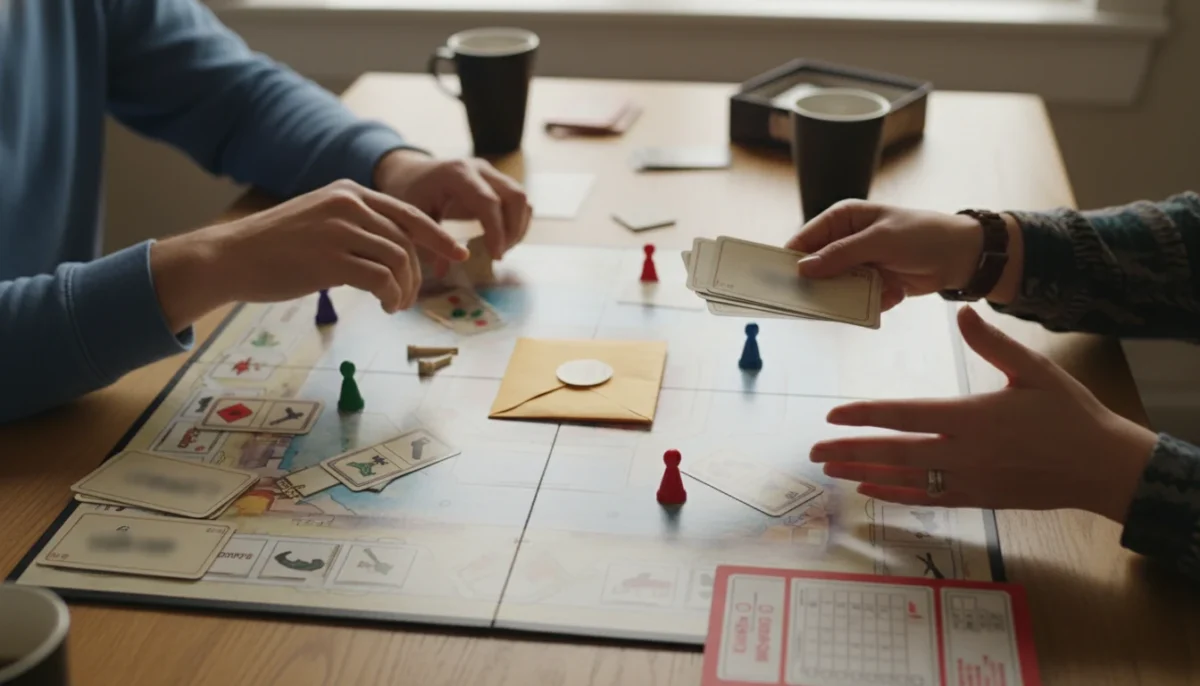
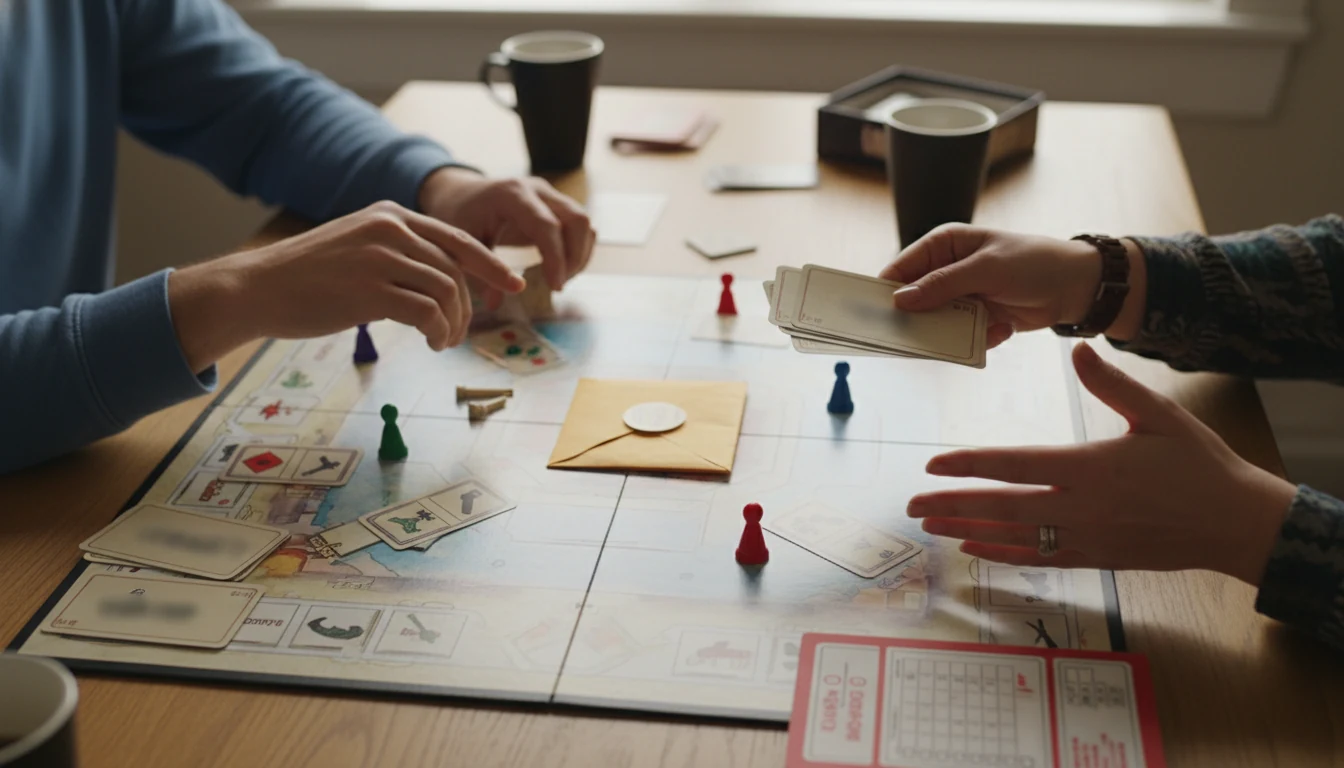
Alice suggests that Colonel Mustard killed the murder with the Wrench in the Library. Bob is next in turn; he looks at his cards and shows Alice the Wrench card to disprove the suggestion. Since Bob showed a card, the enquiry ends.

Clue/Cluedo rules rule situation

Common Misconceptions

  • Thinking only the person who made the suggestion can show cards
  • Assuming you must show all your cards to disprove a suggestion
  • Believing the turn skips everyone if the first player can't show a card

Quick Reference

You CanYou Cannot
Show one clue card to refute a suspicionShow more than one card to disprove a single suggestion
Pass the enquiry to the next player if you cannot show a cardStop the enquiry if the first player in turn has no cards to show
Use a room, person, or weapon card to disprove a suggestion

Frequently Asked Questions

What is the official rule for disproving a suggestion in Clue?
The player in turn must show one clue card that refutes the suspicion if they have one.
Can I show a room card to disprove a weapon suggestion?
Yes, any card (room, person, or weapon) that refutes the suspicion can be shown.
What happens if the first player cannot show a card?
The enquiry passes to the next player in turn until a card is shown.
When is a suggestion considered proven?
A suggestion is proven if no player is able to show a card that refutes it.
Categories
Board Games Card Play Rules

Clue Official Rules: How Many Cards to Show During Turns

Many players mistakenly believe they can show multiple cards to help or hinder a suspect during a Clue inquiry.

According to the Clue Official Rulebook, yes, you must show only one card.

Clue/Cluedo Instructions, [edition not specified], [page not specified]

These rules correspond to the US edition of Clue.

Official Rule Breakdown

When a player enters a room and asks a Clue question regarding a suspect, weapon, and room, the player to their left must attempt to answer. If that player possesses any of the cards mentioned in the question, they must show one of them to the inquiring player secretly. The rules explicitly state that they should never show more than one card. If the player does not have any of the requested cards, they state 'I cannot answer' and the enquiry passes to the next player until one card has been shown.

Step-by-Step

  1. Step 1: Enter a room and ask a Clue question about one suspect, one weapon, and the room entered.
  2. Step 2: The player to the left attempts to answer the question.
  3. Step 3: If the player has a matching card, they show exactly one card secretly to the asker.
  4. Step 4: If the player has no matching cards, the enquiry passes to the next player in turn.
  5. Step 5: The process continues until one card has been shown or no one can answer.

Example Play Situation

Alice enters the Library and asks, 'Was it Mustard with the Wrench in the Library?'. Bob, sitting to her left, looks at his cards and sees he has the Wrench. Bob shows Alice only the Wrench card secretly, and Alice crosses it off her Clue sheet.

Clue/Cluedo rules rule situation

Common Misconceptions

  • Showing multiple cards to help a player avoid being caught
  • Thinking you can show a card if you don't have the specific one asked for
  • Assuming the enquiry stops if the first player cannot answer

Quick Reference

You CanYou Cannot
Show exactly one card to refute a suspicionShow more than one card to the inquiring player
Cross off the card you have been shown on your Clue sheetShow your cards to anyone other than the player making the suggestion
Pass the enquiry to the next player if you cannot answer

Frequently Asked Questions

What is the official rule for showing cards in Clue?
A player must show only one card that refutes the suspicion asked by another player.
Can I show two cards if I have both the suspect and the weapon?
No, you should never show more than one card to the player asking the question.
What happens if the person on my left has no cards to show?
The enquiry passes to the next player in turn until one card is shown.
How many cards should I show when answering a Clue question?
You must show only one card to the player who made the suggestion.
Categories
Board Games Endgame & Winning

Clue Official Rules: End Game and Accusation Guide

Many players mistakenly believe that a wrong accusation ends the entire game immediately, but the official rules specify different consequences for the individual player.

According to the Waddingtons Games Official Rulebook, if an accusation is wrong, the player is out of the game.

Clue/Cluedo Instructions, [edition not specified], [page not specified]

These rules correspond to the US edition of Clue.

Official Rule Breakdown

When a player makes an accusation and it is incorrect, that specific player is declared out of the game. While the player can no longer make suggestions or accusations, they must continue to participate in the role of a suspect and show their cards to other players when requested. If the game is being played via the computer edition, the program may offer to take over the cards of the player who has been declared out of the game.

Step-by-Step

  1. Step 1: The player moves their piece to the center of the board to make an accusation.
  2. Step 2: The player reads the accusation out loud, naming one suspect, one weapon, and one room.
  3. Step 3: The player checks the cards in the Envelope secretly.
  4. Step 4: If the accusation is wrong, the player is removed from active play but remains a suspect.

Example Play Situation

Alice makes an accusation of Professor Plum in the Library with the Wrench. Bob checks the Envelope and finds the accusation is incorrect. Alice is now out of the game, but when Bob makes a suggestion later, Alice must still show him her cards if she has them.

Clue/Cluedo rules rule situation

Common Misconceptions

  • A wrong accusation ends the game for everyone
  • A player who makes a wrong accusation cannot show cards to others
  • The game only ends when someone wins

Quick Reference

You CanYou Cannot
Continue showing cards to other players even if you are outDo not make any further questions or accusations once you are out
Remain a suspect for other players' investigationsDo not tell other players which cards you got wrong
Check the Envelope secretly after making an accusation

Frequently Asked Questions

What is the official rule for a wrong accusation in Clue?
The player is out of the game but must still act as a suspect and show cards.
Does the game end if I guess the wrong murderer?
No, the game continues until a correct accusation is made or everyone guesses incorrectly.
Can an eliminated player still show their cards?
Yes, they must show cards as appropriate to help other players' investigations.
What happens if every player makes an incorrect accusation?
The murder remains unsolved and players reveal the cards in the Envelope to see who won.
Categories
Board Games Card Play Rules

Cluedo Official Rules: How to Show Disprove Cards

Many players wonder if they must reveal their clue cards to the entire table when responding to a suggestion.

According to the Hasbro Official Rulebook, clue cards must be shown secretly to the player making the suggestion.

Cluedo Instructions, [edition not specified], Page 6

These rules correspond to the UK edition of Cluedo.

Official Rule Breakdown

In Cluedo, when a player makes a suggestion or enquiry, the player to their left must attempt to answer. If that player possesses any of the cards mentioned in the suggestion, they must show one of them to the player who made the suggestion secretly. The rulebook specifies that they should never show more than one card. This ensures that the identity of the cards remains hidden from the other players at the table.

Step-by-Step

  1. Step 1: A player makes a suggestion involving a suspect, a weapon, and a room.
  2. Step 2: The player to the left of the suggester checks their hand for the requested cards.
  3. Step 3: If the player has a matching card, they show exactly one card secretly to the suggester.
  4. Step 4: If the player does not have the card, they say 'I cannot answer' and the enquiry passes to the next player.

Example Play Situation

Alice suggests that it was Miss Scarlett with the Rope in the Library. Bob, sitting to Alice's left, looks at his cards and sees the Rope. Bob shows the Rope card secretly to Alice only, while the other players remain unaware of which card was shown.

Clue/Cluedo rules rule situation

Common Misconceptions

  • Showing the card to everyone at the table
  • Showing multiple cards to disprove a suggestion
  • Thinking the whole table sees the card

Quick Reference

You CanYou Cannot
Show exactly one card to the suggesterShow more than one card to the suggester
Keep your own cards secret from othersShow your cards to the entire group
Cross off cards on your sheet when seenReveal your cards to players who did not make the suggestion

Frequently Asked Questions

What is the official rule for showing cards in Cluedo?
Cards must be shown secretly to the player who made the suggestion.
Do I have to show my card to everyone if I can answer?
No, you only show one card privately to the person asking the question.
Can I show two cards to disprove a suggestion?
No, you must only show one card to the player making the suggestion.
What happens if I don't have any of the cards asked for?
You simply say 'I cannot answer' and the turn passes to the next player.
Categories
Board Games Rules & Disputes

Cluedo Official Rules: Disproving Suggestions Guide

Many players mistakenly believe that a suggestion must always be refuted by another player, but the rules account for situations where no cards can be shown.

According to the Cluedo Official Rulebook, if no one can disprove a suggestion, the player has isolated one or more of the Murder Cards.

Cluedo Instructions, [edition not specified], Page 7

These rules correspond to the UK edition of Cluedo.

Official Rule Breakdown

In Cluedo, when a player makes a suggestion, the player in turn must, if possible, show one clue card which refutes that suspicion. This card may be a room, person, or weapon. If the next player in turn is unable to show a clue card, the enquiry passes on to the next player after that until one card has been shown. If no one has a card to show, the player making the suggestion has isolated one or more of the 'Murder Cards' (Cluedo Instructions, Page 7).

Step-by-Step

  1. Step 1: A player makes a suggestion consisting of a suspect, a weapon, and a room.
  2. Step 2: The player in turn must attempt to show one clue card that refutes the suggestion.
  3. Step 3: If the first player cannot show a card, the enquiry passes to the next player in turn.
  4. Step 4: This process continues until a card is shown or all players have been unable to refute the suggestion.

Example Play Situation

Alice suggests that Miss Scarlett used the Dagger in the Library. Bob is asked to show a card, but he has no cards matching those items. The enquiry passes to Charlie, who also cannot show a card. Since no one can disprove the suggestion, Alice has successfully isolated the Murder Cards.

Clue/Cluedo rules rule situation

Common Misconceptions

  • Thinking the turn skips everyone if the first person can't show a card
  • Believing a suggestion must be refuted to be valid
  • Assuming you can only show a card if it is your turn

Quick Reference

You CanYou Cannot
Pass the enquiry to the next player if you cannot show a cardDo not assume a suggestion is wrong just because no one can show a card
Show a room, person, or weapon card to refute a suspicionDo not show more than one card to refute a single suggestion
Use the isolated cards to make a full accusation

Frequently Asked Questions

What is the official rule for a suggestion in Cluedo when no one can disprove it?
The player has isolated one or more of the Murder Cards.
Can I show a weapon card to refute a suggestion?
Yes, a card shown may be a room, person, or weapon.
What happens if the player in turn cannot show a clue card?
The enquiry passes to the next player in turn until a card is shown.
How do I know if I have found the murderer?
If no one can show a card to refute your suggestion, you have isolated the Murder Cards.
Categories
Board Games Turn Order & Actions

Cluedo Official Rules: How to Make a Suggestion

Many players wonder if they must physically move suspect and weapon tokens into a room when making a suggestion, but the official mechanics clarify this process.

According to the Waddingtons Cluedo Official Rulebook, yes, you must bring the suspect and weapon tokens into the room.

Cluedo Instructions, [edition not specified], [page not specified]

These rules correspond to the UK edition of Cluedo.

Official Rule Breakdown

When a player enters a room, they may make a suggestion about the crime by calling a suspect and a weapon into that room for enquiries. According to the Cluedo Instructions (specifically the 'On your turn, roll, move and enter a room' section), the player must bring the suspect's character token and the weapon token they are asking about into the room with them. After the suggestion is made, the player to the left must attempt to show a clue card to refute the suspicion. The character and weapon tokens remain in the room after the suggestion is made, though if a character token belongs to another player, that player can ask a question on their next turn without moving.

Step-by-Step

  1. Step 1: Roll the dice and move your character token into a room.
  2. Step 2: Select one suspect and one weapon to include in your suggestion.
  3. Step 3: Physically move the chosen suspect token and weapon token into the room you have entered.
  4. Step 4: State your suggestion (e.g., 'Was it Scarlet, with the Rope in the Garage?').
  5. Step 5: The player to your left must show you one clue card if they have it.

Example Play Situation

Alice rolls the dice and moves her token into the Kitchen. She then brings the Professor Plum token and the Dagger token into the Kitchen to suggest the murder happened there. Bob, sitting to her left, shows Alice the Plum card to refute the suggestion.

Clue/Cluedo rules rule situation

Common Misconceptions

  • Thinking you can make a suggestion without moving the tokens into the room
  • Assuming you can move through multiple rooms in one turn to reach a room
  • Believing you must roll an exact number to enter a room

Quick Reference

You CanYou Cannot
Bring the suspect and weapon tokens into the room with youDo not move diagonally across the board
Stop moving immediately upon entering a roomDo not leave a room in the same move you entered it
Ask about suspects, weapons, and rooms you haven't crossed off your sheetDo not move your piece through a square occupied by another piece

Frequently Asked Questions

What is the official rule for making a suggestion in Cluedo?
You must enter a room, bring the suspect and weapon tokens into it, and then ask your question.
Do I have to move the suspect token when I ask a question?
Yes, you must bring the suspect's character token and the weapon token into the room with you.
Can I make a suggestion if I don't enter a room?
No, you must enter a room and then you can make a suggestion about the crime.
What happens to the tokens after I make a suggestion?
The tokens stay in the room, but if a player's character token was moved, they can ask a question on their next turn.
Categories
Board Games FAQ & Clarifications

Clue Official Rules: Suggestion vs Accusation Guide

Many players confuse the investigative process of making a suggestion with the final, high-stakes act of making an accusation.

According to the Cluedo Official Rulebook, a suggestion is used to gather information by asking players to show cards, whereas an accusation is a final attempt to solve the murder.

Cluedo Instructions, [edition not specified], [page not specified]

These rules correspond to the US edition of Clue.

Official Rule Breakdown

In Clue, a suggestion occurs when a player asks a question to see if another player can refute a suspicion by showing a clue card (room, person, or weapon). If the player making the suggestion has isolated one or more 'Murder Cards' because no one can show a card, they have gained information. Conversely, an accusation is made when a player feels sure they have examined all clues. This is done in secret; if the accusation is correct, the program exposes the 'Murder Cards' and declares a winner. If the accusation is wrong, that player is out of the game and only remains to act as a suspect or show cards.

Step-by-Step

  1. Step 1: Move your piece to a room to make a suggestion.
  2. Step 2: Name a suspect, a weapon, and the room to suggest they are involved.
  3. Step 3: The player in turn must show one clue card to refute the suspicion if possible.
  4. Step 4: If you are certain of the solution, move to the center of the board to make a formal accusation.

Example Play Situation

Alice moves to the Dining Room and makes a suggestion that it was Professor Plum with the Wrench. Bob shows Alice a card to refute the suspicion. Later, Alice moves to the center of the board and makes an accusation of Miss Scarlett in the Library; because she is wrong, Alice is out of the game.

Clue/Cluedo rules rule situation

Common Misconceptions

  • Thinking an accusation is just another way to ask a question
  • Believing you can make an accusation from any room on the board
  • Confusing being 'out of the game' with losing the entire match

Quick Reference

You CanYou Cannot
You can make notes using the cursor keys and colorsYou cannot make an accusation unless you are in the center of the board
You can make an accusation in secretYou cannot pass through a room and into another on a single turn
You can show a card to refute a suggestionYou cannot move your piece diagonally

Frequently Asked Questions

What is the official rule for making a suggestion in Clue?
A suggestion is an enquiry where a player shows a card to refute a suspicion.
How does an accusation differ from a suggestion?
Suggestions gather clues, while accusations are final guesses that can end your participation.
What happens if my accusation is wrong?
You are out of the game but remain available to show cards to other players.
Can I make an accusation from any room?
No, you must get to the space in the center of the board first.