Categories
Board Games FAQ & Clarifications

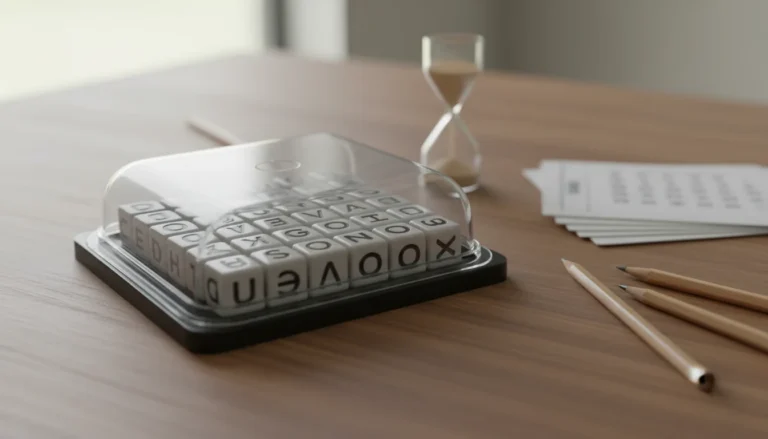
Codenames Official Rules: What Happens When Touching Assassin

Many players mistakenly believe that touching the assassin simply ends a turn, but the official rules dictate a much more severe consequence.

According to the Czech Games Edition Official Rulebook, if a field operative touches the assassin, the game ends immediately and that team loses.

Codenames Official Rules [edition not specified]

Expertise: Board game rules expert. | Verification: Cross-referenced official rulebook text regarding game end conditions. | Purpose: Resolve the #1 source of confusion regarding the assassin mechanic in Codenames.
Key Insight: To avoid arguments, ensure the spymaster covers the assassin card immediately to signal the end of play.

These rules correspond to the UK edition of Codenames.

Official Rule Breakdown

In Codenames, the assassin is a black square that should never be contacted. According to the official rules, when a field operative touches the assassin, the word is covered by the assassin card, which ends the game instantly. The team that made contact with the assassin is declared the loser. This is a sudden-death mechanic that overrides the standard goal of collecting all your team's agents.

Step-by-Step

  1. Step 1: A field operative selects a codename on the table.
  2. Step 2: The operative touches the chosen word.
  3. Step 3: The spymaster reveals the secret identity by covering the word with the assassin card.
  4. Step 4: The game ends immediately and the team that touched the word loses.

Example Play Situation

Alice is playing as a field operative for the Red Team. Her spymaster, Bob, gives the clue 'Water: 2'. Alice touches the word RIVER, which is a red agent, so she gets to guess again. However, Alice then touches the word HORN, which is the assassin. Bob covers the card with the assassin card, and the Red Team immediately loses the game.

Codenames rules rule situation

Common Misconceptions

  • Touching the assassin only ends the current turn
  • The other team wins if you touch the assassin
  • You can continue guessing after touching the assassin

Quick Reference

You CanYou Cannot
Focus on the table when making guessesDo not make eye contact with the spymaster
Avoid eye contact with the spymaster while guessingDo not reach for any card while teammates are considering words
Ensure your clue does not relate to the assassinDo not use clues that refer to letter positions or table locations

Frequently Asked Questions

What is the official rule for touching the assassin in Codenames?
The game ends immediately and the team that touched the assassin loses.
Does the other team win if I touch the assassin?
Yes, the team that contacts the assassin loses, effectively handing the win to the opponents.
Can I keep guessing if I hit the assassin?
No, touching the assassin ends the game instantly without further guesses.
What happens if a spymaster gives an invalid clue?
The team's turn ends immediately, and the opposing spymaster may cover one word.
Categories
Board Games FAQ & Clarifications

Codenames Clue Meaning Rules: Official Codenames Guide

Many players mistakenly believe they can use any word that sounds similar to a target word, but official play requires a connection to the word's actual meaning.

According to the Codenames Official Rulebook, clues must refer to the meanings of words rather than just their sounds.

Codenames Official Rules, [edition not specified]

Expertise: Board game rules expert. | Verification: Cross-referenced official rulebook text regarding soundalikes and rhymes. | Purpose: Resolve the #1 confusion regarding soundalike and rhyme validity in Codenames.
Key Insight: To avoid arguments, establish whether your group allows soundalike clues before the first round starts.

These rules correspond to the US edition of Codenames.

Official Rule Breakdown

In traditional Codenames, soundalike clues are permitted only if they are about the meanings of words. For example, 'snail' is a valid clue for 'MAIL' because it is a common phrase, but 'snail' is not a valid clue for 'SCALE' unless the group has a specific contextual reason (like weighing snails). Similarly, 'night' is not a valid clue for 'ARMOR' or 'MOON' based on sound alone. However, the Codenames app allows all sounda…

Example Play Situation

Alice is the spymaster and Bob is a field operative. Alice wants to hint at 'GOLD' and 'CAPTAIN' using the clue 'L-e-a-d'. Bob correctly identifies the connection to the meaning of the metal and the leadership role, rather than just the sound of the word.

Codenames rules rule situation

House Rules

[HOUSE RULE] Some groups allow 'soundalike' clues (e.g., using 'night' for 'KNIGHT') or allow all types of rhyming clues to increase difficulty or fun, provided the opposing spymaster agrees.

Common Misconceptions

  • Using a word just because it rhymes without a semantic link.
  • Using soundalikes like 'knight' for 'night' in the standard tabletop version.
  • Thinking all rhymes are automatically valid regardless of meaning.

Quick Reference

You CanYou Cannot
Use rhymes that refer to the actual meaning of the wordsUse soundalikes that only mimic the sound (e.g., 'night' for 'knight')
Use soundalikes if they relate to the word's meaningUse any form of a word visible on the table
Spell out your clue if requested by an opponentUse melodies or accents as a clue

Frequently Asked Questions

What is the official rule for clues in Codenames?
Clues must be one word and must refer to the meanings of the target words.
Can I use a rhyme if it only sounds similar but has no meaning connection?
No, rhymes are only valid when they refer to the meanings of the words.
Is it allowed to use 'night' as a clue for 'KNIGHT'?
No, in traditional play, soundalikes are only valid if they relate to meaning.
What happens if I use a word that is part of a compound word on the table?
That is an invalid clue; you cannot use any part of a compound word visible on the table.
Categories
Board Games FAQ & Clarifications

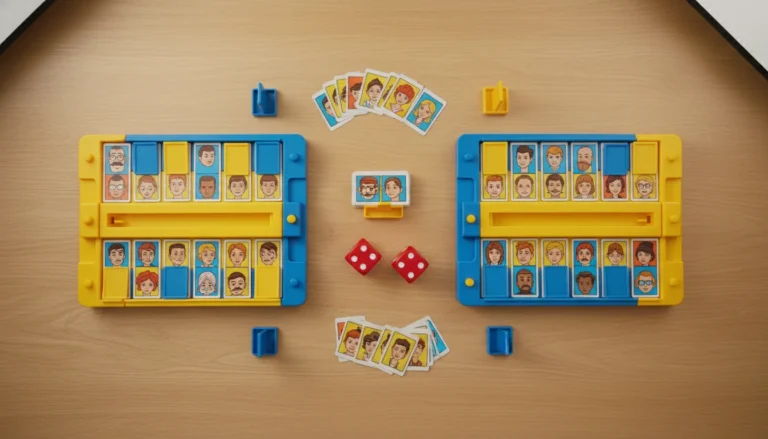
Cluedo Official Rules: Wrong Accusation & Elimination

Many players mistakenly believe they can continue making suggestions or accusations after they have been eliminated from the game.

According to the Waddingtons Cluedo Official Rulebook, if an accusation is wrong, the player is out of the game.

Cluedo Instructions, Waddingtons Computer Edition, [page not specified]

These rules correspond to the UK edition of Cluedo.

Official Rule Breakdown

When a player makes an accusation and it is incorrect, that player is immediately removed from active play. According to the Cluedo Instructions, the player is 'out of the game and only participates in order to be a suspect and to show cards as appropriate.' This means the player can no longer make suggestions, move their piece, or make further accusations, but they must still show clue cards when requested by other players during their turns to help solve the mystery.

Step-by-Step

  1. Step 1: The player makes a full accusation (suspect, weapon, and room) in secret.
  2. Step 2: The program or players reveal the 'Murder Cards' in the envelope.
  3. Step 3: If the accusation does not match the cards, the player is declared out of the game.
  4. Step 4: The player remains in the game only to serve as a suspect and show cards when prompted.

Example Play Situation

Alice makes an accusation of Professor Plum with the Spanner in the Library. Bob reveals the cards and shows that the actual murderer is Miss Scarlett. Alice is now out of the game, but when Bob makes a suggestion later, Alice must still show him a card if she has one.

Clue/Cluedo rules rule situation

Common Misconceptions

  • Thinking you can keep playing after a wrong accusation
  • Believing you are completely removed from the table after being out
  • Assuming you can make further suggestions after being eliminated

Quick Reference

You CanYou Cannot
You can show cards to other players when askedYou cannot make any further questions
You can act as a suspect for others' investigationsYou cannot make any further accusations
You cannot move your piece on the board

Frequently Asked Questions

What is the official rule for making a wrong accusation in Cluedo?
The player is out of the game but must still show cards as a suspect.
Can I keep playing if I guess the wrong person?
No, you are out of the game, though you still show cards for others.
What happens if I fail to show a card during a suggestion?
You are penalised by being out of the game, similar to a wrong accusation.
Do I have to show my cards after I am eliminated?
Yes, you participate only to be a suspect and show cards as appropriate.
Categories
Board Games FAQ & Clarifications

Clue Official Rules: How to Disprove a Suggestion

Many players are unsure of the specific sequence required when a player attempts to disprove a suggestion in Clue.

According to the Cluedo Official Rulebook, the player in turn must show one clue card that refutes the suspicion if possible.

Cluedo Instructions, [page not specified]

These rules correspond to the US edition of Clue.

Official Rule Breakdown

To disprove a suggestion, the player whose turn it is must, if possible, show one clue card that refutes the suspicion. This card can be a room, a person, or a weapon. If the player in turn is unable to show a clue card, the enquiry passes to the next player in turn until a card is shown. If no player has a card to show, the player who made the suggestion has successfully isolated one or more of the 'Murder Cards' (Cluedo Instructions, [page not specified]).

Step-by-Step

  1. Step 1: A player makes a suggestion (e.g., Person, Weapon, Room).
  2. Step 2: The player whose turn it is must check if they have a clue card that refutes that specific suggestion.
  3. Step 3: If the player has a refuting card, they show it to the player who made the suggestion.
  4. Step 4: If the player in turn cannot show a card, the turn passes to the next player to see if they can show a refuting card.
  5. Step 5: This process continues until a card is shown or all players have been checked.

Example Play Situation

Alice suggests that Colonel Mustard killed the murder with the Wrench in the Library. Bob is next in turn; he looks at his cards and shows Alice the Wrench card to disprove the suggestion. Since Bob showed a card, the enquiry ends.

Clue/Cluedo rules rule situation

Common Misconceptions

  • Thinking only the person who made the suggestion can show cards
  • Assuming you must show all your cards to disprove a suggestion
  • Believing the turn skips everyone if the first player can't show a card

Quick Reference

You CanYou Cannot
Show one clue card to refute a suspicionShow more than one card to disprove a single suggestion
Pass the enquiry to the next player if you cannot show a cardStop the enquiry if the first player in turn has no cards to show
Use a room, person, or weapon card to disprove a suggestion

Frequently Asked Questions

What is the official rule for disproving a suggestion in Clue?
The player in turn must show one clue card that refutes the suspicion if they have one.
Can I show a room card to disprove a weapon suggestion?
Yes, any card (room, person, or weapon) that refutes the suspicion can be shown.
What happens if the first player cannot show a card?
The enquiry passes to the next player in turn until a card is shown.
When is a suggestion considered proven?
A suggestion is proven if no player is able to show a card that refutes it.
Categories
Board Games FAQ & Clarifications

Cluedo False Accusation Official Rules & Gameplay Guide

Many players mistakenly believe that a wrong accusation allows you to continue making suggestions, but the official rules impose a strict penalty.

According to the Waddingtons Cluedo Official Rulebook, if an accusation is wrong, the player is immediately out of the game.

Cluedo Instructions, Computer Edition, [page not specified]

These rules correspond to the UK edition of Cluedo.

Official Rule Breakdown

When a player makes a full accusation and it is incorrect, that player is removed from active play. According to the Cluedo instructions, the player is 'out of the game' and only participates in order to be a suspect and to show cards as appropriate. If the accusation is correct, the program (or the game setup) exposes the 'Murder Cards' and declares the winning player. If everyone makes an incorrect accusation, the murder remains unsolved, and the cards are revealed to see which suspect escaped.

Step-by-Step

  1. Step 1: Move your piece to the center of the board to prepare for an accusation.
  2. Step 2: State your accusation out loud, naming one suspect, one weapon, and one room.
  3. Step 3: Check the cards in the Envelope secretly.
  4. Step 4: If the cards match your accusation, you win the game.
  5. Step 5: If the cards do not match, you are removed from the game as an active player.

Example Play Situation

Alice reaches the centre of the board and accuses Colonel Mustard with the Spanner in the Library. Bob checks the Envelope and finds the cards do not match Alice's guess. Alice is now out of the game, but she must still show her cards if another player makes a suggestion involving her.

Clue/Cluedo rules rule situation

Common Misconceptions

  • Thinking you can keep playing after a wrong accusation
  • Believing you can make a second accusation if the first one fails
  • Assuming you can win by guessing even if you are already out of the game

Quick Reference

You CanYou Cannot
You can show cards to others even after being eliminatedYou cannot make further accusations once you are out of the game
You can act as a suspect after a wrong accusationYou cannot ask further questions once you are out of the game
You can win by identifying the murderer, weapon, and room in one accusationYou cannot reveal which cards you got wrong to the other players

Frequently Asked Questions

What is the official rule for a false accusation in Cluedo?
The player is out of the game but remains available to show cards as a suspect.
Can I keep playing if my accusation is wrong?
No, you are removed from active play and can only show cards when prompted.
What happens if every player makes a wrong accusation?
The murder remains unsolved and the cards are revealed to see who escaped.
Do I have to show my cards after I am out of the game?
Yes, you participate only to be a suspect and show cards as appropriate.
Categories
Board Games FAQ & Clarifications

Clue Official Rules: Suggestion vs Accusation Guide

Many players confuse the investigative process of making a suggestion with the final, high-stakes act of making an accusation.

According to the Cluedo Official Rulebook, a suggestion is used to gather information by asking players to show cards, whereas an accusation is a final attempt to solve the murder.

Cluedo Instructions, [edition not specified], [page not specified]

These rules correspond to the US edition of Clue.

Official Rule Breakdown

In Clue, a suggestion occurs when a player asks a question to see if another player can refute a suspicion by showing a clue card (room, person, or weapon). If the player making the suggestion has isolated one or more 'Murder Cards' because no one can show a card, they have gained information. Conversely, an accusation is made when a player feels sure they have examined all clues. This is done in secret; if the accusation is correct, the program exposes the 'Murder Cards' and declares a winner. If the accusation is wrong, that player is out of the game and only remains to act as a suspect or show cards.

Step-by-Step

  1. Step 1: Move your piece to a room to make a suggestion.
  2. Step 2: Name a suspect, a weapon, and the room to suggest they are involved.
  3. Step 3: The player in turn must show one clue card to refute the suspicion if possible.
  4. Step 4: If you are certain of the solution, move to the center of the board to make a formal accusation.

Example Play Situation

Alice moves to the Dining Room and makes a suggestion that it was Professor Plum with the Wrench. Bob shows Alice a card to refute the suspicion. Later, Alice moves to the center of the board and makes an accusation of Miss Scarlett in the Library; because she is wrong, Alice is out of the game.

Clue/Cluedo rules rule situation

Common Misconceptions

  • Thinking an accusation is just another way to ask a question
  • Believing you can make an accusation from any room on the board
  • Confusing being 'out of the game' with losing the entire match

Quick Reference

You CanYou Cannot
You can make notes using the cursor keys and colorsYou cannot make an accusation unless you are in the center of the board
You can make an accusation in secretYou cannot pass through a room and into another on a single turn
You can show a card to refute a suggestionYou cannot move your piece diagonally

Frequently Asked Questions

What is the official rule for making a suggestion in Clue?
A suggestion is an enquiry where a player shows a card to refute a suspicion.
How does an accusation differ from a suggestion?
Suggestions gather clues, while accusations are final guesses that can end your participation.
What happens if my accusation is wrong?
You are out of the game but remain available to show cards to other players.
Can I make an accusation from any room?
No, you must get to the space in the center of the board first.
Categories
Board Games FAQ & Clarifications

Exploding Kittens Stealing Rules: Official Card Combo Guide

Many players mistakenly believe that only Cat Cards can be used to steal, but the official rules allow for broader combinations.

According to the Exploding Kittens Official Rulebook, you can steal a random card from another player by playing matching pairs.

Exploding Kittens Official Rules, [edition not specified], [page not specified]

These rules correspond to the US edition of Exploding Kittens.

Official Rule Breakdown

To steal a card, you must play matching pairs. While Cat Cards (cards with no instructions) must be played as matching pairs to steal a random card from another player, the rules also specify that playing matching pairs of any cards with the same title (such as a pair of Skip Cards or a pair of Shuffle Cards) functions as a special combo. These pairs allow you to pick another player and steal a random card from their hand. According to the manual, these cards are powerless on their own but become effective when collected as a pair.

Step-by-Step

  1. Step 1: Collect two cards that share the same title (such as two Cat Cards or two Skip Cards).
  2. Step 2: Play the matching pair as a single action.
  3. Step 3: Select any other player at the table.
  4. Step 4: Steal one random card from that player's hand.

Example Play Situation

Alice plays a pair of Cat Cards. She chooses Bob as her target and steals a random card from his hand. Bob then draws a card to end his turn.

Exploding Kittens rules rule situation

Common Misconceptions

  • Thinking only Cat Cards can be used for stealing
  • Believing you can choose which specific card to steal from a player's hand
  • Thinking you must play cards one by one instead of as a pair

Quick Reference

You CanYou Cannot
You can play matching pairs of Cat Cards to steal a cardYou cannot use a single card to steal
You can use pairs of other titled cards like Skip Cards to steal a cardYou cannot choose a specific card from a player's hand; it must be random
You can play as many cards as you like before drawing to end your turn

Frequently Asked Questions

What is the official rule for stealing cards in Exploding Kittens?
Play matching pairs of cards to steal a random card from another player's hand.
Can I use two Skip Cards to steal a card?
Yes, matching pairs of any cards with the same title can be used as a special combo.
Do Cat Cards have instructions for stealing?
No, they have no instructions but must be played in matching pairs to steal a card.
How do I end my turn in Exploding Kittens?
You end your turn by drawing a card from the top of the Draw Pile.
Categories
Board Games FAQ & Clarifications

Exploding Kittens Official Rules: Nope Card Timing Guide

Many players mistakenly believe a Nope card can be played to stop an Exploding Kitten after it has already been drawn, but the timing is strictly regulated.

According to the Exploding Kittens Official Rulebook, a Nope card can be played at any time before an action has begun.

Exploding Kittens Official Rules [edition not specified]

These rules correspond to the US edition of Exploding Kittens.

Official Rule Breakdown

The official rules state that a Nope card can be played at any time before an action has begun, even if it is not your turn. This card is used to stop any action except for an Exploding Kitten or a Defuse Card. Once an action has commenced, the window to play a Nope has closed. Additionally, the rules specify that you can play a Nope on another Nope to negate it and create a 'Yup'.

Example Play Situation

Alice plays a See the Future card to peek at the deck. Bob immediately plays a Nope card to cancel her action. Because the action had not yet been completed, the Nope successfully negates Alice's ability to see the cards.

Exploding Kittens rules rule situation

Common Misconceptions

  • Thinking a Nope can stop an Exploding Kitten card
  • Believing a Nope can be played after an action has already started
  • Assuming a Nope card can only be played on your own turn

Quick Reference

You CanYou Cannot
Play a Nope at any time before an action beginsUse a Nope to stop an Exploding Kitten
Play a Nope on another Nope to create a YupUse a Nope to stop a Defuse Card
Use a Nope to stop most special actionsPlay a Nope after an action has already started

Frequently Asked Questions

What is the official rule for playing a Nope in Exploding Kittens?
You can play it any time before an action starts, even if it isn't your turn.
Can I use a Nope card to stop an Exploding Kitten?
No, the rules state you cannot use a Nope to stop an Exploding Kitten or a Defuse Card.
Is it too late to play a Nope if the card is already being played?
Yes, the Nope must be played before the action has begun to be valid.
What happens if I play a Nope on another Nope?
It negates the card and creates a 'Yup'.
Categories
Board Games FAQ & Clarifications

Sushi Go! Chopsticks Exchange Rules: Official Guide

Many players mistakenly believe the Chopsticks card stays on the table to be used again immediately, but the official rules require it to be passed on.

According to the Sushi Go! Official Rulebook, the Chopsticks card must be returned to your hand before the hand-passing phase occurs.

Sushi Go! Official Rulebook, [page not specified]

These rules correspond to the US edition of Sushi Go!.

Official Rule Breakdown

The process for using Chopsticks involves a specific sequence to ensure the card is passed to the next player. If a player has a Chopsticks card in front of them, they first choose one card from their hand as usual. Before other players reveal their cards, the player calls out 'Sushi Go!' and selects a second card from their hand, placing both face-down on the table. Once all players reveal their chosen cards, the player who used the Chopsticks must put that card back into their hand. This ensures the Chopsticks card is included in the hand that is then passed to the player on their left, allowing others to potentially use it in subsequent turns. While a player may have multiple Chopsticks cards in front of them, they may only use one per turn (Source: Sushi Go! Official Rulebook, [page not specified]).

Step-by-Step

  1. Step 1: Choose the first card you wish to keep from your hand as usual.
  2. Step 2: Before others reveal their cards, call out 'Sushi Go!' and select a second card from your hand.
  3. Step 3: Place both selected cards face-down on the table.
  4. Step 4: Wait for all players to reveal their chosen cards.
  5. Step 5: Put the Chopsticks card back into your hand before passing your remaining hand to the left.

Example Play Situation

Alice has a Chopsticks card in front of her. She chooses a Tempura and then calls 'Sushi Go!' to take a second card, a Sashimi. After everyone reveals their cards, Alice puts her Chopsticks card back into her hand so that Bob receives it when she passes her hand.

Sushi Go! rules rule situation

Common Misconceptions

  • Thinking the Chopsticks card stays on the table for the next turn
  • Using multiple Chopsticks cards at once to take more than two cards
  • Revealing the second card before calling 'Sushi Go!'

Quick Reference

You CanYou Cannot
Call out 'Sushi Go!' before revealing cardsDo not leave the Chopsticks card on the table during the pass
Return the Chopsticks card to your hand before passingDo not take three cards even if you have two Chopsticks cards
Use only one Chopsticks card per turn

Frequently Asked Questions

What is the official rule for using Chopsticks in Sushi Go!?
Call 'Sushi Go!' to take two cards, then return the Chopsticks card to your hand before passing.
Can I use two Chopsticks cards at the same time?
No, you may only use one Chopsticks card per turn.
When do I put the Chopsticks card back in my hand?
You put it back after everyone reveals their cards but before hands are passed.
Do I keep the Chopsticks card in front of me if I have two?
Yes, you can have multiple, but you only use one per turn.
Categories
Board Games FAQ & Clarifications

Ticket to Ride Game End Rules: Official Rules Guide

Many players mistakenly believe the game ends only when everyone runs out of trains, but specific scoring milestones can trigger an immediate conclusion.

According to the Days of Wonder Official Rulebook, the game ends immediately when a player completes their sixth Ticket or when a player places their last train on the board.

Ticket to Ride Official Rulebook, [edition not specified], [page not specified]

These rules correspond to the UK edition of Ticket to Ride.

Official Rule Breakdown

The game end triggers are defined by two specific conditions in the Ticket to Ride rulebook. First, the game ends immediately when a player completes their sixth Ticket; in this scenario, that player is declared the winner and receives the Golden Ticket as a reward. Second, the game also ends if a player places their last train on the board. In this second case, the winner is determined by the player who has the most completed Tickets. If there is a tie among players, all tied players win together.

Example Play Situation

Alice completes her sixth Destination Ticket during her turn. The game ends immediately, and Alice is declared the winner. Bob and Charlie must now count their points, but Alice takes the Golden Ticket reward regardless.

Ticket to Ride rules rule situation

Common Misconceptions

  • The game only ends when all players run out of plastic trains
  • The player with the most points always wins even if someone completes 6 tickets
  • Ties result in a single winner being chosen by a coin flip

Quick Reference

You CanYou Cannot
Check if a player has completed six TicketsDo not continue playing turns after a player hits six Tickets
Check if a player has placed their last train on the boardDo not assume the player with the most points wins if a player completes six Tickets
Calculate total points for all players if the game ends via the last train rule

Frequently Asked Questions

What is the official rule for game end in Ticket to Ride?
The game ends when a player completes six Tickets or places their last train on the board.
Does the game end if I run out of trains?
Yes, if placing those last trains is your final move, the game ends immediately.
Who wins if someone completes six Destination Tickets?
That specific player wins the game and receives the Golden Ticket reward.
What happens if there is a tie at the end of the game?
If players are tied for the most completed Tickets, all tied players win together.