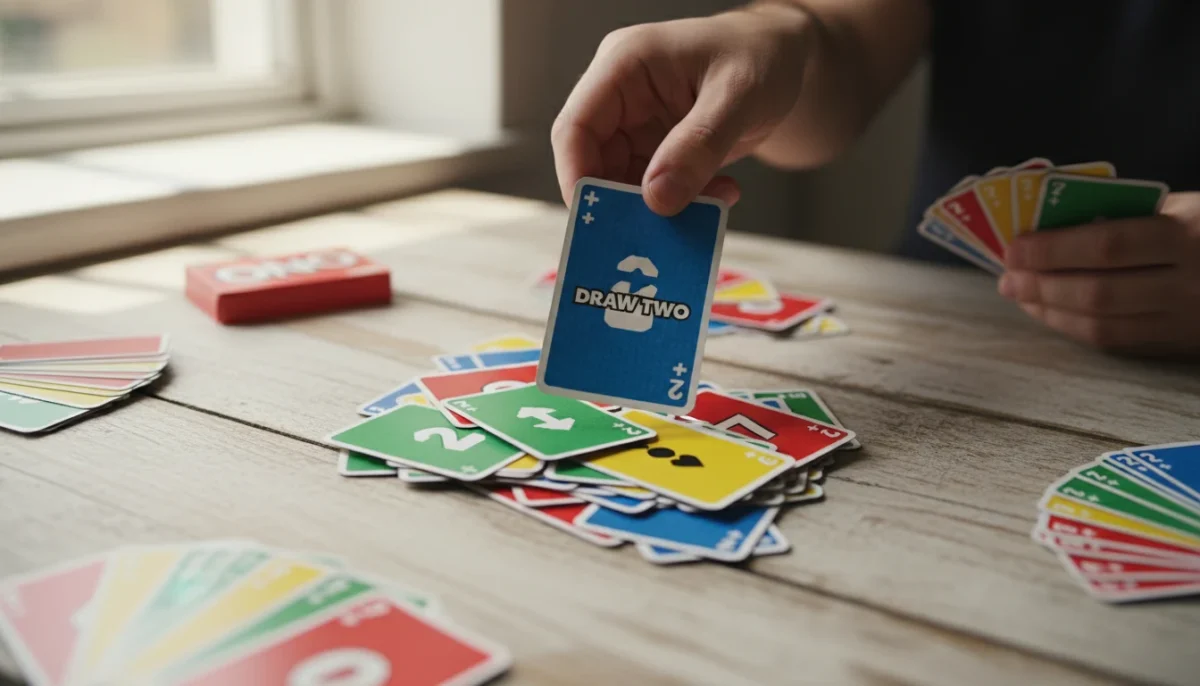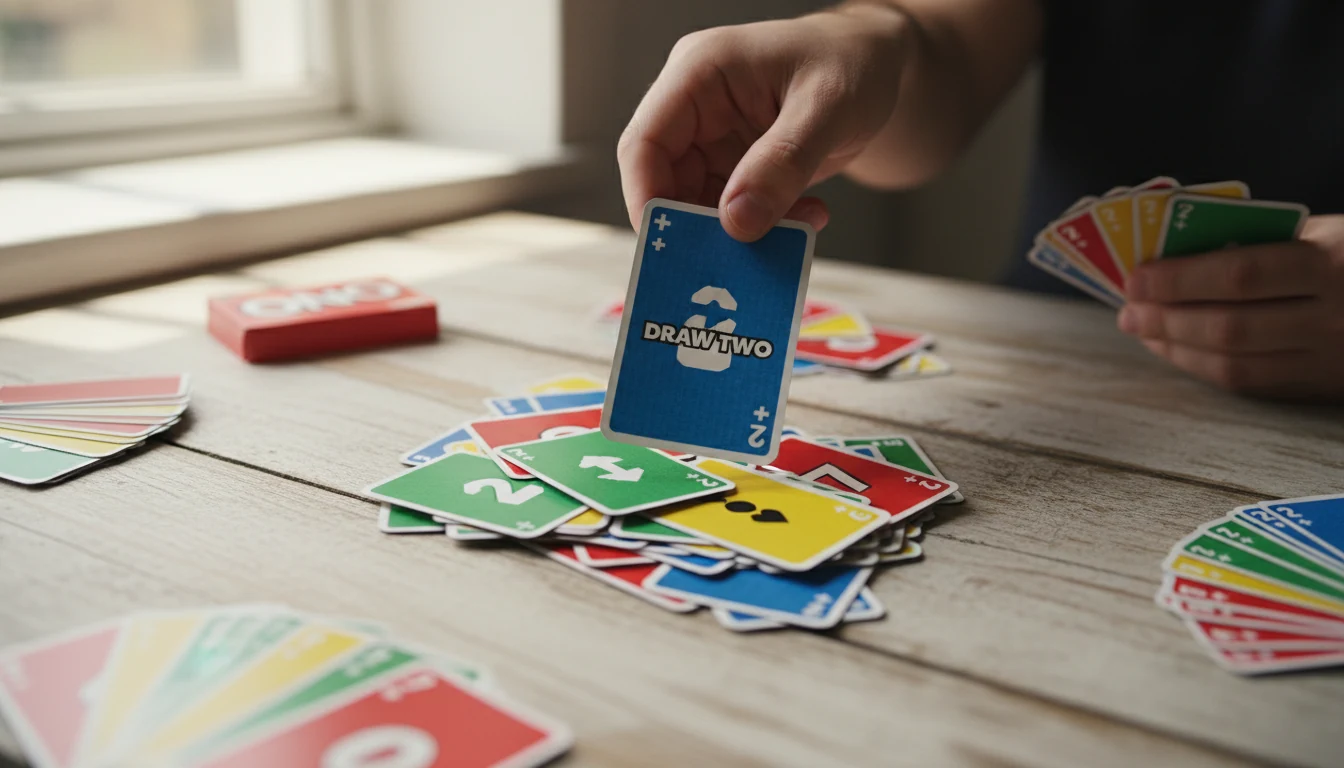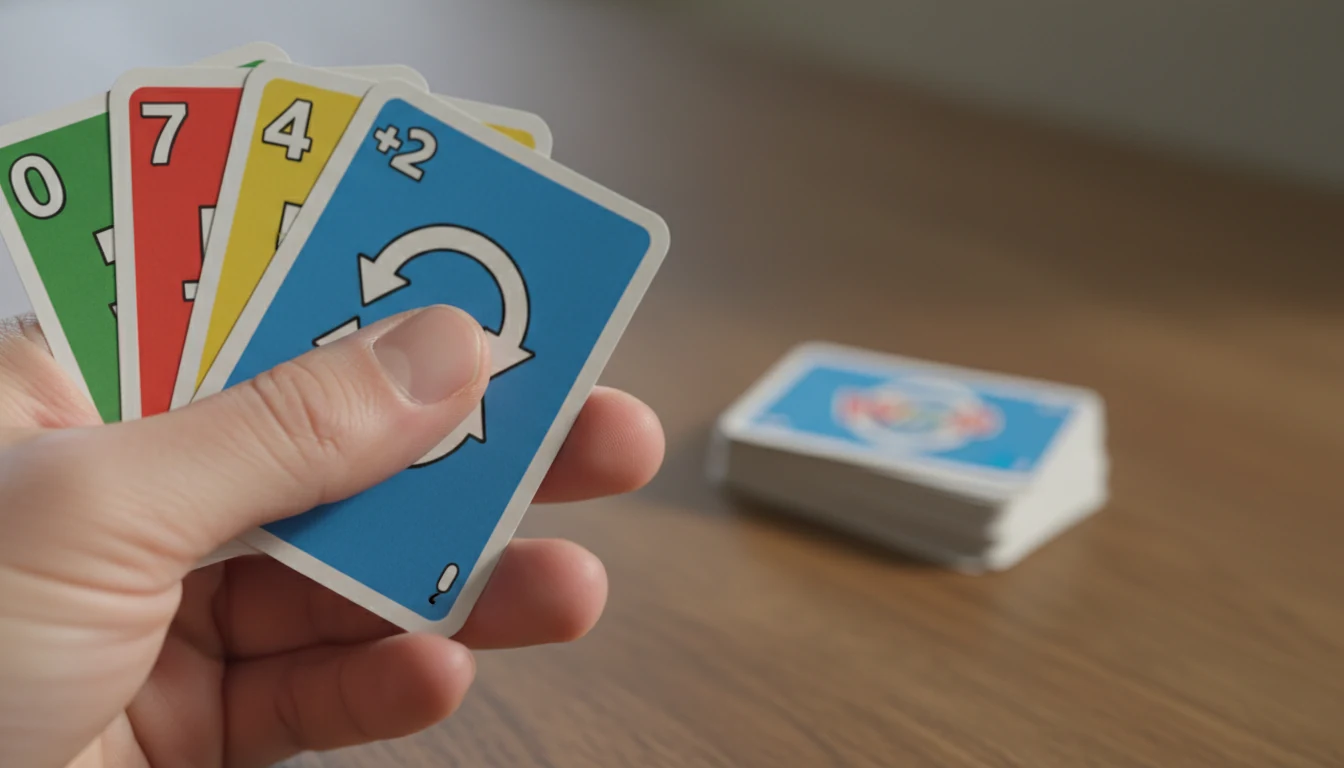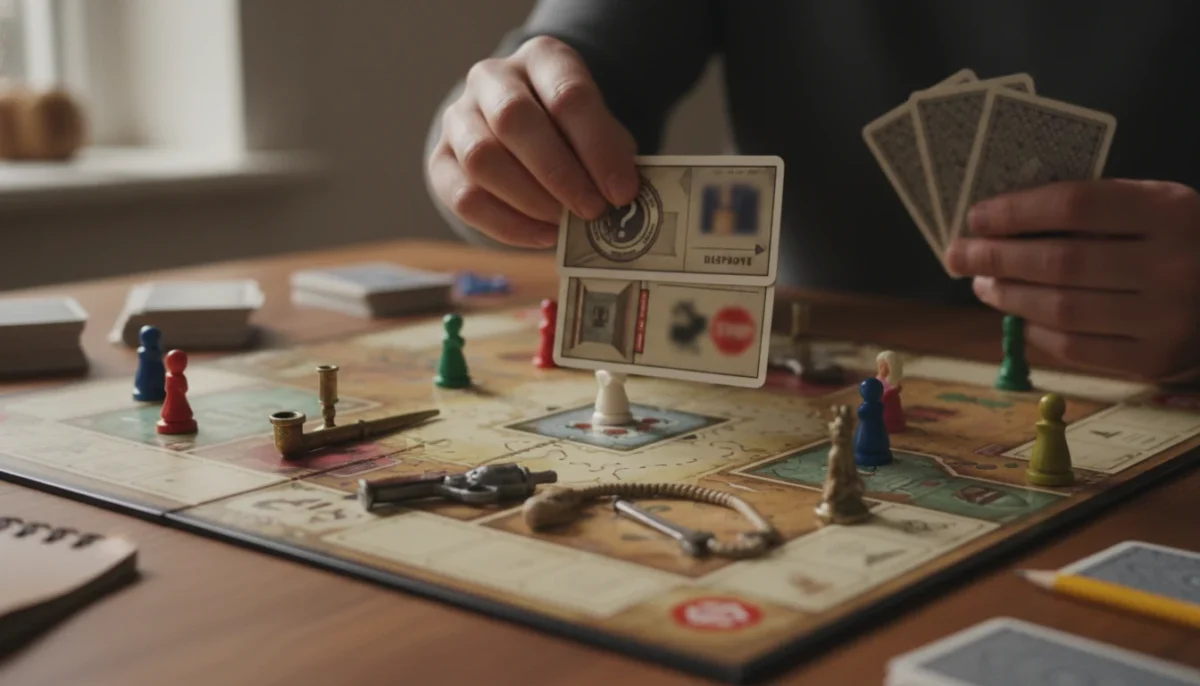
Categories
Board Games Card Play Rules

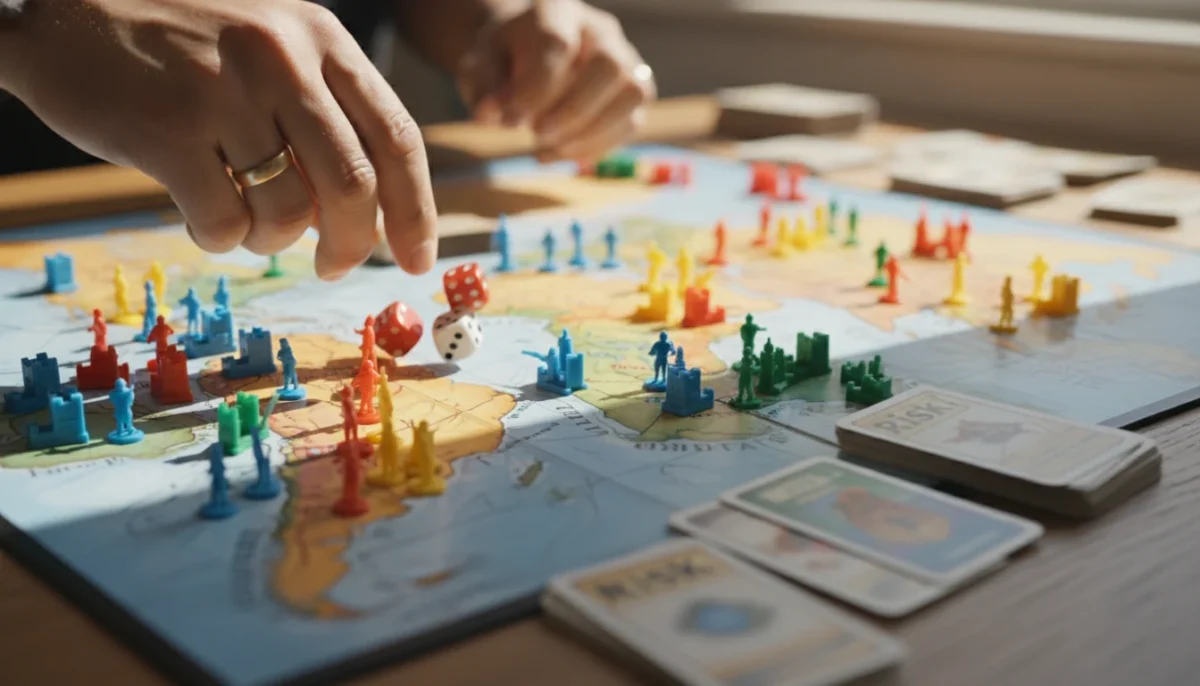
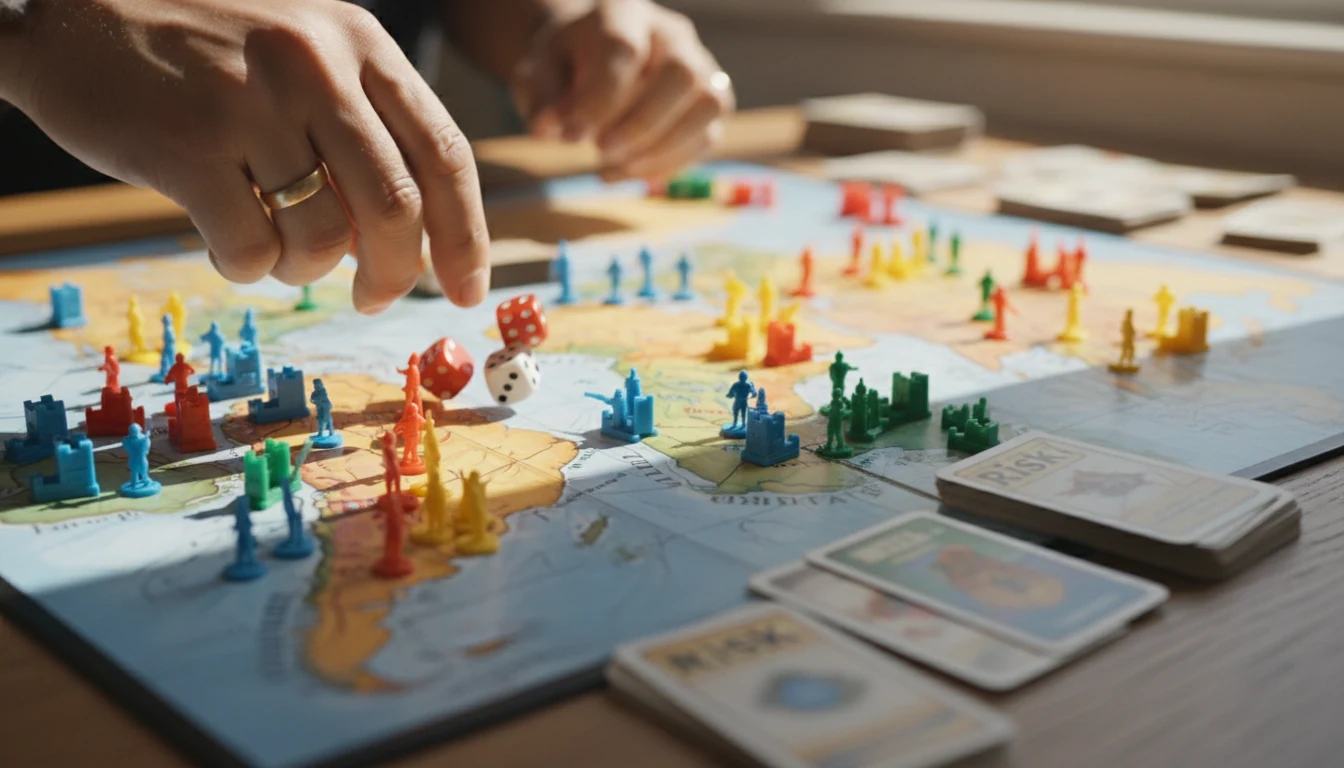
Risk Card Trade-In Rules: Official Risk Rules Guide

Many players mistakenly believe they can hold onto Risk cards indefinitely to build up a massive army, but the rules actually mandate trading them in under certain conditions.

According to the Hasbro Gaming Official Rulebook, you must trade in at least one set if you have 5 or 6 cards at the beginning of your turn.

Risk Official Rules 2022, [page not specified]

Expertise: Board game rules expert. | Verification: Cross-referenced official 2022 rulebook text. | Purpose: Resolve the #1 confusion regarding mandatory Risk card trading.
Key Insight: To avoid arguments, ensure players count their cards clearly at the start of every turn.

These rules correspond to the UK edition of Risk.

Official Rule Breakdown

Regarding the requirement to trade in Risk cards, the official rules state that while you may choose to wait after collecting a set of 3, a mandate exists if your hand grows. Specifically, if you have 5 or 6 cards at the beginning of your turn, you must trade in at least one set. If you possess two sets within those 5 or 6 cards, you may choose to trade in a second set as well. The value of these sets is determined by the total number of sets traded in by any player throughout the game, not just by the individual player (Risk Rules 2022, [page not specified]).

Example Play Situation

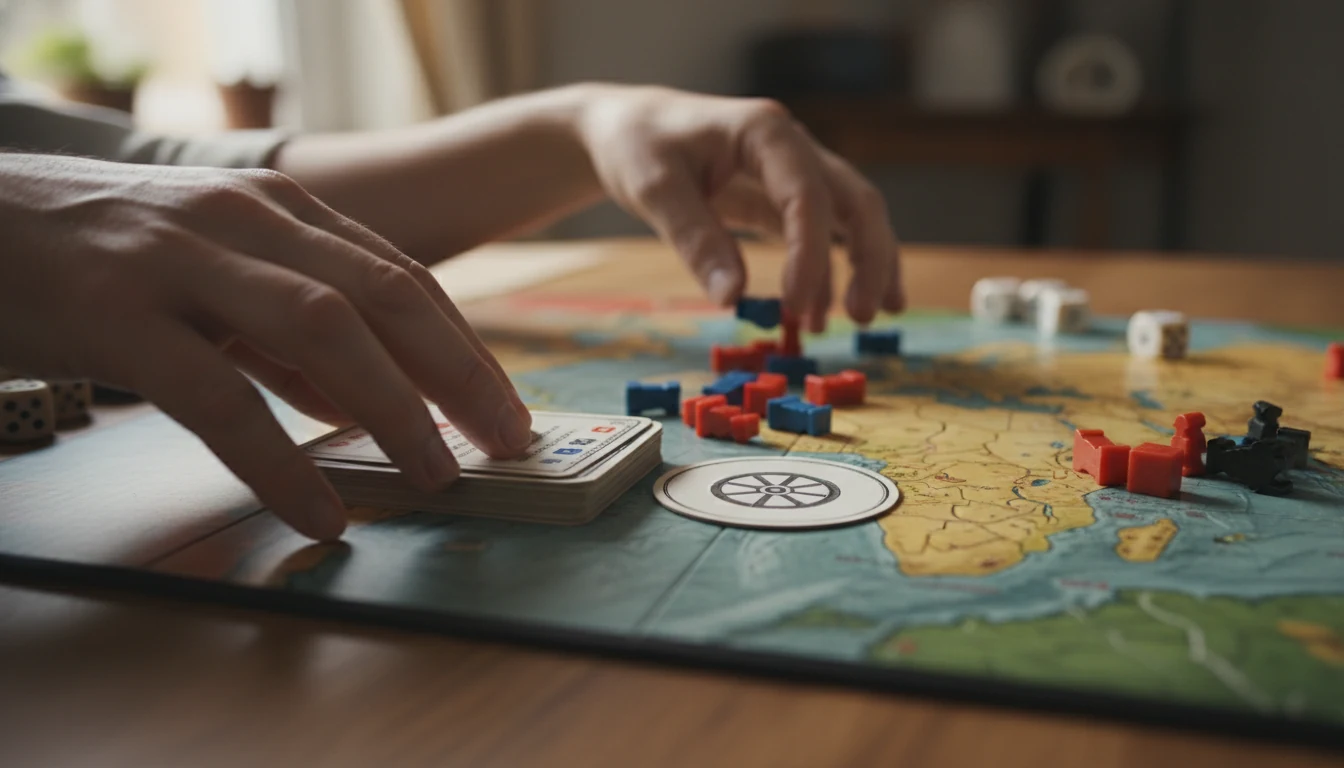
Alice has 5 Risk cards at the start of her turn. According to the rules, she must trade in one set of three cards to receive armies. Bob, on his turn, has 3 cards and chooses to wait, which is permitted because he has not reached the 5-card threshold.
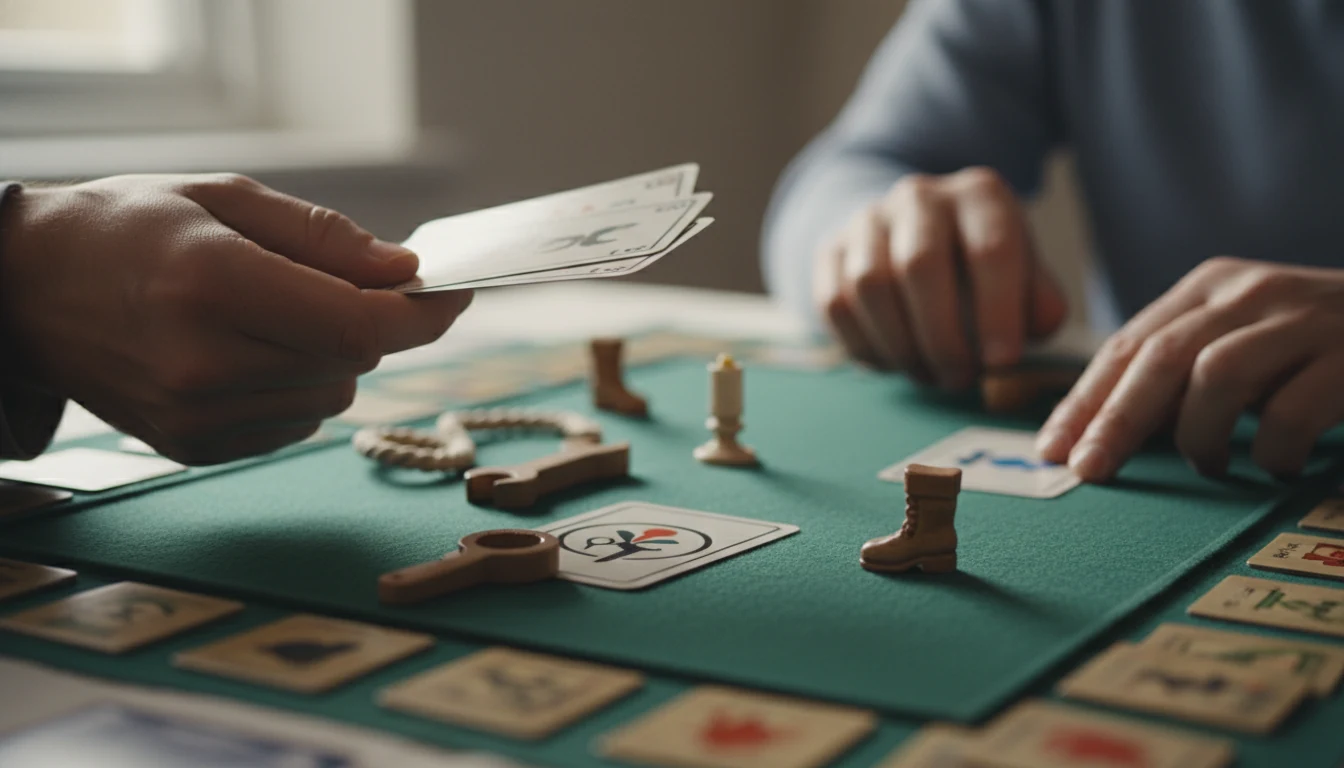
Risk rules rule situation

Common Misconceptions

  • Waiting to trade in cards is always allowed
  • You only trade in cards when you want to attack
  • The value of a set depends only on your own trades

Quick Reference

You CanYou Cannot
Trade in at least one set if you have 5 or 6 cardsDo not hold 5 or 6 cards without trading in a set
Trade in a second set if you have two sets within 5 or 6 cardsDo not assume your first trade is worth the same as the tenth
Use the bottom edge of the board to track the next trade value

Frequently Asked Questions

What is the official rule for trading cards in Risk?
You may trade sets at the start of your turn, but must trade if you hold 5 or 6 cards.
Can I keep all my Risk cards until I am ready to attack?
No, if you have 5 or 6 cards at the start of your turn, you must trade in at least one set.
What happens if I have 6 cards and two different sets?
You must trade in at least one set, but you are permitted to trade in both sets if you wish.
Does the number of armies I get depend on my own sets?
No, the value increases based on the total number of sets traded in by all players.
Categories
Board Games Card Play Rules

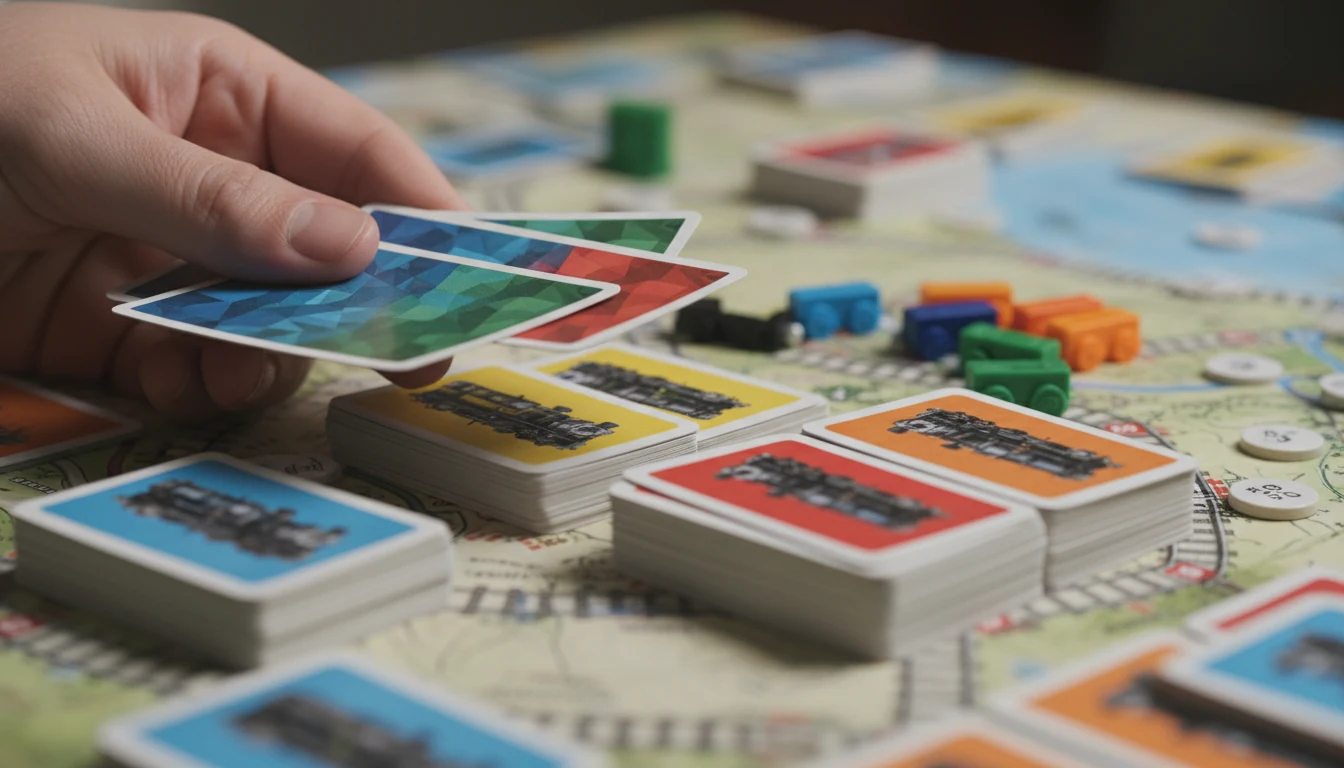
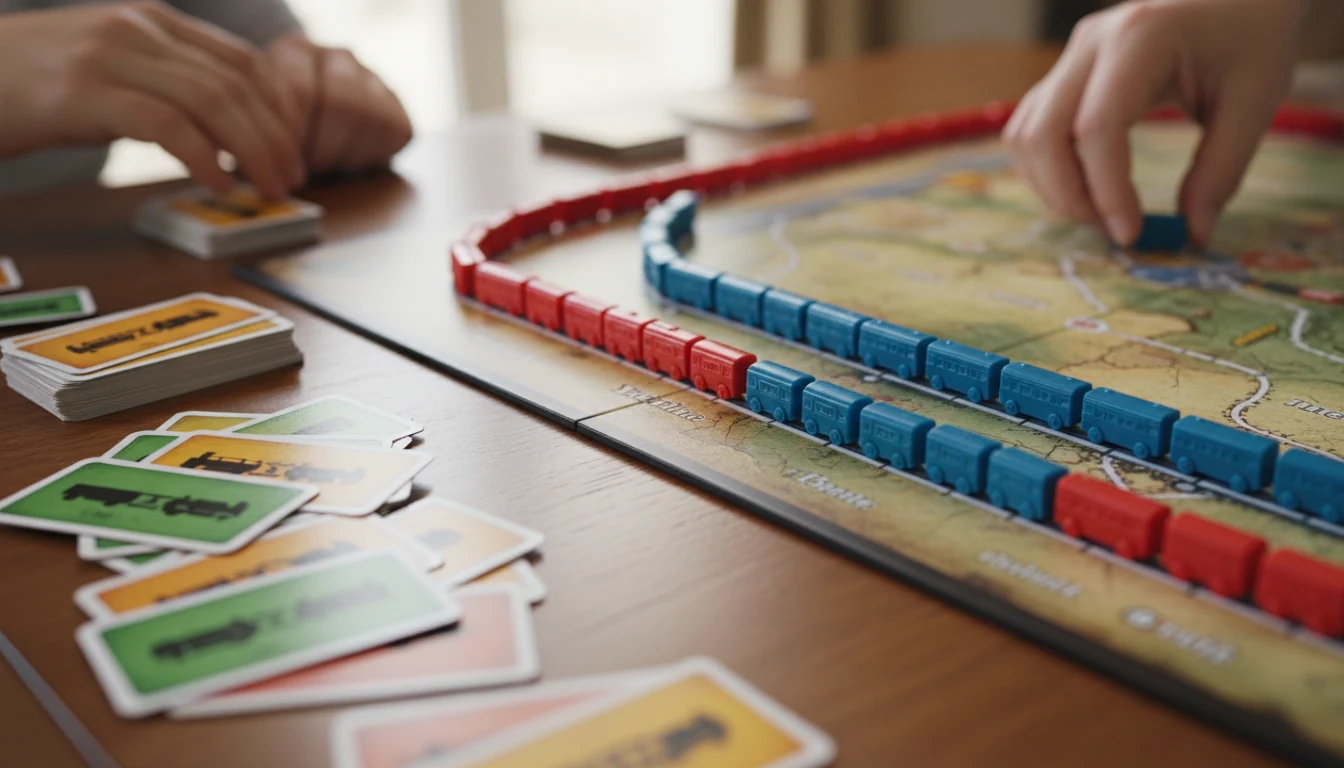
Ticket to Ride Destination Ticket Penalty Official Rules

Many players mistakenly believe they only lose points for uncompleted routes, but the rules specify that points are lost if you do not successfully complete the route given on the Destination Ticket(s) you kept.

According to the Ticket to Ride Official Rulebook, points are lost if you do not successfully complete the route given on the Destination Ticket(s) you kept.

Ticket to Ride Official Rulebook [edition not specified]

These rules correspond to the UK edition of Ticket to Ride.

Official Rule Breakdown

Regarding the penalty for Destination Tickets, the official rules state that points can be scored by successfully completing a continuous path of routes between two cities listed on your Destination Ticket(s). However, points are lost if you do not successfully complete the route given on the Destination Ticket(s) you kept. These tickets must be kept secret until the end of the game.

Example Play Situation

Alice holds a Destination Ticket for New York to Miami. At the end of the game, Alice has not completed the continuous path between those two cities. Consequently, Alice loses the points indicated on that Destination Ticket.

Ticket to Ride rules rule situation

Common Misconceptions

  • Thinking you only lose points for the entire game score
  • Believing you can discard Destination Tickets during your turn to avoid penalties
  • Assuming all Destination Tickets must be completed to win

Quick Reference

You CanYou Cannot
Keep Destination Tickets secret until the end of the gameDo not reveal your Destination Tickets before the game ends
Score points by completing a continuous path of routesDo not attempt to claim a route that is not on the board
Keep at least one Destination Ticket when drawing threeDo not ignore the penalty for uncompleted tickets

Frequently Asked Questions

What is the official rule for Destination Ticket penalties in Ticket to Ride?
Points are deducted if the route on your kept ticket is not successfully completed.
Do I lose points if I don't complete my Destination Tickets?
Yes, you lose the points shown on any Destination Ticket you kept but did not complete.
When do I have to reveal my Destination Tickets?
You must keep them secret until the very end of the game.
Can I choose to keep zero Destination Tickets?
In some versions, you may keep none, but in others, you must keep a minimum number.
Categories
Board Games Card Play Rules

UNO Draw 2 and Draw 4 Stacking: Official & House Rules

Many players believe they can pass the penalty of a Draw card to the next person by playing another Draw card, but the official rules differ.

No, according to the Mattel Official Rulebook, stacking Draw cards is not a legitimate move in the standard game.

UNO Basic Official Rulebook, 2008, [page not specified]

Expertise: Board game rules expert. | Verification: Cross-referenced official 2008 Mattel rulebook content. | Purpose: Resolve the #1 stacking confusion from player forums.
Key Insight: To avoid arguments, establish whether stacking is allowed before the first card is dealt.

These rules correspond to the US edition of UNO.

Official Rule Breakdown

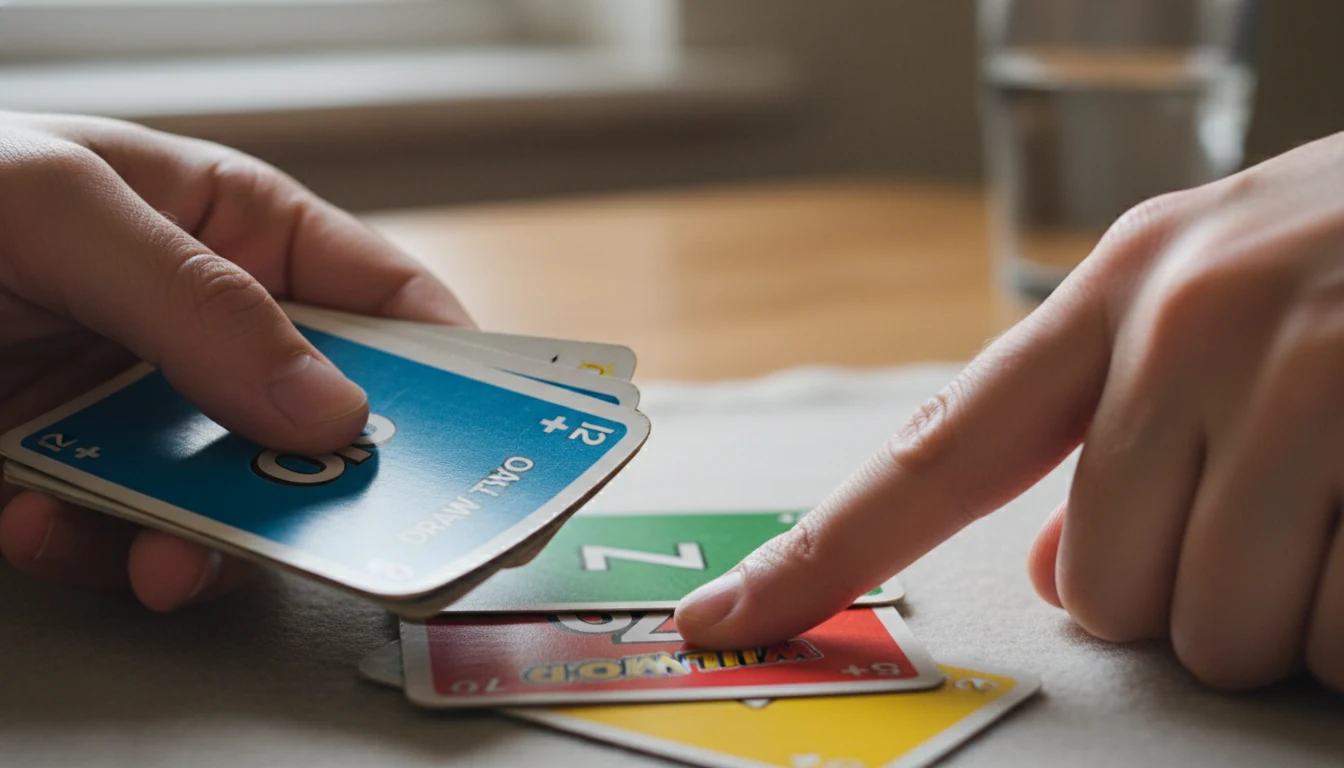
According to the Mattel Official Rulebook (UNO Basic), stacking is not an official rule. If the last card played in a round is a Draw Two or Wild Draw Four card, the next player must draw the 2 or 4 cards respectively. The official stance is that when a player is presented with a Draw card, they must simply draw the assigned number of cards and miss their turn, rather than playing another card to increase the penalty for the following player.

Example Play Situation

Alice plays a Draw Two card. Bob, following official rules, must draw two cards and skip his turn. If they were playing the Progressive House Rule, Bob could play another Draw Two, forcing Charlie to draw four cards instead.

Uno rules rule situation

House Rules

[HOUSE RULE] Many players use the 'Progressive UNO' variant. In this version, a player may play a second Draw Two on top of the first to make the next player draw 4, or a second Wild Draw Four to make the next player draw 8. Another common variant allows stacking any Draw card (Draw Two or Wild Draw Four) on top of any other Draw card to create high-intensity games.

Common Misconceptions

  • Stacking Draw Two cards on top of each other
  • Stacking Wild Draw Four cards on top of each other
  • Mixing Draw Two and Wild Draw Four cards in a single stack

Quick Reference

You CanYou Cannot
Draw the required cards when a Draw card is playedStack Draw cards under official rules
Skip your turn if a Draw card is playedPlay a Draw card to avoid drawing cards yourself
Establish stacking rules before starting a game

Frequently Asked Questions

What is the official rule for stacking in UNO?
No, official rules state that stacking is not a legitimate move.
Can I play a Draw Two on top of a Wild Draw Four?
No, under official rules, you must draw the cards immediately.
Is it allowed to stack Draw cards if my friends agree?
Yes, if all players agree to a house rule variation before play starts.
What happens if I play a Draw Two when someone plays a Draw Four?
In official play, you cannot; you must simply draw the cards.
Categories
Board Games Card Play Rules

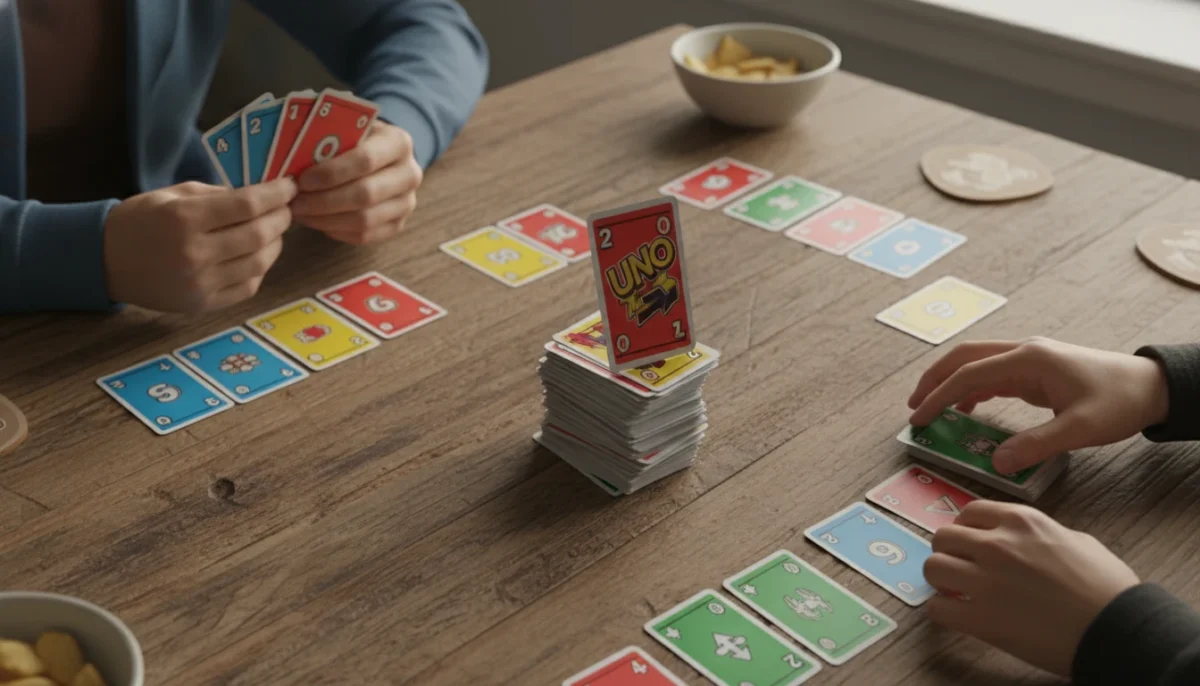
UNO Draw Two Stacking Rules: Official vs House Rules

Many players assume that Draw Two cards can be stacked to pass the penalty to the next person, but the official rules work differently.

No, according to the Mattel Official Rulebook, you cannot stack Draw Two cards in standard play.

UNO Official Rulebook, [edition not specified]

Expertise: Board game rules expert. | Verification: Cross-referenced official Mattel rulebook text regarding Draw Two functions. | Purpose: Resolve the #1 stacking confusion from player forums.
Key Insight: To avoid arguments, establish whether you are playing with 'Progressive UNO' house rules before the first card is dealt.

These rules correspond to the UK edition of UNO.

Official Rule Breakdown

In the standard UNO rules, when a Draw Two card is played, the next player in the direction of play must draw 2 cards and forfeit their turn. The rulebook specifies that if the last card played in a round is a Draw Two, the next player must draw the 2 cards, and these are counted when points are totalled. There is no provision in the official basic rules for 'stacking' these cards to increase the penalty for subsequent players.

Step-by-Step

  1. Step 1: A player plays a Draw Two card on a matching colour or another Draw Two card.
  2. Step 2: The next player in the direction of play must draw 2 cards from the DRAW pile.
  3. Step 3: The next player forfeits their turn.
  4. Step 4: Play continues with the player following the one who drew the cards.

Example Play Situation

Alice plays a Red Draw Two card. Bob, the next player, must draw 2 cards from the pile and skip his turn. It is then Charlie's turn to play.

Uno rules rule situation

House Rules

[HOUSE RULE] In the 'Progressive UNO' variant, players may play a Draw Two card on top of another Draw Two, causing the next player to draw 4 cards. This can continue consecutively as long as players have the cards in their hands.

Common Misconceptions

  • Stacking Draw Two cards to make the next person draw more
  • Thinking a Draw Two can be played on any card regardless of colour
  • Assuming the penalty increases if you have multiple Draw Two cards

Quick Reference

You CanYou Cannot
Draw 2 cards when a Draw Two is played on youStack a Draw Two to pass the penalty to the next player in standard rules
Forfeit your turn after drawing the cardsPlay a Draw Two on a non-matching colour unless it is another Draw Two
Play a Draw Two on a matching colour or another Draw Two

Frequently Asked Questions

What is the official rule for stacking Draw Two cards in UNO?
No, official rules state the next player simply draws 2 and skips their turn.
Can I play a Draw Two on top of another Draw Two?
Yes, the rules allow playing a Draw Two on another Draw Two, but it does not stack the penalty in standard play.
Is it allowed to skip my turn if I draw the cards?
No, the player who is targeted by the Draw Two must both draw the cards and forfeit their turn.
What happens if a Draw Two is the last card played?
The next player must draw 2 cards, and those cards are counted towards the total points.
Categories
Board Games Card Play Rules

Cluedo Official Rules: How to Show Disprove Cards

Many players wonder if they must reveal their clue cards to the entire table when responding to a suggestion.

According to the Hasbro Official Rulebook, clue cards must be shown secretly to the player making the suggestion.

Cluedo Instructions, [edition not specified], Page 6

These rules correspond to the UK edition of Cluedo.

Official Rule Breakdown

In Cluedo, when a player makes a suggestion or enquiry, the player to their left must attempt to answer. If that player possesses any of the cards mentioned in the suggestion, they must show one of them to the player who made the suggestion secretly. The rulebook specifies that they should never show more than one card. This ensures that the identity of the cards remains hidden from the other players at the table.

Step-by-Step

  1. Step 1: A player makes a suggestion involving a suspect, a weapon, and a room.
  2. Step 2: The player to the left of the suggester checks their hand for the requested cards.
  3. Step 3: If the player has a matching card, they show exactly one card secretly to the suggester.
  4. Step 4: If the player does not have the card, they say 'I cannot answer' and the enquiry passes to the next player.

Example Play Situation

Alice suggests that it was Miss Scarlett with the Rope in the Library. Bob, sitting to Alice's left, looks at his cards and sees the Rope. Bob shows the Rope card secretly to Alice only, while the other players remain unaware of which card was shown.

Clue/Cluedo rules rule situation

Common Misconceptions

  • Showing the card to everyone at the table
  • Showing multiple cards to disprove a suggestion
  • Thinking the whole table sees the card

Quick Reference

You CanYou Cannot
Show exactly one card to the suggesterShow more than one card to the suggester
Keep your own cards secret from othersShow your cards to the entire group
Cross off cards on your sheet when seenReveal your cards to players who did not make the suggestion

Frequently Asked Questions

What is the official rule for showing cards in Cluedo?
Cards must be shown secretly to the player who made the suggestion.
Do I have to show my card to everyone if I can answer?
No, you only show one card privately to the person asking the question.
Can I show two cards to disprove a suggestion?
No, you must only show one card to the player making the suggestion.
What happens if I don't have any of the cards asked for?
You simply say 'I cannot answer' and the turn passes to the next player.
Categories
Board Games Card Play Rules

Exploding Kittens Defuse Card Official Rules Guide

Many players mistakenly believe the Defuse card simply removes the Exploding Kitten from the game entirely.

According to the Exploding Kittens Official Rulebook, the Defuse card allows you to avoid being eliminated by reinserting the kitten.

Exploding Kittens Official Rules [edition not specified]

These rules correspond to the UK edition of Exploding Kittens.

Official Rule Breakdown

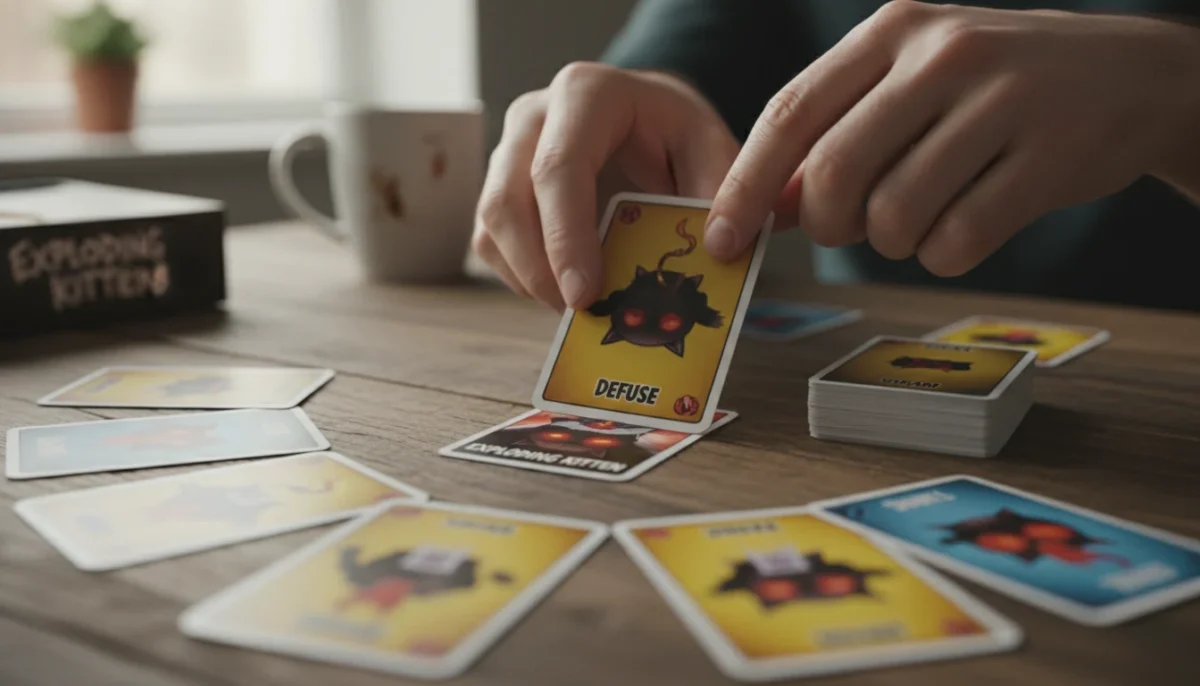
The Defuse card is described as the most powerful card in the game because it is the only card that can save a player from an Exploding Kitten. If a player draws an Exploding Kitten, instead of being eliminated and becoming 'dead', they may play the Defuse card. Once played, the player must take the Exploding Kitten and secretly reinsert it anywhere within the Draw Pile without reordering or viewing the other cards (Exploding Kittens-rules.pdf, [page not specified]).

Step-by-Step

  1. Step 1: Draw the Exploding Kitten card from the Draw Pile.
  2. Step 2: Play the Defuse card from your hand.
  3. Step 3: Take the Exploding Kitten card.
  4. Step 4: Secretly reinsert the Exploding Kitten into the Draw Pile at any position of your choice.

Example Play Situation

Alice draws an Exploding Kitten card, which would normally end her game. She plays her Defuse card to stay alive and secretly places the Exploding Kitten near the bottom of the Draw Pile. Bob then begins his turn by drawing a card.

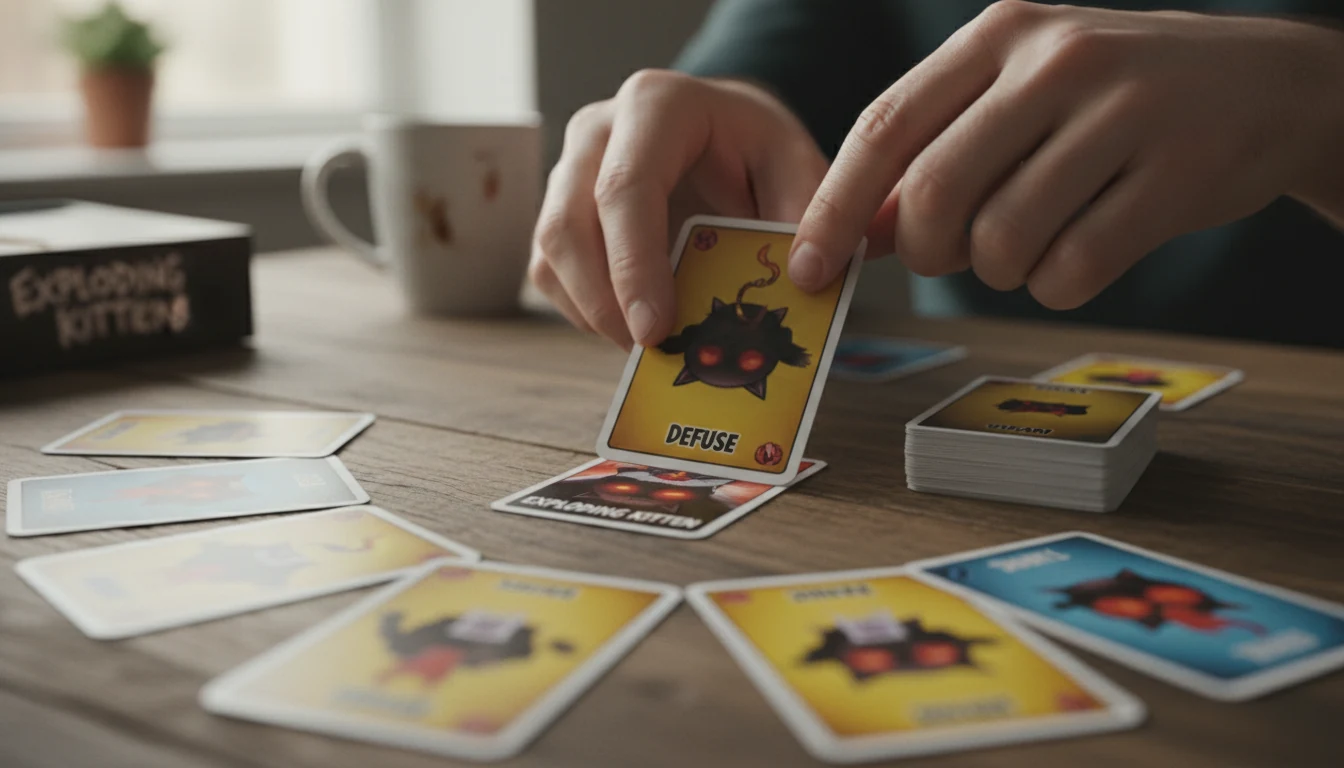
Exploding Kittens rules rule situation

Common Misconceptions

  • Thinking the Defuse card removes the kitten from the game
  • Thinking you must show the other players where you put the kitten
  • Thinking you can only use a Defuse card if you have one in your hand

Quick Reference

You CanYou Cannot
You can reinsert the kitten anywhere in the Draw PileYou cannot view the other cards while reinserting the kitten
You can use the Defuse card to stay in the gameYou cannot reorder the deck while placing the kitten

Frequently Asked Questions

What is the official rule for using a Defuse card in Exploding Kittens?
Play the card to avoid exploding and secretly put the kitten back in the Draw Pile.
Can I show other players where I put the Exploding Kitten?
No, you must put it back in the Draw Pile secretly without reordering or viewing cards.
Does the Defuse card remove the Exploding Kitten from the deck?
No, it simply moves the kitten to a new secret location in the Draw Pile.
What happens if I don't have a Defuse card when I draw a kitten?
You explode, you are dead, and you are out of the game.
Categories
Board Games Strategy Games

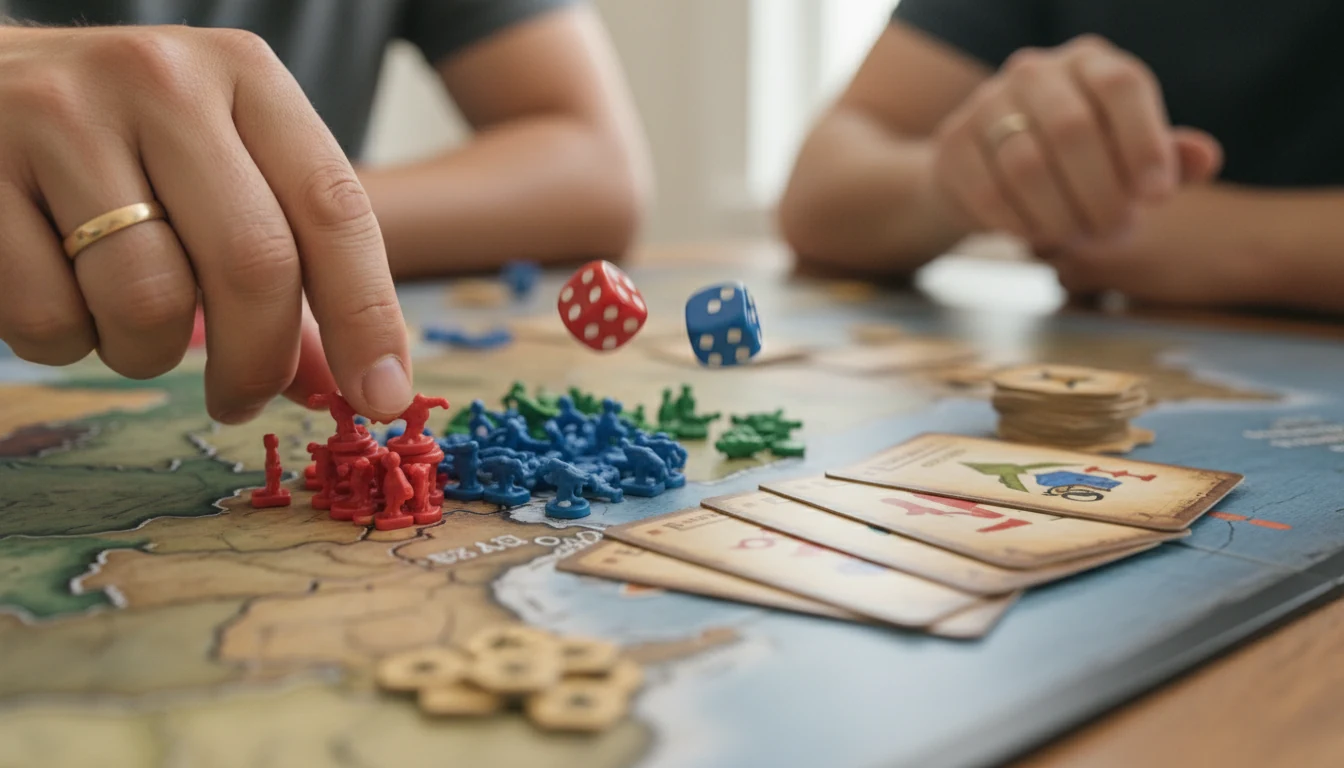
Risk Dice Rules: Attacker vs Defender Official Rules

Many players mistakenly believe that the attacker can win a battle by simply rolling a higher number, forgetting that ties and multiple dice comparisons are central to the mechanic.

According to the Risk Official Rulebook, the attacker compares their highest die against the defender's highest die, and ties always go to the defender.

Risk Official Rules 2022, [page not specified]

Expertise: Board game rules expert and technical writer. | Verification: Cross-referenced official 2022 rulebook and A3 edition manuals. | Purpose: Resolve the #1 source of combat confusion in Risk: tie-breaking and multi-die comparisons.
Key Insight: To avoid arguments, establish that the defender wins all ties before the first die is cast.

These rules correspond to the UK edition of Risk.

Official Rule Breakdown

To decide a battle, the attacker and defender compare their highest dice. If the attacker's die is higher, the defender removes one army from the territory under attack. If the defender's die is higher or if there is a tie, the attacker loses one army from the territory they are attacking from. If both players roll more than one die, the process is repeated by comparing the next-highest dice. At no time may a player lose more armies than the number of dice they roll, and the attacker can never lose more than two armies on a single roll.

Step-by-Step

  1. Step 1: The attacker announces the number of dice they intend to roll and the target territory.
  2. Step 2: The defender indicates the number of dice they will roll.
  3. Step 3: Both players roll their dice simultaneously.
  4. Step 4: Compare the highest die of the attacker against the highest die of the defender.
  5. Step 5: If the attacker's die is higher, the defender loses one army; if the defender's die is higher or equal, the attacker loses one army.
  6. Step 6: If both players rolled multiple dice, compare the second-highest dice and repeat the process.

Example Play Situation

Alice attacks Bob in Brazil. Alice rolls three dice (6, 4, 2) and Bob rolls two dice (5, 3). Alice's highest die (6) is higher than Bob's highest die (5), so Bob loses one army. They then compare their next-highest dice: Alice's 4 is higher than Bob's 3, so Bob loses a second army.

Risk rules rule situation

House Rules

[HOUSE RULE] Some experienced players use the 'Commanders' variant where, once per turn while attacking, a player may change one of their rolled dice to a '6'.

Common Misconceptions

  • Thinking the attacker wins on a tie
  • Believing the attacker can lose more than 2 armies in one roll
  • Assuming the defender can roll 3 dice

Quick Reference

You CanYou Cannot
You can attack any adjacent territoryYou cannot roll more than three dice as an attacker
You can continue attacking as long as you have at least two armies on your territoryYou cannot leave a territory unoccupied
You can use a Risk card to re-roll one die if you have the matching territoryYou cannot use a Risk card to re-roll while defending

Frequently Asked Questions

What is the official rule for attacking in Risk?
Compare highest dice; attacker wins if their die is higher, otherwise defender wins ties.
Can I roll three dice if I only have two armies?
No, you must have at least one more army than the number of dice you roll.
What happens if the attacker and defender roll the same number?
The defender wins the tie and the attacker must remove one army from their territory.
How many armies can I lose in a single roll?
You can never lose more than the number of dice you roll, with a maximum of 2 armies per roll.
Categories
Board Games Rules & Disputes

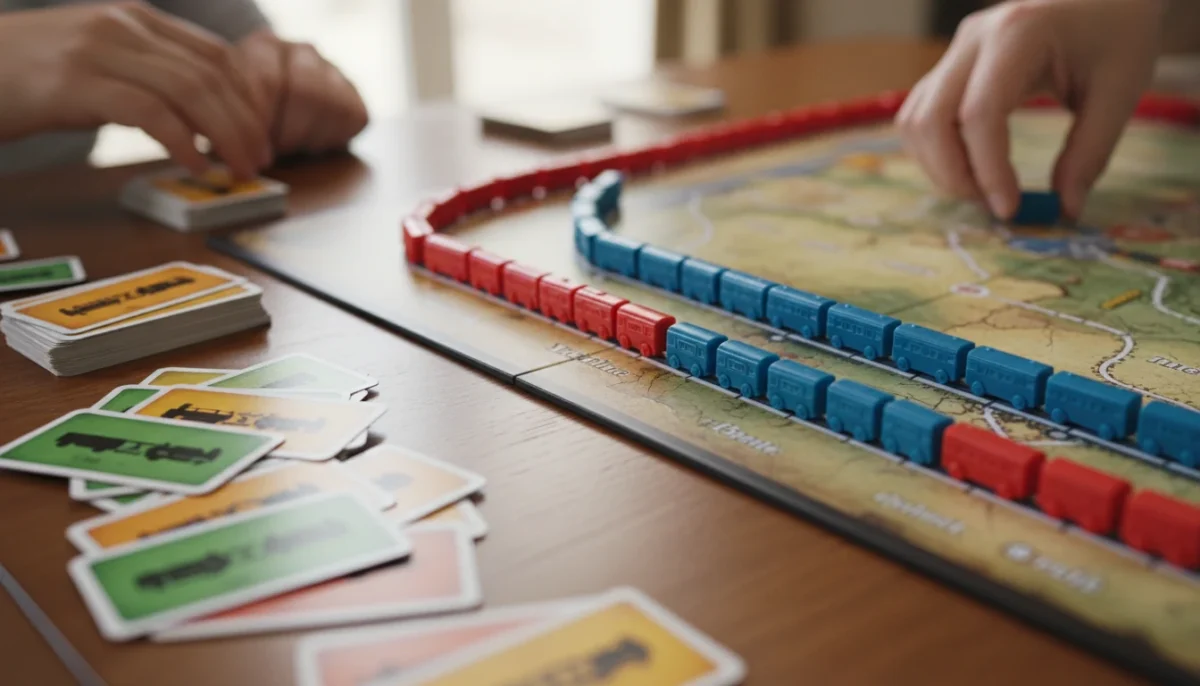
Ticket to Ride Double Route Rules: Official Rules Guide

Many players mistakenly believe that all double-routes on the board remain available for use during a two-player game.

No, according to the Days of Wonders Official Rulebook, in 2 or 3 player games, only one of the Double-Routes can be used.

Ticket to Ride Official Rulebook [edition not specified]

These rules correspond to the UK edition of Ticket to Ride.

Official Rule Breakdown

Regarding the use of Double-Routes in Ticket to Ride, the official rules state that some cities are connected by Double-Routes. While a player can claim either of the two routes between cities, one player cannot claim both routes to the same cities. Crucially, in 2 or 3 player games, only one of the Double-Routes can be used. Once a player claims one of the two routes between cities, the other route is closed to all other players.

Example Play Situation

Alice is playing a two-player game and decides to claim the first Double-Route between two cities. Because it is a two-player game, the second route of that Double-Route is immediately closed to Bob, even though it remains physically on the board.

Ticket to Ride rules rule situation

Common Misconceptions

  • Both routes in a Double-Route can be claimed in a 2-player game
  • A single player can occupy both routes of a Double-Route
  • Double-Routes are always fully available regardless of player count

Quick Reference

You CanYou Cannot
Claim one of the two routes in a Double-RouteClaim both routes of a Double-Route to the same cities
Close the alternative route to other players in 2 or 3 player gamesUse the second Double-Route if the player count is 2 or 3

Frequently Asked Questions

What is the official rule for Double-Routes in Ticket to Ride?
Only one route of a Double-Route can be used in 2 or 3 player games.
Can I claim both routes between the same two cities?
No, one player cannot claim both routes to the same cities.
What happens to the other route in a Double-Route during a 2-player game?
The other route is closed to all other players once one is claimed.
Do Double-Routes work differently in 4-player games?
The restriction specifically applies to 2 or 3 player games.
Categories
Board Games Strategy Games

Can the Robber be Placed on the Desert? Catan Official Rules

Many players mistakenly believe the robber must always be placed on a resource-producing terrain hex, but the rules allow for a different placement.

Yes, according to the Catan Official Rulebook, you may move the robber to the desert hex.

Catan Official Rules 2020, [page not specified]

Expertise: Board game rules expert. | Verification: Cross-referenced official 2020 Catan GmbH rulebook segments. | Purpose: Resolve the #1 dispute regarding robber placement on the desert hex.
Key Insight: To avoid arguments, ensure everyone agrees that moving to the desert means no card is stolen from an adjacent player.

These rules correspond to the US edition of Catan.

Official Rule Breakdown

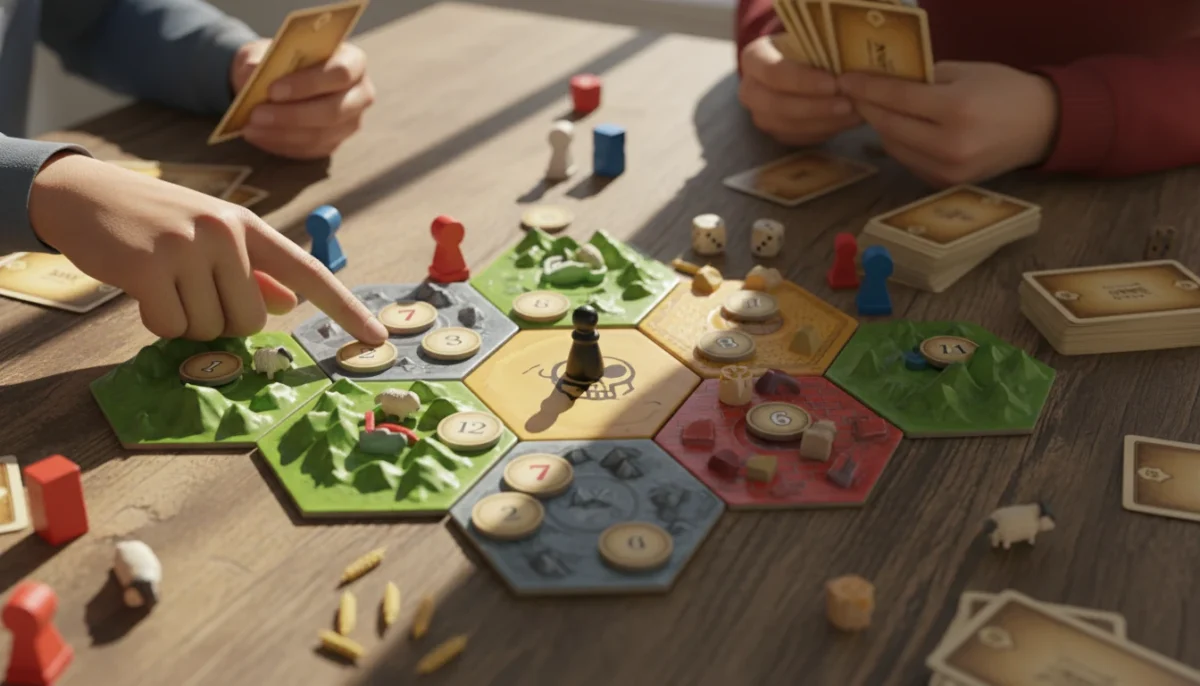
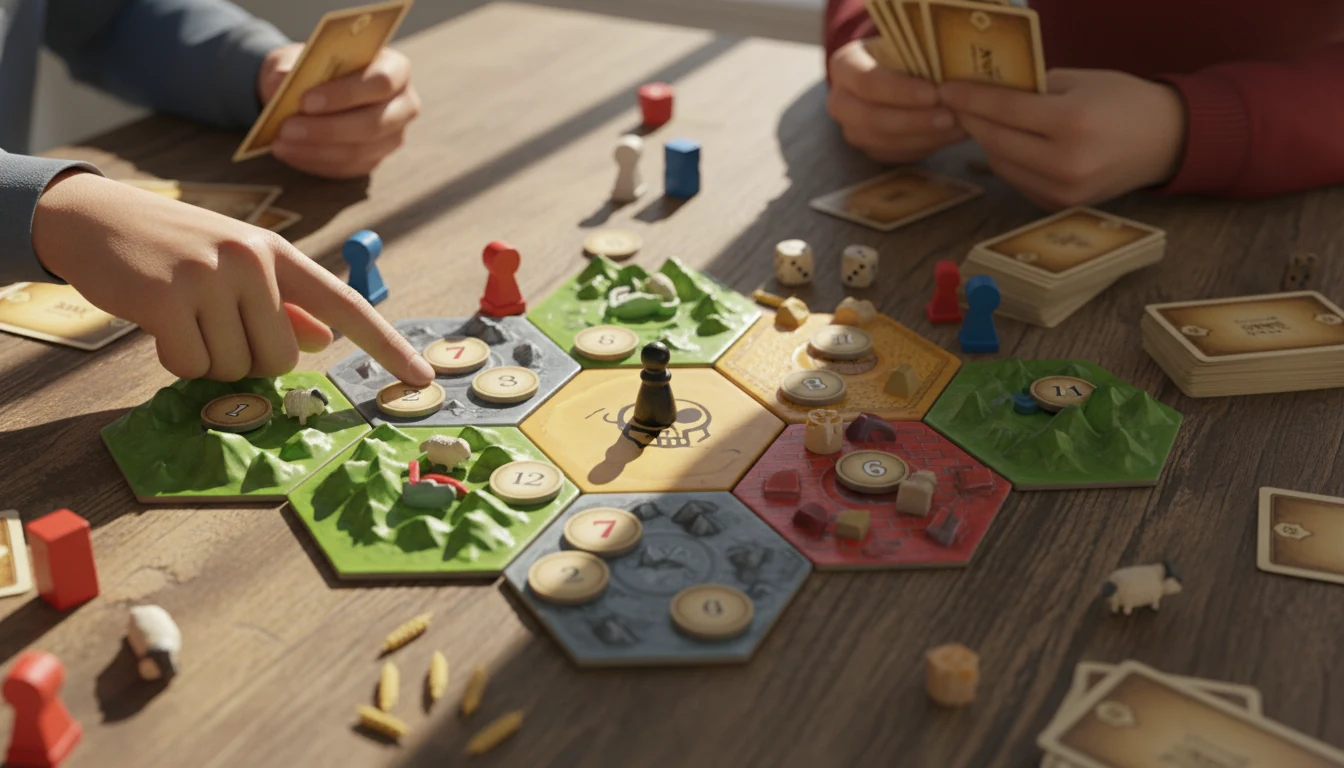
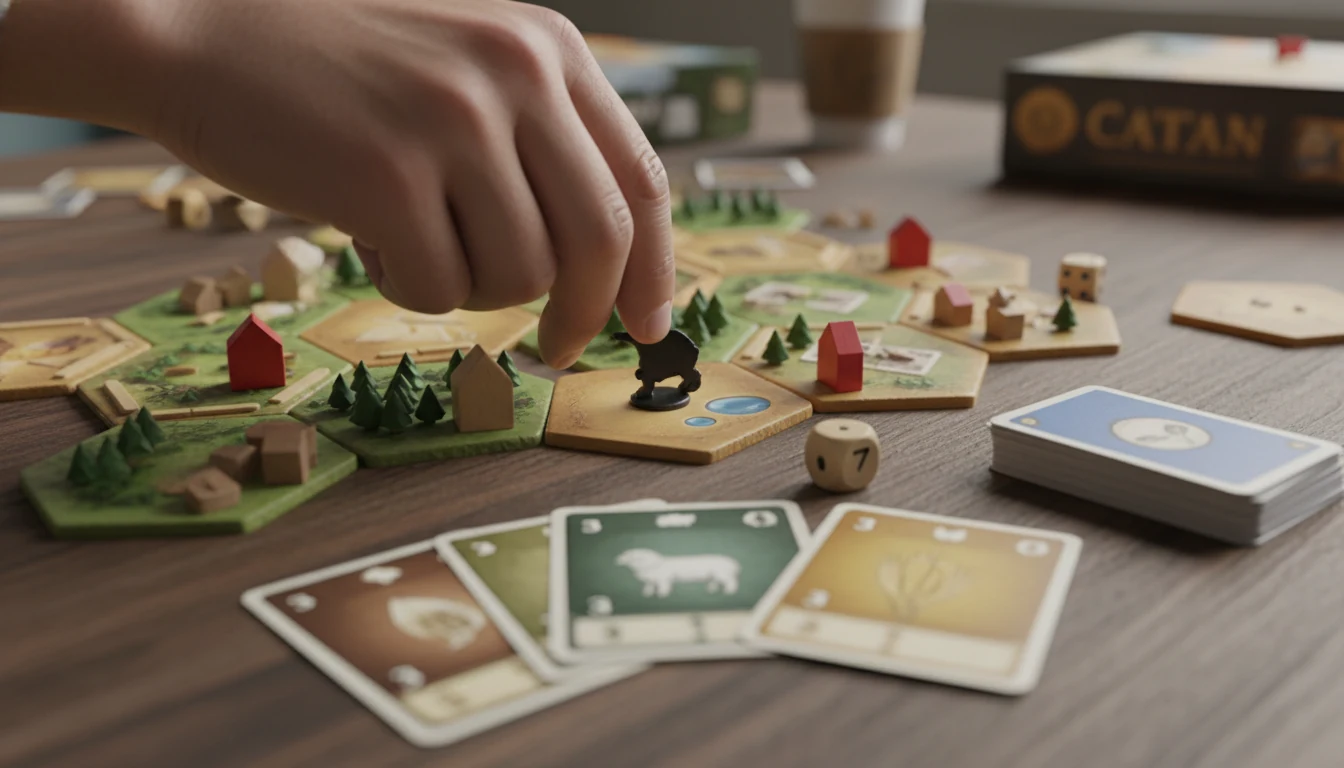
When a player rolls a '7', the robber must be moved. According to the official rules, the player who rolled the 7 must move the robber immediately to the number token of any other terrain hex or to the desert hex. This action blocks the resource production of the chosen hex until the robber is moved again. If the robber is placed on the desert, it does not block any specific resource production because the desert hex does not have a number token.

Step-by-Step

  1. Step 1: Roll the dice and determine if a 7 was rolled.
  2. Step 2: All players with more than 7 resource cards must discard half (rounded down).
  3. Step 3: Select a new location for the robber: either a number token on a terrain hex or the desert hex.
  4. Step 4: Move the robber piece to the chosen location.
  5. Step 5: Steal one random resource card from an opponent adjacent to the new hex (unless the desert was chosen).

Example Play Situation

Alice rolls a 7. She first makes Bob discard his excess cards. Alice then decides to move the robber from the Forest hex to the Desert hex to avoid stealing from any players.

Catan rules rule situation

Common Misconceptions

  • The robber must always be on a number token
  • Moving the robber to the desert allows you to steal a card
  • The desert hex produces resources when the robber is there

Quick Reference

You CanYou Cannot
You can move the robber to the desert hexYou cannot leave the robber on the same hex
You can move the robber to any other number tokenYou cannot steal a card if you move the robber to the desert

Frequently Asked Questions

What is the official rule for moving the robber in Catan?
Move it to any other number token or the desert hex.
Can I move the robber to the desert if I want to steal a card?
No, if you move it to the desert, you do not steal a card.
Is it allowed to keep the robber on the same hex after rolling a 7?
No, the robber must be moved to a different hex or the desert.
What happens if I place the robber on the desert?
The robber is placed there, but no resource production is blocked.
Categories
Board Games Card Play Rules

Cards Against Humanity Czar Winner Official Rules

Many players assume the Czar card dictates the winner, but the actual mechanism for selecting a winner is often misunderstood.

According to the official Cards Against Humanity rules available, this exact scenario is not explicitly defined.

Cards Against Humanity [edition not specified]

These rules correspond to the UK edition of Cards Against Humanity.

Official Rule Breakdown

The accessible official and trusted secondary sources reviewed for 'cards against humanity czar rules how to pick winner' did not provide a precise clause that directly resolves this mechanism. To avoid inventing rules, verify this point in the latest edition-specific official rulebook or FAQ.

Cards Against Humanity rules rule situation

Common Misconceptions

  • The Czar card automatically makes the player the winner of the game.
  • The Czar card determines the winner of the current round.
  • The Czar card is a scoring mechanic.