Categories
Board Games FAQ & Clarifications

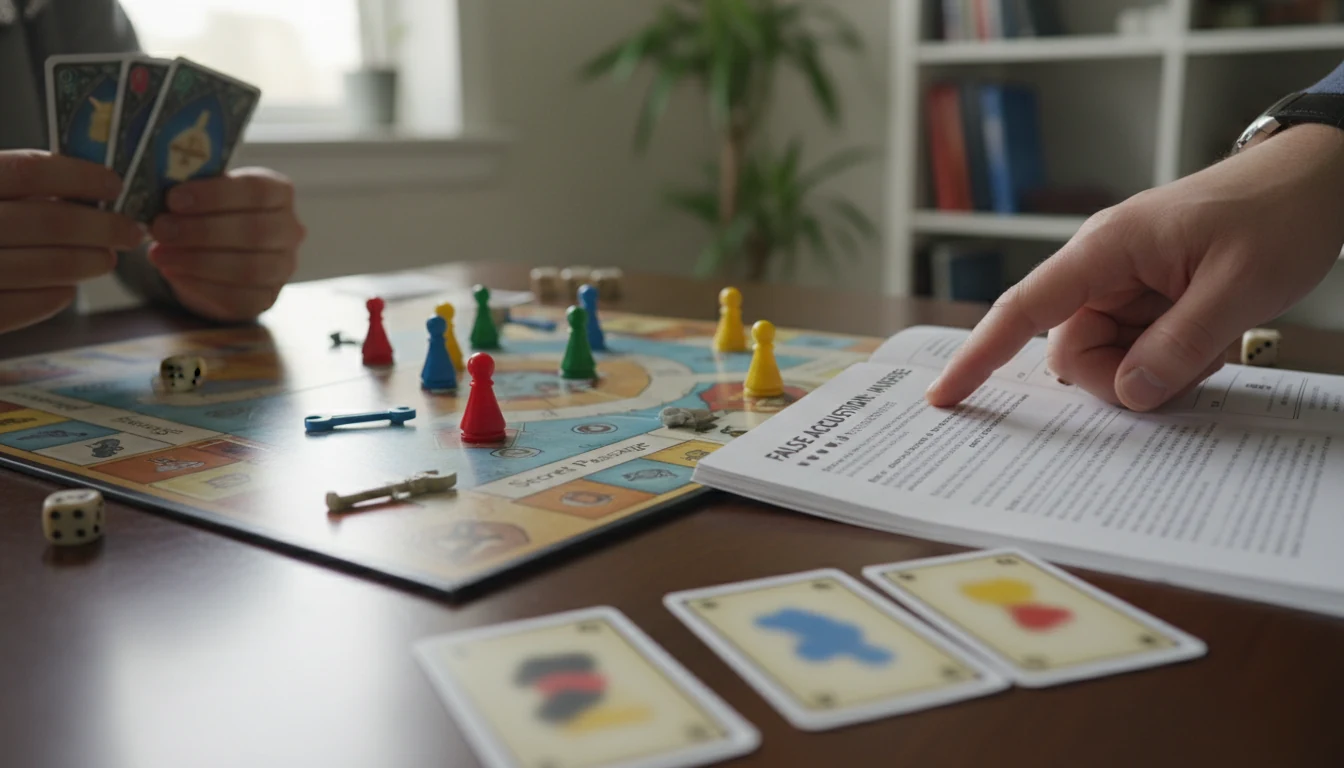
Cluedo False Accusation Official Rules & Gameplay Guide

Many players mistakenly believe that a wrong accusation allows you to continue making suggestions, but the official rules impose a strict penalty.

According to the Waddingtons Cluedo Official Rulebook, if an accusation is wrong, the player is immediately out of the game.

Cluedo Instructions, Computer Edition, [page not specified]

These rules correspond to the UK edition of Cluedo.

Official Rule Breakdown

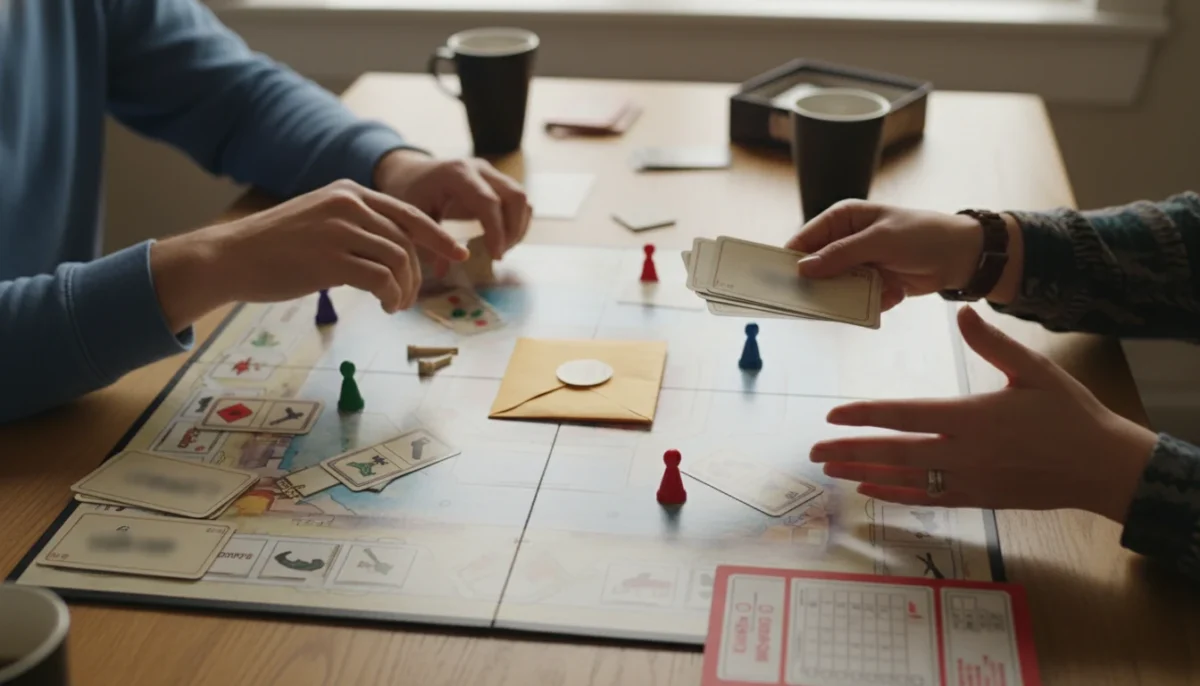
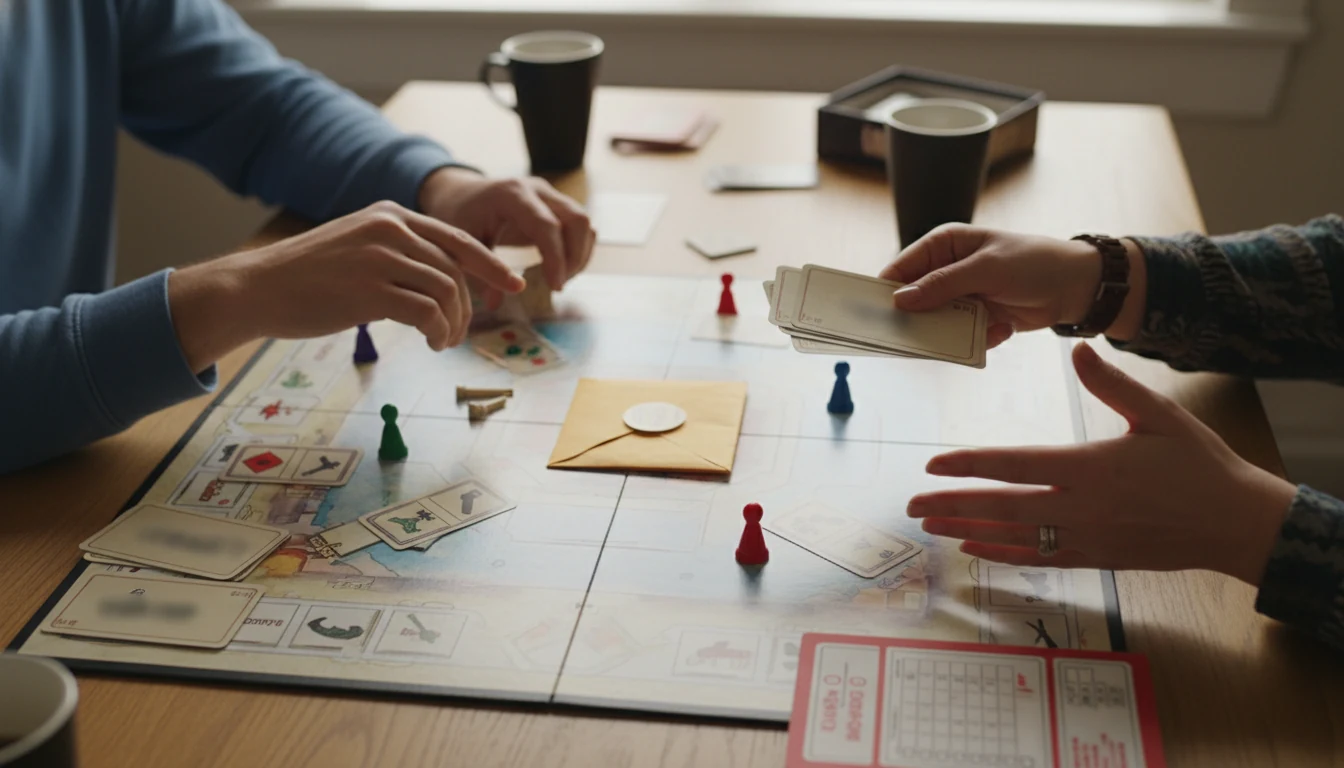
When a player makes a full accusation and it is incorrect, that player is removed from active play. According to the Cluedo instructions, the player is 'out of the game' and only participates in order to be a suspect and to show cards as appropriate. If the accusation is correct, the program (or the game setup) exposes the 'Murder Cards' and declares the winning player. If everyone makes an incorrect accusation, the murder remains unsolved, and the cards are revealed to see which suspect escaped.

Step-by-Step

  1. Step 1: Move your piece to the center of the board to prepare for an accusation.
  2. Step 2: State your accusation out loud, naming one suspect, one weapon, and one room.
  3. Step 3: Check the cards in the Envelope secretly.
  4. Step 4: If the cards match your accusation, you win the game.
  5. Step 5: If the cards do not match, you are removed from the game as an active player.

Example Play Situation

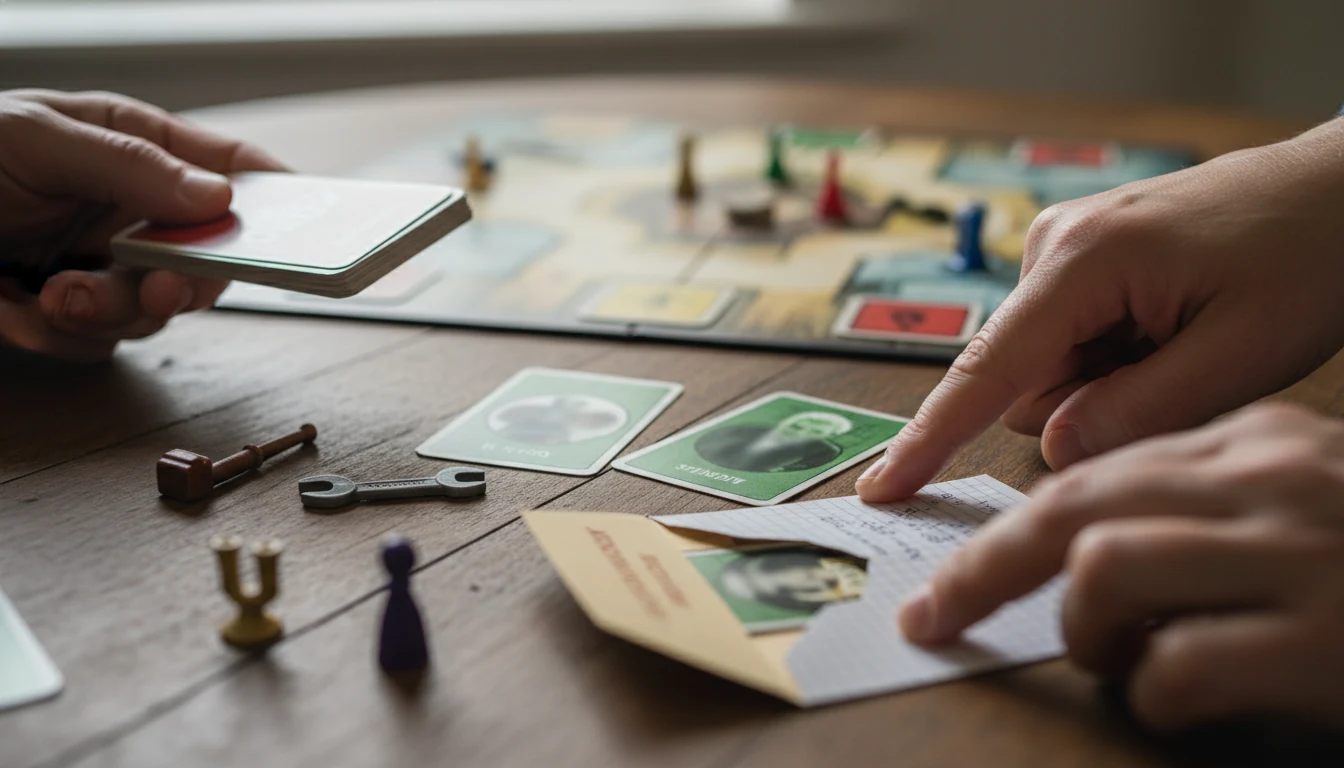
Alice reaches the centre of the board and accuses Colonel Mustard with the Spanner in the Library. Bob checks the Envelope and finds the cards do not match Alice's guess. Alice is now out of the game, but she must still show her cards if another player makes a suggestion involving her.
Clue/Cluedo rules rule situation

Common Misconceptions

  • Thinking you can keep playing after a wrong accusation
  • Believing you can make a second accusation if the first one fails
  • Assuming you can win by guessing even if you are already out of the game

Quick Reference

You CanYou Cannot
You can show cards to others even after being eliminatedYou cannot make further accusations once you are out of the game
You can act as a suspect after a wrong accusationYou cannot ask further questions once you are out of the game
You can win by identifying the murderer, weapon, and room in one accusationYou cannot reveal which cards you got wrong to the other players

Frequently Asked Questions

What is the official rule for a false accusation in Cluedo?
The player is out of the game but remains available to show cards as a suspect.
Can I keep playing if my accusation is wrong?
No, you are removed from active play and can only show cards when prompted.
What happens if every player makes a wrong accusation?
The murder remains unsolved and the cards are revealed to see who escaped.
Do I have to show my cards after I am out of the game?
Yes, you participate only to be a suspect and show cards as appropriate.
Categories
Board Games Card Play Rules

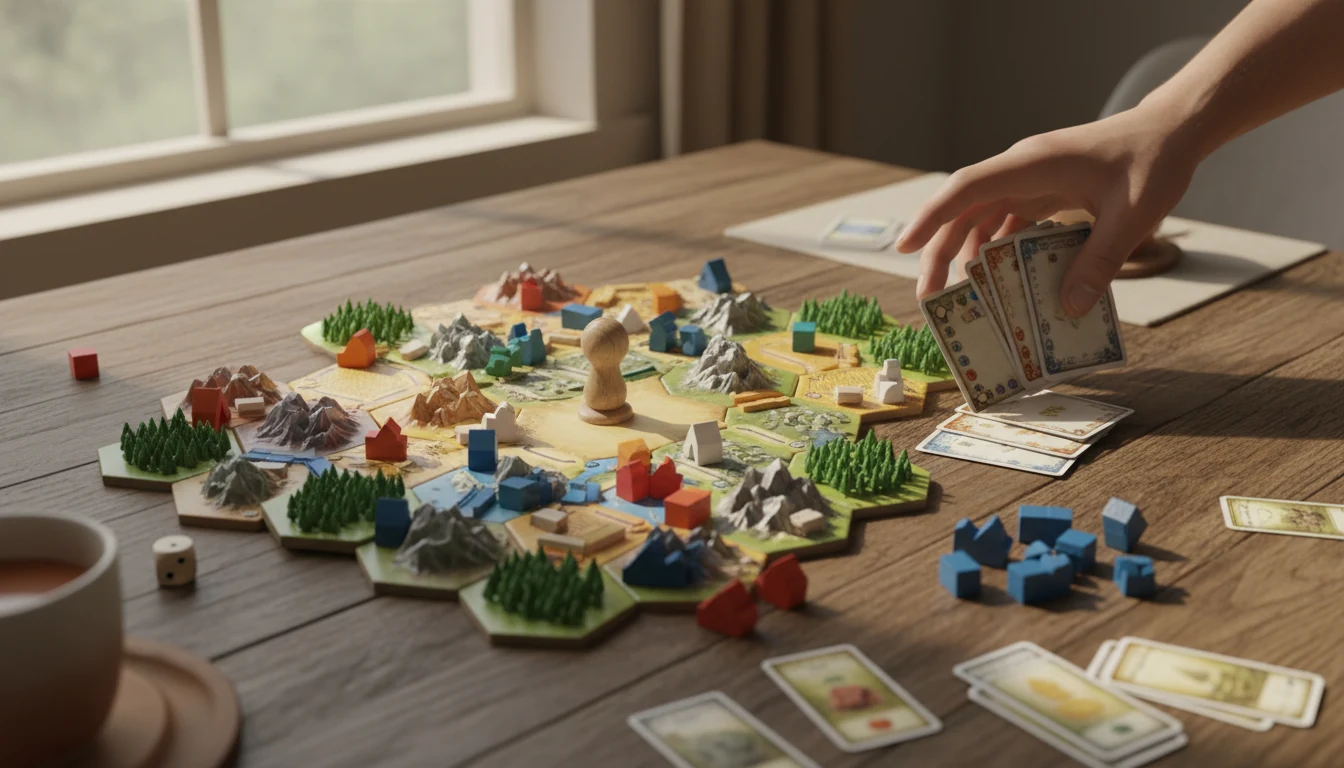
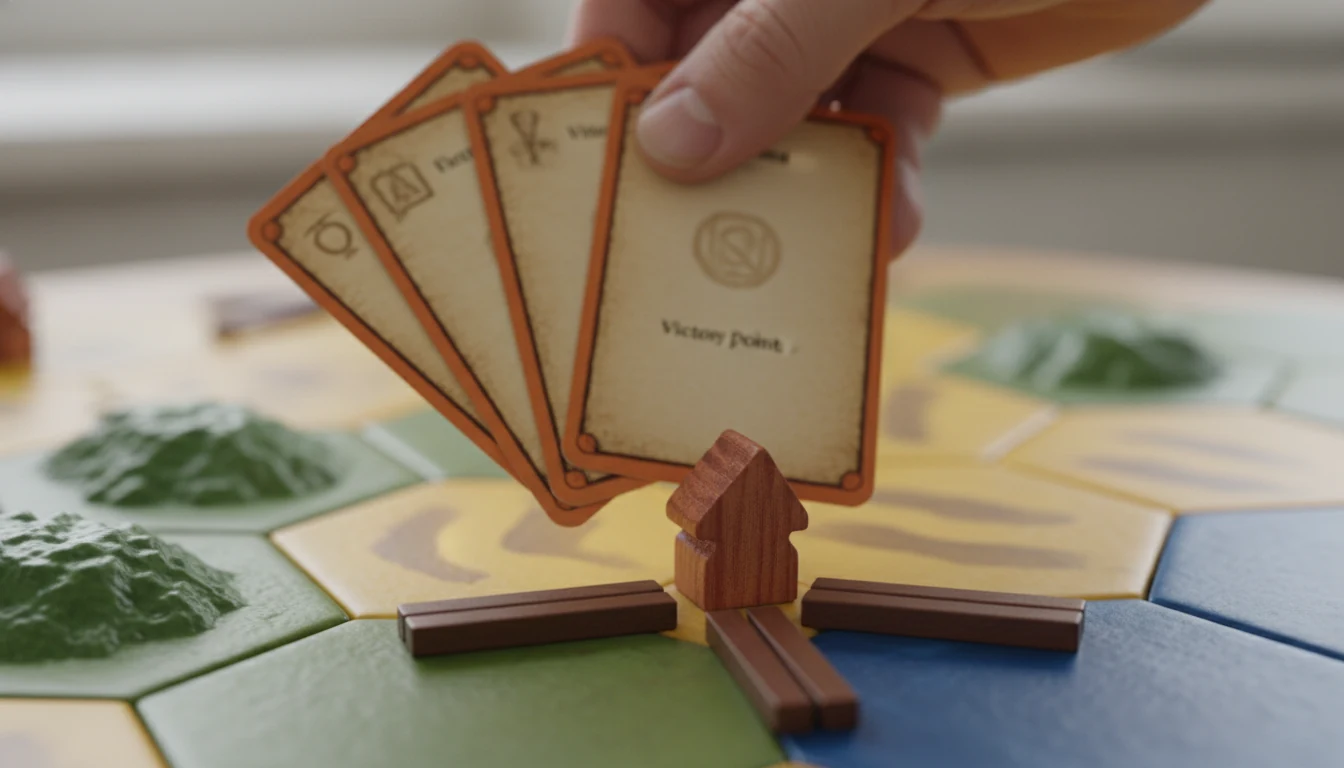
Catan Development Card Rules: Official Rules Guide

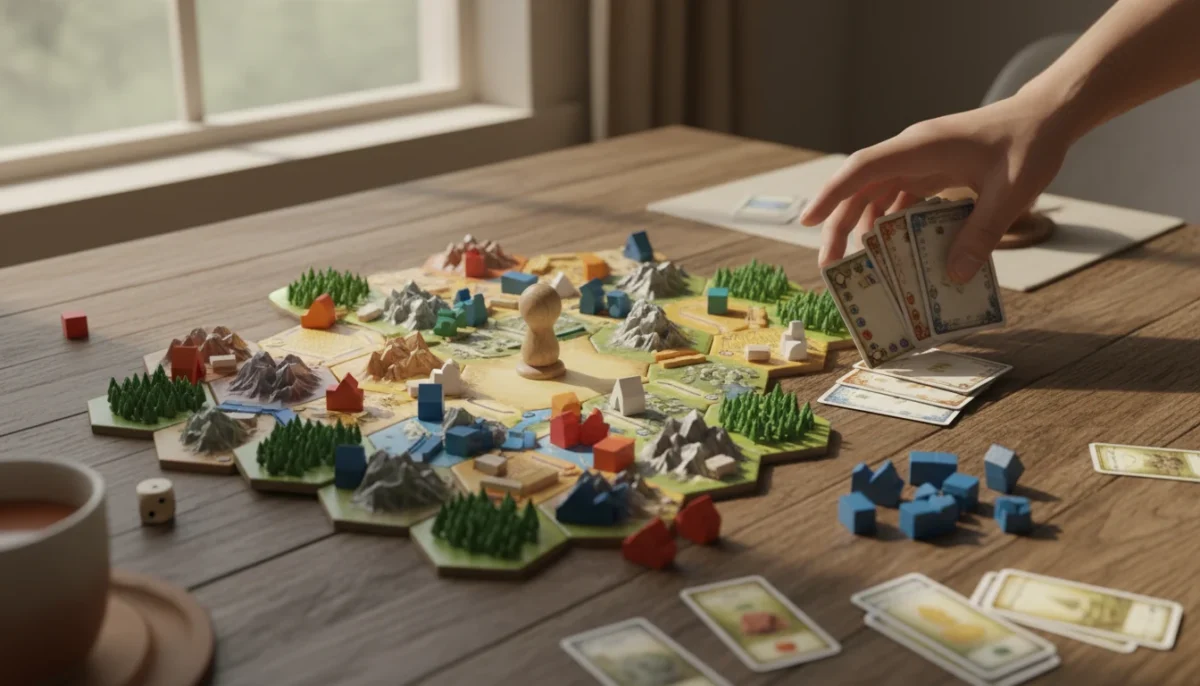
Many players mistakenly believe they are limited to playing only one development card per turn, leading to confusion during fast-paced sessions.

According to the official Catan rules available, this exact scenario is not explicitly defined.

Catan Official Rules 2020, [page not specified]

Expertise: Board game rules expert. | Verification: Cross-referenced provided evidence chunks for 'development card' turn limits. | Purpose: Resolve the #1 confusion regarding card limits per turn from player forums.
Key Insight: To avoid arguments, players should agree on a turn limit before starting if the house rule differs from the standard.

These rules correspond to the UK edition of Catan.

Official Rule Breakdown

The accessible official and trusted secondary sources reviewed for 'how many development cards can you play per turn in catan' did not provide a precise clause that directly resolves this mechanism. To avoid inventing rules, verify this point in the latest edition-specific official rulebook or FAQ. No official numeric limit is explicitly stated (0 confirmed values in retrieved sources).

Example Play Situation

Alice draws a development card and plays it to gain an advantage. Bob waits for his turn to see if Alice can play additional cards, but the rules provided do not define a cap.

Catan rules rule situation

Common Misconceptions

  • Players can only play one development card per turn.
  • Development cards must be played in a specific order.
  • You can trade development cards with other players.

Quick Reference

You CanYou Cannot
You can buy development cardsYou may not trade development cards
You can keep victory point cards hiddenYou may not give away cards

Frequently Asked Questions

Can I trade my development cards to another player?
No, the rules state you may not trade development cards.
When do I reveal my victory point cards?
You reveal them only when you or someone else wins the game.
Categories
Board Games Strategy Games

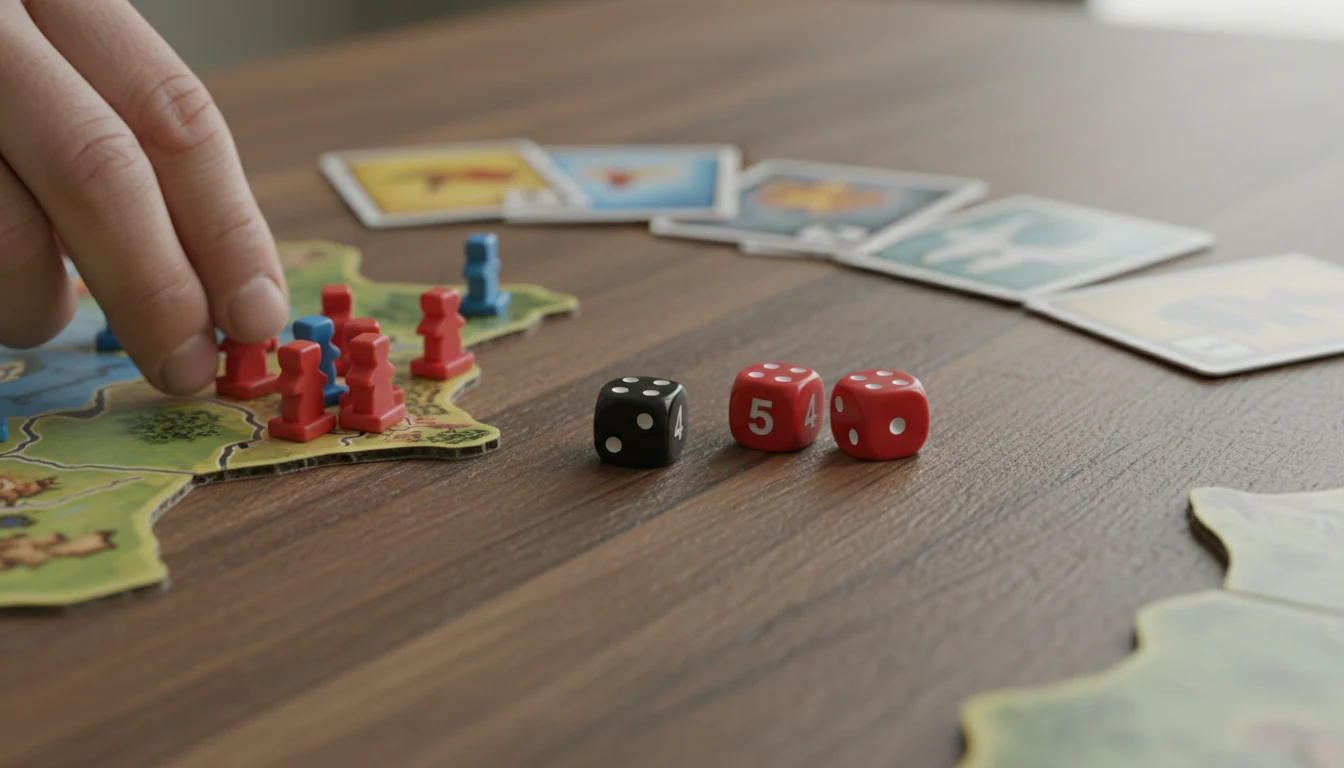
Risk Dice Tie Rules: Official Risk Board Game Rules

Many players mistakenly believe that the attacker has the advantage in a tie, but the official mechanics favor the defender.

According to the Hasbro/Parker Brothers Official Rulebook, ties in dice rolls always go to the defender.

Risk Official Rules 2022, [page not specified]

These rules correspond to the US edition of Risk.

Official Rule Breakdown

When deciding a battle in Risk, players compare the highest die rolled by each side. If the attacker's die is higher, the defender loses one army; however, if the defender's die is higher or if the dice values are equal, the attacker loses an army. Specifically, the rules state that 'TIES ALWAYS GO TO THE DEFENDER.' If both players roll more than one die, the process is repeated by comparing the next highest dice. The attacker can never lose more armies on a single roll than the number of dice they rolled.

Step-by-Step

  1. Step 1: Both the attacker and defender announce the number of dice they intend to roll.
  2. Step 2: Both players roll their dice simultaneously.
  3. Step 3: Compare the highest die of the attacker against the highest die of the defender.
  4. Step 4: If the attacker's die is higher, the defender removes one army from the territory.
  5. Step 5: If the defender's die is higher or if the dice are equal (a tie), the attacker removes one army from their own territory.
  6. Step 6: If both players rolled multiple dice, repeat the comparison using the next highest dice.

Example Play Situation

Alice attacks Bob in Brazil using three dice. Bob defends with two dice. Alice rolls a 6 and a 4, while Bob rolls a 6 and a 2. Because the highest dice are both 6, a tie occurs, and Alice must remove one of her armies from the territory she attacked from.

Risk rules rule situation

Common Misconceptions

  • Thinking the attacker wins ties
  • Assuming the attacker can lose more armies than the dice they rolled
  • Believing the defender can use Risk cards to re-roll

Quick Reference

You CanYou Cannot
Compare the highest dice firstDo not use a Risk card to re-roll when defending a territory
Repeat the process with the next highest dice if multiple dice were rolledDo not remove more armies than the number of dice you rolled
Leave at least one army behind on the territory you attacked from

Frequently Asked Questions

What is the official rule for dice ties in Risk?
Ties always go to the defender, resulting in the attacker losing an army.
Who wins if the attacker and defender roll the same number?
The defender wins the tie, and the attacker must remove an army.
How do you resolve battles with multiple dice?
Compare the highest dice, then compare the next highest dice if both players rolled more than one.
Can an attacker lose more armies than they rolled?
No, the attacker can never lose more armies than the number of dice they rolled in that single roll.
Categories
Board Games FAQ & Clarifications

Ticket to Ride Game End Rules: Official Rules Guide

Many players mistakenly believe the game ends only when everyone runs out of trains, but specific scoring milestones can trigger an immediate conclusion.

According to the Days of Wonder Official Rulebook, the game ends immediately when a player completes their sixth Ticket or when a player places their last train on the board.

Ticket to Ride Official Rulebook, [edition not specified], [page not specified]

These rules correspond to the UK edition of Ticket to Ride.

Official Rule Breakdown

The game end triggers are defined by two specific conditions in the Ticket to Ride rulebook. First, the game ends immediately when a player completes their sixth Ticket; in this scenario, that player is declared the winner and receives the Golden Ticket as a reward. Second, the game also ends if a player places their last train on the board. In this second case, the winner is determined by the player who has the most completed Tickets. If there is a tie among players, all tied players win together.

Example Play Situation

Alice completes her sixth Destination Ticket during her turn. The game ends immediately, and Alice is declared the winner. Bob and Charlie must now count their points, but Alice takes the Golden Ticket reward regardless.

Ticket to Ride rules rule situation

Common Misconceptions

  • The game only ends when all players run out of plastic trains
  • The player with the most points always wins even if someone completes 6 tickets
  • Ties result in a single winner being chosen by a coin flip

Quick Reference

You CanYou Cannot
Check if a player has completed six TicketsDo not continue playing turns after a player hits six Tickets
Check if a player has placed their last train on the boardDo not assume the player with the most points wins if a player completes six Tickets
Calculate total points for all players if the game ends via the last train rule

Frequently Asked Questions

What is the official rule for game end in Ticket to Ride?
The game ends when a player completes six Tickets or places their last train on the board.
Does the game end if I run out of trains?
Yes, if placing those last trains is your final move, the game ends immediately.
Who wins if someone completes six Destination Tickets?
That specific player wins the game and receives the Golden Ticket reward.
What happens if there is a tie at the end of the game?
If players are tied for the most completed Tickets, all tied players win together.
Categories
Board Games Word Games

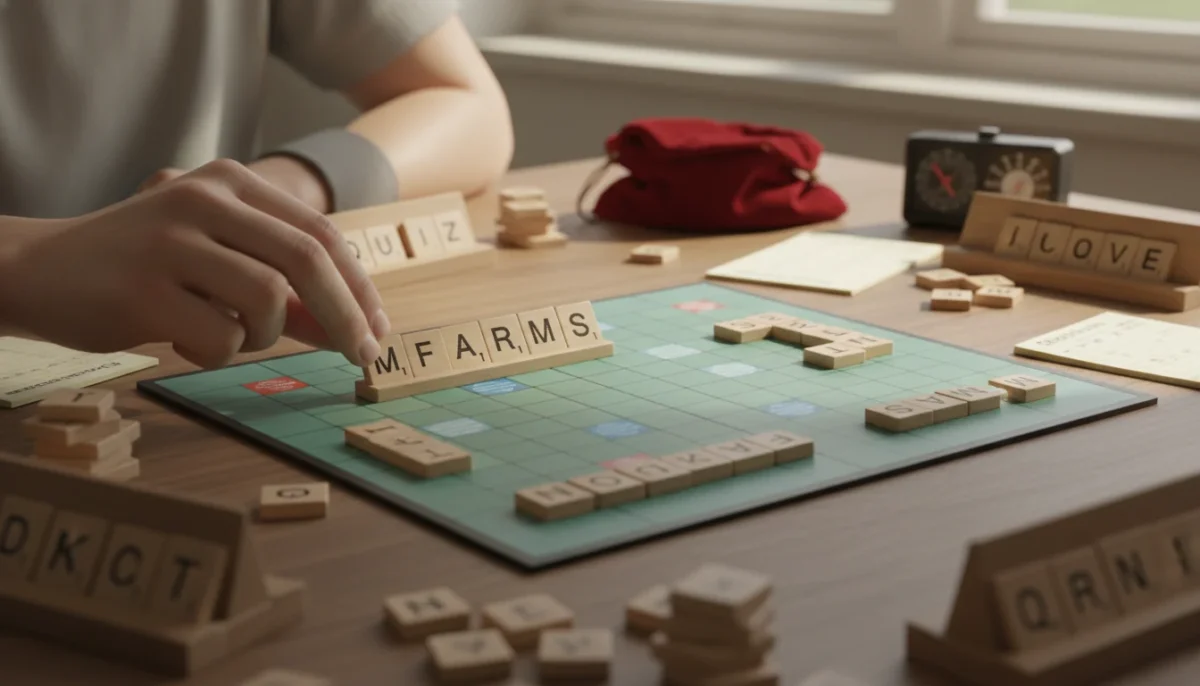
Scrabble Official Rules: Adding Letters to Existing Words

Many players mistakenly believe they can only form entirely new words, rather than modifying existing ones on the board.

Yes, according to the Mattel Scrabble Official Rulebook, you can add tiles to the beginning or end of an existing word.

Scrabble Official Rules [edition not specified]

Expertise: Board game rules expert. | Verification: Cross-referenced official rulebook text regarding word formation methods. | Purpose: Resolve the #1 confusion regarding word modification in Scrabble.
Key Insight: To avoid arguments, confirm that all new tiles are placed in one continuous line before scoring.

These rules correspond to the US edition of Scrabble.

Official Rule Breakdown

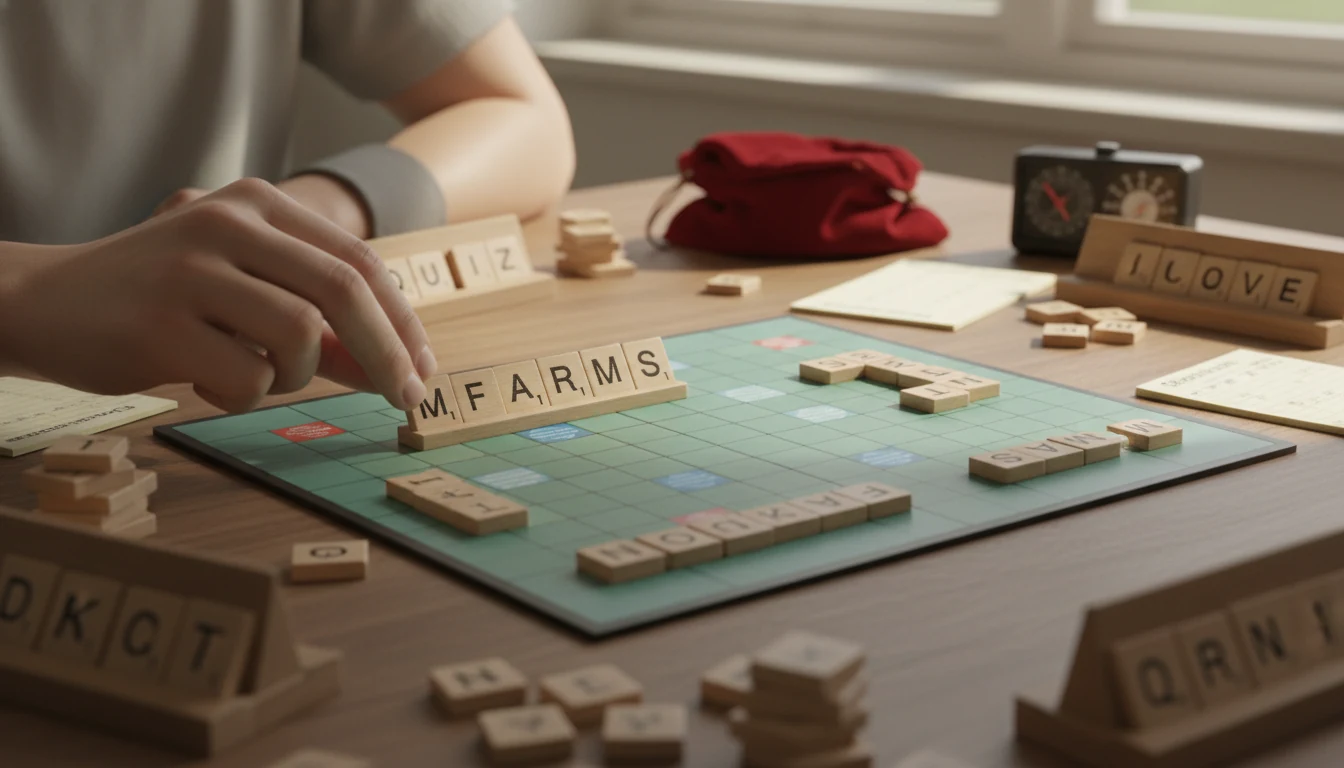
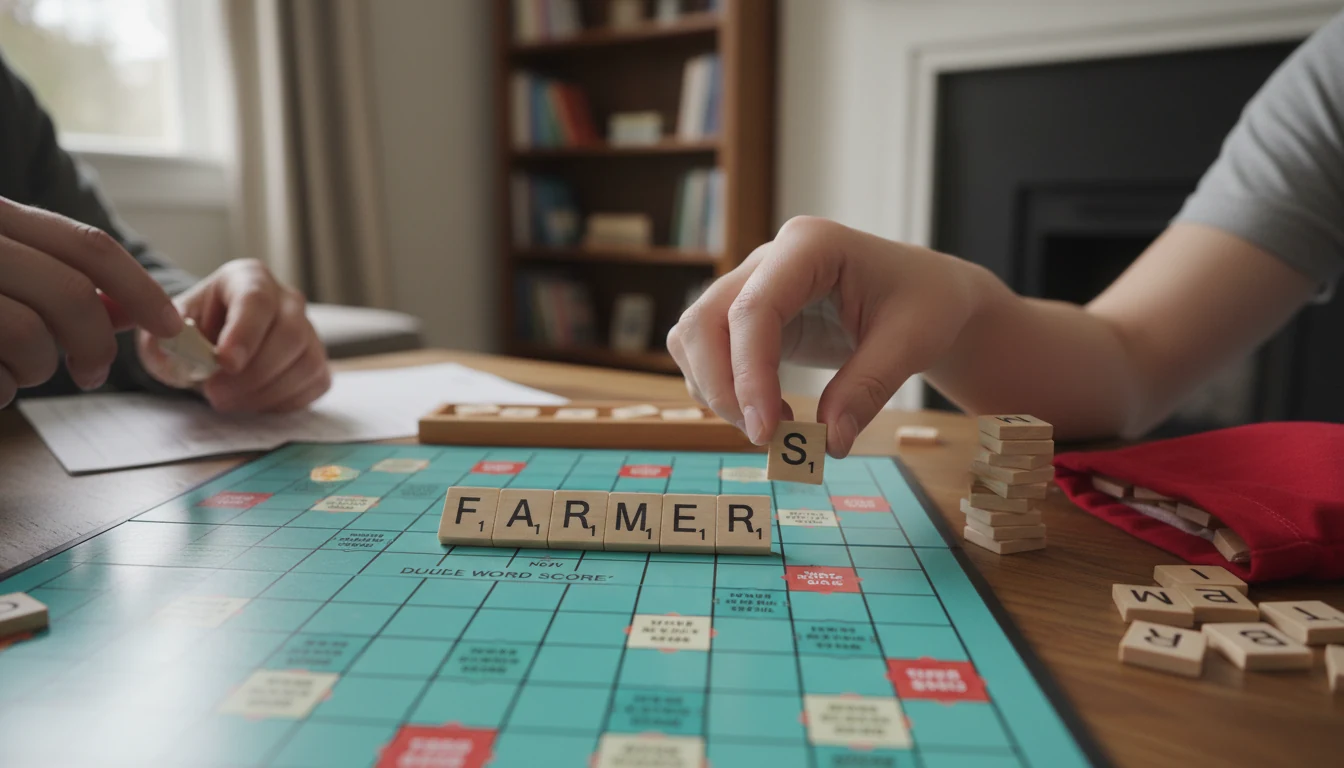
According to the Scrabble Official Rulebook, players have several ways to form new words. One primary method is adding one or more tiles to the beginning or end of a word already on the board, or to both the beginning and end of that word (e.g., turning TRAINER into STRAINERS). All tiles played in a single turn must be placed in one continuous line, either horizontally or vertically. If any tile touches another tile in adjacent rows, it must form part of a complete word in crossword fashion.

Step-by-Step

  1. Step 1: Identify an existing word on the board to modify.
  2. Step 2: Select tiles from your rack to add to the start, the end, or both ends of that word.
  3. Step 3: Place the tiles in a single continuous horizontal or vertical line.
  4. Step 4: Ensure all resulting words formed by the new tiles are valid and connected in crossword fashion.

Example Play Situation

Alice sees the word 'TRAIN' on the board. She uses her tiles to add an 'E' and an 'R' to the end, forming 'TRAINER'. Bob then plays a word that connects to the 'T' in Alice's new word, creating a new intersection.

Scrabble rules rule situation

Common Misconceptions

  • Thinking you can only play words that don't touch existing words
  • Believing you can add letters to the middle of a word
  • Assuming you can add tiles to multiple different words in one turn

Quick Reference

You CanYou Cannot
Add tiles to the beginning of a wordAdd tiles to the middle of an existing word
Add tiles to the end of a wordAdd tiles to various different words in the same turn
Add tiles to both ends of a word simultaneouslyPlace tiles in non-continuous lines

Frequently Asked Questions

What is the official rule for adding letters to a word in Scrabble?
You can add tiles to the beginning, end, or both ends of an existing word.
Can I add a letter to the middle of a word already on the board?
No, tiles must be added to the beginning or end to extend the word.
Is it allowed to extend a word on both ends in one move?
Yes, you can add tiles to both the beginning and end of a word in a single turn.
What happens if my new tiles form multiple words?
You receive the score for all words formed or modified by your play.
Categories
Board Games Card Play Rules

Cards Against Humanity Judge Rules: Official & House Rules

Many players wonder if the judge in Cards Against Humanity is allowed to play their own cards to influence the outcome.

According to the official Cards Against Humanity rules available, this exact scenario is not explicitly defined.

Cards Against Humanity [edition not specified]

These rules correspond to the UK edition of Cards Against Humanity.

Official Rule Breakdown

The accessible official and trusted secondary sources reviewed for 'cards against humanity judge can t pick own card rule' did not provide a precise clause that directly resolves this mechanism. To avoid inventing rules, verify this point in the latest edition-specific official rulebook or FAQ.

Cards Against Humanity rules rule situation

Common Misconceptions

  • The judge can play their own cards to win
  • The judge must play a card from their hand
Categories
Board Games Rules & Disputes

Cluedo Official Rules: Disproving Suggestions Guide

Many players mistakenly believe that a suggestion must always be refuted by another player, but the rules account for situations where no cards can be shown.

According to the Cluedo Official Rulebook, if no one can disprove a suggestion, the player has isolated one or more of the Murder Cards.

Cluedo Instructions, [edition not specified], Page 7

These rules correspond to the UK edition of Cluedo.

Official Rule Breakdown

In Cluedo, when a player makes a suggestion, the player in turn must, if possible, show one clue card which refutes that suspicion. This card may be a room, person, or weapon. If the next player in turn is unable to show a clue card, the enquiry passes on to the next player after that until one card has been shown. If no one has a card to show, the player making the suggestion has isolated one or more of the 'Murder Cards' (Cluedo Instructions, Page 7).

Step-by-Step

  1. Step 1: A player makes a suggestion consisting of a suspect, a weapon, and a room.
  2. Step 2: The player in turn must attempt to show one clue card that refutes the suggestion.
  3. Step 3: If the first player cannot show a card, the enquiry passes to the next player in turn.
  4. Step 4: This process continues until a card is shown or all players have been unable to refute the suggestion.

Example Play Situation

Alice suggests that Miss Scarlett used the Dagger in the Library. Bob is asked to show a card, but he has no cards matching those items. The enquiry passes to Charlie, who also cannot show a card. Since no one can disprove the suggestion, Alice has successfully isolated the Murder Cards.

Clue/Cluedo rules rule situation

Common Misconceptions

  • Thinking the turn skips everyone if the first person can't show a card
  • Believing a suggestion must be refuted to be valid
  • Assuming you can only show a card if it is your turn

Quick Reference

You CanYou Cannot
Pass the enquiry to the next player if you cannot show a cardDo not assume a suggestion is wrong just because no one can show a card
Show a room, person, or weapon card to refute a suspicionDo not show more than one card to refute a single suggestion
Use the isolated cards to make a full accusation

Frequently Asked Questions

What is the official rule for a suggestion in Cluedo when no one can disprove it?
The player has isolated one or more of the Murder Cards.
Can I show a weapon card to refute a suggestion?
Yes, a card shown may be a room, person, or weapon.
What happens if the player in turn cannot show a clue card?
The enquiry passes to the next player in turn until a card is shown.
How do I know if I have found the murderer?
If no one can show a card to refute your suggestion, you have isolated the Murder Cards.
Categories
Board Games Classic Games

Monopoly Building and Monopoly Rules Official Guide

Many players mistakenly believe they can build houses on any property, but the official rules require owning a complete colour set first.

According to the Hasbro Official Rulebook, rent for streets is influenced by the owner's monopoly status, which is achieved by owning all properties in a colour set.

Monopoly Official Rules [edition not specified]

Expertise: Board game rules expert. | Verification: Cross-referenced official rulebook text regarding property types and rent calculation. | Purpose: Resolve the #1 confusion regarding when and where players can build houses.
Key Insight: To avoid arguments, ensure all players agree on the colour set groupings before the first house is built.

These rules correspond to the UK edition of Monopoly.

Official Rule Breakdown

The official rules for Monopoly specify that rent for street properties is determined by several factors, including the owner's monopoly status and the level of development. A monopoly is established when a player owns every property within a single colour set. Once this set is complete, the player is permitted to construct houses and hotels on those sites, which significantly increases the rent collected from opponents who land on them. For railroads and utilities, rent is calculated based on the number of assets owned or the dice roll, respectively, rather than building structures.

Step-by-Step

  1. Step 1: Acquire all Title Deed cards within a single colour set.
  2. Step 2: Ensure the properties are not currently mortgaged to the Bank.
  3. Step 3: Pay the Bank the required building cost per house or hotel as listed on the Title Deed.
  4. Step 4: Place the houses or hotels on the properties to increase the rent value.

Example Play Situation

Alice owns all the pink properties in her colour set. On her turn, she pays the Bank to add two houses to each pink space. Later, Bob lands on a pink property and must pay the increased rent dictated by Alice's development level.

Monopoly rules rule situation

Common Misconceptions

  • Thinking you can build houses without owning the full colour set
  • Assuming railroads or utilities can have houses built on them
  • Believing rent increases automatically without purchasing buildings

Quick Reference

You CanYou Cannot
Collect all properties in a colour set to achieve a monopolyDo not attempt to build houses on railroads or utilities
Pay the Bank to add houses or hotels to your streetsDo not build on properties that are currently mortgaged
Check the Title Deed for specific building costsDo not build on a property if you do not own the full colour set

Frequently Asked Questions

What is the official rule for building in Monopoly?
You must own the complete colour set of properties to build houses or hotels.
Can I build houses on the Electric Company?
No, houses and hotels can only be built on street properties, not utilities.
How do I get a monopoly in Monopoly?
By owning every property card that belongs to a specific colour group.
Does rent go up if I own all the railroads?
Yes, rent for railroads increases based on the total number of railroads you own.
Categories
Board Games Card Play Rules

Risk Official Rules: Progressive Card Trade Explained

Many players mistakenly believe that the value of a card trade is fixed, whereas the actual rules implement a progressive system based on total sets traded.

According to the Risk Official Rulebook, card trading is a progressive mechanic where the number of armies received increases based on the total number of sets already traded in by all players.

Risk Official Rulebook, [edition not specified], [page not specified]

These rules correspond to the US edition of Risk.

Official Rule Breakdown

The progressive card trade mechanism allows players to trade in matched sets of cards at the beginning of subsequent turns to receive additional armies. The specific number of armies granted depends on the total number of sets anyone has traded in throughout the game. For example, the first set traded in is worth 4 armies. If 5 sets have been traded in so far, the next set will be worth 15 armies. Players can use the bottom edge of the game board to keep traded-in cards face down to track the value of the next available trade.

Step-by-Step

  1. Step 1: Collect a set of 3 cards (same design, three different designs, or two plus a wild card).
  2. Step 2: Wait until the beginning of your next turn to trade them in.
  3. Step 3: Check the total number of sets already traded in by all players to determine the current army value.
  4. Step 4: Trade in the cards and receive the corresponding number of additional armies.

Example Play Situation

Alice has collected three Infantry cards. At the start of her turn, she notices that 4 sets have already been traded in by other players. She trades her set in and receives the progressive army value designated for the 5th set.

Risk rules rule situation

Common Misconceptions

  • Thinking every set is worth the same number of armies
  • Trading cards in during your movement phase instead of the start of your turn
  • Believing you can trade cards whenever you want without waiting for your turn

Quick Reference

You CanYou Cannot
You can trade in sets at the beginning of your turnYou cannot trade in cards during your movement phase
You can use the game board edge to track trade valuesYou cannot ignore the progressive value established by previous trades
You can wait to trade in sets if you have 5 or 6 cards

Frequently Asked Questions

What is the official rule for card trading in Risk?
You trade matched sets at the start of your turn for a progressive number of armies.
How many armies do I get for the first set traded in?
The very first set traded in by any player is worth 4 armies.
Do I have to trade in cards if I have 6 cards?
Yes, if you have 5 or 6 cards at the start of your turn, you must trade in at least one set.
How does the progressive value work?
The army reward increases based on the total number of sets everyone has traded in so far.
Categories
Board Games FAQ & Clarifications

Ticket to Ride Europe Train Station Official Rules

Many players are unsure if Train Stations can be used to claim routes that have already been occupied by other players.

According to the Days of Wonder Official Rulebook, Train Stations allow a player to use one Route belonging to an opponent to complete Destination Tickets.

Ticket to Ride Europe Official Rulebook, Anniversary Edition, [page not specified]

These rules correspond to the UK edition of Ticket to Ride Europe.

Official Rule Breakdown

Regarding the use of Train Stations, players must choose specific Routes to use for their built Stations during the end-game scoring phase. Each Station allows the player to use one (and only one) Route belonging to an opponent into that city for the purpose of completing Destination Tickets. The Station must be placed on top of the Train Cars on the chosen Route. These Routes then behave as if they are owned by both the player who owns the Train Car and the player who owns the Station. If two players choose the same Route for their Stations, that Route is considered owned by three players. Note that a Station cannot be placed on a Route that has not been claimed by any opponent, as there would be no Train Car to place it on.

Step-by-Step

  1. Step 1: Reveal all Destination Tickets at the end of the game.
  2. Step 2: Choose the specific Routes you wish to use for your built Stations.
  3. Step 3: Place each Station on top of the Train Cars on the chosen opponent's Route.
  4. Step 4: Calculate points, treating the Route as owned by both the original owner and the Station owner.

Example Play Situation

Alice has built a Train Station and wants to complete a ticket from London to Paris. She chooses the Route Bob claimed between those cities and places her Station on top of Bob's colored Train Cars. Now, Alice can use that same Route to satisfy her Destination Ticket requirements.

Ticket to Ride rules rule situation

Common Misconceptions

  • Thinking you can use a Station on a Route that no one has claimed yet.
  • Believing a single Station can be used for multiple different Routes.
  • Assuming a Station can be used to claim a Route that is not owned by an opponent.

Quick Reference

You CanYou Cannot
You can place a Station on an opponent's RouteYou cannot place a Station on an unclaimed Route
You can use the Route to complete your Destination TicketsYou cannot use more than one Route per Station
You can add 4 points to your score for each unplayed Station

Frequently Asked Questions

What is the official rule for using Train Stations in Ticket to Ride Europe?
Each Station lets you use one Route owned by an opponent to complete your Destination Tickets.
Can I place a Station on a route that hasn't been claimed by anyone?
No, a Station must be placed on top of an opponent's Train Cars.
What happens if two players want to use the same opponent's route for their Stations?
The Route is then considered owned by three players: the original owner and both Station owners.
How many points do I get for a Station I didn't use?
You receive 4 points for each of your unplayed Stations.