
Categories
Board Games Card Play Rules

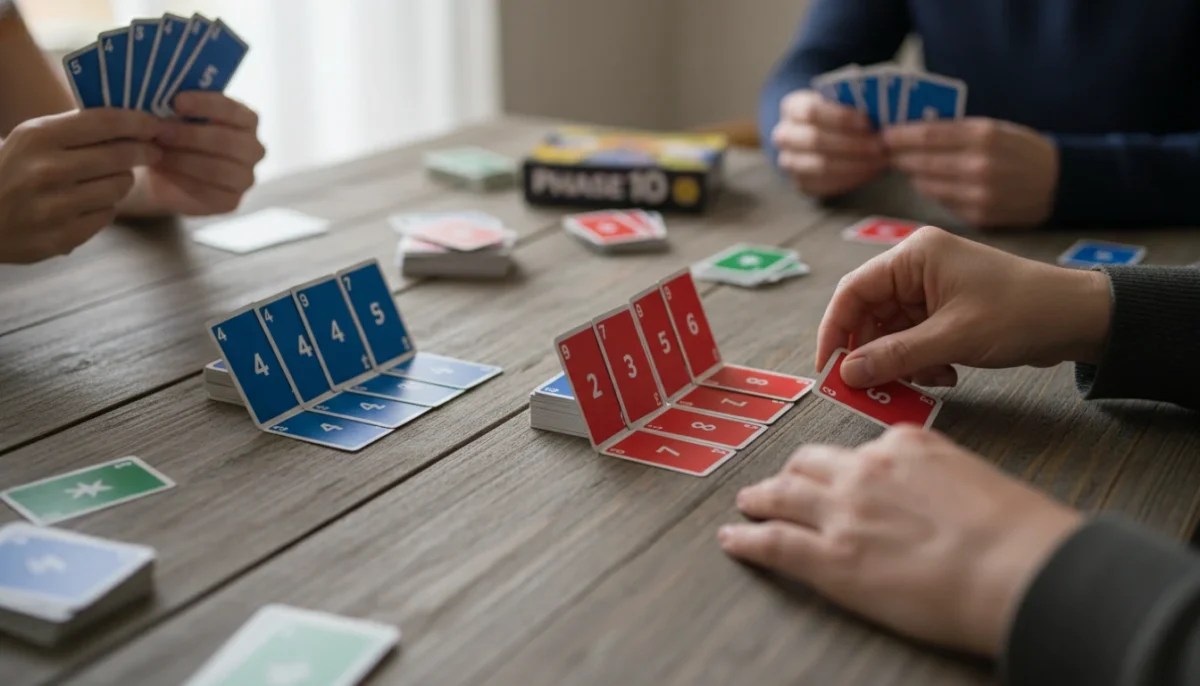
Phase 10 Official Rules: How to Hit Other Players’ Phases

Many players wonder if they can strategically interfere with an opponent's progress by playing cards onto their completed phases.

Yes, according to the Phase 10 Official Rulebook, you can add cards to other players' phases through the 'hitting' mechanic.

Phase 10 Official Rules, [edition not specified], [page not specified]

Expertise: Board game rules expert. | Verification: Cross-referenced official PDF manual content. | Purpose: Resolve the #1 confusion regarding hitting opponents' cards in Phase 10.
Key Insight: To avoid arguments, ensure everyone agrees that a player must be 'Phase-down' before they can start hitting.

These rules correspond to the US edition of Phase 10.

Official Rule Breakdown

According to the Phase 10 Official Rulebook, 'hitting' is the method used to get rid of leftover cards after making a Phase. A hit is performed by placing a card directly onto a Phase that has already been laid down on the table. This can be done to your own cards, another player's cards, or both. To be a valid hit, the card must properly fit the existing combination; for example, adding a '2' to a player's existing run of '3, 4, 5, 6' or adding a '4' to a set of '4s'. You may only perform a hit during your turn, and you must have already laid down your own Phase before you are eligible to hit.

Step-by-Step

  1. Step 1: Successfully lay down your own Phase face-up on the table.
  2. Step 2: On your turn, draw a card from either the draw pile or the discard pile.
  3. Step 3: Identify a card in your hand that fits an existing Phase on the table (yours or an opponent's).
  4. Step 4: Place that card directly onto the existing Phase to perform a 'hit'.

Example Play Situation

Alice successfully lays down her Phase 1. On Bob's next turn, Bob draws a '5' and sees that Alice has a set of '5s' on the table. Bob places his '5' onto Alice's set to perform a hit.
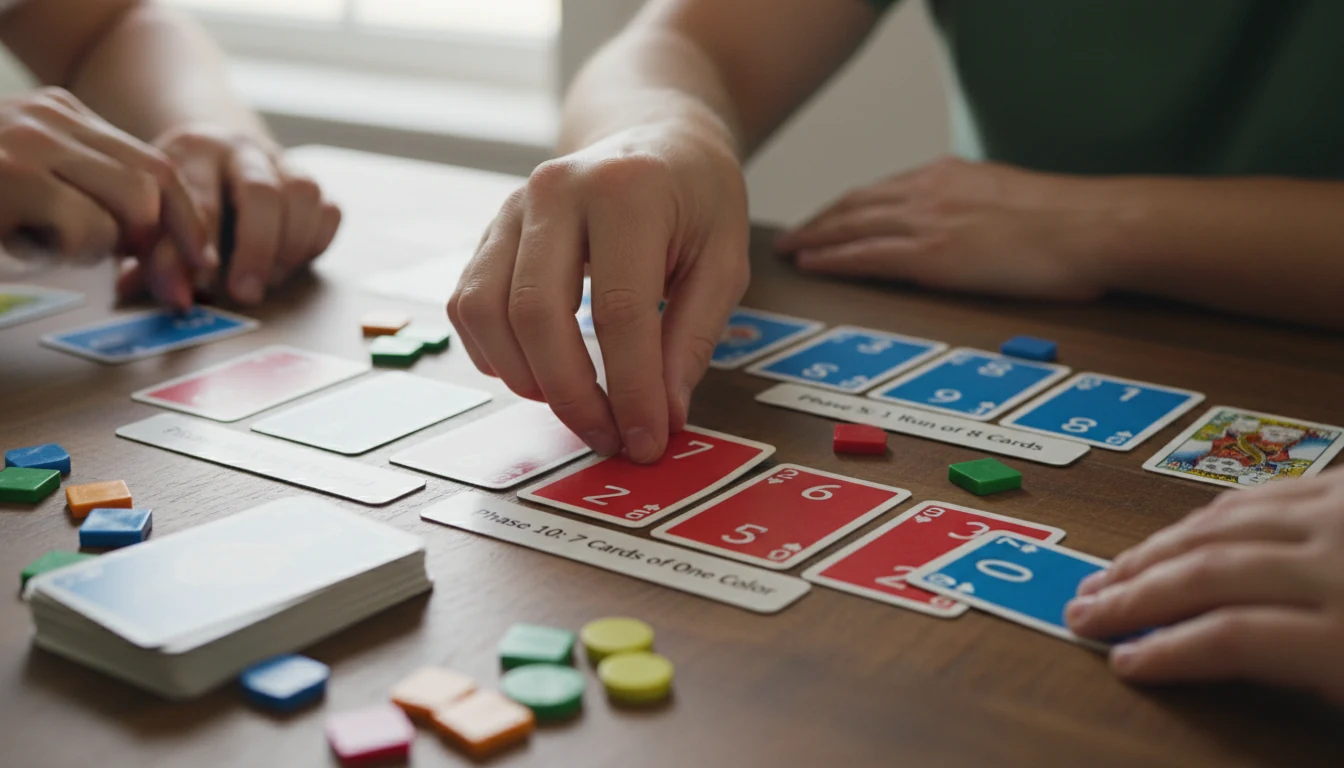
Phase 10 rules rule situation

House Rules

[HOUSE RULE] Some groups play with a variation where players can play cards from other players' completed phases, but this is not part of the official rules.

Common Misconceptions

  • Thinking you can hit a Phase before you have laid down your own Phase.
  • Believing you can play a card that doesn't fit the sequence or set of the existing Phase.
  • Assuming you can only hit your own cards.

Quick Reference

You CanYou Cannot
You can hit your own cardsYou cannot hit a Phase before laying down your own
You can hit another player's cardsYou cannot hit a Phase with a card that does not fit the set or run
You can hit both your cards and an opponent's cardsYou cannot hit during another player's turn

Frequently Asked Questions

What is the official rule for hitting in Phase 10?
You can place a card onto an existing Phase if it fits the set or run, including opponents' Phases.
Can I hit an opponent's Phase if I haven't finished mine yet?
No, you must have your own Phase laid down before you can perform a hit.
Is it allowed to add a Wild card to someone else's Phase?
Yes, you can add a Wild card to any valid card situation to complete a hit.
What happens if I try to hit a Phase with a card that doesn't fit?
The hit is invalid; you cannot play a card that does not properly fit the existing combination.

Categories
Board Games Card Play Rules

Cards Against Humanity Pick Two Card Rules Official Guide

Many players wonder if they can play multiple cards at once to increase their chances, but the official rules for Cards Against Humanity do not mention a 'pick two' mechanic.

According to the official Cards Against Humanity rules available, this exact scenario is not explicitly defined.

Cards Against Humanity [edition not specified]

These rules correspond to the US edition of Cards Against Humanity.

Official Rule Breakdown

The accessible official and trusted secondary sources reviewed for 'cards against humanity pick two card rules' did not provide a precise clause that directly resolves this mechanism. To avoid inventing rules, verify this point in the latest edition-specific official rulebook or FAQ.

Example Play Situation

None

Cards Against Humanity rules rule situation

Common Misconceptions

  • Players can play two cards at once to improve their odds
  • The judge can select two cards from one player
  • Playing two cards is a standard variation
Categories
Board Games Turn Order & Actions

Cluedo Official Rules: How to Make a Suggestion

Many players wonder if they must physically move suspect and weapon tokens into a room when making a suggestion, but the official mechanics clarify this process.

According to the Waddingtons Cluedo Official Rulebook, yes, you must bring the suspect and weapon tokens into the room.

Cluedo Instructions, [edition not specified], [page not specified]

These rules correspond to the UK edition of Cluedo.

Official Rule Breakdown

When a player enters a room, they may make a suggestion about the crime by calling a suspect and a weapon into that room for enquiries. According to the Cluedo Instructions (specifically the 'On your turn, roll, move and enter a room' section), the player must bring the suspect's character token and the weapon token they are asking about into the room with them. After the suggestion is made, the player to the left must attempt to show a clue card to refute the suspicion. The character and weapon tokens remain in the room after the suggestion is made, though if a character token belongs to another player, that player can ask a question on their next turn without moving.

Step-by-Step

  1. Step 1: Roll the dice and move your character token into a room.
  2. Step 2: Select one suspect and one weapon to include in your suggestion.
  3. Step 3: Physically move the chosen suspect token and weapon token into the room you have entered.
  4. Step 4: State your suggestion (e.g., 'Was it Scarlet, with the Rope in the Garage?').
  5. Step 5: The player to your left must show you one clue card if they have it.

Example Play Situation

Alice rolls the dice and moves her token into the Kitchen. She then brings the Professor Plum token and the Dagger token into the Kitchen to suggest the murder happened there. Bob, sitting to her left, shows Alice the Plum card to refute the suggestion.

Clue/Cluedo rules rule situation

Common Misconceptions

  • Thinking you can make a suggestion without moving the tokens into the room
  • Assuming you can move through multiple rooms in one turn to reach a room
  • Believing you must roll an exact number to enter a room

Quick Reference

You CanYou Cannot
Bring the suspect and weapon tokens into the room with youDo not move diagonally across the board
Stop moving immediately upon entering a roomDo not leave a room in the same move you entered it
Ask about suspects, weapons, and rooms you haven't crossed off your sheetDo not move your piece through a square occupied by another piece

Frequently Asked Questions

What is the official rule for making a suggestion in Cluedo?
You must enter a room, bring the suspect and weapon tokens into it, and then ask your question.
Do I have to move the suspect token when I ask a question?
Yes, you must bring the suspect's character token and the weapon token into the room with you.
Can I make a suggestion if I don't enter a room?
No, you must enter a room and then you can make a suggestion about the crime.
What happens to the tokens after I make a suggestion?
The tokens stay in the room, but if a player's character token was moved, they can ask a question on their next turn.
Categories
Board Games Classic Games

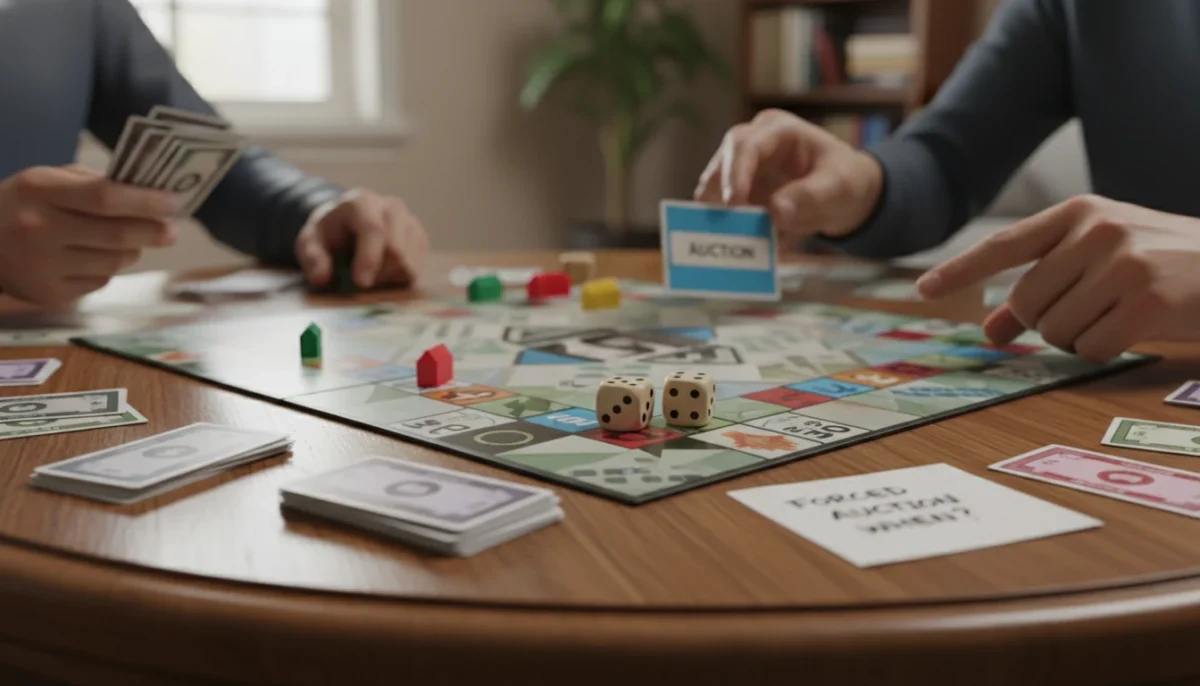
Monopoly Forced Auction Rules: Official Gameplay Guide

Many players mistakenly believe they can trigger an auction at any time, but the official rules specify a very narrow window for this mechanic.

According to the Monopoly Official Rulebook, an auction occurs when a player lands on an unowned property and chooses not to buy it.

Monopoly Official Rulebook, [edition not specified]

Expertise: Board game rules expert with extensive experience in classic property trading games. | Verification: Verified against official Monopoly rulebook documentation. | Purpose: Resolve the #1 confusion regarding when and how auctions are triggered in Monopoly.
Key Insight: To avoid arguments, ensure the Banker is ready to act as auctioneer before the first property is declined.

These rules correspond to the US edition of Monopoly.

Official Rule Breakdown

In Monopoly, the auction process is triggered by a specific event during play. According to the official rules, when a player lands on a property that is not already owned by anyone else, they have the first priority to buy it from the Bank at the printed price. If the player chooses not to buy that property, it is then auctioned off to the highest bidder (Monopoly Official Rulebook, [page not specified]). The Banker acts as the auctioneer during this process.

Step-by-Step

  1. Step 1: A player lands on a property that is not currently owned by any player.
  2. Step 2: The player decides whether to purchase the property at the price listed on the space.
  3. Step 3: If the player declines the purchase, the Banker immediately initiates an auction.
  4. Step 4: The Banker auctions the property to all players, and the highest bidder wins the Title Deed.

Example Play Situation

Alice lands on Boardwalk, which is unowned. She decides she cannot afford the price, so she declines the purchase. The Banker immediately begins an auction, and Bob wins the property by being the highest bidder.

Monopoly rules rule situation

Common Misconceptions

  • Thinking auctions can happen for owned properties
  • Believing players can force an auction to help a friend
  • Assuming the Banker must buy the property if no one bids

Quick Reference

You CanYou Cannot
Decline a purchase to trigger an auctionAuction a property that is already owned
Let the Banker act as the auctioneerForce an auction if you want to buy the property

Frequently Asked Questions

What is the official rule for auctions in Monopoly?
Auctions occur only when a player lands on unowned property and declines to buy it.
Can I auction a property that someone else already owns?
No, auctions are only for properties that are not currently owned by any player.
What happens if I land on a property but don't have enough money?
If you decline to buy it because you lack funds, it goes to a forced auction.
Who runs the auction during the game?
The player elected as the Banker acts as the auctioneer.
Categories
Board Games Strategy Games

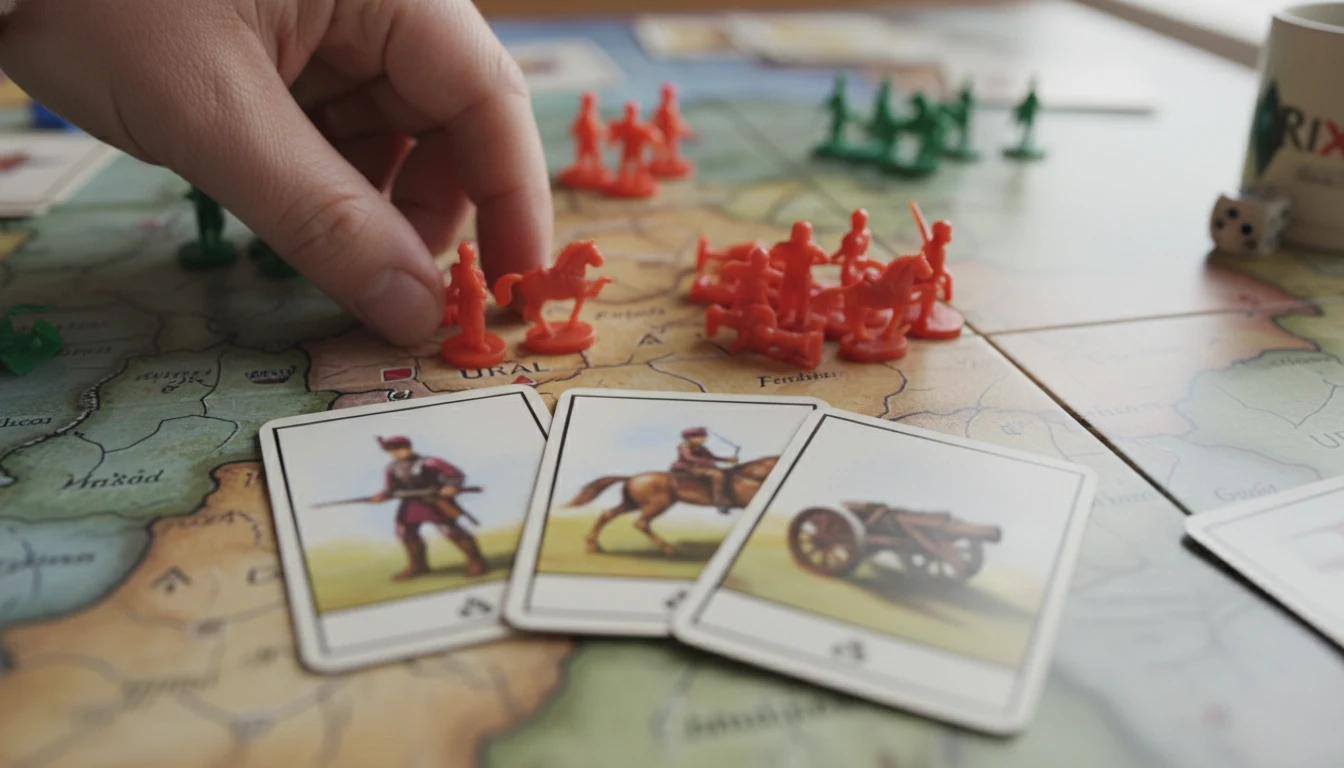
Risk Elimination Rules: Official Rules for Player Removal

Many players mistakenly believe they only gain the territories of an eliminated opponent, but the official rules grant additional card rewards.

According to the Parker Brothers Official Rulebook, when you eliminate an opponent, you receive all the cards they currently hold.

Risk Rules 2022, Elimination of Opponents

These rules correspond to the US edition of Risk.

Official Rule Breakdown

When a player is able to take the last remaining piece of an opponent on their turn, they are awarded all cards that the eliminated opponent had in their possession (Risk Rules 2022, Elimination of Opponents). Following this acquisition, the player may combine these new cards with their existing hand. If the combined total allows for the creation of one or more sets, the player may turn them in immediately during that same turn to collect additional armies. This is only possible if the total number of cards held by the attacker and the eliminated player combined equals six or more sets.

Step-by-Step

  1. Step 1: Capture the last remaining army/territory of an opponent.
  2. Step 2: Collect all Risk cards currently held by that eliminated player.
  3. Step 3: Combine the collected cards with your own current hand.
  4. Step 4: Identify any complete sets (Infantry, Cavalry, or Artillery) within the combined total.
  5. Step 5: Turn in those sets immediately to receive the corresponding army reinforcements.

Example Play Situation

Alice attacks Bob's last territory and eliminates his army. Alice takes all of Bob's Risk cards and adds them to her own. Since the combined cards allow her to form two complete sets, Alice turns them in immediately to receive extra armies for her next turn.

Risk rules rule situation

Common Misconceptions

  • Thinking you only get the territories and not the cards
  • Waiting until your next turn to turn in the newly acquired cards
  • Believing you can only turn in sets if you had them before the elimination

Quick Reference

You CanYou Cannot
You can combine eliminated cards with your own handYou cannot turn in sets if the combined total is less than six cards
You can turn in sets immediately after an eliminationYou cannot wait until a later turn to claim the eliminated player's cards
You can receive multiple army increases if you form multiple sets

Frequently Asked Questions

What is the official rule for eliminating a player in Risk?
You receive all cards held by the opponent you just eliminated.
Can I turn in cards from an eliminated player on the same turn?
Yes, if you can form sets using the combined cards, you may turn them in immediately.
Do I get the opponent's armies too?
No, you receive their cards, but the armies are removed from the board.
What happens if I collect cards but can't make a set?
You simply add those cards to your hand for future use.
Categories
Board Games FAQ & Clarifications

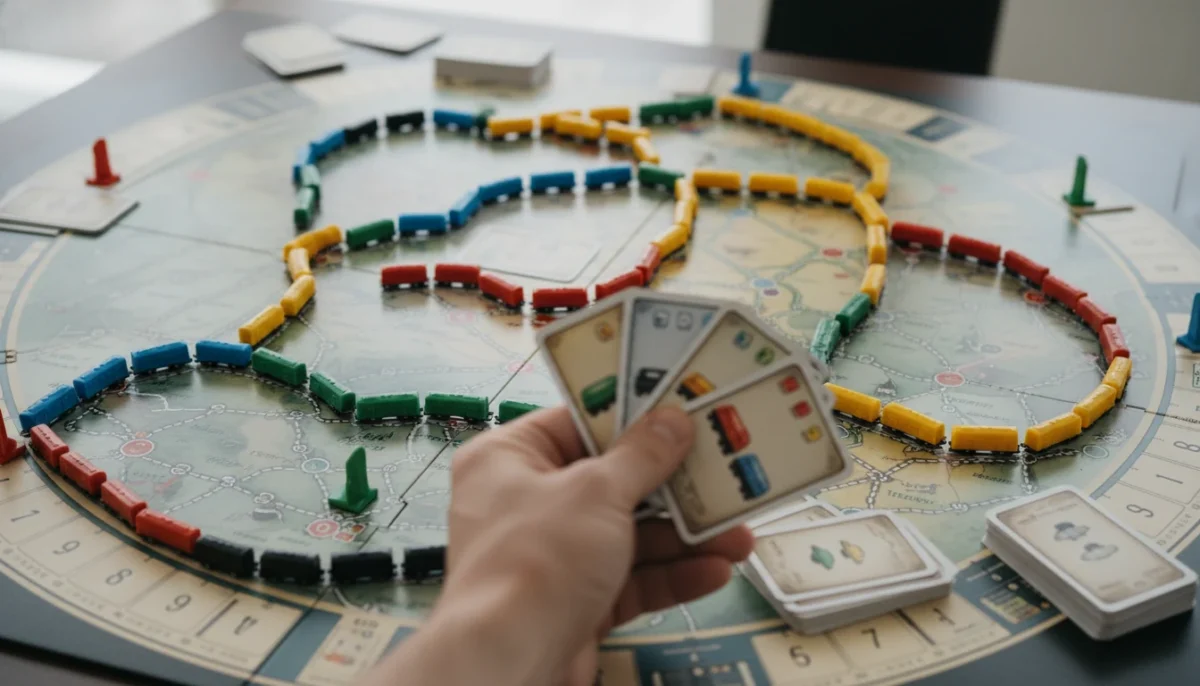
Ticket to Ride Europe Tunnel Rules: Official Rules Guide

Many players mistakenly assume they can simply play the required cards for a tunnel and complete the route immediately, but the official rules require a risk-based reveal process.

According to the Days of Wonder Official Rulebook, claiming a Tunnel Route involves a specific reveal process that may require playing additional cards.

Ticket to Ride Europe Official Rules, [edition not specified], [page not specified]

These rules correspond to the US edition of Ticket to Ride Europe.

Official Rule Breakdown

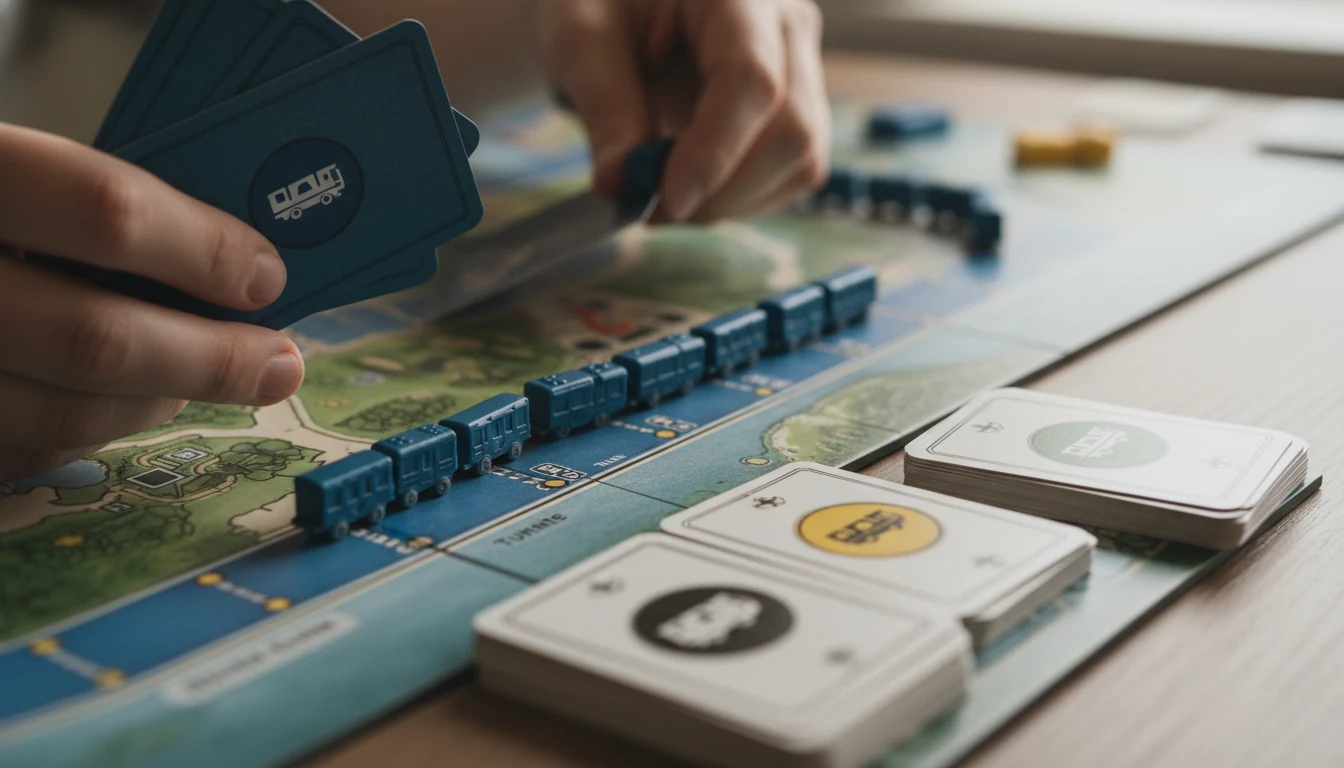
To claim a Tunnel Route, a player must first lay down the number of cards required by the length of the Route. Following this, the three top cards from the Train draw pile are turned faceup, regardless of the length of the Tunnel Route. For each card revealed whose color matches the color of the cards played to claim the Tunnel Route, the player must play an additional card of the same color from their hand (or a Locomotive). If the player does not have enough additional Train Car cards of the matching color or does not wish to play them, they may take all their cards back in their hand and their turn ends. At the end of the turn, the three Train Car cards revealed for the Tunnel are discarded. Note that Locomotives act as multi-colored wild cards; if a Locomotive is drawn during the reveal, it automatically matches the color of the cards played and forces the player to play an additional matching card.

Step-by-Step

  1. Step 1: Lay down the number of Train Car cards required by the length of the Tunnel Route.
  2. Step 2: Turn the top three cards from the Train draw pile faceup.
  3. Step 3: For every revealed card that matches the color of the cards played, identify the required additional cards.
  4. Step 4: Play an additional card of the matching color (or a Locomotive) for each match found.
  5. Step 5: Successfully claim the Tunnel if all required additional cards are played; otherwise, return all cards to hand and end the turn.

Example Play Situation

Alice attempts to claim a three-space Blue Tunnel. She plays three Blue cards. Bob turns over the top three cards of the draw pile, revealing one Blue card and two Red cards. Alice must then play one additional Blue card or Locomotive from her hand to successfully claim the route.

Ticket to Ride rules rule situation

Common Misconceptions

  • Thinking the tunnel length determines how many cards are revealed
  • Assuming you can skip the additional card requirement if you don't want to
  • Forgetting that Locomotives count as matches during the reveal

Quick Reference

You CanYou Cannot
You can use a Locomotive to satisfy an additional card requirementYou cannot claim the tunnel if you fail to provide the matching cards
You can take all your cards back if you cannot complete the tunnelYou cannot use the revealed cards to claim the route

Frequently Asked Questions

What is the official rule for claiming a Tunnel in Ticket to Ride Europe?
Play the required cards, reveal three draw pile cards, and play additional matching cards for any matches found.
What happens if I don't have enough cards to finish a tunnel?
You must take all your played cards back into your hand and your turn ends immediately.
Do Locomotives count as matches during a tunnel reveal?
Yes, Locomotives are multi-colored wild cards and will match the color of the cards you played.
How many cards are revealed when attempting a tunnel?
Exactly three cards are turned faceup from the Train draw pile.
Categories
Board Games Strategy Games

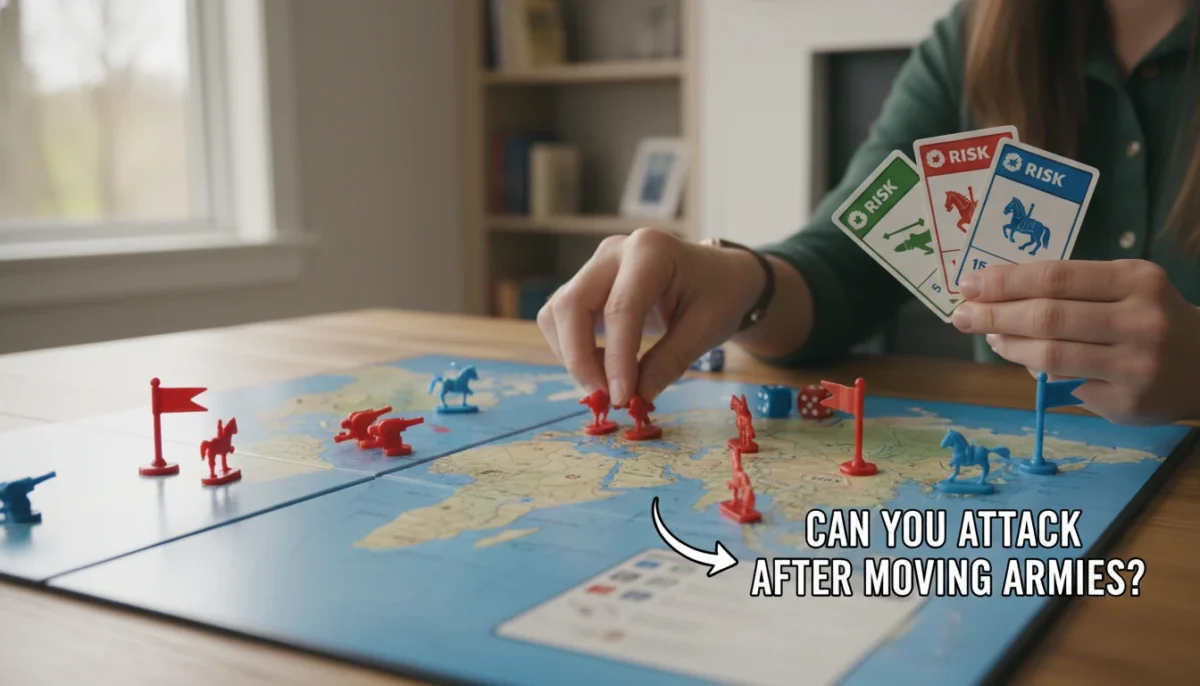
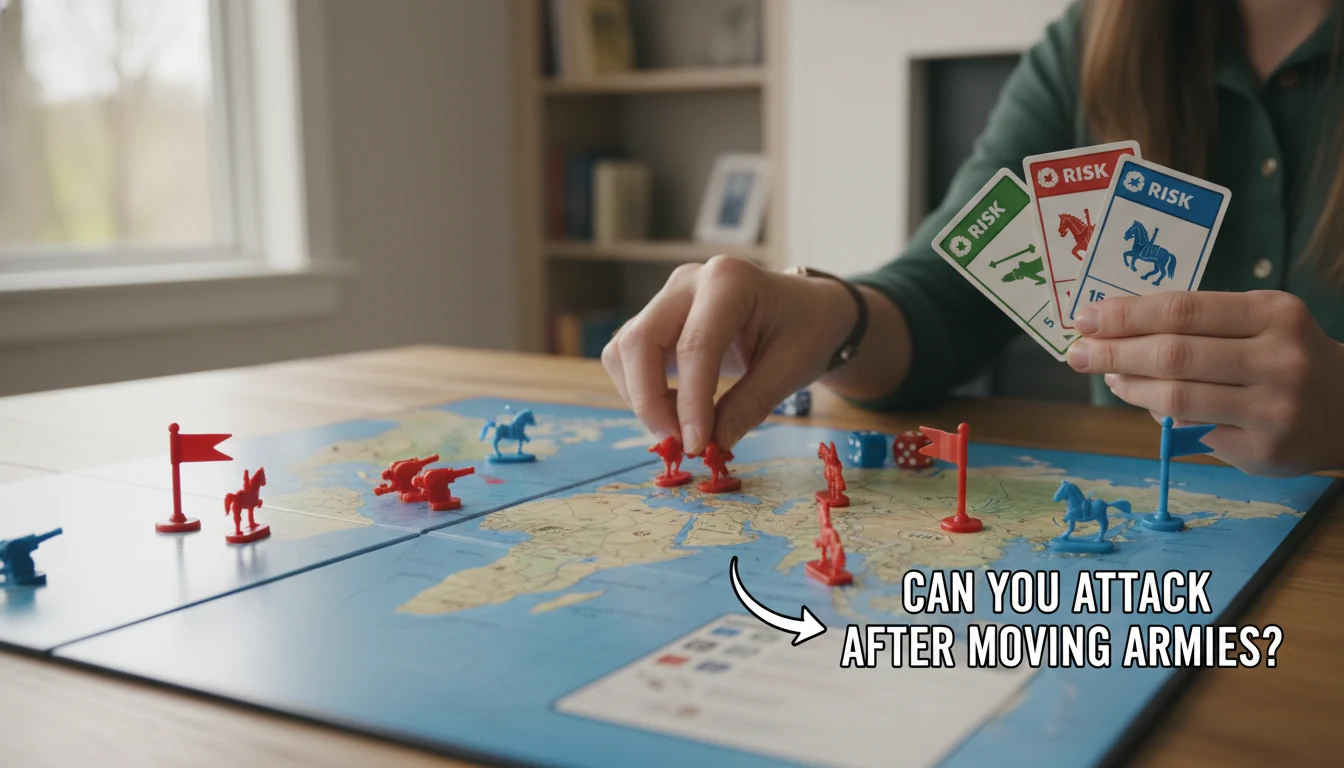
Risk Official Rules: Can You Move Armies Before Attacking?

Many players mistakenly believe that moving armies to fortify their position can occur before they begin their offensive attacks.

No, according to the Risk Official Rulebook, you cannot attack after moving armies; fortification is the final step of your turn.

Risk Official Rules 2022, [page not specified]

Expertise: Board game rules expert and technical writer. | Verification: Cross-referenced official 2022 rulebook PDF content regarding turn sequence and fortification. | Purpose: Resolve the #1 confusion regarding turn order and the timing of the fortification rule.
Key Insight: To avoid arguments, establish that fortification is the very last action of the turn before passing the dice.

These rules correspond to the US edition of Risk.

Official Rule Breakdown

According to the Risk Official Rulebook (Risk_Rules_2022.pdf), the sequence of a turn is strictly defined. A player ends their attack(s) when they wish or are forced to by running out of armies. If they have captured at least one territory, they take one RISK card. The final step in the turn sequence is to fortify the position, which involves moving armies from one or more territories to other territories, provided a continuous path of occupied territories exists between them.

Step-by-Step

  1. Step 1: Place armies from your supply onto the board.
  2. Step 2: Conduct attacks to capture enemy territories.
  3. Step 3: If territories were captured, draw one RISK card.
  4. Step 4: Fortify your position by moving armies between connected territories.
  5. Step 5: Pass the dice to the next player.

Example Play Situation

Alice conducts several attacks and successfully captures North Africa. After her battles, she draws one RISK card. Finally, she uses her last turn action to move armies from North Africa into South America to fortify her position.

Risk rules rule situation

Common Misconceptions

  • Moving armies before attacking to prepare for a charge
  • Thinking fortification can be used to move troops into a territory you haven't captured yet
  • Attempting to move armies after the turn has officially ended

Quick Reference

You CanYou Cannot
You can attack as many times as you wantYou cannot move armies before your attacks
You can move armies during the fortification phaseYou cannot move armies through unoccupied territories
You can take one RISK card if you captured a territoryYou cannot move armies after passing the dice

Frequently Asked Questions

What is the official rule for attacking in Risk?
You may attack as many times as you wish until you run out of armies or choose to stop.
Can I move my troops to a new territory before I start attacking?
No, moving armies (fortifying) is the final step of your turn after all attacks are finished.
What if I want to move armies through an empty territory?
You cannot; you must occupy all territories in between the starting and destination points.
Is it allowed to attack the same territory multiple times?
Yes, you can attack the same territory repeatedly or move on to different enemy territories.
Categories
Board Games Card Play Rules

Cards Against Humanity Pick 3 Black Cards Official Rules

Many players mistakenly believe there is a specific requirement to select three black cards during a turn in Cards Against Humanity.

According to the official Cards Against Humanity rules available, this exact scenario is not explicitly defined.

Cards Against Humanity [edition not specified]

These rules correspond to the US edition of Cards Against Humanity.

Official Rule Breakdown

The accessible official and trusted secondary sources reviewed for 'cards against humanity rules pick 3 black card' did not provide a precise clause that directly resolves this mechanism. To avoid inventing rules, verify this point in the latest edition-specific official rulebook or FAQ.

Cards Against Humanity rules rule situation

Common Misconceptions

  • Players must pick three black cards
  • Black cards have special selection rules
Categories
Board Games Card Play Rules

Cluedo Official Rules: How to Show Cards for Disproving

Many players mistakenly believe that anyone can show a card to disprove a suggestion, but the rules specify a strict order of players.

According to the Hasbro Official Rulebook, the player immediately to the left of the person making the suggestion is the first to attempt to show a card.

Cluedo Instructions, [edition not specified], [page not specified]

These rules correspond to the UK edition of Cluedo.

Official Rule Breakdown

When a player enters a room and makes a CLUE question regarding a suspect, weapon, and the room, the player on their left must be the first to try to answer. If that player possesses any of the cards mentioned in the enquiry, they must show exactly one card to the player who made the suggestion secretly. They should never show more than one card. If the player on the left cannot answer, they say 'I cannot answer' and the enquiry passes to the next player in turn until a card has been shown (Cluedo Instructions, [page not specified]).

Step-by-Step

  1. Step 1: The player enters a room and makes a CLUE question about one suspect, one weapon, and the room.
  2. Step 2: The player to the left of the questioner attempts to show one relevant card secretly.
  3. Step 3: If the player to the left has no matching cards, the enquiry passes to the next player in turn.
  4. Step 4: The process continues until one player successfully shows a single clue card to the questioner.

Example Play Situation

Alice enters the Library and asks, 'Was it Mustard, with the Wrench, in the Library?'. Bob, sitting to Alice's left, looks at his cards and shows Alice the Wrench card secretly. Alice then marks the Wrench off her CLUE sheet.

Clue/Cluedo rules rule situation

Common Misconceptions

  • Showing more than one card to disprove a suggestion
  • Any player being allowed to show a card regardless of turn order
  • The player making the suggestion showing their own cards

Quick Reference

You CanYou Cannot
Show exactly one card to disprove a suggestionShow more than one card to a single enquiry
Pass the enquiry to the next player if you cannot answerShow cards to other players instead of the questioner
Mark off the card you have seen on your CLUE sheetForget to pass the enquiry if you have no matching cards

Frequently Asked Questions

What is the official rule for showing a card in Cluedo?
The player to the left of the questioner must show one card if they have it.
Can I show two cards to disprove a suggestion?
No, you should never show more than one card to the player making the enquiry.
What happens if the player on my left has no cards to show?
The enquiry passes to the next player in turn until someone can show a card.
Who is responsible for showing a card when a suggestion is made?
The player sitting to the immediate left of the person making the suggestion.
Categories
Board Games Classic Games

Monopoly Free Parking Official Rules vs House Rules

Many players believe that landing on Free Parking provides a financial windfall, but the official rules treat it differently.

No, according to the Hasbro Official Rulebook, landing on Free Parking does not grant any money, property, or reward.

Monopoly Official Rulebook [edition not specified]

Expertise: Board game rules expert. | Verification: Cross-referenced official rulebook text and secondary rule analysis sites. | Purpose: Resolve the #1 confusion regarding Free Parking rewards in Monopoly.
Key Insight: To avoid arguments, establish whether you are using the 'Free Parking Jackpot' house rule before the first dice roll.

These rules correspond to the UK edition of Monopoly.

Official Rule Breakdown

According to the Monopoly rulebook (specifically the section regarding 'FREE PARKING'), a player landing on this space does not receive any money, property or reward of any kind. The space is defined strictly as a 'free' resting place for the player's token. While many players use alternative methods to add excitement, the standard rules do not include any mechanism for collecting funds or assets upon landing here.

Example Play Situation

Alice rolls the dice and lands her token on Free Parking. Since she is playing by the official rules, she receives no money or property. Bob, playing with the official rules, also lands on Free Parking and simply waits for his next turn.

Monopoly rules rule situation

House Rules

[HOUSE RULE] The 'Free Parking Jackpot' is a popular community variant where money from taxes or fees is placed in the centre of the board, and the player who lands on Free Parking collects the accumulated total.

Common Misconceptions

  • Landing on Free Parking gives you a jackpot of tax money
  • Free Parking is a space where you collect a salary
  • You can collect property when landing on Free Parking

Quick Reference

You CanYou Cannot
Use Free Parking as a resting placeDo not collect money when landing on Free Parking
Move your token to Free Parking if rolledDo not collect property when landing on Free Parking

Frequently Asked Questions

What is the official rule for Free Parking in Monopoly?
It is a free resting place where no money, property, or rewards are given.
Can I collect the tax money if I land on Free Parking?
No, unless you are playing with the unofficial 'Free Parking Jackpot' house rule.
Is it allowed to collect £200 when landing on Free Parking?
No, the £200 salary is only awarded when a player lands on or passes GO.
What happens if I land on Free Parking?
Your turn ends and you simply occupy the space without any additional benefit.