

Categories
Board Games Strategy Games

Risk Official Rules: How to Roll Three Dice Correctly

Many players mistakenly believe they can roll three dice regardless of their army count, but the official rules require a specific army surplus.

According to the Hasbro Gaming Official Rulebook, an attacker may roll up to three dice provided they meet the army requirement.

Risk Official Rules 2022, [page not specified]

These rules correspond to the US edition of Risk.

Official Rule Breakdown

To roll three dice, the attacker must have at least one more army in their territory than the number of dice they roll. Specifically, if a player has four or more armies on the territory, they may choose to throw one, two, or three dice. Under no circumstances may a player throw more than three dice during an attack. The defender may roll one or two dice if they have two or more armies, or only one die if they have only one army present.

Step-by-Step

  1. Step 1: Identify an adjacent territory owned by an opponent to attack.
  2. Step 2: Ensure you have at least one more army on your territory than the number of dice you intend to roll.
  3. Step 3: Announce the number of dice you intend to roll (up to 3).
  4. Step 4: Roll the red dice simultaneously with the defender's white dice.
  5. Step 5: Compare the highest dice to determine losses.

Example Play Situation

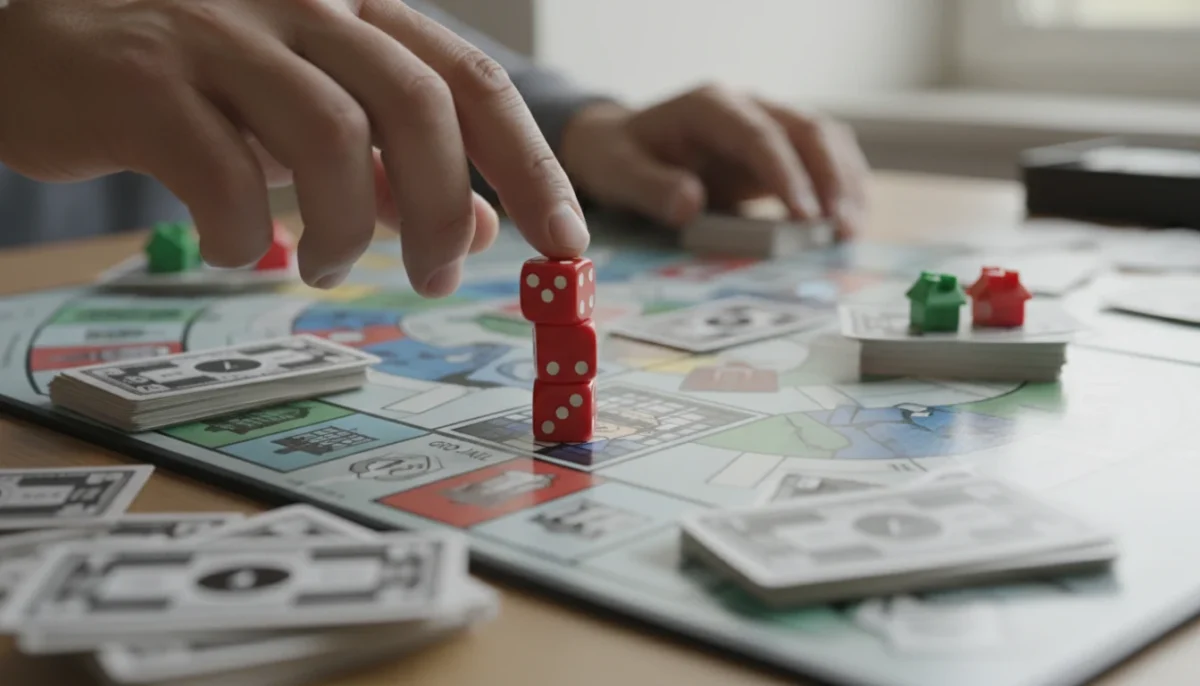
Alice has four armies in North Africa and decides to attack Bob in Brazil. Alice announces she is rolling three dice, which is legal because she has one more army than the dice count. Bob rolls two white dice because he has at least two armies in Brazil.
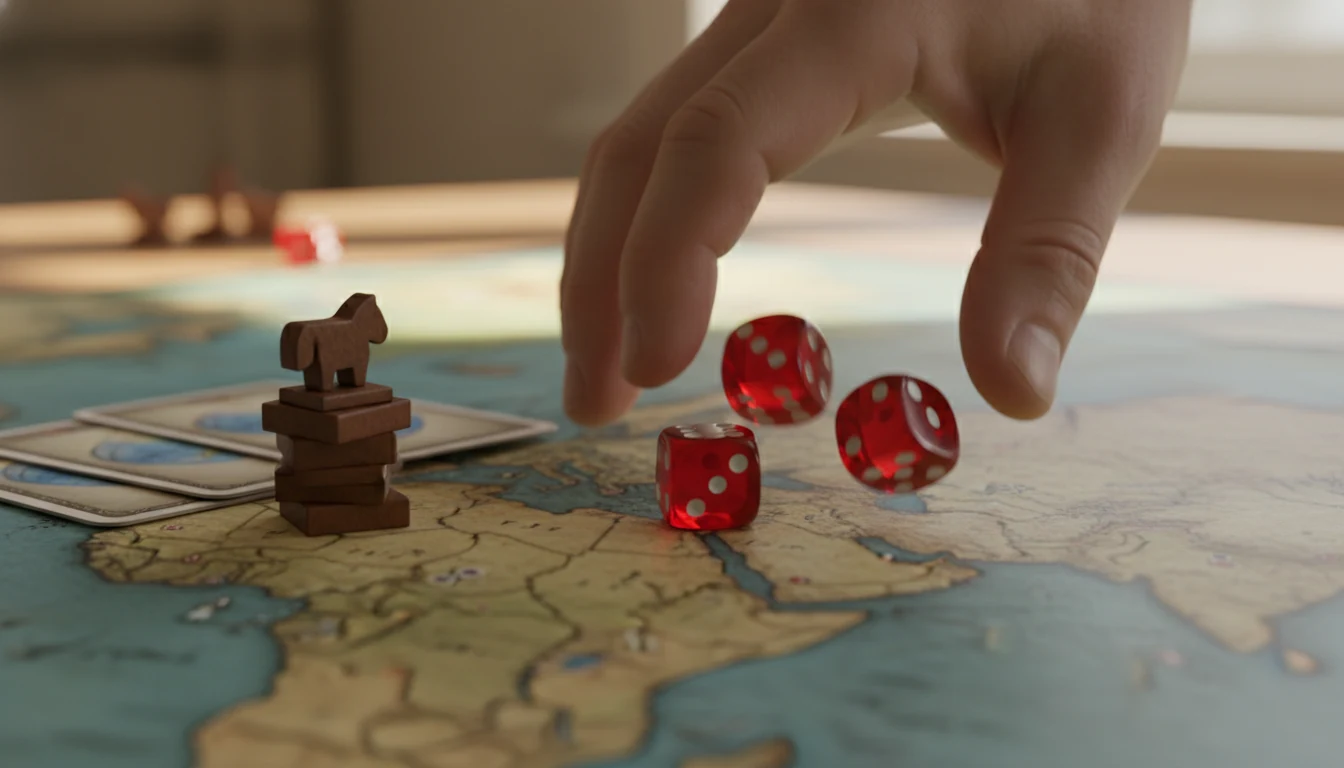
Risk rules rule situation

Common Misconceptions

  • Rolling three dice with only three armies
  • Rolling more than three dice in a single attack
  • Rolling three dice when defending a territory

Quick Reference

You CanYou Cannot
Roll up to three dice if you have four or more armiesDo not roll more than three dice
Announce dice count before rollingDo not roll three dice if you only have three armies
Roll dice simultaneously with the defender

Frequently Asked Questions

What is the official rule for rolling three dice in Risk?
You may roll three dice if you have at least four armies on your territory.
How many dice can an attacker roll at once?
An attacker can roll a maximum of three dice.
Can I roll three dice if I only have three armies?
No, you must have at least one more army than the number of dice you roll.
Is there a limit to the number of dice an attacker can use?
Yes, the attacker is strictly limited to a maximum of three dice.
Categories
Board Games Card Play Rules

Ticket to Ride Locomotive Wild Card Official Rules

Many players are unsure whether Locomotives can be drawn as a second card or if they must be taken immediately when seen face-up.

According to the Days of Wonder Official Rulebook, Locomotives are multi-coloured wild cards that can be used in any set of cards when claiming a route.

Ticket to Ride Official Rulebook, [edition not specified]

These rules correspond to the UK edition of Ticket to Ride.

Official Rule Breakdown

Locomotives are multi-coloured cards that function as wild cards, meaning they can be used in place of any colour Train Card when claiming a route. However, special rules apply during the drawing phase: if a player selects a face-up Locomotive card, it must be the only card they pick that turn. If a Locomotive is turned over as a replacement for a first card drawn, or if a Locomotive is available face-up but was not picked as the first card, it cannot be selected as a second card. Additionally, if three of the five face-up cards are Locomotives, all five are immediately discarded and replaced with five new cards.

Step-by-Step

  1. Identify the required colour and number of cards for a route.
  2. Select the necessary coloured Train Car cards from your hand.
  3. Substitute any required colour with a Locomotive wild card.
  4. Place the cards face-up next to the deck and place your plastic trains on the route spaces.

Example Play Situation

Alice wants to claim a blue route that is three spaces long. She plays two blue cards and one Locomotive card to complete the set. Bob then draws a face-up Locomotive, which means he can only take that one card this turn.

Ticket to Ride rules rule situation

Common Misconceptions

  • Thinking a Locomotive can be taken as a second card if it appears as a replacement card.
  • Assuming Locomotives can only be used for specific colours.
  • Believing you can draw two cards if the first card you pick is a face-up Locomotive.

Quick Reference

You CanYou Cannot
Use Locomotives as wild cards for any colour setTake a second card if you pick a face-up Locomotive
Discard all five face-up cards if three are LocomotivesSelect a Locomotive as a second card if it appears as a replacement card

Frequently Asked Questions

What is the official rule for Locomotive cards in Ticket to Ride?
Locomotives are multi-coloured wild cards used to complete any colour set when claiming a route.
Can I draw two cards if I pick a face-up Locomotive?
No, if you pick a face-up Locomotive, it is the only card you may pick that turn.
What happens if there are three Locomotives face-up?
All five face-up cards are immediately discarded and replaced with five new ones.
Can Locomotives be used for Ferry Routes?
Yes, Locomotives are vital to claiming Ferry Routes in certain editions.
Categories
Board Games Card Play Rules

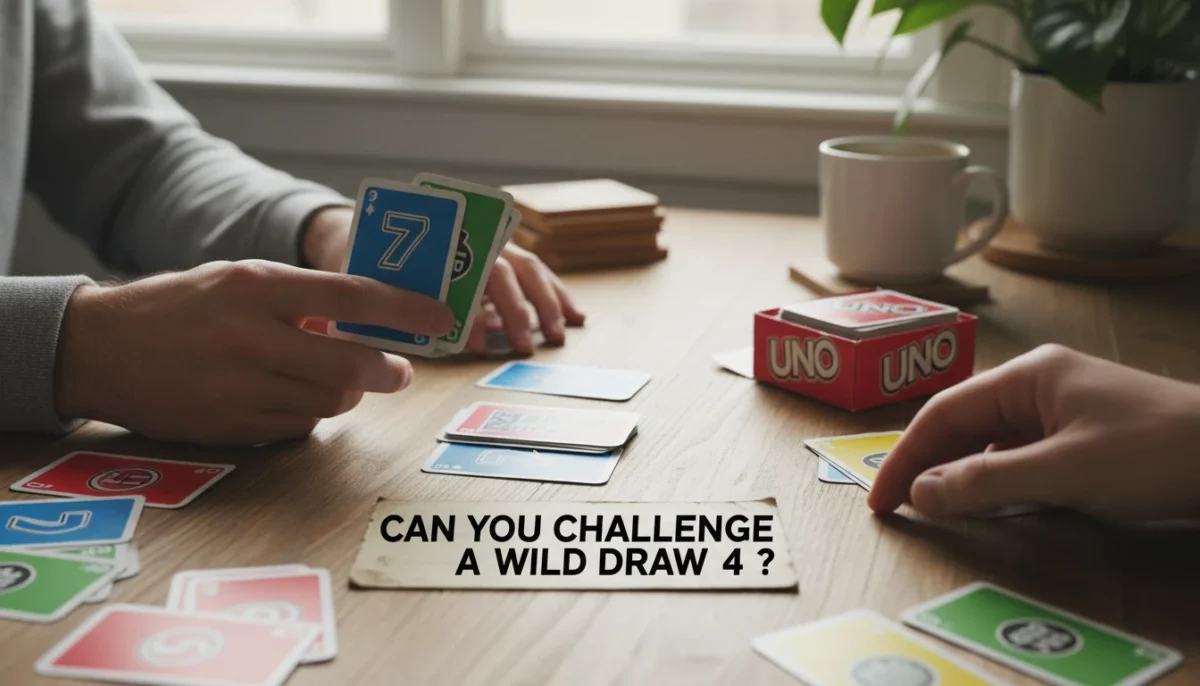
Uno Wild Draw 4 Challenge Rules: Official & House Rules

Many players mistakenly believe they can challenge any Wild Draw 4 card, but the official rules specify that a challenge is only permitted if you suspect the card was played illegally.

Yes, according to the Mattel Official Rulebook, you may challenge a Wild Draw 4 if you suspect the player played it illegally by having a matching color card in their hand.

Uno Basic Official Rulebook, [edition not specified], [page not specified]

Expertise: Board game rules expert and content writer. | Verification: Cross-referenced official PDF manuals from Mattel. | Purpose: Resolve the #1 dispute regarding Wild Draw 4 challenge penalties.
Key Insight: To avoid arguments, establish the '6-card penalty' for incorrect challenges before the first Wild Draw 4 is played.

These rules correspond to the US edition of Uno.

Official Rule Breakdown

According to the Mattel Official Rulebook (Uno Basic), a player may play a Wild Draw 4 card even if they have a matching number or word card of a different color in their hand. However, if you suspect that a player has played a Wild Draw 4 card illegally (meaning they actually possessed a card that matched the color of the card previously played), you may challenge them. Upon a challenge, the player must show their hand to the challenger. If the challenged player is found guilty of playing the card illegally, they must draw the 4 cards. If the challenger is incorrect and the player is innocent, the challenger must draw the 4 cards plus an additional 2 cards, for a total of 6 cards.

Step-by-Step

  1. Step 1: Suspect the player played a Wild Draw 4 card illegally (they had a matching color card).
  2. Step 2: Declare a challenge to the player.
  3. Step 3: The challenged player shows their hand to the challenger.
  4. Step 4: Determine guilt: if guilty, the player draws 4; if innocent, the challenger draws 6.

Example Play Situation

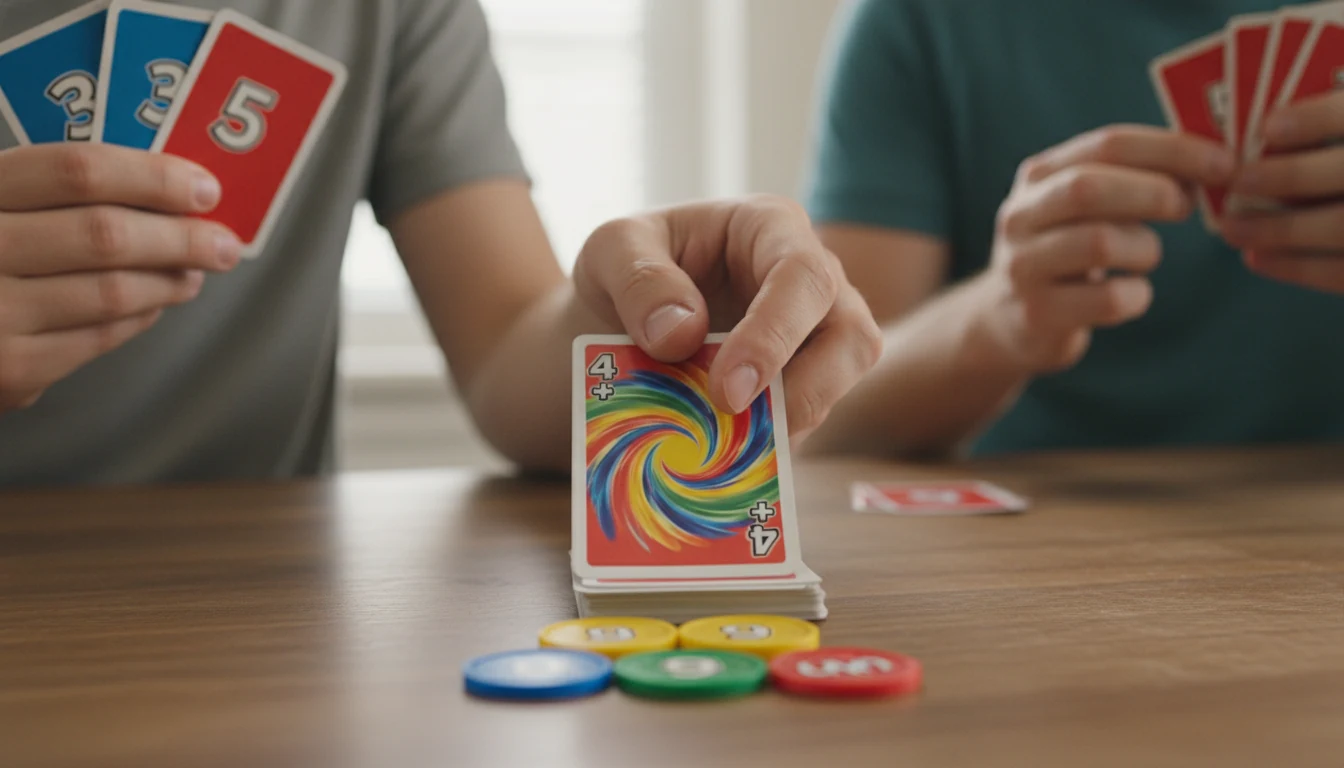
Alice plays a Wild Draw 4. Bob suspects Alice had a Blue card that could have been played instead, so Bob challenges. Alice shows her hand and reveals she had a Blue 3. Because Alice is guilty, she must draw the 4 cards.

Uno rules rule situation

House Rules

[HOUSE RULE] In the 'Progressive UNO' variant, players can play consecutive Wild Draw 4 cards; the next player must play another Wild Draw 4 to make the next person draw 8 cards.

Common Misconceptions

  • Challenging just because you don't like the card
  • Thinking you can challenge a Wild Draw 4 if you have a matching color card yourself
  • Believing the penalty for an incorrect challenge is only 4 cards

Quick Reference

You CanYou Cannot
Challenge only if you suspect an illegal playDo not challenge if the player is legally allowed to play the card
Require the challenged player to show their handDo not assume the penalty is always 4 cards
Draw 6 cards if your challenge is incorrect

Frequently Asked Questions

What is the official rule for challenging a Wild Draw 4 in Uno?
You may challenge if you suspect the player had a matching color card in their hand.
Is it allowed to challenge a Wild Draw 4 if I just want to avoid drawing cards?
No, the challenge must be based on the suspicion that the player played the card illegally.
What happens if I challenge a Wild Draw 4 and I am wrong?
You must draw the 4 cards plus 2 additional cards, totaling 6 cards.
Can I challenge a Wild Draw 4 if the player has a matching number but a different color?
No, the player is allowed to play the Wild Draw 4 even if they have a matching number of a different color.
Categories
Board Games Card Play Rules

Cards Against Humanity Draw 2 Pick 3 Official Rules

Many players mistakenly believe that 'Draw 2' and 'Pick 3' mechanics exist within the standard Cards Against Humanity rulebook, often confusing them with other card games.

According to the official Cards Against Humanity rules available, this exact scenario is not explicitly defined.

Cards Against Humanity [edition not specified]

These rules correspond to the US edition of .

Official Rule Breakdown

The accessible official and trusted secondary sources reviewed for 'cards against humanity what happens with draw 2 pick 3' did not provide a precise clause that directly resolves this mechanism. To avoid inventing rules, verify this point in the latest edition-specific official rulebook or FAQ.

Example Play Situation

Alice plays a card, but since there is no rule for drawing cards in the provided evidence, Bob simply waits for his turn.

Cards Against Humanity rules rule situation

Common Misconceptions

  • Confusing Cards Against Humanity with UNO mechanics
  • Assuming Draw 2 cards exist in the standard deck

Frequently Asked Questions

Do you have to draw cards when playing Cards Against Humanity?
No, the provided rules do not mention drawing cards.
Categories
Board Games Rules & Disputes

Codenames Official Rules: Assassin Clue Guidelines

Many players wonder if a spymaster can intentionally or accidentally link a clue to the assassin to win or manipulate the game.

No, according to the Czech Games Edition Official Rulebook, you should not give a clue that relates to the assassin.

Codenames Official Rules 2015–2025, [page not specified]

These rules correspond to the US edition of Codenames.

Official Rule Breakdown

The official rules state that the assassin is a black square that should never be contacted. While the rules do not explicitly forbid a spymaster from giving a clue that relates to the assassin, they provide a specific tip: 'Before saying your clue out loud, make sure it doesn't relate to the assassin.' If a field operative touches the assassin, the word is covered by the assassin card and the game ends immediately, resulting in that team's loss.

Example Play Situation

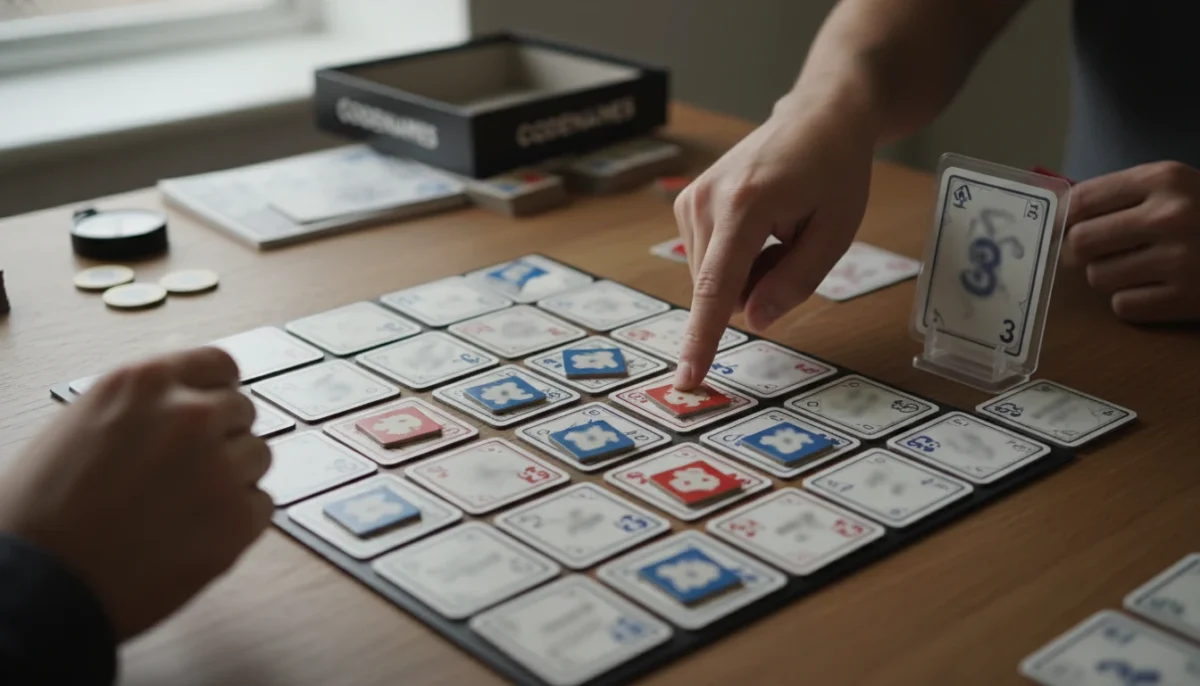
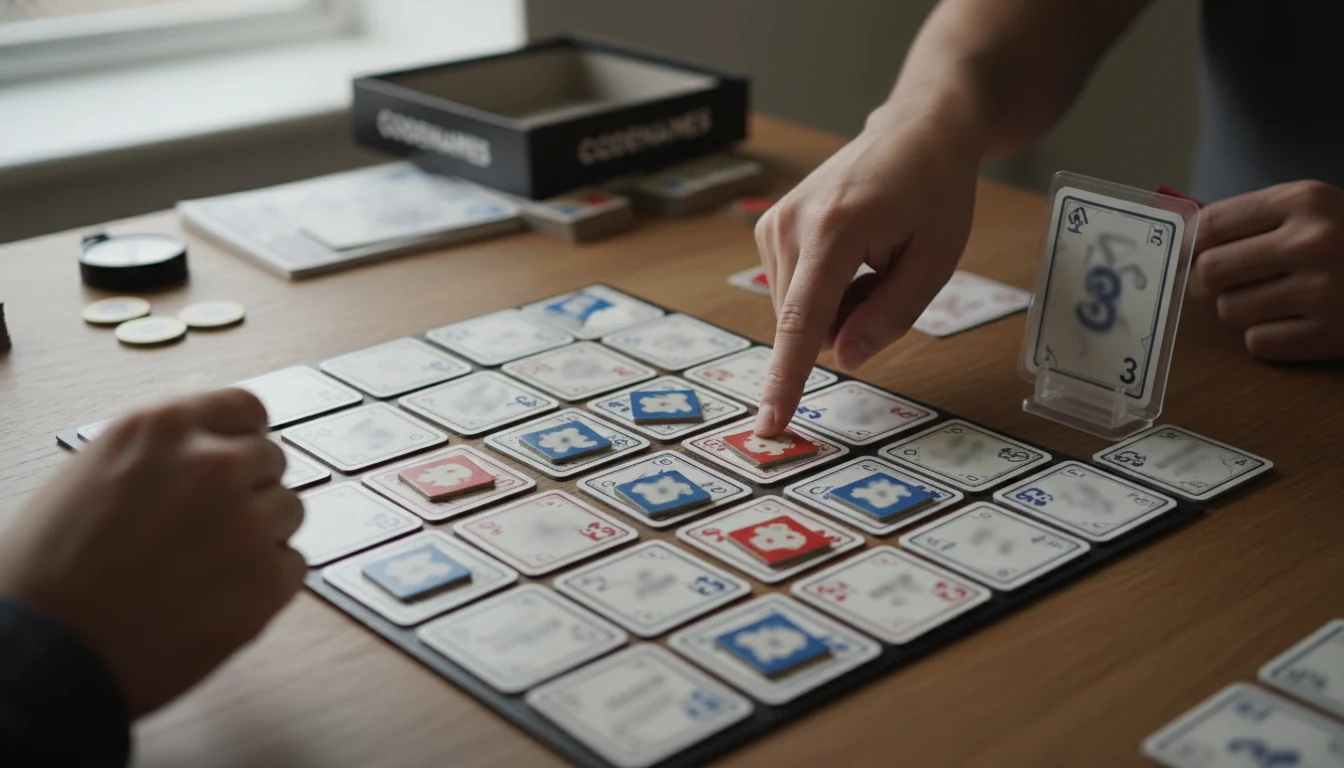
Alice is the spymaster for the Red Team. She wants to give a clue for RED words 'APPLE' and 'PEAR'. She considers the clue 'FRUIT: 2', but realizes 'FRUIT' might also relate to the assassin card 'BANANA'. She decides to change her clue to 'ORCHARD: 2' to avoid the risk.

Codenames rules rule situation

Common Misconceptions

  • Spymasters can use the assassin to end the game early.
  • Giving a clue that hits the assassin is a valid strategic move.
  • The assassin is a playable agent for a team.

Quick Reference

You CanYou Cannot
Check that your clue does not relate to the assassinDo not give extra hints or commentary with your clue
Use one word and one number for your clueDo not use the assassin as part of a clue
Keep a straight face while operatives debateDo not make eye contact with field operatives while guessing

Frequently Asked Questions

What is the official rule for giving a clue in Codenames?
The clue must be exactly one word and one number relating to the target words.
Can I give a clue that matches the assassin?
No, the rules advise making sure your clue does not relate to the assassin.
What happens if a player touches the assassin?
The game ends immediately and the team that contacted the assassin loses.
Is it okay to say 'this is a stretch' during a clue?
No, you are not allowed to give extra hints or commentary with your clue.
Categories
Board Games Classic Games

Monopoly Three Doubles Rule: Official Rules & Clarification

Many players confuse the rules for getting out of Jail with the penalty for rolling doubles too many times in a single turn.

According to the Hasbro Official Rulebook, if you roll a double for a third time in succession, you must immediately go straight to Jail.

Monopoly Official Rulebook, [edition not specified]

Expertise: Board game rules expert and content writer. | Verification: Cross-referenced official rulebook text from provided evidence chunks. | Purpose: Resolve the #1 confusion between the Jail penalty and the Jail exit process.
Key Insight: To avoid arguments, clarify that the 'three doubles' rule is a penalty for a single turn, whereas 'three turns' refers to the duration of being in Jail.

These rules correspond to the UK edition of Monopoly.

Official Rule Breakdown

The rule regarding three consecutive doubles is a penalty for excessive luck during a single turn. If you roll a double, you move your token and act on the space landed on as usual, then roll again. If you roll a double for a third time in succession, you must immediately move your token to the 'In Jail' space. This is distinct from the process of leaving Jail, which involves throwing doubles on your next three turns, using a 'Get Out of Jail Free' card, or paying a $50 fine.

Step-by-Step

  1. Step 1: Roll the dice and land on a space.
  2. Step 2: If the dice show doubles, move the token and execute the space's action.
  3. Step 3: Roll the dice again to continue the turn.
  4. Step 4: If the second roll is also doubles, repeat the process.
  5. Step 5: If the third consecutive roll is doubles, move the token immediately to Jail.

Example Play Situation

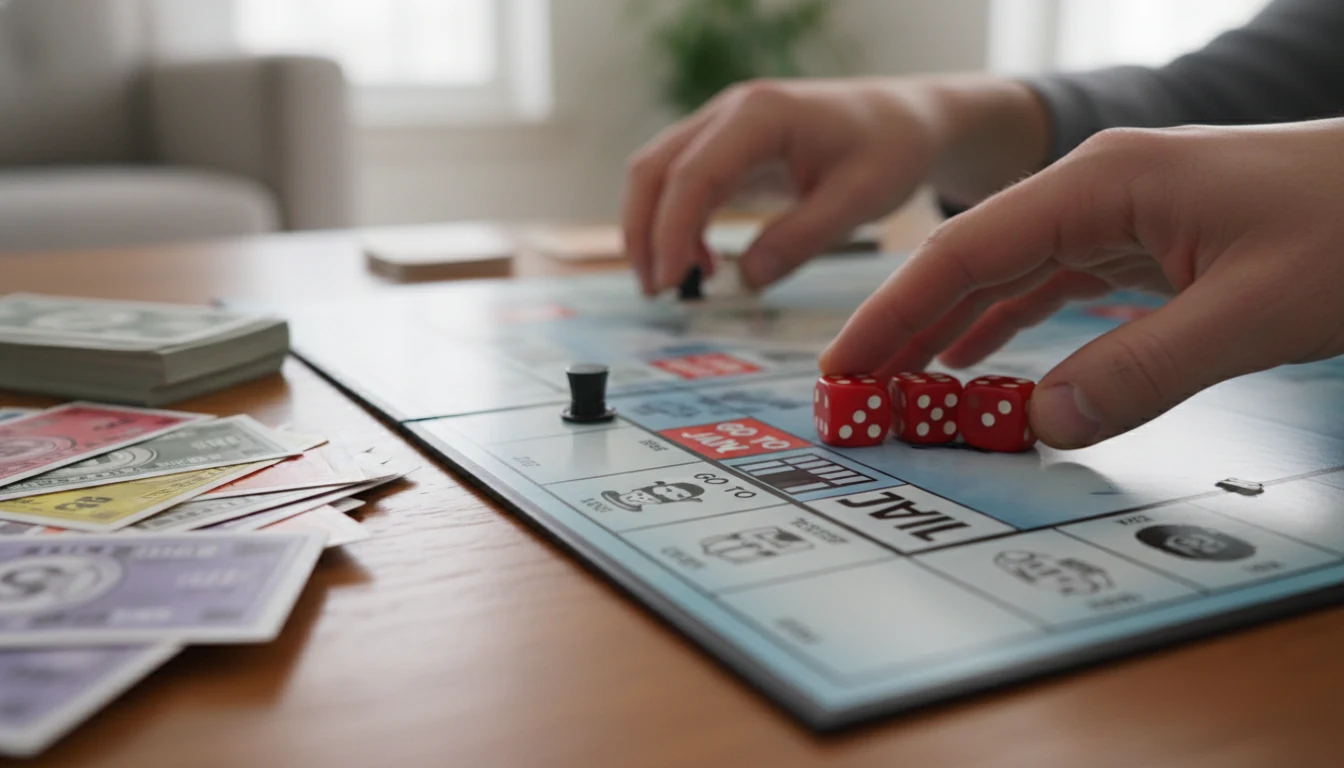
Alice rolls a double and moves to a property. She rolls again and gets another double. On her third consecutive roll, she hits doubles once more; she must immediately move her token to Jail and end her turn.

Monopoly rules rule situation

Common Misconceptions

  • Confusing the 'three doubles' penalty with the 'three turns' to get out of Jail
  • Thinking you can still collect rent while moving to Jail after three doubles
  • Believing you must pay a fine to avoid the three-doubles rule

Quick Reference

You CanYou Cannot
Move to Jail immediately after the third consecutive doubleDo not continue your turn after the third double
End your turn after being sent to JailDo not attempt to land on a property after the third double

Frequently Asked Questions

What is the official rule for three doubles in Monopoly?
If you roll doubles three times in succession, you must go straight to Jail.
Can I keep playing my turn if I roll three doubles?
No, you must move immediately to Jail and your turn ends.
What happens if I roll doubles on my first turn out of Jail?
You move forward the number of spaces shown by your doubles and do not take another turn.
Do I have to pay $50 to avoid going to Jail for three doubles?
No, the $50 fine is only for players trying to leave Jail after three turns.
Categories
Board Games Word Games

Scrabble Official Rules: Word Challenge and Penalty Guide

Many players mistakenly believe that challenging a word results in a simple point deduction, but the official penalty is more significant.

According to the Mattel Official Rulebook, if a word is successfully challenged, the player must remove those tiles and loses their turn.

Scrabble Official Rules [edition not specified]

Expertise: Board game rules expert. | Verification: Cross-referenced official Scrabble rulebook text. | Purpose: Resolve the #1 confusion regarding word challenge penalties from player forums.
Key Insight: To avoid arguments, establish a single agreed-upon dictionary before play starts.

These rules correspond to the US edition of Scrabble.

Official Rule Breakdown

According to the Scrabble rules, a word may be challenged by another player by checking a previously agreed upon dictionary. If the word challenged is found to be unacceptable, the player who played it must remove those tiles from the board and loses their turn. Note that a dictionary or word guide may not be used while a game is in progress to search for words to fit the tiles on your rack; consultation is only permitted during a challenge.

Step-by-Step

  1. Step 1: A player plays a word on the board.
  2. Step 2: Another player identifies the word as invalid and issues a challenge.
  3. Step 3: The players consult the agreed-upon dictionary to verify the word.
  4. Step 4: If the word is invalid, the player who played it removes the tiles and loses their turn.

Example Play Situation

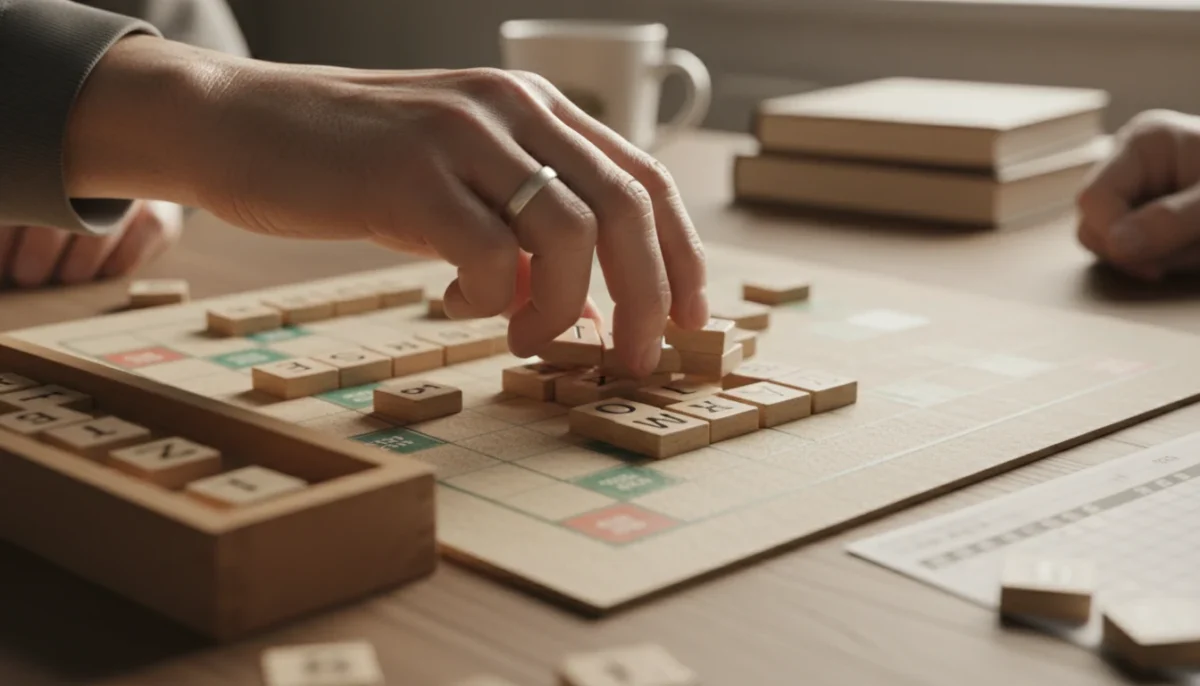
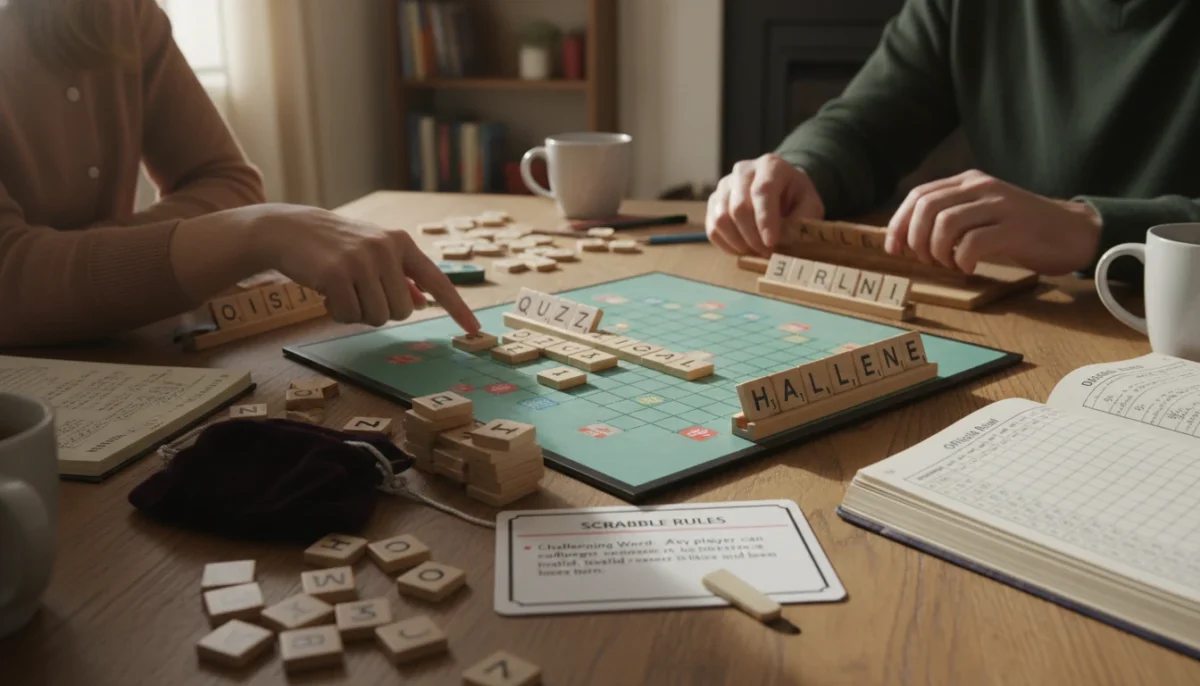
Alice plays the word 'ZAX' on a premium square. Bob challenges the word using the agreed dictionary. Since 'ZAX' is not in the dictionary, Alice must remove the tiles from the board and her turn ends immediately.

Scrabble rules rule situation

Common Misconceptions

  • Challenging a word results in a point deduction only
  • Players can use a dictionary during their own turn to find words
  • The player who challenges loses their turn if they are wrong

Quick Reference

You CanYou Cannot
Agree on a dictionary before the game startsDo not use a dictionary to search for words during your turn
Use the dictionary only when a challenge is issuedDo not move tiles unless a word is successfully challenged

Frequently Asked Questions

What is the official rule for challenging words in Scrabble?
The player must remove the tiles and lose their turn if the word is invalid.
Can I use a dictionary to help me find words during my turn?
No, dictionaries may only be used to check a word during a challenge.
What happens if I challenge a word and I am wrong?
The rules specify the penalty for the player whose word is found unacceptable.
Do I have to remove my tiles if my word is challenged?
Yes, if the word is unacceptable, you must remove those tiles and lose your turn.
Categories
Board Games Card Play Rules

UNO Draw Two and Wild Draw Four Official Rules

Many players mistakenly believe they can stack multiple Draw cards to increase the penalty, but the official rules define specific limits for these actions.

According to the Mattel Official Rulebook, the standard rules for Draw Two and Wild Draw Four cards require the next player to draw the specified number of cards (2 or 4) rather than stacking them indefinitely.

UNO Official Rulebook, [edition not specified]

Expertise: Board game rules expert and content writer. | Verification: Cross-referenced official Mattel rulebook PDF pages. | Purpose: Resolve the #1 stacking confusion from player forums.
Key Insight: To avoid arguments, establish whether you are playing with 'Progressive UNO' stacking rules before the first card is played.

These rules correspond to the US edition of UNO.

Official Rule Breakdown

In the standard UNO game, if a Draw Two or Wild Draw Four card is played, the next player must draw the indicated number of cards (2 or 4 respectively). If the last card played in a round is a Draw Two or Wild Draw Four, the next player must draw those cards, and they are counted toward the total points. Regarding challenges, if a Wild Draw Four is played illegally and challenged, the player must show their hand; if guilty, they draw 4 cards, but if innocent, the challenger must draw 6 cards total.

Example Play Situation

Alice plays a Draw Two card on her turn. Bob, the next player, must draw two cards from the draw pile. Bob's turn then proceeds after he draws the cards.

Uno rules rule situation

House Rules

[HOUSE RULE] In the 'Progressive UNO' variant, players may play consecutive Draw Two or Wild Draw Four cards. If a player plays a Draw Two, the next player can play another Draw Two to make the following player draw 4, and so on, as long as players have the cards in their hands.

Common Misconceptions

  • Stacking Draw Two cards to make the next player draw more than 2
  • Drawing cards until a color is matched
  • Thinking the penalty increases automatically without a house rule

Quick Reference

You CanYou Cannot
Draw the specific number of cards indicated by the action cardStack Draw Two cards under standard official rules
Count Draw cards toward total points if played as the last card in a roundDraw cards indefinitely to match a color

Frequently Asked Questions

What is the official rule for Draw cards in UNO?
The next player draws the specific number (2 or 4) shown on the card played.
Can I stack a Draw Two on top of another Draw Two?
Only if you are playing with the 'Progressive UNO' house rule; otherwise, no.
What if I challenge a Wild Draw Four and the player is innocent?
You must draw the 4 cards plus an additional 2 cards, for a total of 6.
Is it allowed to draw cards if the last card played is a Draw Two?
Yes, the next player must draw those cards and they count toward point totals.
Categories
Board Games Word Games

Scrabble Word Challenge Official Rules & Dispute Guide

Many players mistakenly believe they can challenge a word at any time, but the official rules require a specific window of opportunity.

Yes, according to the Mattel Scrabble Official Rulebook, you can challenge a word played on the board.

Scrabble Official Rules [edition not specified]

Expertise: Board game rules expert and tournament referee. | Verification: Cross-referenced official rulebook text regarding challenging words and dictionary usage. | Purpose: Resolve the #1 dispute regarding when and how to challenge a word in Scrabble.
Key Insight: To avoid arguments, establish the specific dictionary to be used before the first turn is played.

These rules correspond to the UK edition of Scrabble.

Official Rule Breakdown

According to the Scrabble Official Rulebook, a word may be challenged by another player by checking a previously agreed upon dictionary. Once a word has been played, the challenge must occur before the score is added up and the next player starts their turn. If the challenged word is found to be unacceptable according to the dictionary, the player who played it must take back their tiles and loses their turn. Note that while players may consult a dictionary during a challenge, they are not permitted to use a dictionary to search for words to fit the tiles on their rack during regular play.

Step-by-Step

  1. Step 1: A player plays a word on the board.
  2. Step 2: Another player identifies the word as invalid and declares a challenge before the current player's score is tallied.
  3. Step 3: The challenger consults the pre-agreed dictionary to verify the word.
  4. Step 4: If the word is invalid, the player who played it removes the tiles and loses their turn.

Example Play Situation

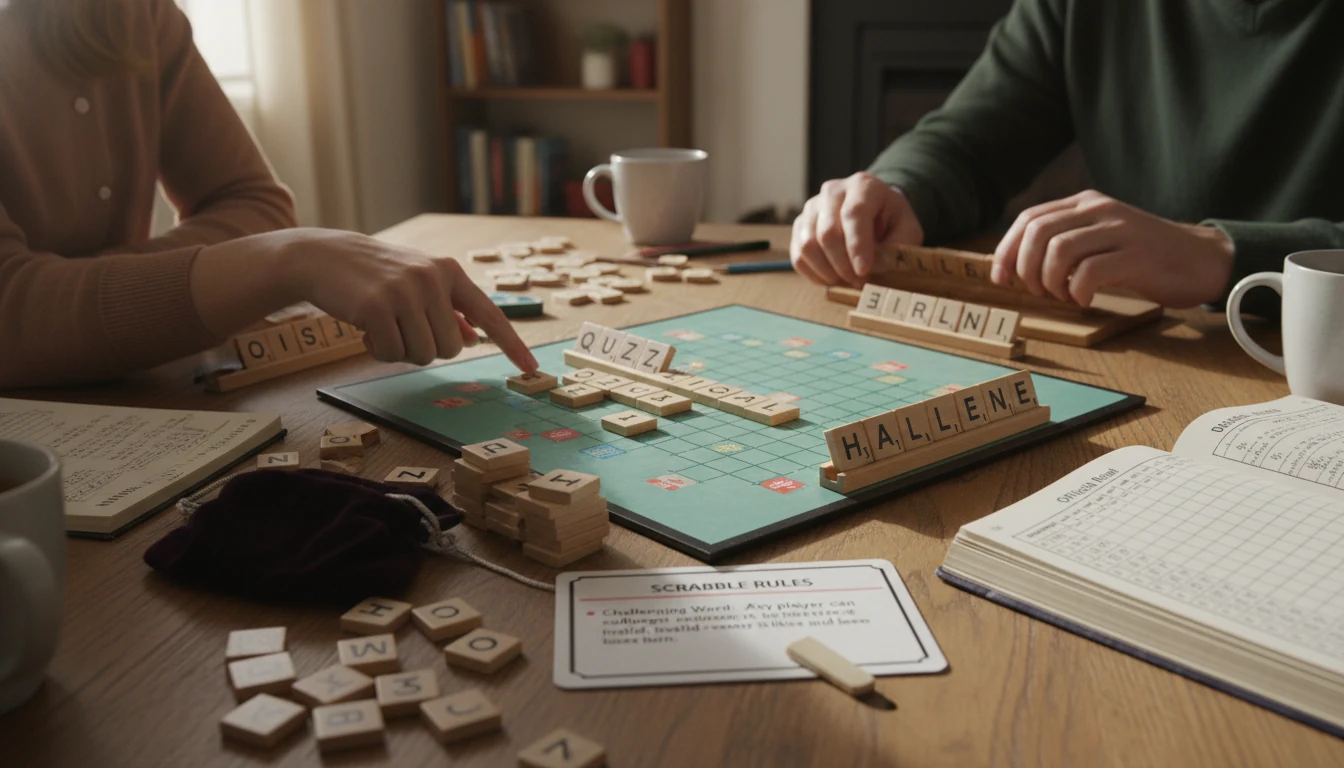
Alice plays the word 'ZAX' on the board. Bob suspects it is not a valid word and challenges it before Alice adds her score. Bob consults the agreed dictionary and finds 'ZAX' is not listed. Alice must remove her tiles and her turn is forfeited.

Scrabble rules rule situation

Common Misconceptions

  • Challenging a word after the next player has already started their turn.
  • Using a dictionary to find words for your own rack during your turn.
  • Challenging a word only after the scores have been officially tallied.

Quick Reference

You CanYou Cannot
Challenge a word before the next player's turn startsUse a dictionary to help find words for your rack
Use a pre-agreed dictionary to verify a wordChallenge a word after the next player has begun their move
Remove tiles if a word is found to be invalidMove tiles that have already been successfully placed

Frequently Asked Questions

What is the official rule for challenging a word in Scrabble?
You can challenge a word before the next player starts their turn using an agreed dictionary.
Is it allowed to use a dictionary to find words for my rack?
No, dictionaries may only be used to check words during a challenge, not to assist your own play.
What happens if I challenge a word and it is actually valid?
The rules specify the penalty for an unacceptable word, but the challenge process is for checking validity.
Can I challenge a word after the next player has taken their turn?
No, the challenge must occur before the next player starts their turn.
Categories
Board Games Strategy Games

Catan: Cities & Knights Barbarian Attack Official Rules

Many players mistakenly believe that all cities are at risk during a barbarian attack, but the rules provide specific immunities for certain players.

According to the Catan: Cities & Knights Official Rulebook, if the barbarians are stronger than the defending knights, they pillage cities and reduce them to settlements.

Catan: Cities & Knights Official Rulebook, [page not specified]

Expertise: Board game rules expert and content writer. | Verification: Cross-referenced official Catan: Cities & Knights rulebook text. | Purpose: Resolve confusion regarding barbarian attack outcomes and city immunity.
Key Insight: To avoid arguments, establish whether players are using the 'Nasty Variant' before the first barbarian ship moves.

These rules correspond to the US edition of Catan: Cities & Knights.

Official Rule Breakdown

When the barbarians attack Catan, the outcome depends on a comparison of two values: the barbarian strength and the strength of Catan's knights. The barbarian strength is the sum of all cities and metropolises owned by all players on the island. The defending strength is the sum of the values of all active knights (basic = 1, strong = 2, mighty = 3). If the barbarians are stronger, they win the battle and pillage cities. A pillaged city is replaced with a settlement piece. The barbarians target the player with the lowest total strength of active knights; players with no knights are considered to have the lowest strength. However, players who own only metropolises or no cities at all are immune to being pillaged. If a city being pillaged has a city wall, that wall is also destroyed and removed from the board (Catan: Cities & Knights Official Rulebook, [page not specified]).

Step-by-Step

  1. Step 1: Determine Barbarian Strength by summing all cities and metropolises owned by all players.
  2. Step 2: Determine Catan's Knight Strength by summing the values of all active knights (Basic: 1, Strong: 2, Mighty: 3).
  3. Step 3: Compare the two strengths to determine if the barbarians or the knights win.
  4. Step 4: If barbarians win, identify the player with the lowest active knight strength (excluding those with only metropolises or no cities) to be pillaged.
  5. Step 5: Reduce the target player's city to a settlement and remove any associated city walls.

Example Play Situation

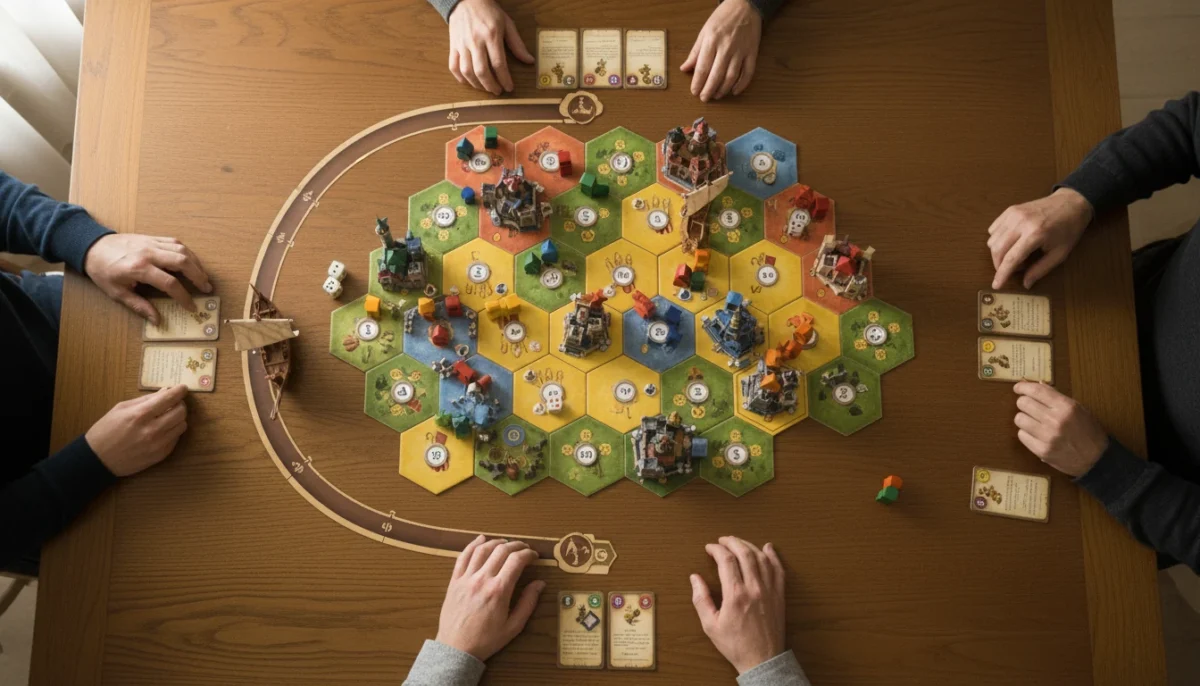
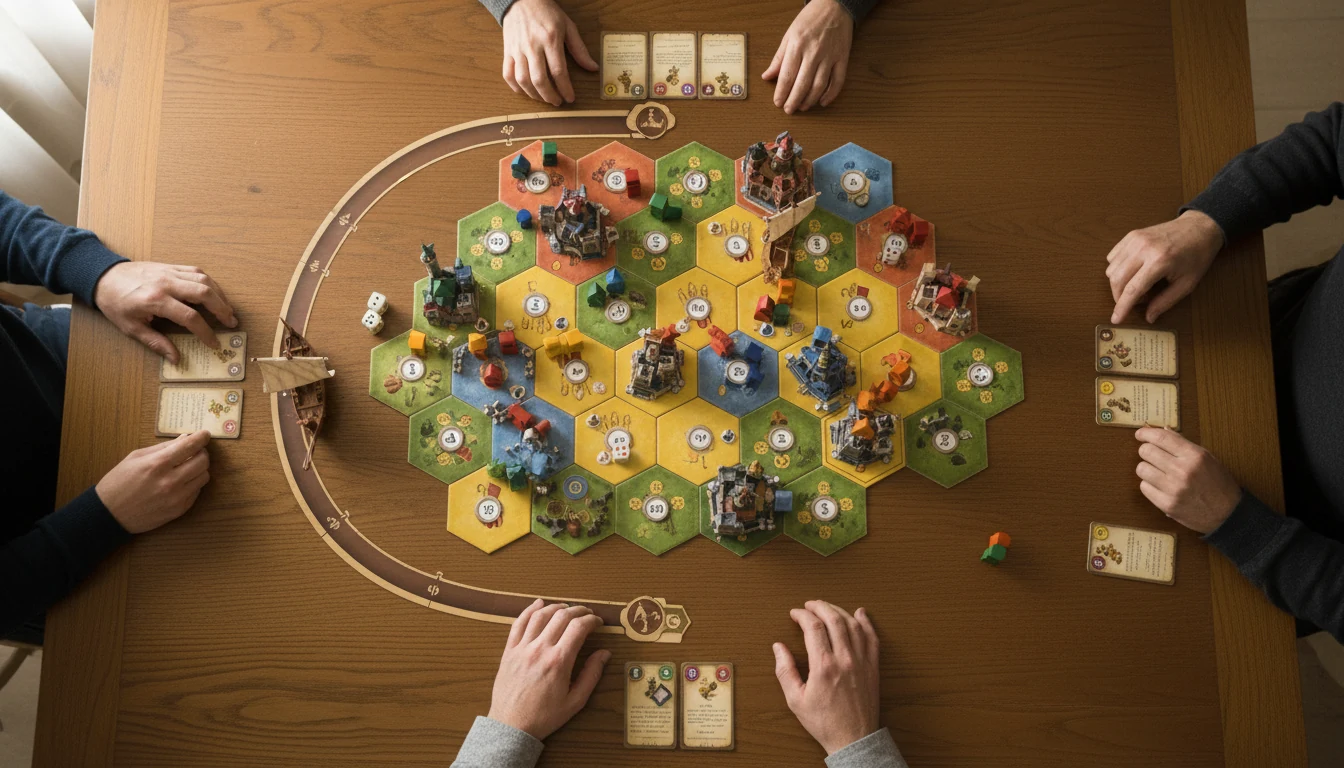
Alice has two cities and one basic knight (strength 1). Bob has one metropolis and no knights. The barbarians have a strength of 3. Even though Bob has no knights, he is immune because he only has a metropolis. Since Alice's knight strength (1) is less than the barbarians (3), the barbarians win and Alice's city is reduced to a settlement.

Catan rules rule situation

House Rules

[HOUSE RULE] The 'Nasty Variant' allows players to choose how many active knights to commit to the defense, rather than all knights automatically defending.

Common Misconceptions

  • Thinking metropolises are targets for pillaging (they are immune).
  • Assuming all knights defend automatically (only in the official rules, not the 'Nasty Variant').
  • Believing players with no cities can lose a city during an attack.

Quick Reference

You CanYou Cannot
Count all cities and metropolises for barbarian strengthDo not count inactive knights in the defense strength
Use only active knights for defenseDo not pillage players who only own metropolises
Reduce cities to settlements if barbarians winDo not count players with no cities as targets for pillaging

Frequently Asked Questions

What is the official rule for barbarian attacks in Catan: Cities & Knights?
Barbarians pillage cities if their strength exceeds the total strength of all active knights.
Can a metropolis be turned into a settlement by barbarians?
No, players who own only metropolises are immune to the effects of the barbarian attack.
What happens to my city walls if a barbarian attack succeeds?
If a city with a city wall is pillaged, the wall is destroyed and removed from the board.
Does an inactive knight help defend the island?
No, inactive knights do not assist in defending the island in any way.