Categories
Board Games Word Games

Codenames One Word Clue Rules: Official & House Rules

Many players assume that any compound word can serve as a clue, but the official rules distinguish between different types of word structures.

No, according to the Codenames Official Rulebook, a clue must technically be only one word, though exceptions exist for specific types.

Codenames Official Rules [edition not specified]

These rules correspond to the UK edition of Codenames.

Official Rule Breakdown

Regarding whether a clue can be two words, the official rules state that your clue must be only one word. While English contains various compound forms, technically only one-word compounds such as 'greenhouse' are valid. Two-word compounds like 'pack rat' or hyphenated words like 'mother-in-law' are considered invalid unless the opposing spymaster allows them. However, groups can agree to allow common abbreviations (like CIA or NASA) or specific proper names (like New York) to count as one-word clues.

Example Play Situation

Alice is the spymaster and Bob is a field operative. Alice wants to use 'alarm clock' for the words 'TIME' and 'WAKE', but since it is two words, the opposing team objects. Alice instead decides to use a valid one-word clue or asks the opponents for permission to use the compound.
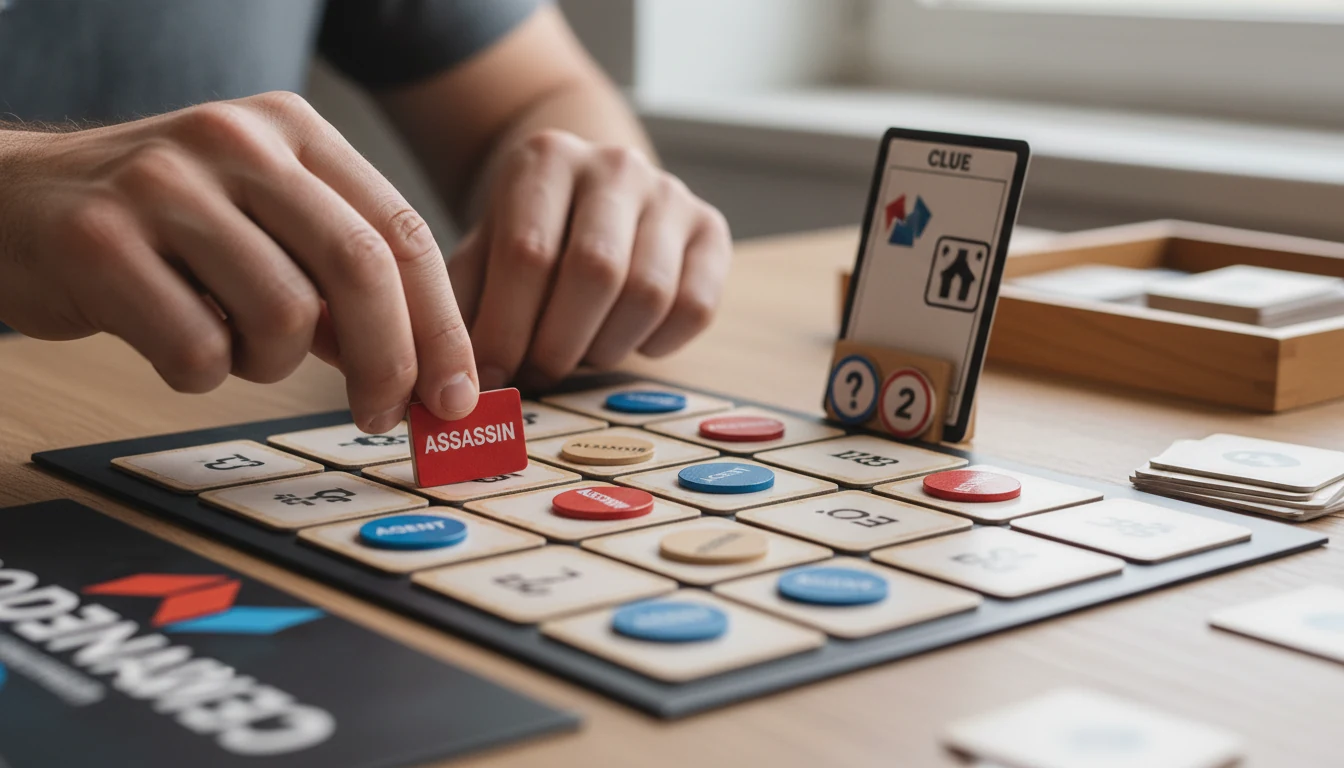
Codenames rules rule situation

House Rules

[HOUSE RULE] Many groups choose to be more liberal by allowing all compound words, such as 'alarm clock', or allowing multi-word proper names and titles.

Common Misconceptions

  • All compound words are valid clues
  • Two-word phrases are allowed by default
  • Spymasters can invent their own compound words

Quick Reference

You CanYou Cannot
Use one-word compounds like greenhouseUse two-word clues like pack rat without permission
Use proper names if your group agreesInvent new compound words that do not exist
Use common abbreviations if your group agreesUse hyphenated words unless allowed by opponents

Frequently Asked Questions

What is the official rule for one-word clues in Codenames?
Clues must be one word, meaning only one-word compounds like greenhouse are strictly valid.
Can I use a two-word clue like 'pack rat'?
No, unless the opposing spymaster agrees to allow it as a house rule.
Are abbreviations like CIA allowed?
Yes, your group can decide to allow common abbreviations as one-word clues.
Is 'New York' considered one word?
Your group can agree to count proper names like New York as one word.
Categories
Board Games Classic Games

Monopoly House and Hotel Shortage Official Rules

Many players mistakenly believe they can simply buy more hotels when the bank runs out, but the official rules require a specific auction process instead.

Yes, according to the Monopoly Official Rulebook, if there is a shortage of houses or hotels, the Banker must auction the available buildings to the highest bidder.

Monopoly instructions.pdf, [edition not specified]

Expertise: Board game rules expert. | Verification: Cross-referenced official rulebook text for Building Shortages. | Purpose: Resolve the #1 shortage dispute from player forums.
Key Insight: To avoid arguments, establish that the Banker will run an auction immediately if two players demand the last building.

These rules correspond to the US edition of Monopoly.

Official Rule Breakdown

When a building shortage occurs, players cannot simply purchase houses or hotels as they normally would. According to the official rules, if there are no Houses left in the Bank, you must wait for other players to return theirs before you can buy any. Similarly, if a limited number of Houses or Hotels is left and two or more players wish to buy more than the Bank has, the Banker auctions them off to the highest bidder, starting at the lowest price shown on the relevant Title Deed(s). (Source: Monopoly instructions.pdf, Building Shortages section).

Step-by-Step

  1. Step 1: Identify that the Bank has insufficient Houses or Hotels for all interested players.
  2. Step 2: Determine the starting price based on the lowest price shown on the relevant Title Deed(s).
  3. Step 3: The Banker conducts an auction for the available buildings.
  4. Step 4: The highest bidder wins the auction and receives the building(s).

Example Play Situation

Alice and Bob both want to buy the last available Hotel. Since the Bank cannot provide one to both, the Banker starts an auction at the price listed on the Title Deed. Bob bids $500 and Alice bids $600, so Bob wins the Hotel by being the highest bidder.

Monopoly rules rule situation

Common Misconceptions

  • Waiting for the Bank to magically refill without other players selling buildings
  • Assuming the first person to ask for a building gets priority during a shortage
  • Thinking you can buy hotels from other players directly

Quick Reference

You CanYou Cannot
Wait for players to return houses to the BankBuy buildings directly from other players
Participate in a Banker-led auction for limited buildingsSkip the auction if multiple players want the same limited building
Sell buildings back to the Bank at half price

Frequently Asked Questions

What is the official rule for building shortages in Monopoly?
The Banker auctions limited houses or hotels to the highest bidder.
Can I buy a house from another player if the Bank is empty?
No, houses and hotels must be sold to the Bank, not to other players.
What if two players want the last hotel at the same time?
The Banker must auction that hotel to the highest bidder.
Is it allowed to build houses if the Bank has none left?
No, you must wait until other players return houses to the Bank.
Categories
Board Games Word Games

Scrabble Official Rules: How to Challenge Invalid Words

Many players mistakenly believe they can use a dictionary during their turn to find words, but the official rules restrict dictionary use specifically to the challenge phase.

According to the Scrabble Official Rulebook, a word may be challenged by another player by checking a previously agreed upon dictionary.

Scrabble Official Rules [edition not specified]

Expertise: Board game rules expert. | Verification: Cross-referenced official rulebook text from provided evidence chunks. | Purpose: Resolve the #1 source of disputes regarding dictionary usage and word challenges.
Key Insight: To avoid arguments, establish the specific dictionary to be used before the first tile is drawn.

These rules correspond to the UK edition of Scrabble.

Official Rule Breakdown

To challenge a word in Scrabble, a player must act after a word has been played but before the score is added and the next player begins their turn. At this specific point, the challenger may consult a dictionary to check spelling or usage. If the challenged word is found to be unacceptable according to the agreed dictionary, the player who played the word must take back their tiles and loses their turn. Note that a dictionary or word guide may not be used during a player's regular turn to search for words to fit the tiles on their rack.

Step-by-Step

  1. Step 1: A player plays a word and places tiles on the board.
  2. Step 2: Before the score is added and the next player's turn begins, another player declares a challenge.
  3. Step 3: The challenger consults the previously agreed-upon dictionary to verify the word.
  4. Step 4: If the word is invalid, the player who played it removes the tiles and loses their turn.

Example Play Situation

Alice plays the word 'ZAX' on the board. Before Bob can start his turn, Charlie challenges the word. Charlie looks up 'ZAX' in the agreed dictionary and finds it is not listed. Alice must remove her tiles from the board and her turn is forfeited.

Scrabble rules rule situation

Common Misconceptions

  • Using a dictionary to find words for your own rack
  • Challenging a word after the next player has already started their turn
  • Challenging a word after the score has already been added

Quick Reference

You CanYou Cannot
Agree on a dictionary before the game startsUse a dictionary to help find words for your rack
Challenge a word before the next player's turnMove tiles that have already been placed unless challenged
Remove tiles if a word is successfully challengedChallenge a word after the score has been recorded

Frequently Asked Questions

What is the official rule for challenging words in Scrabble?
Challenge a word using an agreed dictionary before the next player's turn starts.
Can I use a dictionary to help me find words for my rack?
No, dictionaries may only be used during a challenge, not to find words for your turn.
What happens if I challenge a word and it is actually valid?
The rules specify the penalty for an invalid word; if valid, the word remains and the score is added.
Is it allowed to challenge a word after the next player has moved?
No, the challenge must occur before the next player starts their turn.
Categories
Board Games Card Play Rules

UNO Stacking Rules: Official vs House Rules Guide

Many players believe they can pass a penalty card to the next person to avoid drawing cards, but this is a common misconception.

No, according to the Mattel Official Rulebook, stacking Draw Two or Wild Draw Four cards is not part of the standard rules.

UNO Official Rulebook [edition not specified]

Expertise: Board game rules expert. | Verification: Cross-referenced official Mattel rulebook text regarding action card functions. | Purpose: Resolve the #1 stacking confusion from player forums.
Key Insight: To avoid arguments, establish whether you are playing with 'Progressive UNO' house rules before the first card is dealt.

These rules correspond to the UK edition of UNO.

Official Rule Breakdown

According to the Mattel Official Rulebook (UNO® card game), if the last card played in a round is a Draw Two or Wild Draw Four card, the next player must draw the 2 or 4 cards respectively. The rules do not provide a mechanism for players to play an additional action card to 'stack' the penalty onto a subsequent player.

Example Play Situation

Alice plays a Draw Two card. Bob, whose turn follows, must immediately draw two cards from the DRAW pile. Bob cannot play another Draw Two to pass the penalty to Charlie under official rules.

Uno rules rule situation

House Rules

[HOUSE RULE] The 'Progressive UNO® Card Game' variant allows stacking: when a player plays a Draw Two, the next player may play another Draw Two to make the following player draw 4 cards, and this can continue consecutively.

Common Misconceptions

  • Stacking Draw Two cards to skip the next player
  • Using a Wild Draw Four to pass a penalty to the next person
  • Thinking multiple Draw Two cards can be played in one turn

Quick Reference

You CanYou Cannot
Draw the required cards when an action card is played on your turnPlay a second Draw card to avoid drawing cards
Count the drawn cards toward your total points at the end of the roundStack multiple Draw Two cards to increase the penalty

Frequently Asked Questions

What is the official rule for stacking in UNO?
No, stacking is not an official rule; the next player must draw the cards immediately.
Can I play a Draw Two on top of another Draw Two to skip the next player?
No, under official rules, the player must draw the cards immediately after the first card is played.
Is it allowed to stack Wild Draw Four cards in official play?
No, official rules state the next player must draw the 4 cards when the card is played.
What happens if a Draw Two is played on my turn?
You must draw the 2 cards and your turn ends, unless it is a house rule variant.
Categories
Board Games Classic Games

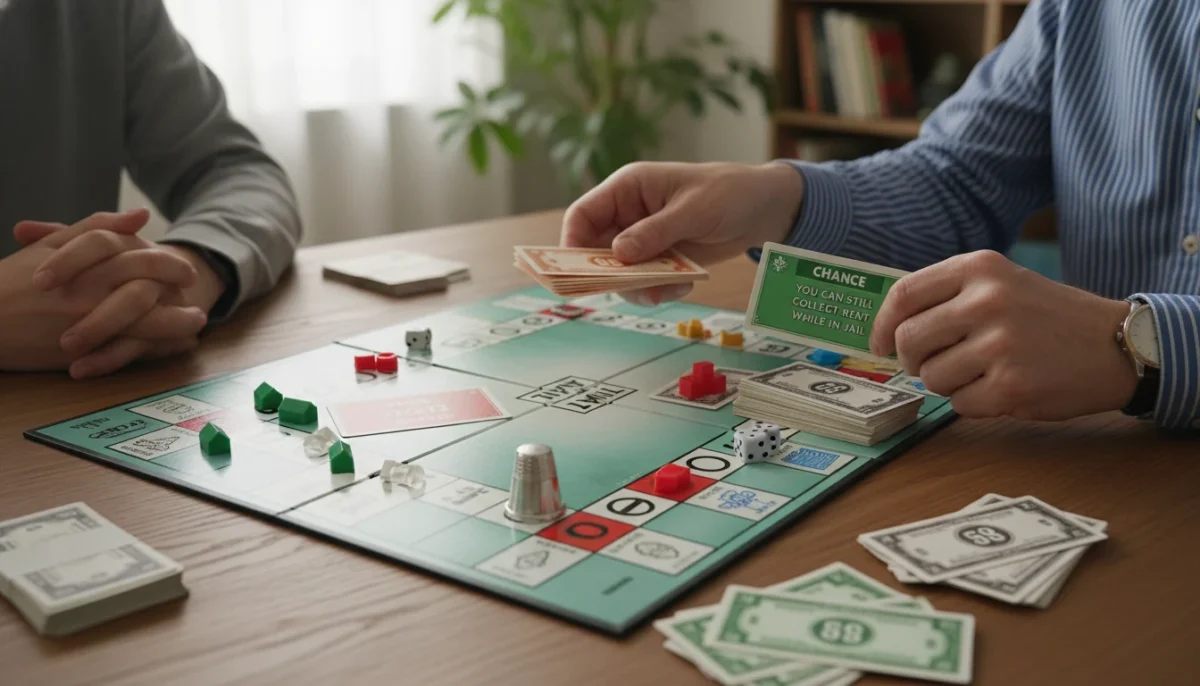
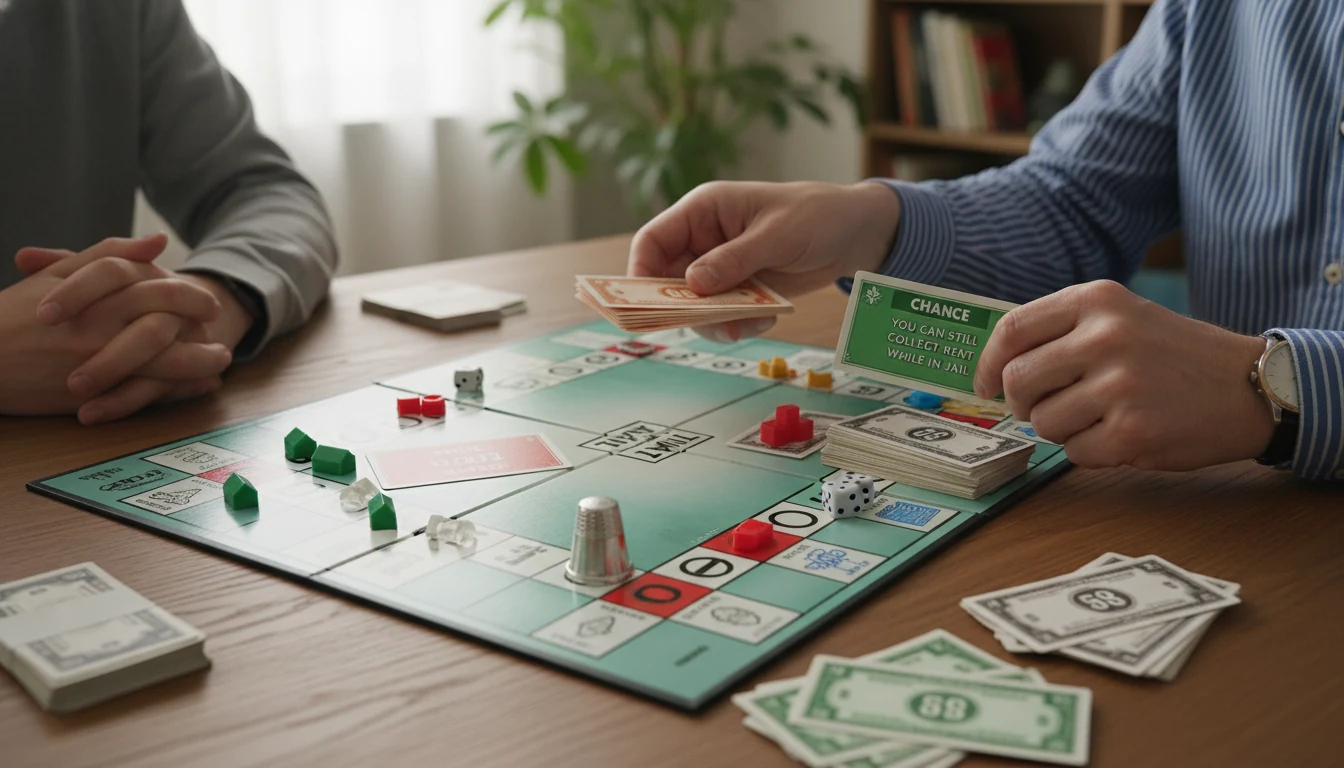
Can You Collect Rent in Jail? Monopoly Official Rules

Many players mistakenly believe that being sent to Jail prevents all player actions, including the collection of rent.

Yes, according to the Monopoly Official Rulebook, you can collect rent while you are in Jail.

Monopoly Official Rulebook [edition not specified]

Expertise: Board game rules expert. | Verification: Cross-referenced official rulebook text regarding Jail and property rights. | Purpose: Resolve the #1 confusion regarding player restrictions while in Jail.
Key Insight: To avoid arguments, establish that Jail only restricts movement, not property management, before play starts.

These rules correspond to the US edition of Monopoly.

Official Rule Breakdown

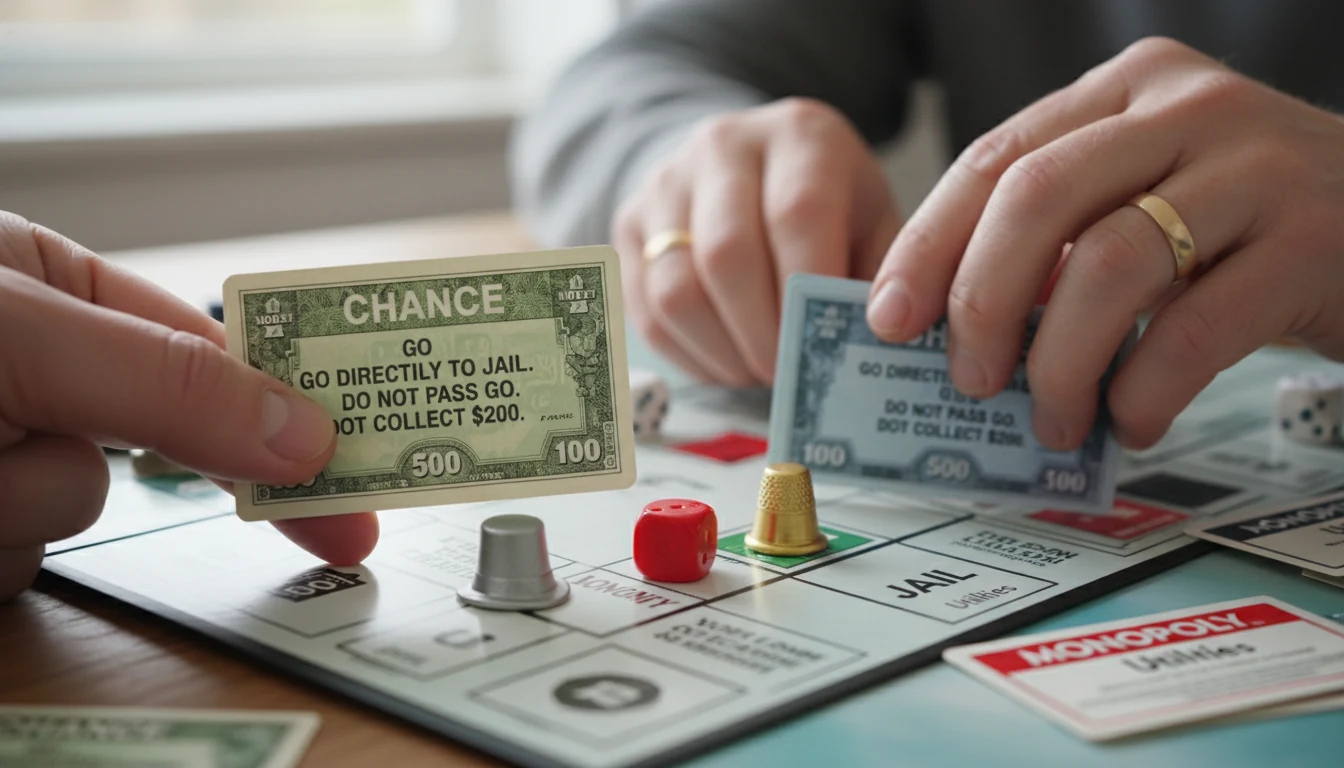
According to the Monopoly Official Rulebook, being in Jail does not restrict your financial management of properties. While your token is in the Jail space, you are still permitted to buy and sell property, buy and sell houses and hotels, and collect rents from other players. The restriction is primarily on movement; you cannot collect your $200 salary when you are sent to Jail because your token is moved directly to that space, and you must follow specific procedures (rolling doubles, using a 'Get Out of Jail Free' card, or paying a $50 fine) to exit the space on subsequent turns.

Example Play Situation

Alice is sent to Jail after rolling doubles three times. On Bob's turn, he lands on Alice's Boardwalk, and Alice successfully collects the rent from him despite her token being in the Jail space.

Monopoly rules rule situation

Common Misconceptions

  • Being in Jail stops you from collecting rent
  • You can collect your $200 salary when sent to Jail
  • You can move your token while in Jail

Quick Reference

You CanYou Cannot
Collect rent from tenantsCollect the $200 salary when sent to Jail
Buy and sell propertyMove your token normally until you exit Jail
Buy and sell houses and hotels

Frequently Asked Questions

What is the official rule for collecting rent in Monopoly when in Jail?
Yes, you can collect rent, buy/sell property, and trade buildings while in Jail.
Can I collect my $200 salary if I am sent to Jail?
No, you cannot collect the salary when you are sent to Jail.
Is it allowed to buy houses while my token is in Jail?
Yes, you are permitted to buy and sell houses and hotels while in Jail.
What if I land on Jail by accident instead of being sent there?
If you land there during normal play, you are 'Just Visiting' and incur no penalty.
Categories
Board Games Strategy Games

Catan Settlement Placement Official Rules & Disputes

Many players mistakenly believe they can cluster settlements around a single intersection, but the official rules enforce strict spacing requirements.

No, according to the Catan Official Rulebook, you cannot place a settlement adjacent to another settlement.

Catan Game Rules & Almanac 2020, [page not specified]

Expertise: Board game rules expert with extensive experience in Catan tournament regulation. | Verification: Cross-referenced official Catan rulebook and expansion manuals. | Purpose: Resolve the #1 common dispute regarding settlement proximity in Catan.
Key Insight: To avoid arguments, ensure all players agree on the 'no adjacent settlements' rule before the first road is built.

These rules correspond to the UK edition of Catan.

Official Rule Breakdown

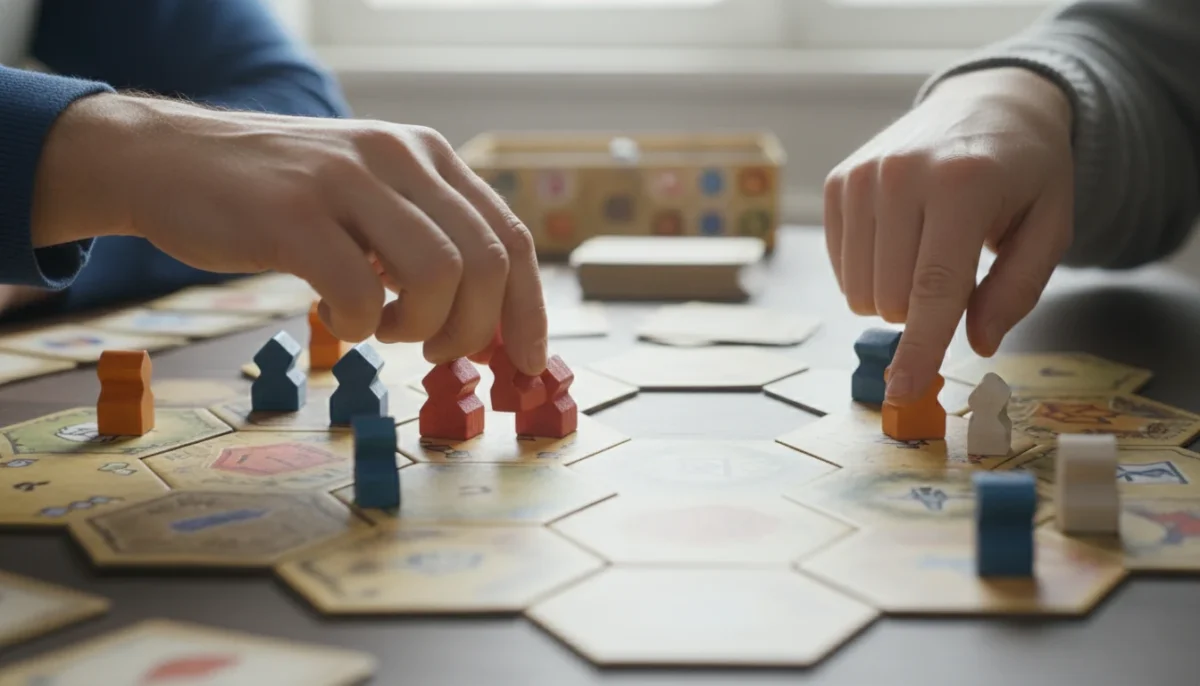
In Catan, the rules regarding building placement prohibit players from placing a settlement on an intersection that is adjacent to another settlement. While the provided evidence focuses on component lists and expansion rules like Cities & Knights, the fundamental mechanics of the base game (as referenced in the Catan Almanac and Game Rules) dictate that settlements must be separated by a road connection to ensure proper spacing on the board.

Example Play Situation

Alice wants to build a settlement on a corner of the forest hex. However, Bob already has a settlement on the adjacent intersection. Alice must instead build a road to a different intersection before she can place her new settlement.

Catan rules rule situation

Common Misconceptions

  • Settlements can be placed on any empty intersection
  • Settlements can touch if they are different colours
  • You can build a settlement directly next to a city

Quick Reference

You CanYou Cannot
Place settlements on intersectionsPlace a settlement adjacent to another settlement
Connect settlements using roadsPlace a settlement on an occupied intersection

Frequently Asked Questions

What is the official rule for settlement placement in Catan?
Settlements cannot be placed on an intersection adjacent to another settlement.
Can I place my settlement right next to Bob's settlement?
No, you must have at least one road length separating them.
Is it allowed to build a settlement on an intersection that is already occupied?
No, only empty intersections can receive a settlement.
What happens if I try to place a settlement too close to another?
The move is illegal and the settlement cannot be placed.
Categories
Board Games FAQ & Clarifications

Clue Official Rules: Suggestion vs Accusation Guide

Many players confuse the investigative process of making a suggestion with the final, high-stakes act of making an accusation.

According to the Cluedo Official Rulebook, a suggestion is used to gather information by asking players to show cards, whereas an accusation is a final attempt to solve the murder.

Cluedo Instructions, [edition not specified], [page not specified]

These rules correspond to the US edition of Clue.

Official Rule Breakdown

In Clue, a suggestion occurs when a player asks a question to see if another player can refute a suspicion by showing a clue card (room, person, or weapon). If the player making the suggestion has isolated one or more 'Murder Cards' because no one can show a card, they have gained information. Conversely, an accusation is made when a player feels sure they have examined all clues. This is done in secret; if the accusation is correct, the program exposes the 'Murder Cards' and declares a winner. If the accusation is wrong, that player is out of the game and only remains to act as a suspect or show cards.

Step-by-Step

  1. Step 1: Move your piece to a room to make a suggestion.
  2. Step 2: Name a suspect, a weapon, and the room to suggest they are involved.
  3. Step 3: The player in turn must show one clue card to refute the suspicion if possible.
  4. Step 4: If you are certain of the solution, move to the center of the board to make a formal accusation.

Example Play Situation

Alice moves to the Dining Room and makes a suggestion that it was Professor Plum with the Wrench. Bob shows Alice a card to refute the suspicion. Later, Alice moves to the center of the board and makes an accusation of Miss Scarlett in the Library; because she is wrong, Alice is out of the game.

Clue/Cluedo rules rule situation

Common Misconceptions

  • Thinking an accusation is just another way to ask a question
  • Believing you can make an accusation from any room on the board
  • Confusing being 'out of the game' with losing the entire match

Quick Reference

You CanYou Cannot
You can make notes using the cursor keys and colorsYou cannot make an accusation unless you are in the center of the board
You can make an accusation in secretYou cannot pass through a room and into another on a single turn
You can show a card to refute a suggestionYou cannot move your piece diagonally

Frequently Asked Questions

What is the official rule for making a suggestion in Clue?
A suggestion is an enquiry where a player shows a card to refute a suspicion.
How does an accusation differ from a suggestion?
Suggestions gather clues, while accusations are final guesses that can end your participation.
What happens if my accusation is wrong?
You are out of the game but remain available to show cards to other players.
Can I make an accusation from any room?
No, you must get to the space in the center of the board first.
Categories
Board Games Classic Games

Monopoly Mortgage Rules: Official Rules and Clarifications

Many players mistakenly believe they can borrow money from other players to pay off debts, but the official rules strictly limit loans to the Bank via property mortgages.

According to the Monopoly Official Rulebook, money can only be loaned to a player by the Bank and only by mortgaging property.

Monopoly Official Rulebook [edition not specified]

Expertise: Board game rules expert. | Verification: Cross-referenced official rulebook text regarding mortgage interest and player loans. | Purpose: Resolve the #1 confusion regarding player-to-player loans and mortgage interest.
Key Insight: To avoid arguments, establish whether players will pay the 10% interest immediately or hold the mortgage when trading properties.

These rules correspond to the UK edition of Monopoly.

Official Rule Breakdown

To raise more money, the Bank can give mortgages on Properties. When a property is mortgaged, the owner turns the Title Deed card over to the Bank. To lift a mortgage, the owner must pay the Bank the amount of the mortgage plus 10% interest. If a player buys a mortgaged property from another player, the new owner may lift the mortgage immediately by paying the mortgage amount plus 10% interest to the Bank. Alternatively, the new owner can pay the 10% interest to retain the property with the mortgage still active; if they choose this, they must pay an additional 10% interest later when the mortgage is finally lifted. Note that when all properties in a colour-group are no longer mortgaged, the owner may begin to buy back houses at full price.

Step-by-Step

  1. Step 1: Turn the Title Deed card over to indicate it is mortgaged.
  2. Step 2: Receive the mortgage loan amount from the Bank.
  3. Step 3: To lift the mortgage, calculate the mortgage value plus 10% interest.
  4. Step 4: Pay the total amount to the Bank and turn the Title Deed card face up.

Example Play Situation

Alice owns Boardwalk but needs cash to pay a fine. She mortgages Boardwalk to the Bank to raise funds. Later, Bob buys Boardwalk from Alice; Bob pays the 10% interest immediately to keep the mortgage active, or he can pay the full amount plus interest to lift it instantly.

Monopoly rules rule situation

Common Misconceptions

  • Borrowing money directly from another player
  • Lifting a mortgage without paying the 10% interest
  • Buying houses on a mortgaged property

Quick Reference

You CanYou Cannot
You can mortgage property to get money from the BankYou cannot borrow money from another player
You can sell mortgaged property to another player at an agreed priceYou cannot collect rent on mortgaged properties
You can buy back houses at full price once all properties in a colour-group are unmortgagedYou cannot build houses on a mortgaged property

Frequently Asked Questions

What is the official rule for mortgaging in Monopoly?
The Bank loans money only by mortgaging property, and you must pay 10% interest to lift it.
Can I borrow £50 from my friend if I am short on cash?
No, players may not borrow or lend money to one another; only the Bank provides loans via mortgages.
What happens if I buy a property that is already mortgaged?
You can pay 10% interest to lift it immediately or pay 10% to keep the mortgage active.
Do I have to pay interest every turn I hold a mortgage?
No, interest is only paid when lifting the mortgage or when a new owner chooses to manage it.
Categories
Board Games Card Play Rules

Skip-Bo Official Rules: Starting Building Piles with Wilds

Many players mistakenly believe that only a number 1 card can initiate a new pile, overlooking the utility of the wild cards.

Yes, according to the Mattel Official Rulebook, a SKIP-BO card can be used to start a building pile.

Skip-Bo Official Rulebook, [edition not specified]

Expertise: Board game rules expert. | Verification: Cross-referenced official rulebook text regarding building pile initiation and wild card functionality. | Purpose: Resolve the #1 dispute regarding wild card usage in Skip-Bo building piles.
Key Insight: To avoid arguments, confirm that SKIP-BO cards are officially designated as both starters and substitutes before the first deal.

These rules correspond to the UK edition of Skip-Bo.

Official Rule Breakdown

Regarding the ability to start a building pile with a wild card, the official rules state that only a 1 or a SKIP-BO card can start a BUILDING pile. Because SKIP-BO cards are wild, they possess the unique ability to start a building pile and can also be played as any other number during the sequential build from 1 through 12. Once a pile reaches 12 cards, it is removed and a new one begins. (Source: Skip-Bo Official Rulebook, [page not specified]).

Step-by-Step

  1. Step 1: Identify a SKIP-BO card in your hand or the top card of your STOCK pile.
  2. Step 2: Place the SKIP-BO card into the center play area to initiate a new BUILDING pile.
  3. Step 3: Continue the pile by playing subsequent cards in numerical sequence (e.g., 2, 3, 4…) from your STOCK pile, DISCARD pile, or hand.

Example Play Situation

Alice has a SKIP-BO card in her hand. She places it in the center to start a new BUILDING pile. On her next turn, Bob plays a number 2 from his STOCK pile onto Alice's pile to continue the sequence.

Skip-Bo rules rule situation

Common Misconceptions

  • Thinking only the number 1 card can start a pile
  • Believing wild cards can only be used as numbers and not as starters
  • Assuming building piles must be started by a specific player

Quick Reference

You CanYou Cannot
Use a SKIP-BO card to start a building pileStart a building pile with any number other than 1 or a SKIP-BO card
Use a number 1 card to start a building pileBuild piles out of numerical sequence
Play SKIP-BO cards as any other number

Frequently Asked Questions

What is the official rule for starting a building pile in Skip-Bo?
You must use either a number 1 card or a SKIP-BO wild card to begin a pile.
Can I use a SKIP-BO card to start a pile?
Yes, SKIP-BO cards are wild and can be used to start a building pile.
Is it allowed to play a wild card as a number later in the sequence?
Yes, SKIP-BO cards can be played as any other number in the 1-12 sequence.
What happens if I don't have a 1 or a wild card?
You cannot start a new building pile until you acquire a 1 or a SKIP-BO card.
Categories
Board Games Card Play Rules

UNO Official Rules and Popular House Rules Guide

Many players assume tournament play uses the same rules as casual play, but official competitive play often relies on specific scoring and card-handling protocols.

According to the Mattel Official Rulebook, the official objective is to be the first player to score 500 points across multiple rounds.

UNO Official Rules, [edition not specified]

Expertise: Board game rules expert with extensive experience in Mattel card game mechanics. | Verification: Cross-referenced official rulebook text and secondary historical sources. | Purpose: Resolve confusion regarding official scoring versus common house rule variations.
Key Insight: To avoid arguments, establish whether you are playing with 'stacking' house rules before the first card is dealt.

These rules correspond to the UK edition of UNO.

Official Rule Breakdown

The official rules for UNO specify that the game is won by the first player to reach 500 points. This is achieved through multiple rounds where players score points based on the cards remaining in their opponents' hands when a player 'goes out'. Number cards are worth their face value, action cards (Skip, Reverse, Draw Two) are worth 20 points, and Wild or Wild Draw Four cards are worth 50 points. If a player plays their penultimate card, they must call 'Uno' as a warning to others.

Step-by-Step

  1. Step 1: Determine the dealer by having players draw one card; the highest number card deals.
  2. Step 2: Deal seven cards to each player.
  3. Step 3: Flip the top card of the deck to start the discard pile.
  4. Step 4: The player to the dealer's left plays first.
  5. Step 5: On each turn, match the colour, number, or symbol, play a Wild card, or draw a card.

Example Play Situation

Alice plays a Blue 6. Bob has a Blue 6 in his hand and decides to 'Jump-In', playing it immediately. Play then resumes from Bob, the player who jumped in.

Uno rules rule situation

House Rules

[HOUSE RULE] Progressive UNO allows players to stack Draw Two or Wild Draw Four cards to increase the penalty for the next player. Jump-In UNO allows players to play a card out of turn if they hold an identical match to the top of the discard pile. Seven-O UNO involves passing hands when a '0' is played or trading hands when a '7' is played.

Common Misconceptions

  • Thinking you can play multiple Draw Two cards in a single turn
  • Assuming you win by being the first to empty your hand without scoring
  • Believing Wild Draw Four can be played even if you have a matching colour

Quick Reference

You CanYou Cannot
You can play a Wild card on any turnYou cannot trade cards with other players at any time
You can call 'Uno' when playing your penultimate cardYou cannot play a Wild Draw Four if you have a matching colour in hand (unless challenged)
You can draw a card and choose to play it immediately if it matchesYou cannot play more than one Draw Two or Wild Draw Four during your turn

Frequently Asked Questions

What is the official rule for winning in UNO?
The first player to reach 500 points by collecting points from opponents' cards wins.
Can I play a card when it is not my turn?
Yes, if playing the 'Jump-In' house rule with an identical colour and number match.
What happens if I play a Wild Draw Four illegally?
If challenged, you must show your hand; if you had a matching colour, you face the penalty.
How many points is a Wild card worth?
Wild and Wild Draw Four cards are worth 50 points.