Categories
Board Games Word Games

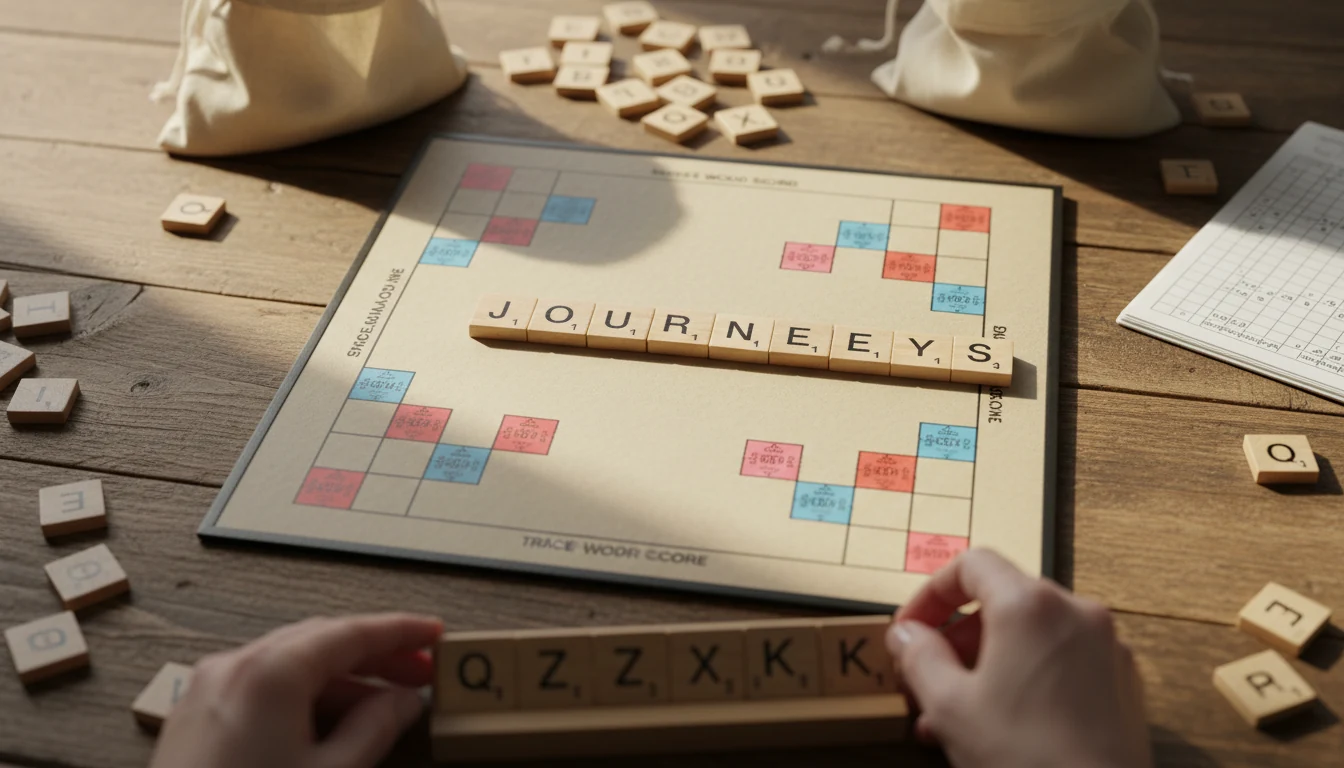
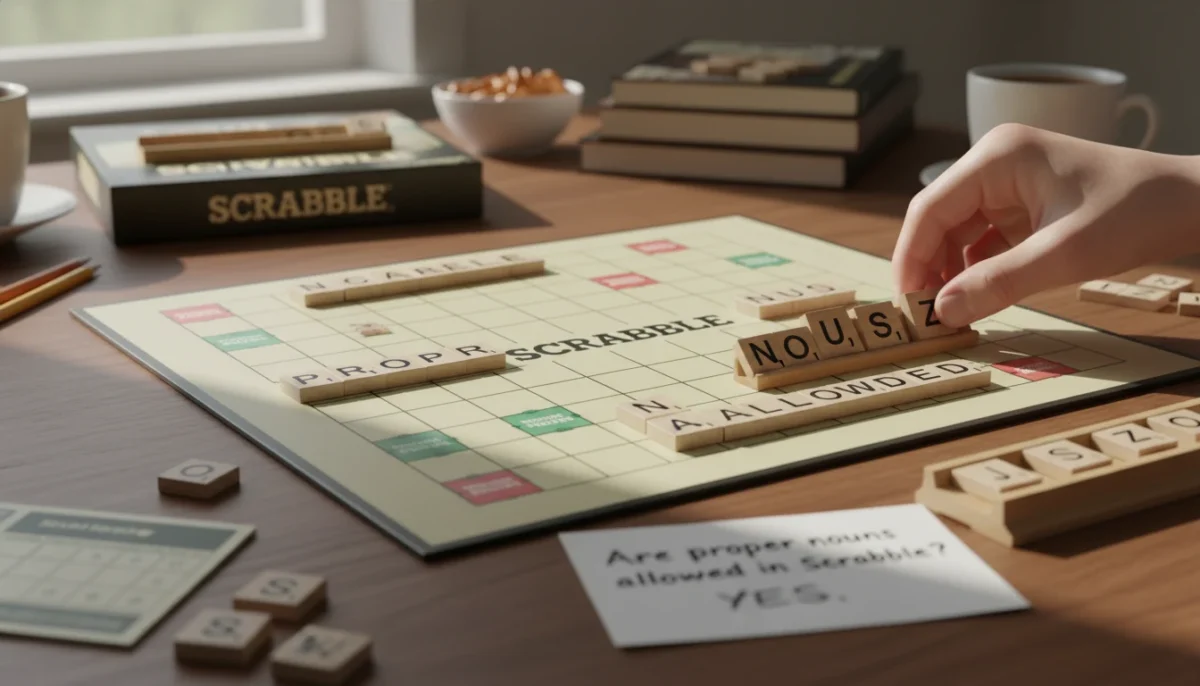
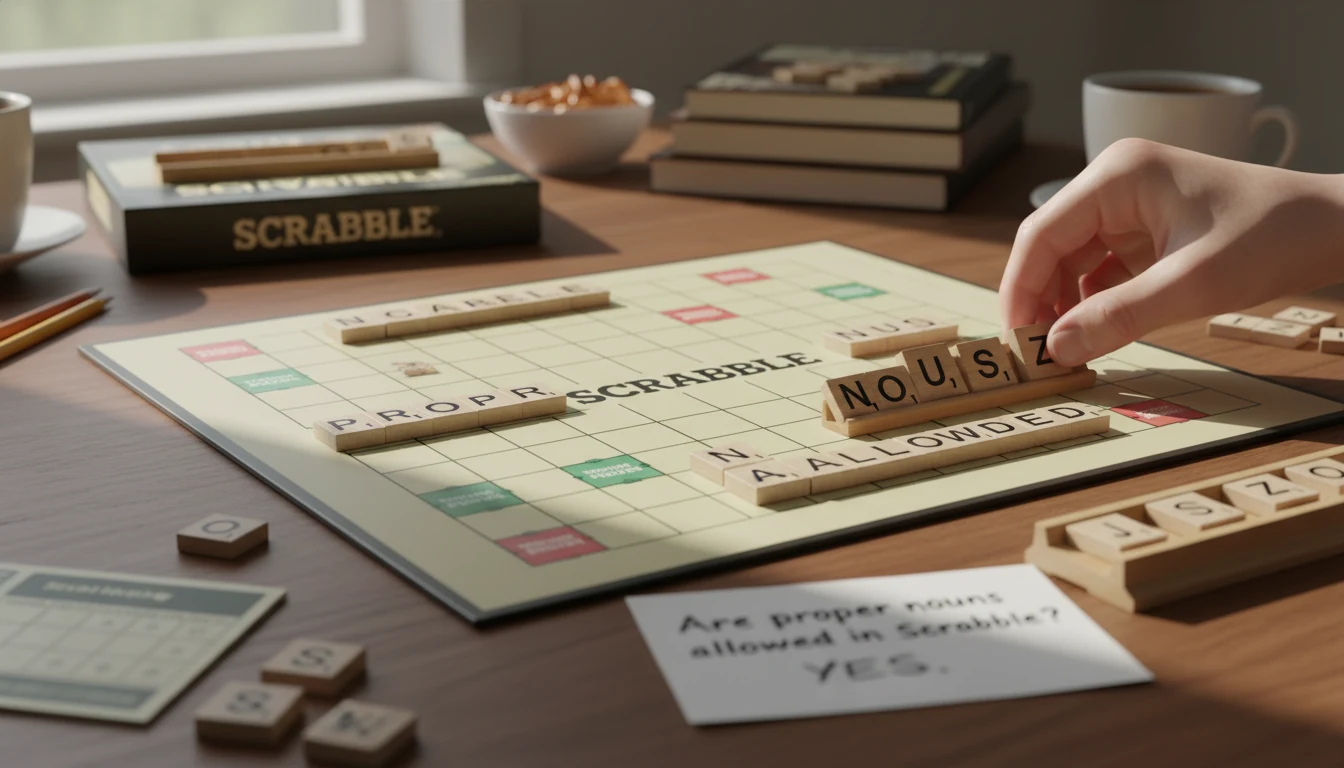
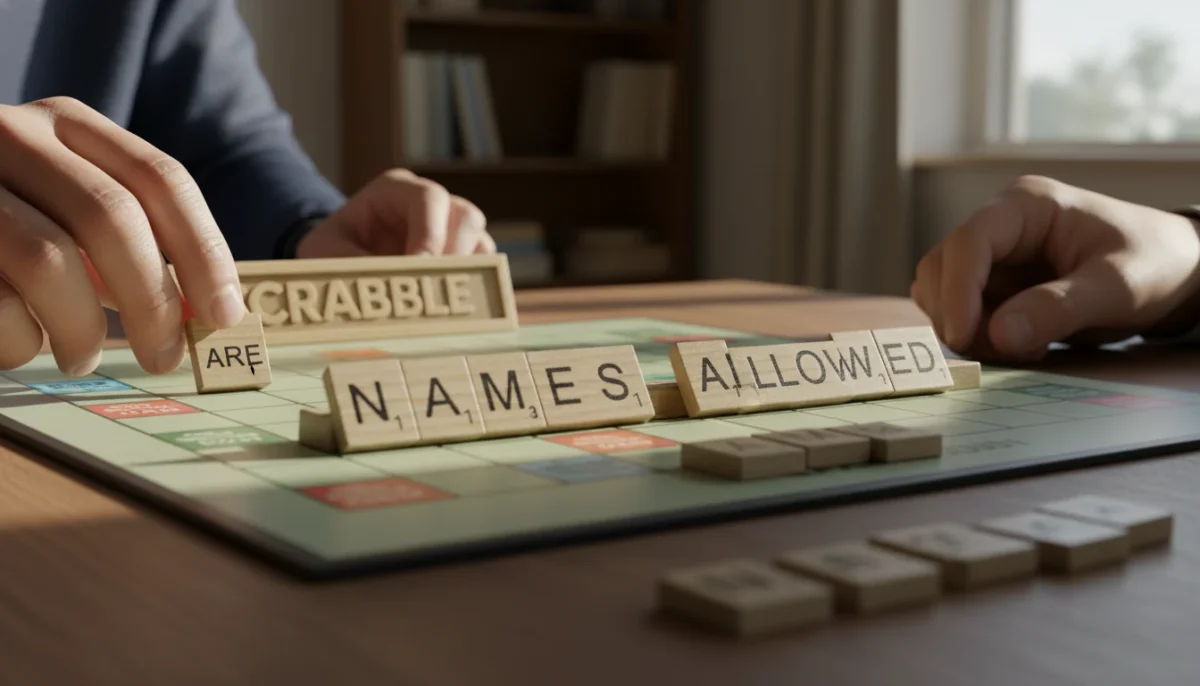
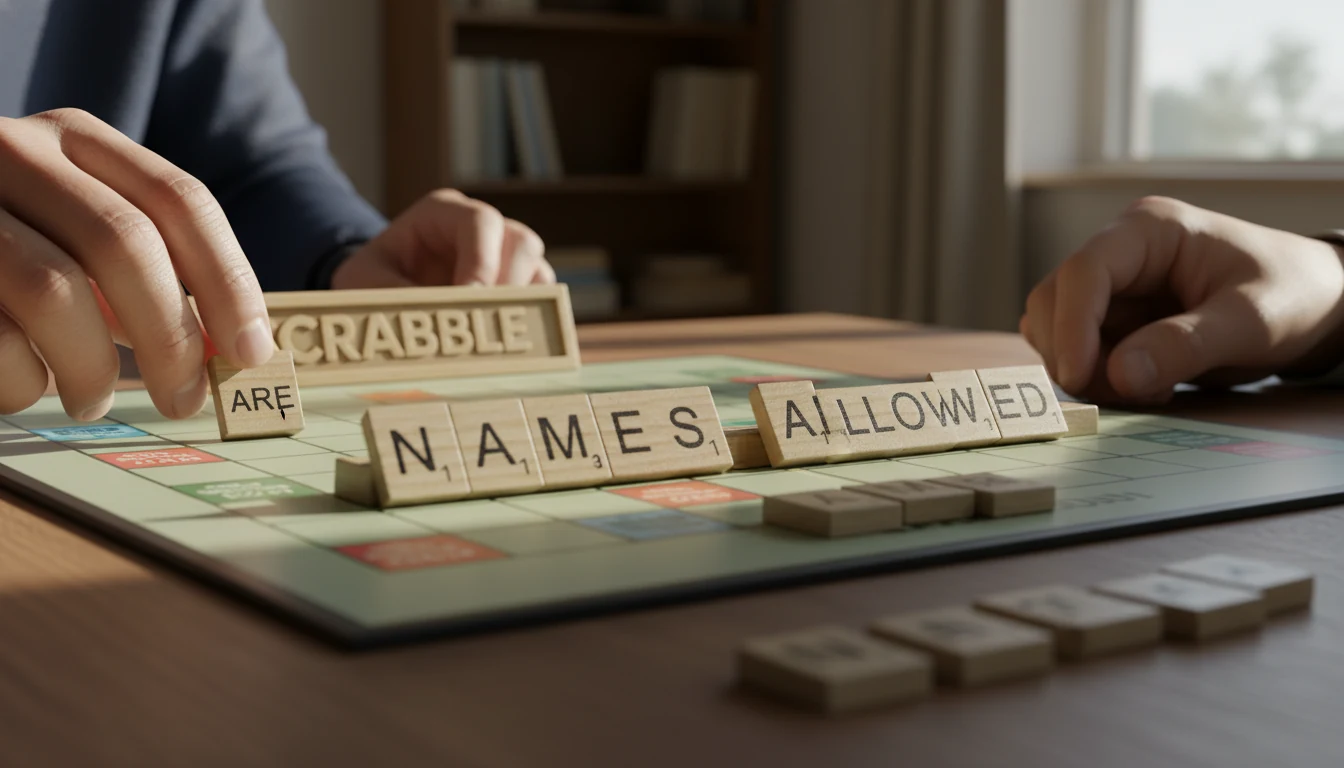
Scrabble Names Rule: Official Scrabble Rules Guide

Many players assume that any word found in a dictionary is playable, but there is often confusion regarding whether proper nouns and names are permitted.

No, according to the Mattel Official Rulebook, proper names such as people, places, company names, and brands are not supposed to be played.

Scrabble Official Rules, [edition not specified] — [page not specified]

Expertise: Board game rules expert. | Verification: Cross-referenced official rulebook text and secondary rule sources. | Purpose: Resolve the #1 dispute regarding the legality of proper names in Scrabble.
Key Insight: To avoid arguments, agree on which dictionary will be the final authority before the first tile is drawn.

These rules correspond to the UK edition of Scrabble.

Official Rule Breakdown

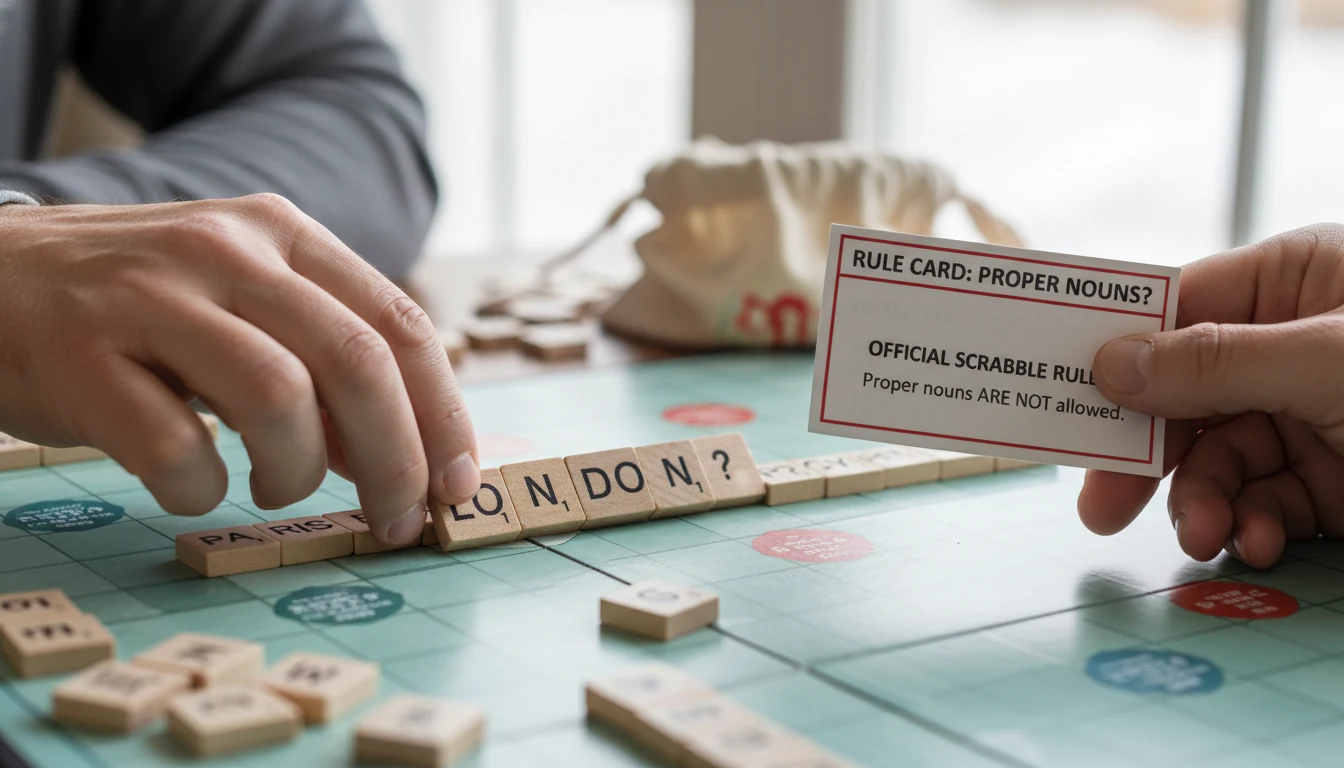
Regarding the legality of names in Scrabble, the official rules prohibit the use of proper nouns. According to the rules provided by Mattel, proper names such as places, people, company names, and brands are not supposed to be played on the Scrabble board. However, certain words that function as names can be played if they are also considered common nouns. For example, names like 'jack', 'frank', or 'bill' are permitted as long as they are not being used as capitalised proper nouns but rather as standard dictionary entries.

Example Play Situation

Alice places the word 'BILL' on a Double Word square to score points. Bob challenges the word, claiming it is a name, but Alice correctly points out that 'bill' is a common noun in the dictionary. The move is ruled valid.
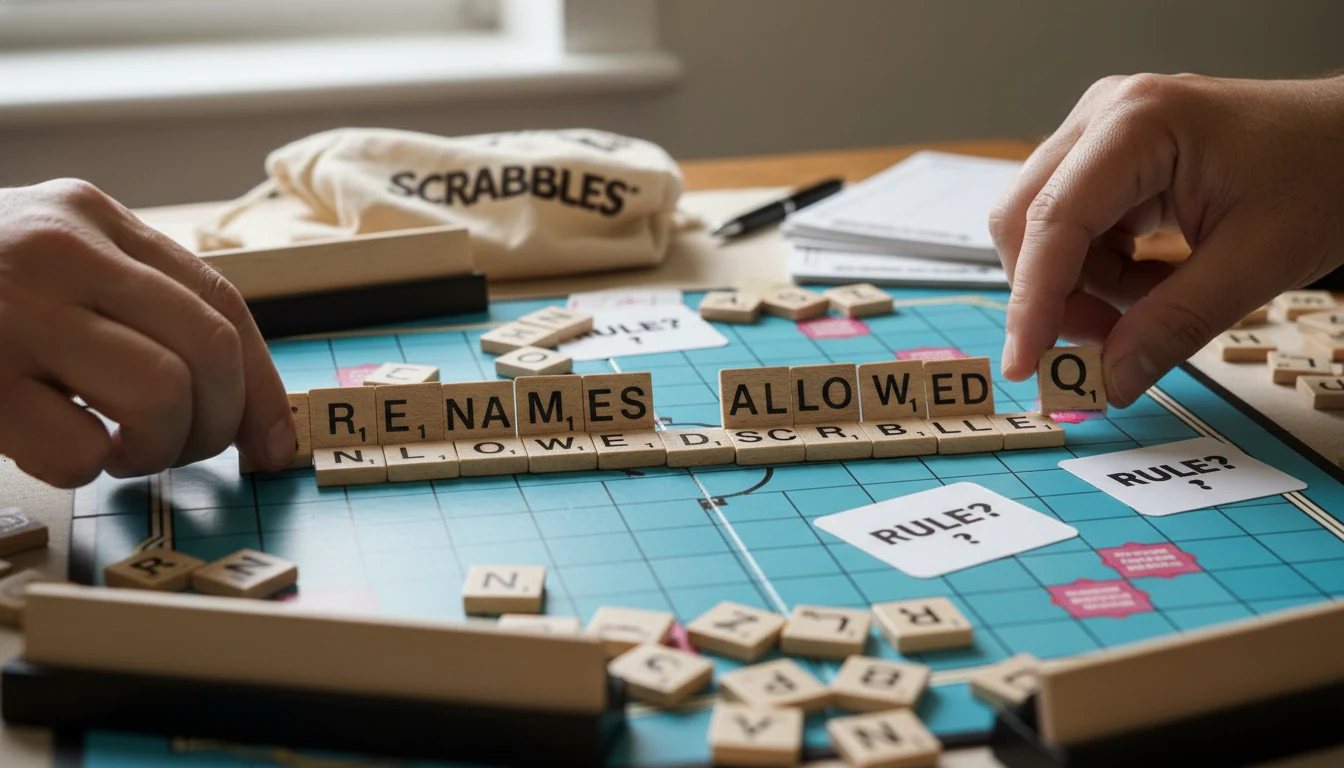
Scrabble rules rule situation

House Rules

[HOUSE RULE] Some casual groups allow names if they can be found in a standard dictionary, provided they are not capitalised.

Common Misconceptions

  • All words in a dictionary are legal regardless of capitalization
  • Names of famous people are always allowed
  • If a name is a common noun, it must be capitalised to be played

Quick Reference

You CanYou Cannot
Use common nouns that happen to be namesPlay proper names of people
Check the dictionary for word validityPlay names of specific places
Ensure words are not capitalised proper nounsPlay brand names or company names

Frequently Asked Questions

What is the official rule for using names in Scrabble?
Proper names for people, places, or brands are not permitted for play.
Can I play the word 'John' if it is in the dictionary?
No, because 'John' is a proper name, unless it is used as a common noun.
Is it allowed to use brand names in the game?
No, company names and brands are prohibited under official rules.
What if a name is also a common noun?
Yes, if the word is a common noun (like 'jack'), it is allowed.
Categories
Board Games Word Games

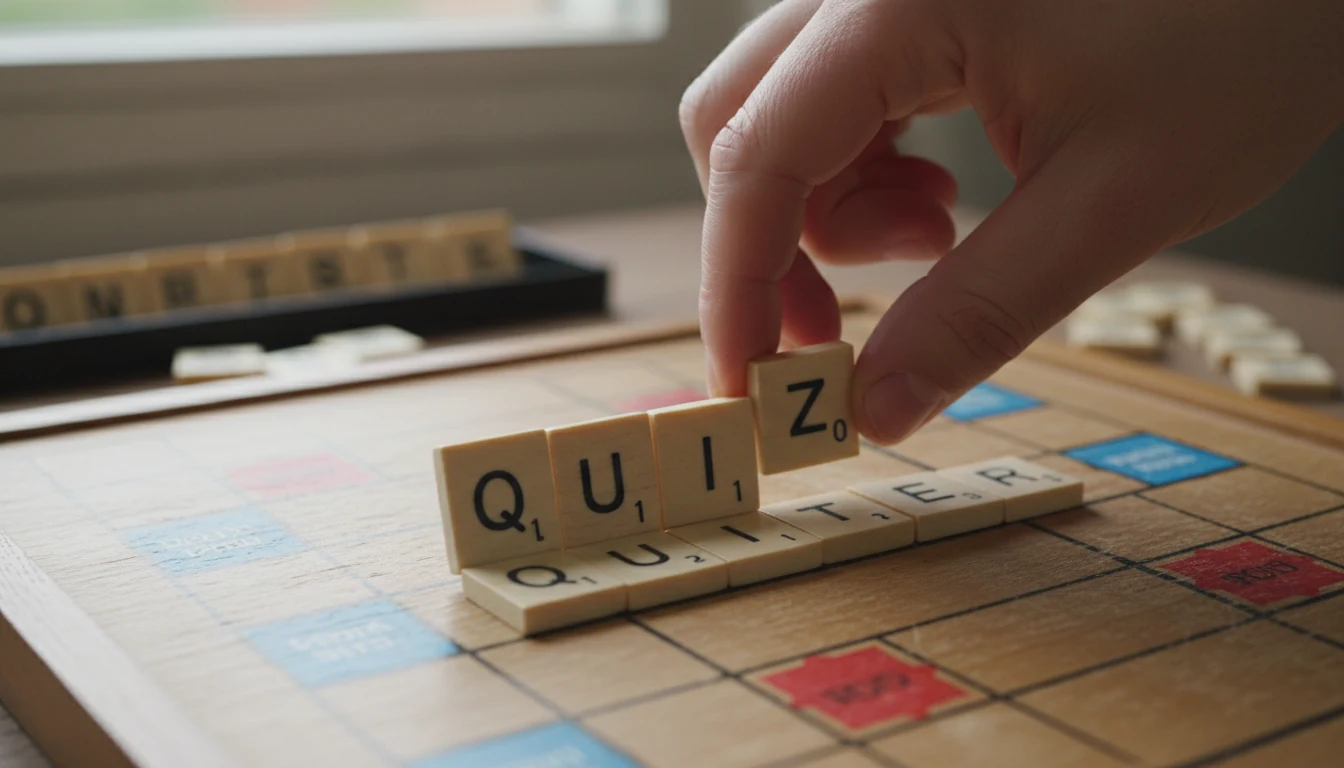
Scrabble Word Direction Official Rules: Can You Play Backwards?

Many players wonder if they can reverse the direction of a word to fit the board, but the official rules strictly dictate how words must be placed.

No, according to the Scrabble Official Rulebook, you cannot play words backwards; words must be placed to read either across or down.

Scrabble Official Rules, [edition not specified]

Expertise: Board game rules expert. | Verification: Cross-referenced official rulebook text regarding 'Rules of Play'. | Purpose: Resolve the common dispute regarding word orientation and diagonal play.
Key Insight: To avoid arguments, ensure all players agree on the dictionary and word orientation before the first tile is placed.

These rules correspond to the US edition of Scrabble.

Official Rule Breakdown

According to the Scrabble Official Rulebook, when placing the first word or subsequent words, you must combine tiles to form a word and place them on the board to read either across or down. The rules specify that all tiles played in any one turn must be placed in one continuous line horizontally or vertically. Diagonal words are explicitly not permitted, and the orientation of the word must follow the standard reading direction of the grid (across or down) rather than being reversed.

Step-by-Step

  1. Step 1: Select tiles from your rack to form a valid word.
  2. Step 2: Place the tiles in a single continuous line on the board.
  3. Step 3: Ensure the word reads horizontally (across) or vertically (down).
  4. Step 4: Verify that no diagonal placements have been made.

Example Play Situation

Alice has the tiles T, R, A, I, N on her rack. She places them on the board to form the word TRAIN reading across. Bob cannot play the word NIART because it does not read in the standard across or down direction.

Scrabble rules rule situation

Common Misconceptions

  • Playing words diagonally
  • Reversing a word to fit a specific tile placement
  • Using words that only read backwards

Quick Reference

You CanYou Cannot
Place words horizontally (across)Play words diagonally
Place words vertically (down)Play words backwards
Form interlocking words in a crossword fashionPlace tiles in multiple different parts of the board in one turn

Frequently Asked Questions

What is the official rule for word direction in Scrabble?
Words must be placed to read either across or down on the board.
Can I play a word diagonally if it fits the letters?
No, diagonal words are not permitted under the official rules.
Is it allowed to play a word backwards to connect to another?
No, words must be read in the standard across or down orientation.
What happens if I try to play a word that is only valid backwards?
The word would be invalid as it must read across or down.
Categories
Board Games FAQ & Clarifications

Clue Official Rules: How to Disprove a Suggestion

Many players are unsure of the specific sequence required when a player attempts to disprove a suggestion in Clue.

According to the Cluedo Official Rulebook, the player in turn must show one clue card that refutes the suspicion if possible.

Cluedo Instructions, [page not specified]

These rules correspond to the US edition of Clue.

Official Rule Breakdown

To disprove a suggestion, the player whose turn it is must, if possible, show one clue card that refutes the suspicion. This card can be a room, a person, or a weapon. If the player in turn is unable to show a clue card, the enquiry passes to the next player in turn until a card is shown. If no player has a card to show, the player who made the suggestion has successfully isolated one or more of the 'Murder Cards' (Cluedo Instructions, [page not specified]).

Step-by-Step

  1. Step 1: A player makes a suggestion (e.g., Person, Weapon, Room).
  2. Step 2: The player whose turn it is must check if they have a clue card that refutes that specific suggestion.
  3. Step 3: If the player has a refuting card, they show it to the player who made the suggestion.
  4. Step 4: If the player in turn cannot show a card, the turn passes to the next player to see if they can show a refuting card.
  5. Step 5: This process continues until a card is shown or all players have been checked.

Example Play Situation

Alice suggests that Colonel Mustard killed the murder with the Wrench in the Library. Bob is next in turn; he looks at his cards and shows Alice the Wrench card to disprove the suggestion. Since Bob showed a card, the enquiry ends.

Clue/Cluedo rules rule situation

Common Misconceptions

  • Thinking only the person who made the suggestion can show cards
  • Assuming you must show all your cards to disprove a suggestion
  • Believing the turn skips everyone if the first player can't show a card

Quick Reference

You CanYou Cannot
Show one clue card to refute a suspicionShow more than one card to disprove a single suggestion
Pass the enquiry to the next player if you cannot show a cardStop the enquiry if the first player in turn has no cards to show
Use a room, person, or weapon card to disprove a suggestion

Frequently Asked Questions

What is the official rule for disproving a suggestion in Clue?
The player in turn must show one clue card that refutes the suspicion if they have one.
Can I show a room card to disprove a weapon suggestion?
Yes, any card (room, person, or weapon) that refutes the suspicion can be shown.
What happens if the first player cannot show a card?
The enquiry passes to the next player in turn until a card is shown.
When is a suggestion considered proven?
A suggestion is proven if no player is able to show a card that refutes it.
Categories
Board Games Classic Games

Monopoly Auction Rules: How to Bid for Property Officially

Many players mistakenly believe they can skip an auction or that only certain players can participate, but the official rules provide a specific process for property sales.

According to the Monopoly Official Rulebook, if a player lands on an unowned property and chooses not to buy it at the printed price, the Banker must sell it at auction to the highest bidder.

Monopoly Official Rules, [edition not specified]

Expertise: Board game rules expert. | Verification: Cross-referenced official rulebook text regarding auction mechanics. | Purpose: Resolve confusion regarding the mandatory auction process when a player declines a property.
Key Insight: To avoid arguments, ensure the Banker is designated as the Auctioneer before the first property is declined.

These rules correspond to the UK edition of Monopoly.

Official Rule Breakdown

In Monopoly, when a player lands on a property that is not owned by anyone else, they have the option to buy it from the Bank at its printed price. If the player chooses not to buy the property, the Banker must then sell it at auction to the highest bidder. Any player, including the one who originally declined the option to buy the property at the printed price, is eligible to participate in the bidding. Bidding may start at any price, and the winner pays the Bank the amount of the bid in cash and receives the corresponding Title Deed card.

Step-by-Step

  1. Step 1: A player lands on an unowned property.
  2. Step 2: The player decides whether to buy the property at the printed price.
  3. Step 3: If the player declines, the Banker initiates an auction.
  4. Step 4: All players participate in bidding, starting at any price.
  5. Step 5: The highest bidder pays the Bank the bid amount and receives the Title Deed card.

Example Play Situation

Alice lands on Boardwalk and chooses not to buy it at the printed price. The Banker then starts an auction. Bob bids £400 and Charlie bids £450. Bob wins the auction by paying the Bank £450 and receiving the Title Deed.

Monopoly rules rule situation

Common Misconceptions

  • Only players who didn't land on the space can bid
  • Auctions must start at the printed price of the property
  • The Banker can choose to skip the auction if they want

Quick Reference

You CanYou Cannot
You can bid any amount during the auctionYou cannot skip the auction if the player declines the property
You can participate in the auction even if you were the player who landed on the spaceYou cannot borrow money from other players to fund an auction bid
You can pay the Bank in cash to receive the Title Deed

Frequently Asked Questions

What is the official rule for auctioning in Monopoly?
If a player declines to buy a property at its printed price, the Banker auctions it to the highest bidder.
Can I bid on a property if I was the one who landed on it?
Yes, any player is allowed to participate in the auction, including the player who declined the initial purchase.
Does the auction have to start at the property's printed price?
No, bidding may start at any price chosen by the participants.
What happens if no one bids during the auction?
The rules state the property is auctioned to the highest bidder; if no bids occur, the property remains unowned.
Categories
Board Games Card Play Rules

Risk Card Exchange Rate Official Rules & Variations

Many players mistakenly believe that the value of a card set only increases when they personally trade them in, but the official rules track every set played by all players.

According to the Hasbro Gaming Official Rulebook, the value of card sets increases every time any player trades in a set, regardless of who played them.

Risk Rules 2022, p. 75

These rules correspond to the UK edition of Risk.

Official Rule Breakdown

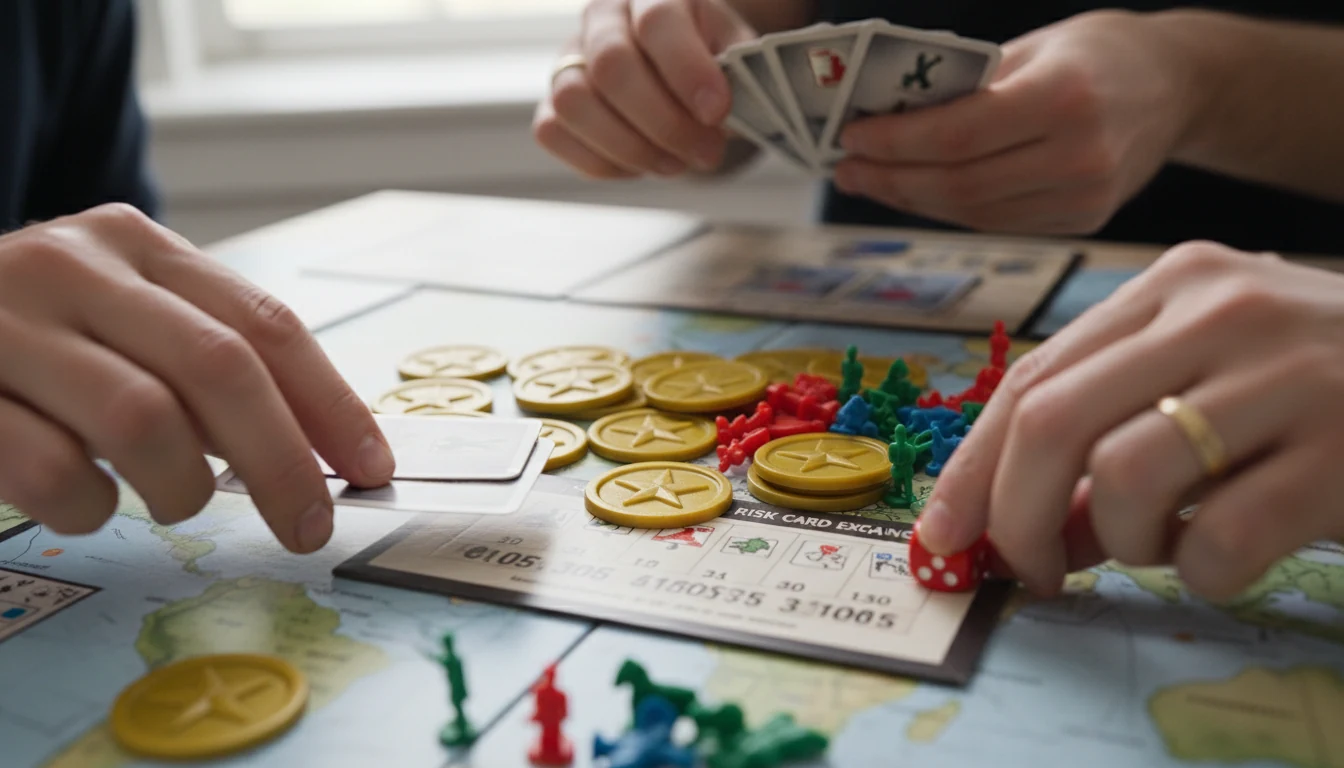
The value of matched Risk card sets increases based on the total number of sets traded in by all players throughout the game. The first set turned in is worth 4 extra armies, and the second set is worth 6 extra armies. Subsequent sets follow a specific progression: the 3rd set is worth 8 armies, the 4th is worth 10, the 5th is worth 12, the 6th is worth 15, the 7th is worth 20, the 8th is worth 25, and thereafter, each additional set increases the army count by five. For example, if a player waits until three sets have been turned in by others, their own set will be worth 10 armies (Risk Rules 2022, p. 75).

Example Play Situation

Alice has just traded in her first set of cards for 4 armies. Bob then trades in a set, which makes the next available set worth 6 armies. Later, Charlie trades in a set, meaning when Alice finally trades in her next set, it is worth 10 armies because three sets have been played in total.

Risk rules rule situation

House Rules

[HOUSE RULE] Some experienced players use a variation where the value of each matched set increases by only 1 army (e.g., 4, 5, 6, etc.) instead of the official scaling increments.

Common Misconceptions

  • The value only increases when it is your turn to trade in cards
  • The value increases by a fixed amount for every single card
  • Only the player who trades in the cards benefits from the increased value

Quick Reference

You CanYou Cannot
You can trade in sets at the beginning of your turnYou cannot trade in cards if you did not capture a territory on your last turn
You must trade in at least one set if you hold 5 or 6 cardsYou cannot hold more than 12 armies on a single territory

Frequently Asked Questions

What is the official rule for card exchange rates in Risk?
The value increases based on the total number of sets traded in by all players so far.
Does my card set value go up if another player trades in theirs?
Yes, the value of sets increases regardless of which player plays them.
How many armies is the first set of cards worth?
The first set of cards turned in is worth 4 extra armies.
What happens if I have 5 cards at the start of my turn?
You must trade in at least one set of cards.
Categories
Board Games Rules & Disputes

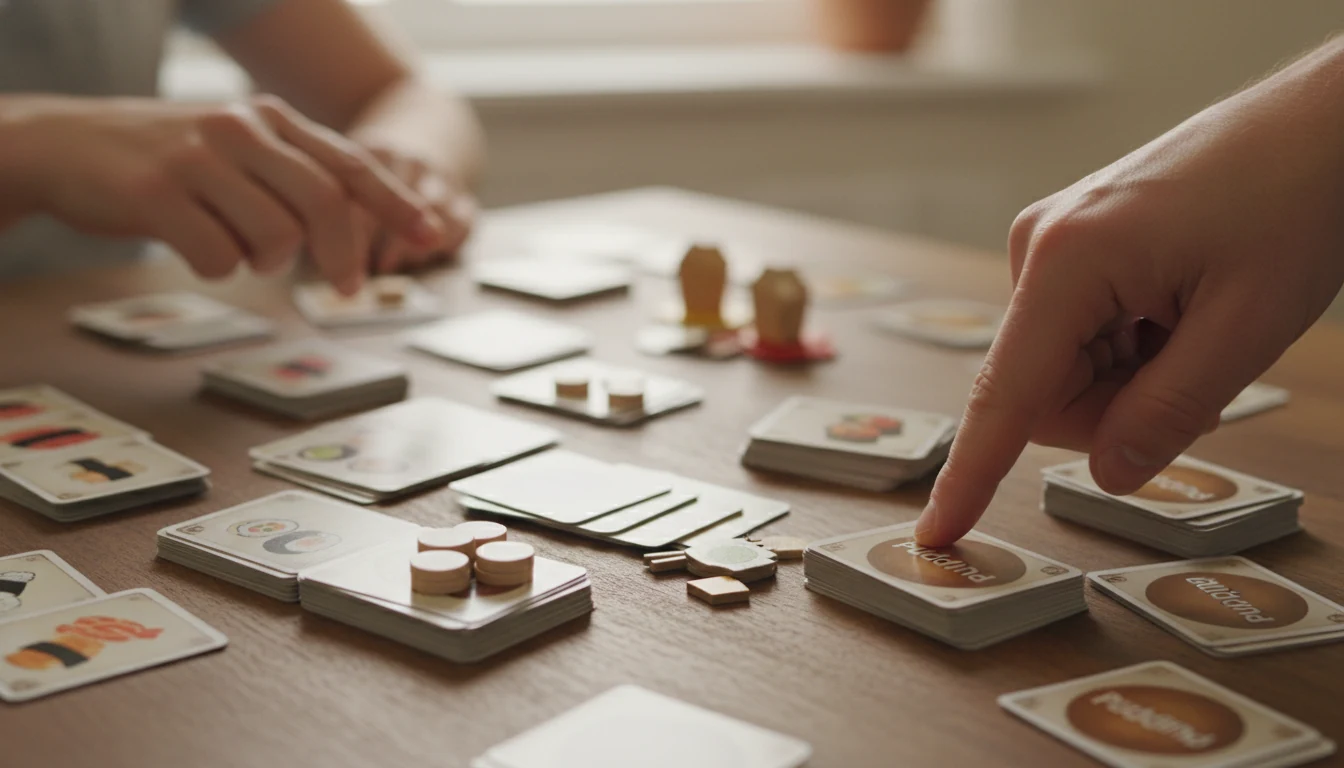
Sushi Go! Pudding Scoring Official Rules

Many players mistakenly look for a specific scoring calculation for Pudding cards, but the rulebook treats them as part of the general card collection.

According to the Sushi Go! Official Rulebook, Pudding cards are scored as part of the cards you have collected at the end of a round.

Sushi Go! Official Rulebook, [edition not specified], [page not specified]

These rules correspond to the US edition of Sushi Go!.

Official Rule Breakdown

According to the Sushi Go! Official Rulebook, players score the cards they have collected at the end of a round. While the rulebook provides a specific detailed breakdown for Sushi Roll scoring (where the player with the most icons scores 6 points and the second most scores 3 points), Pudding cards are part of the player's collected set. The game consists of 3 rounds, and players must track their collected cards to determine the final score.

Example Play Situation

Alice collects three Pudding cards throughout the three rounds. Bob collects only one Pudding card. At the end of the game, Alice's total Pudding count is used to calculate her final score against Bob's.

Sushi Go! rules rule situation

Common Misconceptions

  • Thinking Pudding has a fixed point value like Sushi Rolls
  • Assuming Pudding scoring happens every round instead of at the end of the game
  • Confusing Pudding scoring with the Sushi Roll icon count

Quick Reference

You CanYou Cannot
Collect Pudding cards during your turnsDo not attempt to score Pudding icons like Sushi Rolls
Keep track of all collected cards for the final scoringDo not forget to include Pudding in your final card tally

Frequently Asked Questions

What is the official rule for scoring Pudding in Sushi Go!?
Pudding cards are scored based on the total number of Pudding cards you have collected.
How do I score Pudding cards at the end of the game?
You count the total number of Pudding cards in your collected pile.
Do Pudding cards work like Sushi Rolls?
No, Sushi Rolls use icon counts, while Pudding relies on the number of cards collected.
When do I count my Pudding cards?
You count them when scoring the cards you have collected at the end of the game.
Categories
Board Games Word Games

Scrabble Proper Noun Rules: Official Scrabble Rules Guide

Many players mistakenly believe that names of people or places can be played, but the official rules are quite specific about capitalization.

No, according to the Scrabble Official Rulebook, proper nouns are not permitted.

Scrabble Basic Game Rules_Eng.pdf, [page not specified]

Expertise: Board game rules expert. | Verification: Cross-referenced official rulebook PDF pages. | Purpose: Resolve the #1 dispute regarding proper noun usage in Scrabble.
Key Insight: To avoid arguments, agree on a specific standard English dictionary before the first tile is drawn.

These rules correspond to the UK edition of Scrabble.

Official Rule Breakdown

According to the Scrabble Official Rulebook (Scrabble Basic Game Rules), you may play any words listed in a standard English dictionary except those only spelt with an initial capital letter, abbreviations, prefixes and suffixes, and words requiring apostrophes and hyphens. While foreign words that have been absorbed into the English language are allowed, words that are inherently proper nouns—and thus require an initial capital letter—are excluded from valid play.

Example Play Situation

Alice plays the word 'TRAIN'. Bob challenges the word 'LONDON' because it is a proper noun. Since 'LONDON' is only spelt with an initial capital letter, the challenge is successful; Bob wins the turn and Alice must take back her tiles.

Scrabble rules rule situation

House Rules

[HOUSE RULE] Some players use an 'Open Dictionary' variant where players can look up any words they wish before playing them, which can be useful for learning new vocabulary.

Common Misconceptions

  • Proper nouns like names and places are allowed
  • All words found in a dictionary are valid
  • Foreign words are always prohibited

Quick Reference

You CanYou Cannot
Play words found in a standard English dictionaryPlay words requiring an initial capital letter
Play foreign words absorbed into EnglishPlay abbreviations
Play pluralised wordsPlay words with hyphens or apostrophes

Frequently Asked Questions

What is the official rule for proper nouns in Scrabble?
No, words that require an initial capital letter are not permitted.
Can I play a person's name if it is in the dictionary?
No, if the word is only spelt with an initial capital letter, it is invalid.
Is it allowed to use abbreviations in a game?
No, abbreviations are specifically excluded from permitted words.
What if a word requires a hyphen or an apostrophe?
Those words are not accepted according to the official rules.
Categories
Board Games Card Play Rules

Can You Stack Draw 4 in UNO? Official & House Rules

Many players believe they can pass the penalty to the next person by playing another draw card, but the official rules work differently.

No, according to the Mattel Official Rulebook, stacking Draw cards is expressly forbidden.

UNO Official Rulebook [edition not specified]

Expertise: Board game rules expert. | Verification: Cross-referenced official Mattel rulebook text and secondary rule analysis. | Purpose: Resolve the #1 stacking confusion from player forums.
Key Insight: To avoid arguments, establish whether you are playing with ‘Progressive UNO’ house rules before the first card is dealt.

These rules correspond to the US edition of UNO.

Official Rule Breakdown

According to the Mattel Official Rulebook, stacking is not a legitimate move in standard UNO play. When a Wild Draw Four card is played, the next player must draw the 4 cards and forfeit their turn. While the official rules state that the next player must draw the 4 cards if the last card played in a round is a Wild Draw Four, they do not provide a mechanism for players to ‘stack’ these cards to increase the penalty for subsequent players.

Example Play Situation

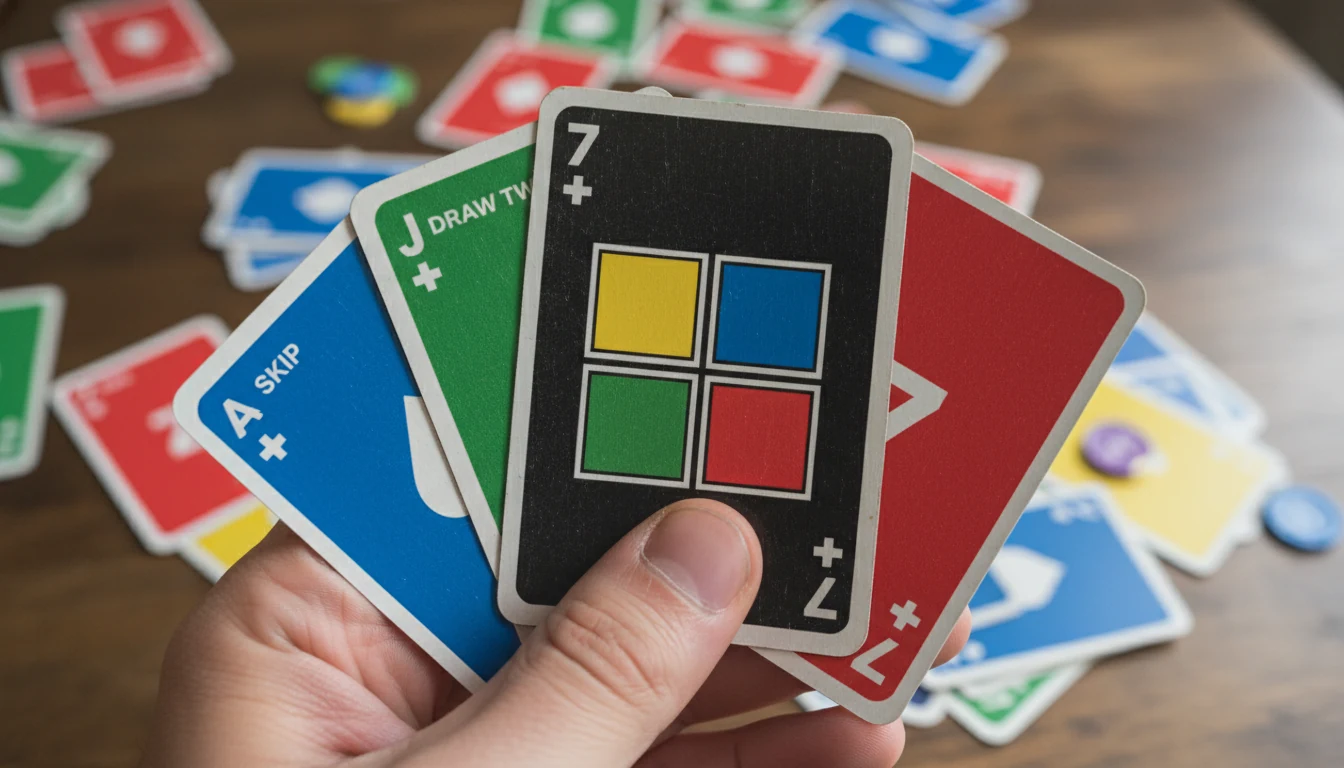
Alice plays a Wild Draw Four card. Bob, following the official rules, must draw 4 cards and skip his turn. Bob cannot play another Wild Draw Four to pass the penalty to Charlie.

Uno rules rule situation

House Rules

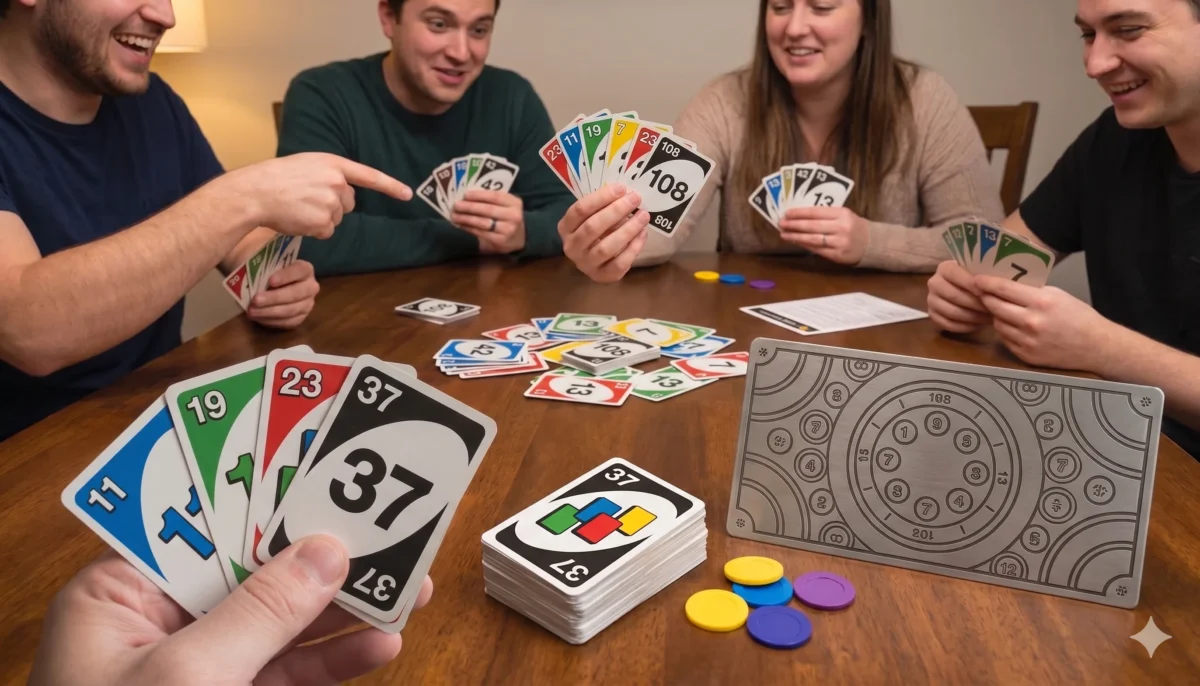
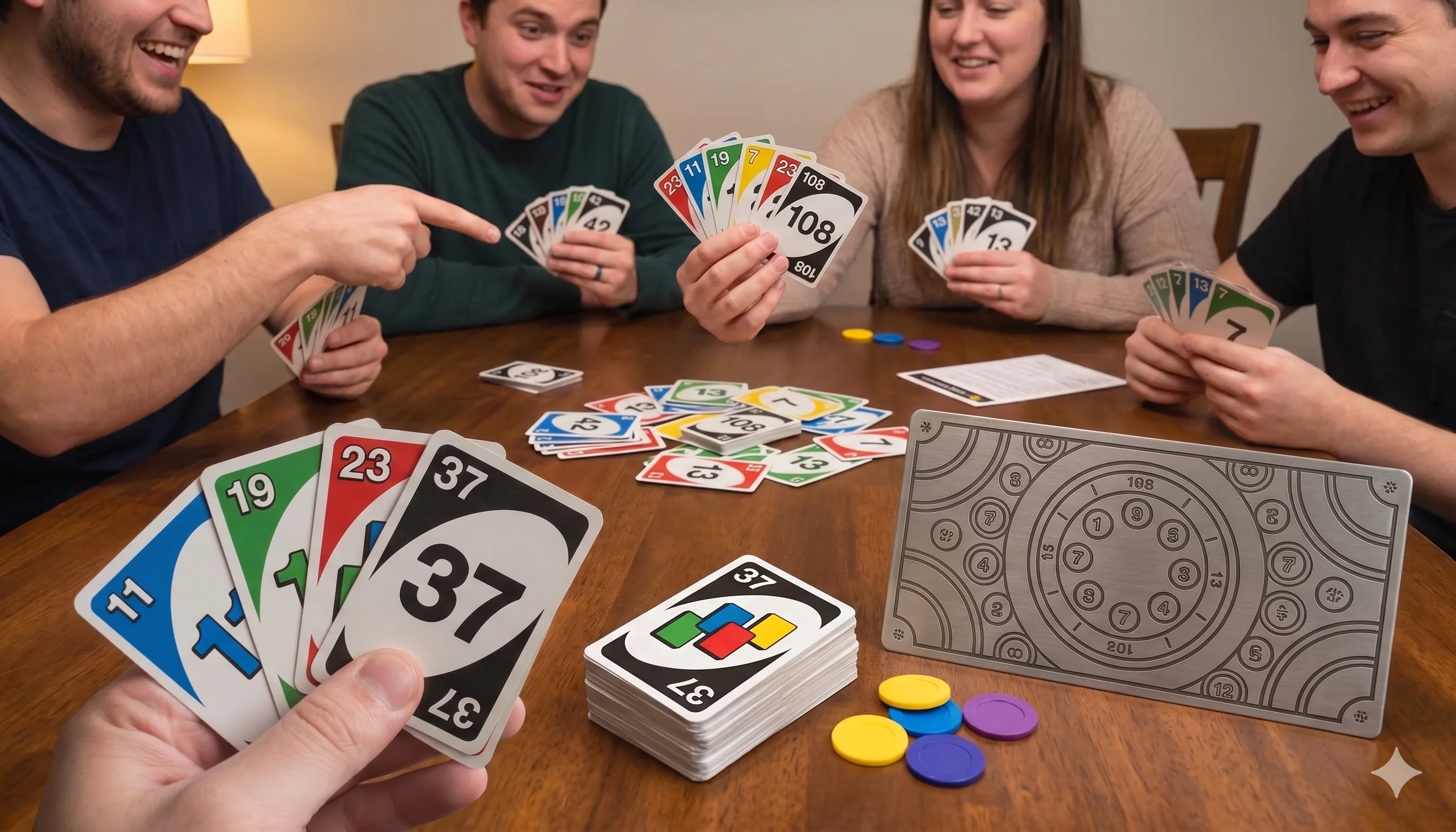
[HOUSE RULE] In the ‘Progressive UNO’ variant, players may play a Wild Draw Four on top of another Wild Draw Four, causing the next player to draw 8 cards. This can continue as long as players have consecutive cards in their hands.

Common Misconceptions

  • Stacking Draw 2 cards on top of each other
  • Using a Wild Draw Four to increase the penalty to 8 cards
  • Passing the draw penalty to the next player via stacking

Quick Reference

You CanYou Cannot
Draw the required number of cards when a Draw card is playedStack a Draw Two on a Draw Two
Forfeit your turn when a Draw card is played on youStack a Wild Draw Four on a Wild Draw Four

Frequently Asked Questions

What is the official rule for stacking in UNO?
No, official rules state that stacking is not a legitimate move.
Can I play a Wild Draw Four on top of another Wild Draw Four?
No, you must draw the 4 cards and skip your turn instead.
Is it allowed to stack Draw Two cards to make someone draw 4?
No, this is only allowed if you are playing with specific House Rules.
What happens if I try to stack cards during a regular game?
The next player should simply draw the cards indicated by the first card played.
Categories
Board Games Card Play Rules

Clue Official Rules: How Many Cards to Show During Turns

Many players mistakenly believe they can show multiple cards to help or hinder a suspect during a Clue inquiry.

According to the Clue Official Rulebook, yes, you must show only one card.

Clue/Cluedo Instructions, [edition not specified], [page not specified]

These rules correspond to the US edition of Clue.

Official Rule Breakdown

When a player enters a room and asks a Clue question regarding a suspect, weapon, and room, the player to their left must attempt to answer. If that player possesses any of the cards mentioned in the question, they must show one of them to the inquiring player secretly. The rules explicitly state that they should never show more than one card. If the player does not have any of the requested cards, they state 'I cannot answer' and the enquiry passes to the next player until one card has been shown.

Step-by-Step

  1. Step 1: Enter a room and ask a Clue question about one suspect, one weapon, and the room entered.
  2. Step 2: The player to the left attempts to answer the question.
  3. Step 3: If the player has a matching card, they show exactly one card secretly to the asker.
  4. Step 4: If the player has no matching cards, the enquiry passes to the next player in turn.
  5. Step 5: The process continues until one card has been shown or no one can answer.

Example Play Situation

Alice enters the Library and asks, 'Was it Mustard with the Wrench in the Library?'. Bob, sitting to her left, looks at his cards and sees he has the Wrench. Bob shows Alice only the Wrench card secretly, and Alice crosses it off her Clue sheet.

Clue/Cluedo rules rule situation

Common Misconceptions

  • Showing multiple cards to help a player avoid being caught
  • Thinking you can show a card if you don't have the specific one asked for
  • Assuming the enquiry stops if the first player cannot answer

Quick Reference

You CanYou Cannot
Show exactly one card to refute a suspicionShow more than one card to the inquiring player
Cross off the card you have been shown on your Clue sheetShow your cards to anyone other than the player making the suggestion
Pass the enquiry to the next player if you cannot answer

Frequently Asked Questions

What is the official rule for showing cards in Clue?
A player must show only one card that refutes the suspicion asked by another player.
Can I show two cards if I have both the suspect and the weapon?
No, you should never show more than one card to the player asking the question.
What happens if the person on my left has no cards to show?
The enquiry passes to the next player in turn until one card is shown.
How many cards should I show when answering a Clue question?
You must show only one card to the player who made the suggestion.
Categories
Board Games Rules & Disputes

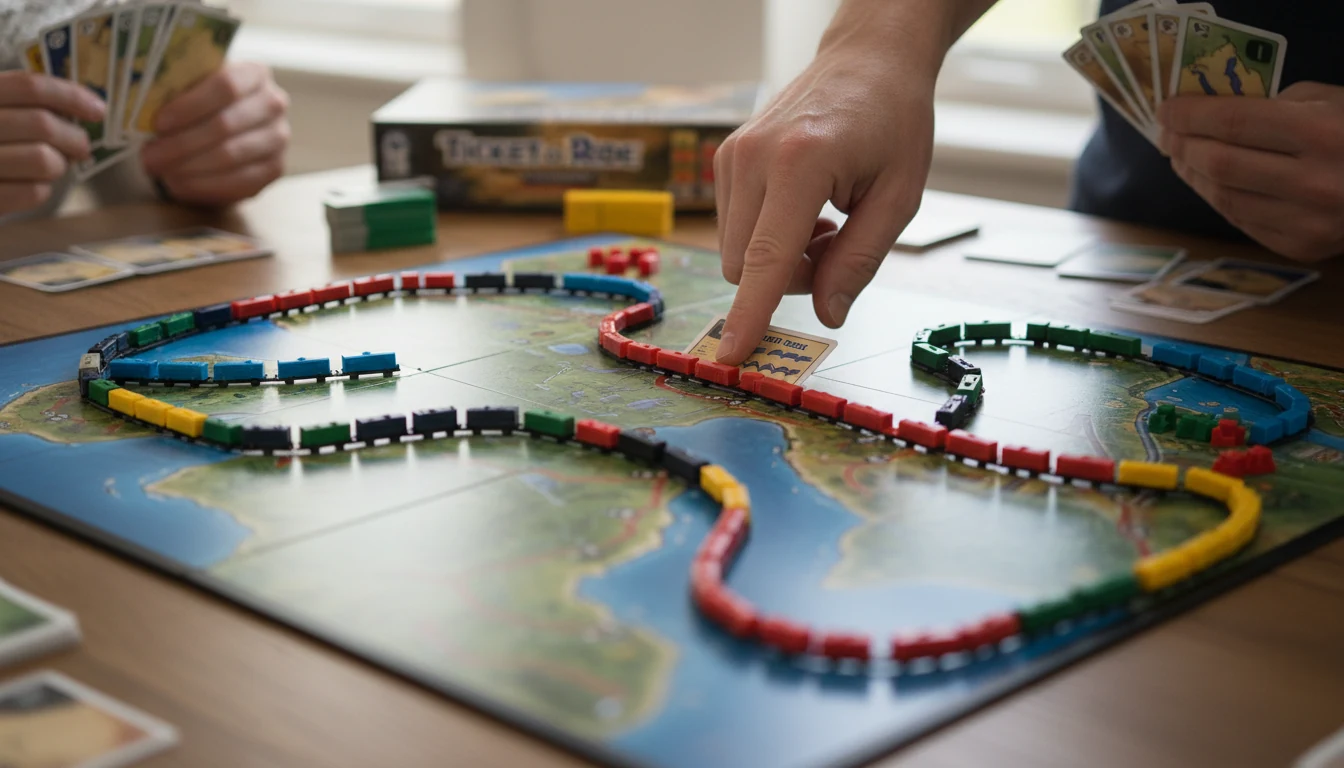
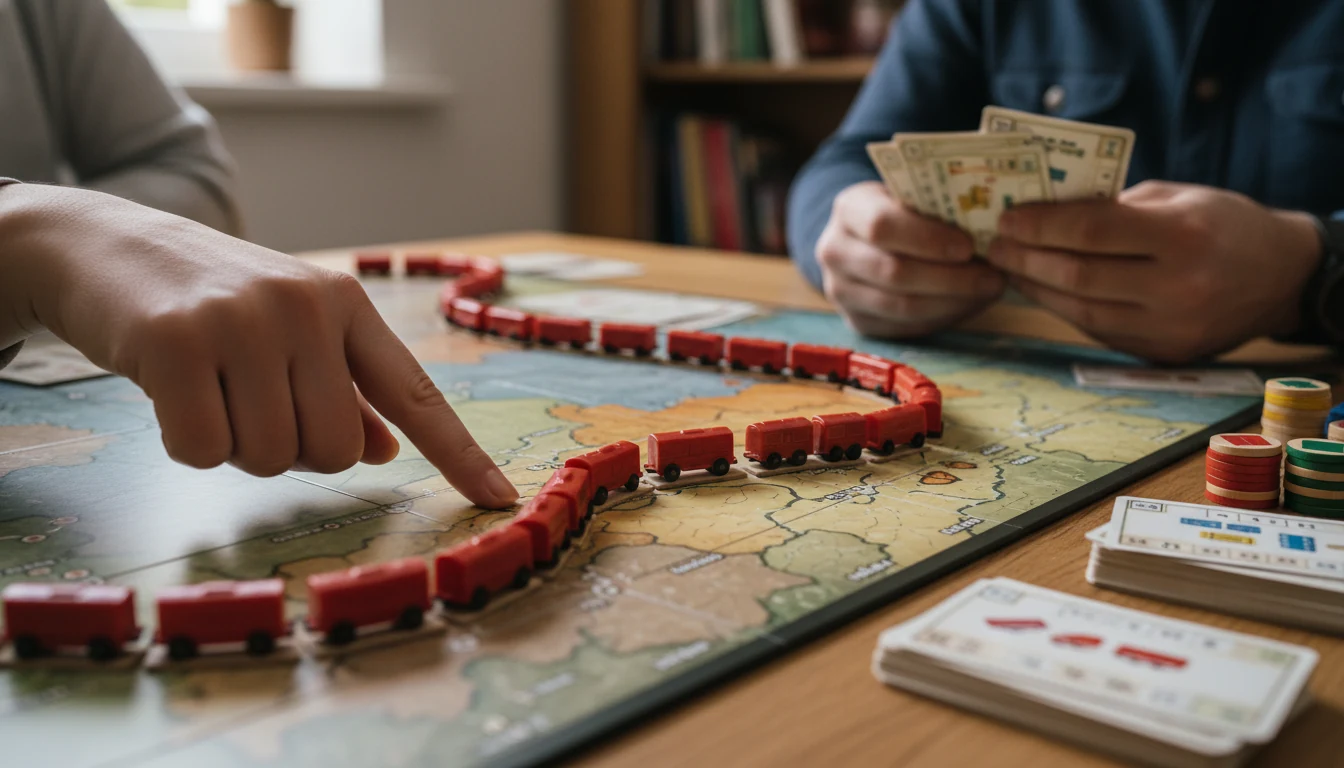
Ticket to Ride Longest Continuous Path Official Rules

Many players mistakenly believe they can reuse the same plastic train pieces to extend their path, but the official rules prohibit this.

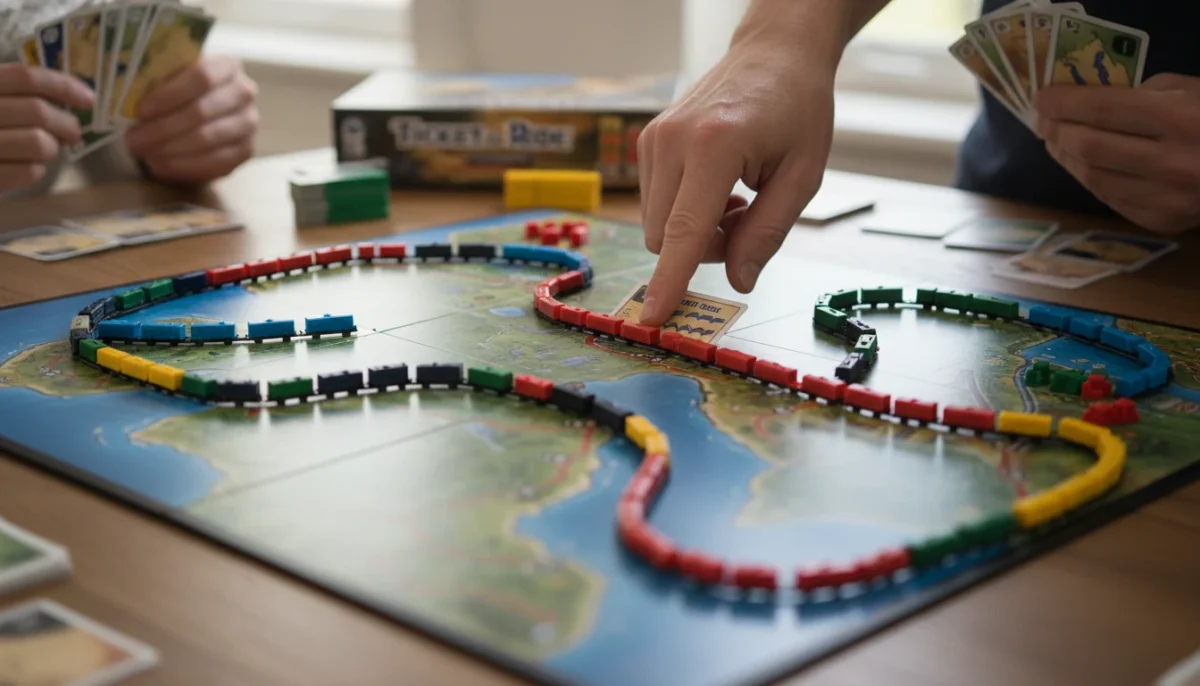
According to the Days of Wonder Official Rulebook, the Longest Continuous Path is determined by evaluating continuous lines of plastic trains of the same color.

Ticket to Ride Official Rulebook [edition not specified]

These rules correspond to the US edition of Ticket to Ride.

Official Rule Breakdown

Example Play Situation

Alice has a continuous line of blue trains that loops through Chicago and ends in New York. Bob also has a blue line that passes through the same cities but uses more individual train pieces. When calculating the bonus, Alice's path is measured against Bob's, and the player with the highest count of unique pieces in a single continuous line wins the card.

Ticket to Ride rules rule situation

Common Misconceptions

  • Reusing the same plastic train piece twice in one path
  • Counting trains of different colors as part of the same continuous path
  • Including opponent's routes with stations in your path calculation (Europe edition)

Quick Reference

You CanYou Cannot
Include loops in your continuous pathUse the same plastic train twice in one path
Pass through the same city multiple timesCount different colored trains as one path
Award the bonus to all tied players in a tie

Frequently Asked Questions

What is the official rule for the longest continuous path in Ticket to Ride?
It is the longest line of plastic trains of a single color, where no piece is used twice.
Can I go through the same city twice in my longest route?
Yes, a continuous path may pass through the same city several times.
What happens if two players tie for the longest path?
All tied players receive the 10 point bonus.
Does the longest path include my different colored trains?
No, you only count continuous lines of trains of the same color.