Categories
Board Games Card Play Rules

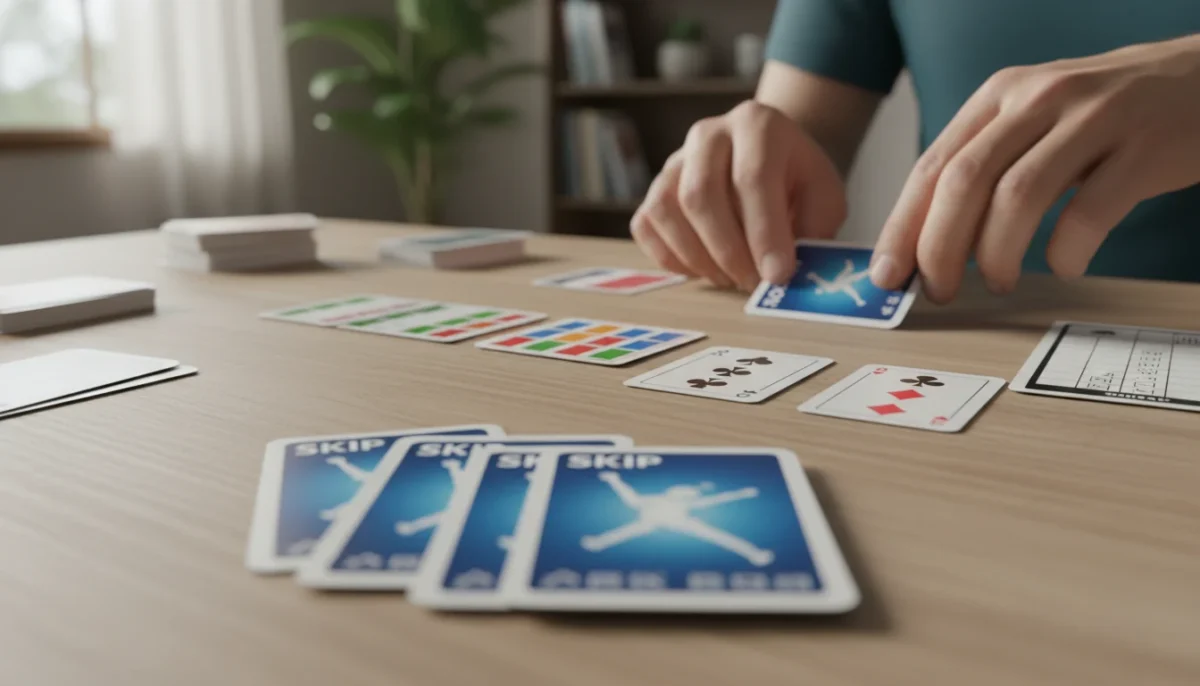
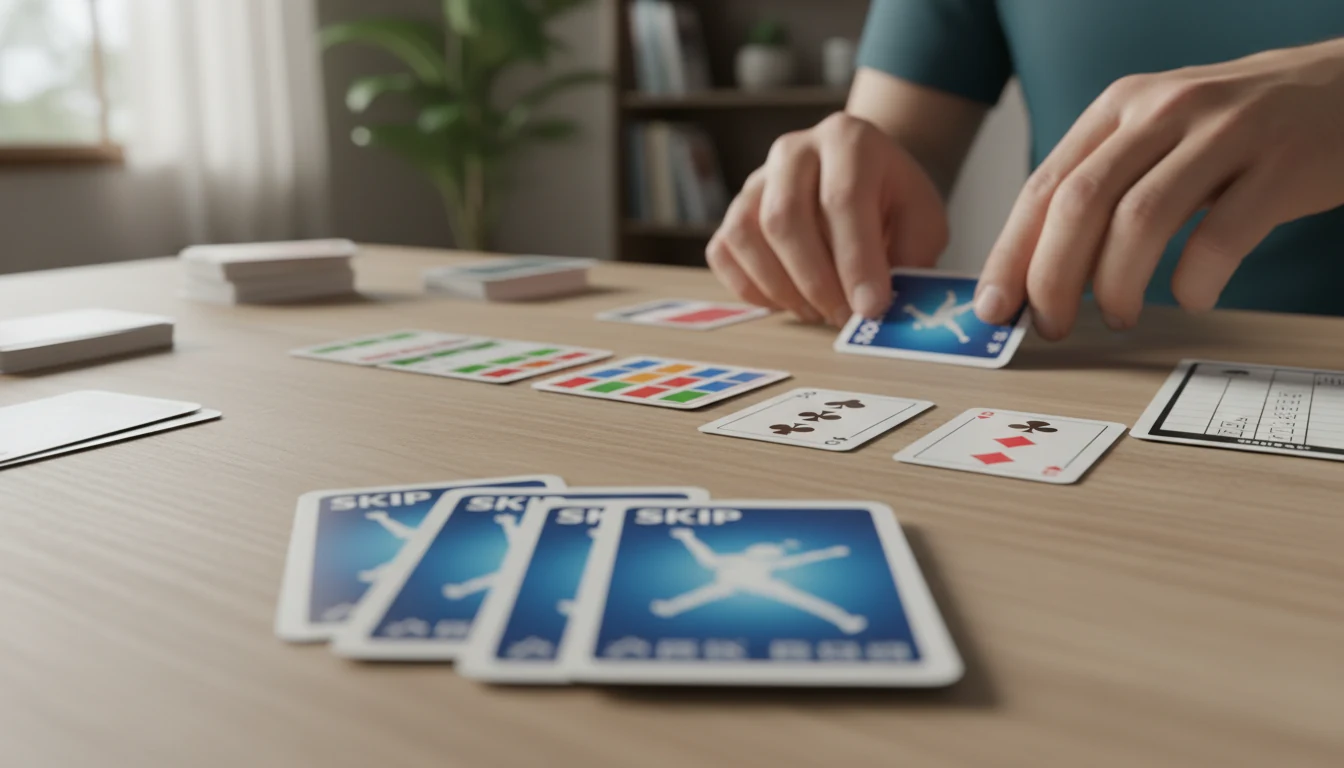
Skip-Bo Wild Card Building Pile Official Rules

Many players are unsure whether SKIP-BO cards can only start a pile or if they can also be used to fill gaps within a sequence.

According to the Mattel Official Rulebook, SKIP-BO cards are wild and can be used to start a BUILDING pile or be played as any other number within a sequence.

Skip-Bo Official Rules [edition not specified]

Expertise: Board game rules expert. | Verification: Cross-referenced official rulebook text regarding card pile mechanics. | Purpose: Resolve the #1 confusion regarding the utility of wild cards in Skip-Bo piles.
Key Insight: Think of the SKIP-BO card as a joker that can transform into any number you need to keep your sequence moving.

These rules correspond to the UK edition of Skip-Bo.

Official Rule Breakdown

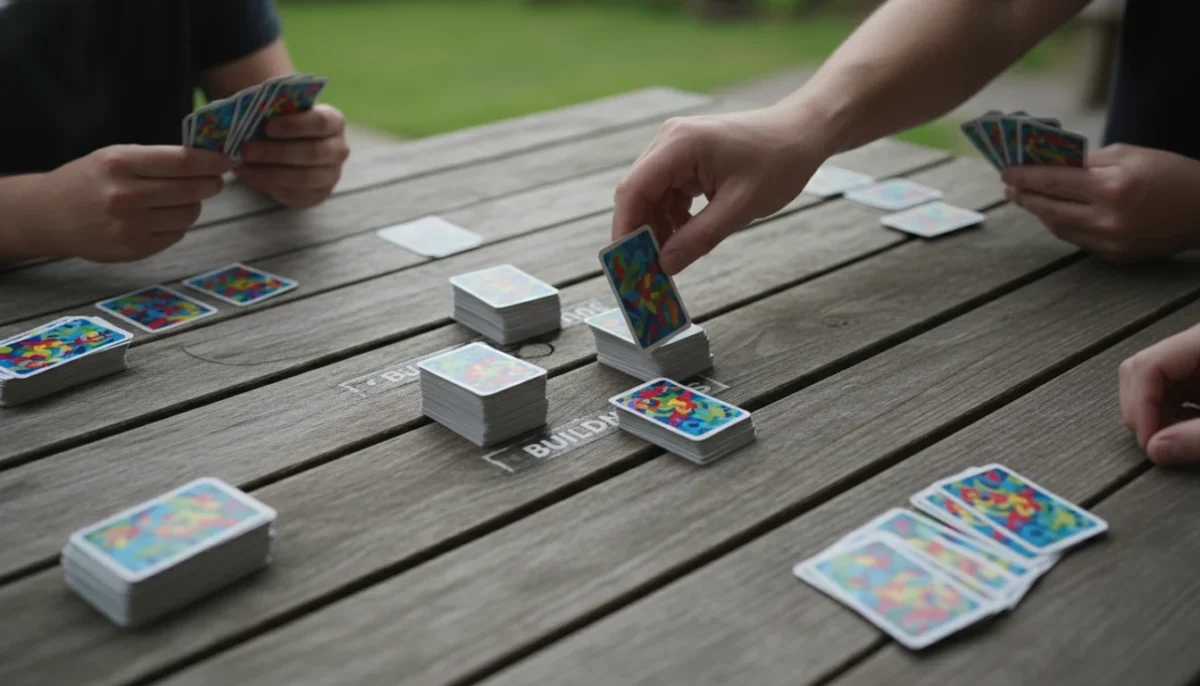
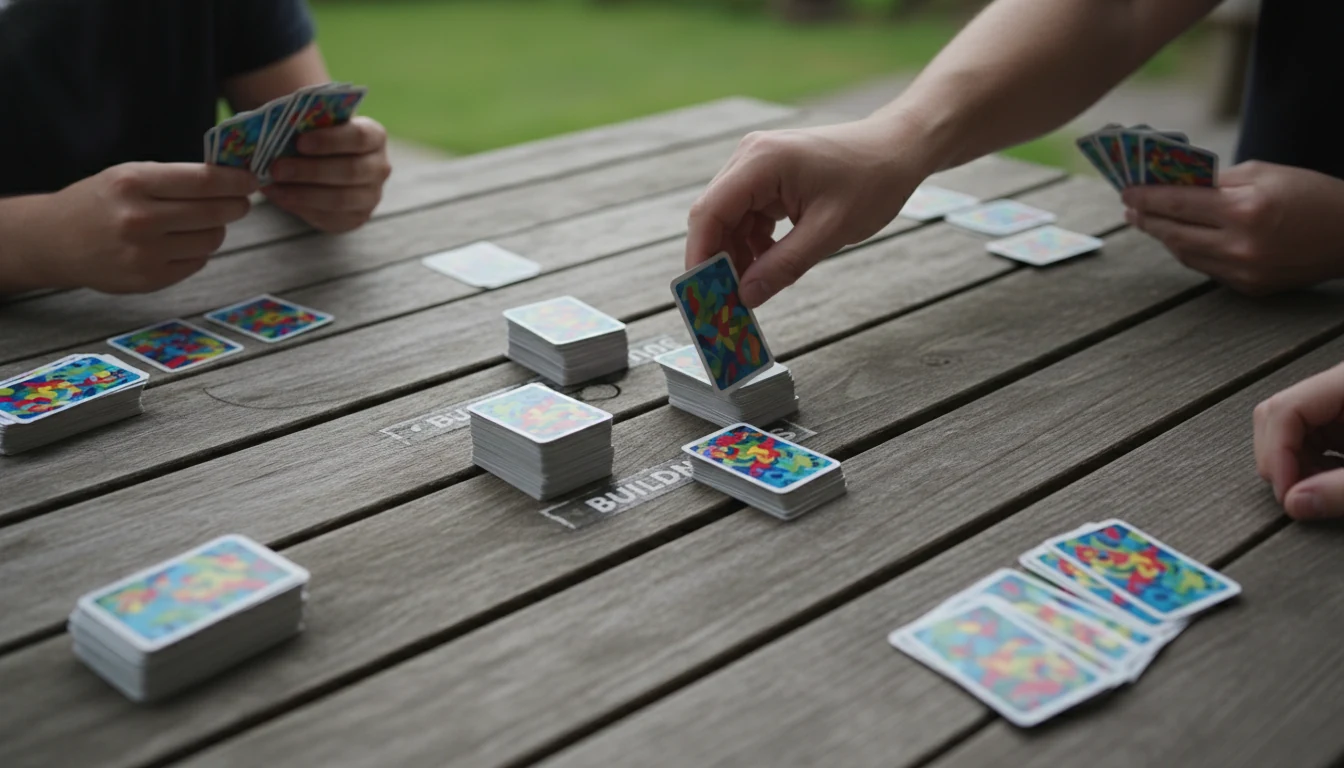
The SKIP-BO cards function as wild cards within the game's mechanics. According to the official rules, a BUILDING pile can be started using either a number 1 card or a SKIP-BO card. Once a pile is established, the SKIP-BO card can also be played as any other number in the numerical sequence from 1 through 12. These piles are built up in sequential order, and once a pile reaches 12 cards, it is removed from play.

Step-by-Step

  1. Step 1: Use a number 1 card or a SKIP-BO card to start a new BUILDING pile in the center area.
  2. Step 2: Continue the sequence by playing cards in numerical order (e.g., 2, 3, 4…).
  3. Step 3: Use a SKIP-BO card as any number to fill a gap in the sequence or continue the build.
  4. Step 4: Complete the pile by reaching the number 12, then remove it to start a new one.

Example Play Situation

Alice has a BUILDING pile currently at number 4. She draws a SKIP-BO card and uses it to represent the number 5 to continue her sequence. Bob then plays a number 6 from his hand onto the same pile.
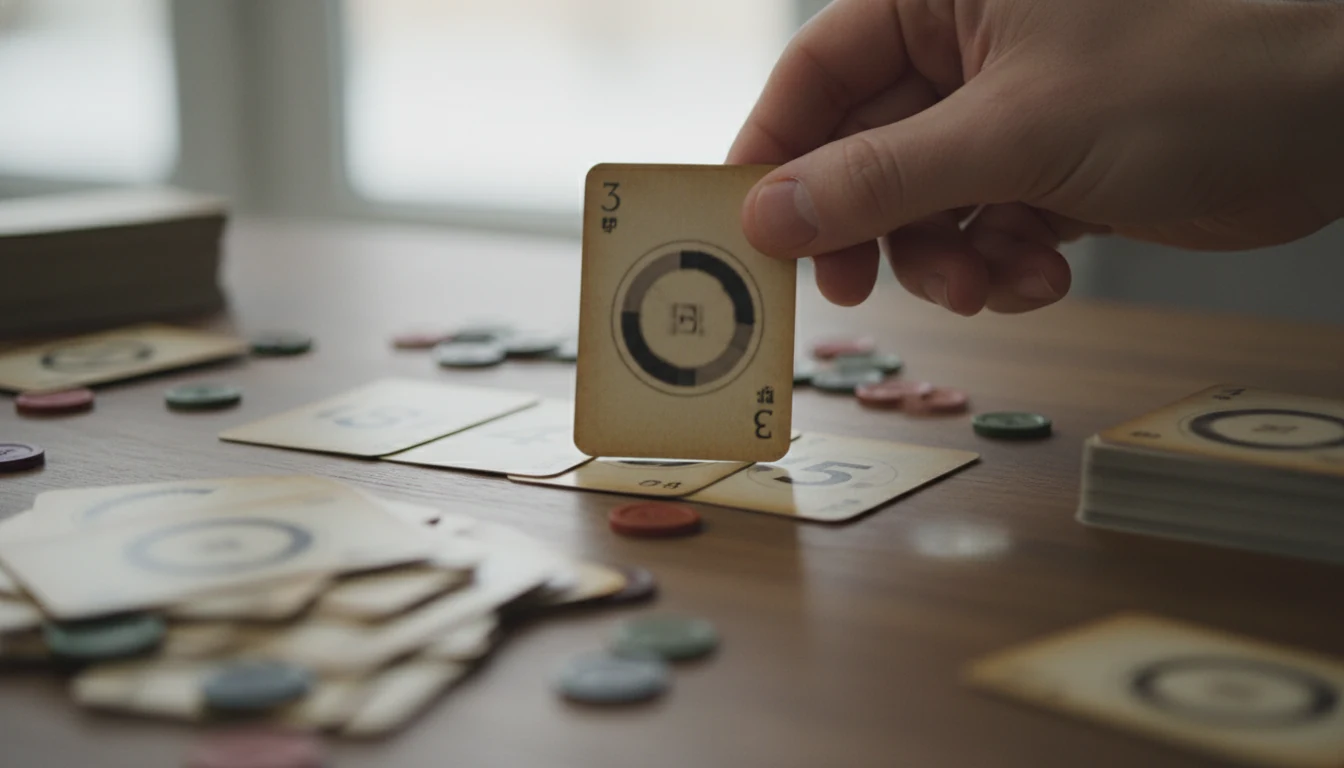
Skip-Bo rules rule situation

Common Misconceptions

  • Thinking SKIP-BO cards can only be used to start a pile
  • Believing SKIP-BO cards have no numerical value
  • Assuming you can only build piles with standard number cards

Quick Reference

You CanYou Cannot
Use a SKIP-BO card to start a new BUILDING pileStart a BUILDING pile with any number other than 1 or a SKIP-BO card
Play a SKIP-BO card as any number in a sequenceBuild a pile out of numerical sequence
Build piles numerically from 1 to 12

Frequently Asked Questions

What is the official rule for SKIP-BO cards in building piles?
They are wild cards that can start a pile or act as any number from 1 to 12.
Can I use a SKIP-BO card to represent a 7 in a pile?
Yes, they can be played as any other number in the sequence.
How do I start a new building pile?
You must play either a number 1 card or a SKIP-BO card.
What happens if I don't have a 1 to start a pile?
You can use a SKIP-BO card instead to initiate the building process.
Categories
Board Games Classic Games

Monopoly Official Rules: Rolling Doubles Three Times

Many players mistakenly believe they get to complete the movement of their third double roll before being penalized.

According to the Monopoly Official Rulebook, if you throw doubles three times in succession, you move your token immediately to the space marked 'In Jail'.

Monopoly Official Rulebook [edition not specified]

Expertise: Board game rules expert and content writer. | Verification: Cross-referenced official rulebook text and secondary rule analysis. | Purpose: Resolve the #1 confusion regarding the 'three doubles' penalty in Monopoly.
Key Insight: To avoid arguments, establish that the third double roll is a 'speeding' penalty that bypasses the space landed on.

These rules correspond to the US edition of Monopoly.

Official Rule Breakdown

In Monopoly, rolling doubles allows a player to move their token as usual and then roll again. However, the official rules state that if a player throws doubles three times in succession, they must move their token immediately to the 'In Jail' space. This occurs before the third roll's movement or any associated actions can take effect. This rule is often referred to as 'speeding' around the board.

Step-by-Step

  1. Step 1: Roll the dice and move the token the sum of the dice.
  2. Step 2: If the dice are doubles, complete any actions on the landed space (e.g., buying property or paying rent).
  3. Step 3: Roll the dice again for a bonus turn.
  4. Step 4: If the second roll is also doubles, repeat the process.
  5. Step 5: If the third consecutive roll results in doubles, skip the movement of that roll and move the token directly to Jail.

Example Play Situation

Alice rolls a pair of 4s and lands on Boardwalk, paying rent to Bob. Alice rolls again and gets another pair of 4s. On her third roll, Alice rolls a pair of 6s; instead of moving 12 spaces, she immediately moves her token to the Jail space.

Monopoly rules rule situation

Common Misconceptions

  • Completing the movement of the third double roll before going to Jail
  • Being able to buy property on the space landed on during the third double roll
  • Thinking the third double roll counts as a normal turn

Quick Reference

You CanYou Cannot
Move to Jail immediately upon the third doubleDo not execute the movement of the third roll
Complete all actions on the first two double rollsDo not attempt to buy property on the third double roll
End your turn immediately after moving to JailDo not collect rent or pay taxes on the third double roll

Frequently Asked Questions

What is the official rule for rolling doubles three times in Monopoly?
You must move your token immediately to the Jail space without completing the third roll.
Can I buy a property if my third double roll lands on an unowned space?
No, the third double roll is voided and you are sent directly to Jail instead.
What happens if I roll doubles twice and then land on 'Go to Jail'?
Your turn ends immediately and you cannot take the bonus roll from the second double.
Does the third double roll count as a turn?
No, the third double roll is treated as 'speeding' and sends you straight to Jail.
Categories
Board Games Card Play Rules

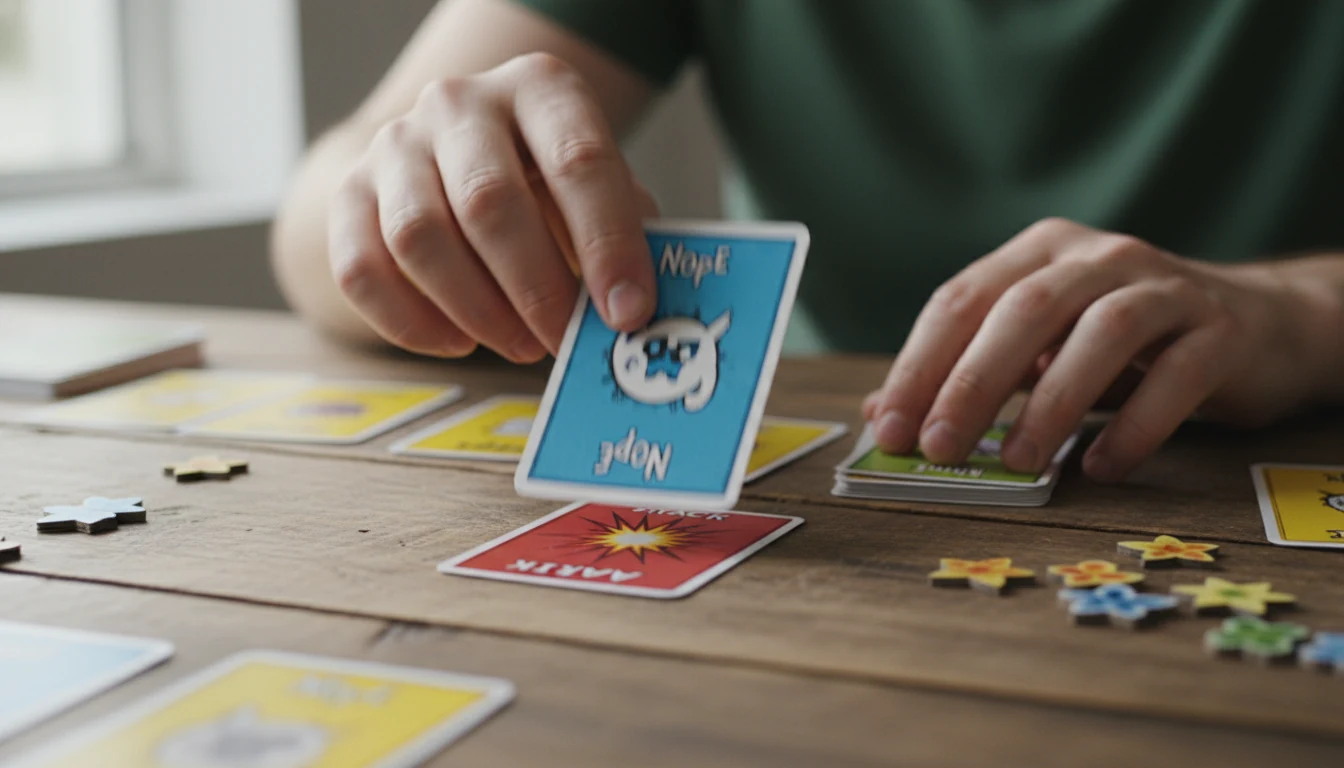
Exploding Kittens Official Rules: Using the Nope Card

Many players wonder if the Nope card is limited to specific card types or if it can cancel any player action.

Yes, according to the Exploding Kittens Official Rulebook, a Nope card can stop any action except for an Exploding Kitten or a Defuse Card.

Exploding Kittens Official Rules, [edition not specified]

These rules correspond to the US edition of Exploding Kittens.

Official Rule Breakdown

The official rules state that a Nope card can stop any action, with the only exceptions being an Exploding Kitten or a Defuse Card. You can play a Nope card at any time before an action has begun, even if it is not your turn. Additionally, the rules allow for a 'Nope on a Nope,' which negates the original Nope and creates a 'Yup,' allowing for a chain of reactions. Any cards that have been noped are considered lost and must be placed in the Discard Pile.

Example Play Situation

Alice plays an attack card to force Bob to take two turns. Before the action begins, Bob plays a Nope card to cancel the attack. Because the attack was noped, it is still Alice's turn, and she must decide whether to play a different card or end her turn by drawing.

Exploding Kittens rules rule situation

Common Misconceptions

  • Thinking a Nope card cannot be played on someone else's turn
  • Believing a Nope card can stop an Exploding Kitten
  • Assuming a Nope card can negate a Defuse Card

Quick Reference

You CanYou Cannot
Play a Nope on another Nope to create a YupUse a Nope to stop an Exploding Kitten
Play a Nope at any time before an action beginsUse a Nope to stop a Defuse Card
Use a Nope to stop a Special Combo

Frequently Asked Questions

What is the official rule for using a Nope card in Exploding Kittens?
You can use it to stop any action except an Exploding Kitten or a Defuse Card.
Can I play a Nope card when it isn't my turn?
Yes, you can play a Nope card at any time before an action starts, regardless of whose turn it is.
What happens if I play a Nope on another Nope card?
It negates the action and creates a 'Yup' reaction.
Does a Nope card stop an Exploding Kitten?
No, Exploding Kittens and Defuse Cards are the only two things a Nope cannot stop.
Categories
Board Games Strategy Games

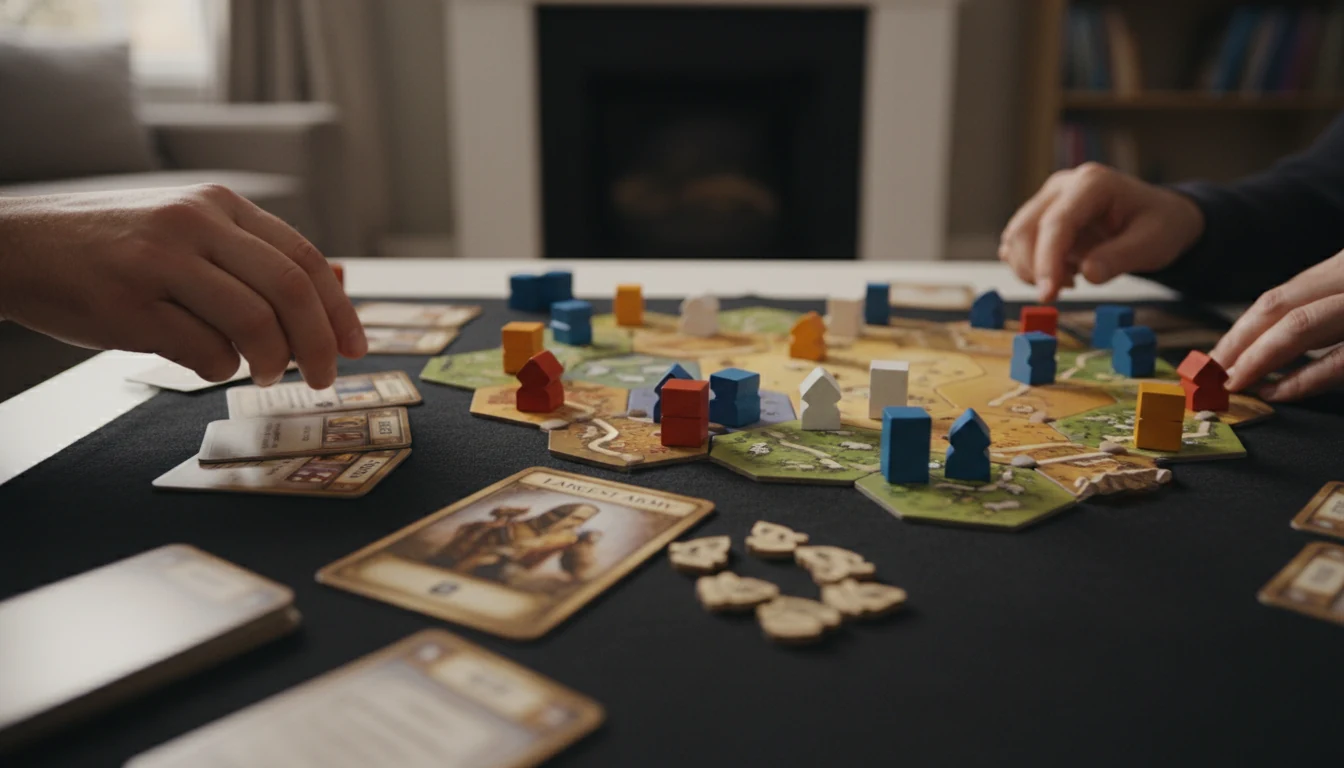
Catan Largest Army Official Rules: How to Claim It

Many players are unsure whether the Largest Army card is earned through playing Knight cards or through specific game mechanics like Cities & Knights.

According to the Catan GmbH Official Rulebook, the Largest Army card is awarded to the first player to play 3 Knight cards, or to any player who subsequently plays more Knight cards than the current holder.

Catan Official Rules 2020, [page not specified]

Expertise: Board game rules expert with extensive experience in Catan expansions. | Verification: Cross-referenced official 2020 Catan GmbH rulebook and expansion documentation. | Purpose: Resolve the confusion regarding when the Largest Army card is awarded and its compatibility with expansions.
Key Insight: To avoid arguments, ensure all players agree to set aside the Largest Army and Longest Road cards before starting Cities & Knights.

These rules correspond to the US edition of Catan.

Official Rule Breakdown

The Largest Army card provides 2 Victory Points and is earned through the use of Knight cards. According to the official rules, the first player to play 3 Knight cards immediately receives this card. If another player later plays more Knight cards than the current holder, that player immediately takes the card from the previous owner. Note that in the Cities & Knights expansion, the Largest Army card is set aside and not used, as the expansion uses different mechanics for knights and progress.

Step-by-Step

  1. Step 1: Play a Knight card from your development card deck.
  2. Step 2: Count the total number of Knight cards played.
  3. Step 3: If you are the first to reach 3 cards, take the Largest Army card.
  4. Step 4: If you already have the card but play more Knight cards than the current leader, take the card from them.

Example Play Situation

Alice plays her second Knight card. Bob then plays his third Knight card and immediately takes the Largest Army card. Later, Alice plays two more Knight cards, bringing her total to five, and she takes the card back from Bob.

Catan rules rule situation

Common Misconceptions

  • Thinking the Largest Army card is used in the Cities & Knights expansion
  • Confusing the Largest Army with the Longest Road
  • Assuming you must play all knights at once to win the card

Quick Reference

You CanYou Cannot
Take the card when you become the new leader in Knight countDo not use the Largest Army card if playing the Cities & Knights expansion
Receive 2 Victory Points upon taking the cardDo not wait until your turn to claim the card if you meet the requirement

Frequently Asked Questions

What is the official rule for Largest Army in Catan?
The first player to play 3 Knight cards gets it, or anyone with more cards takes it.
Can I take the Largest Army card if I am playing Cities & Knights?
No, the Largest Army card is set aside and not used in that expansion.
How many victory points is the Largest Army worth?
It is worth 2 Victory Points.
Does the Largest Army card stay with me if I lose Knight cards?
No, if another player plays more Knight cards than you, they take the card.
Categories
Board Games Card Play Rules

Exploding Kittens Combo Card Stealing Official Rules

Many players mistakenly believe that only Cat Cards can be used to steal cards, but the rules for matching pairs have expanded.

According to the Exploding Kittens Official Rulebook, you can steal a random card from another player by playing matching pairs.

Exploding Kittens Official Rules [edition not specified]

These rules correspond to the US edition of Exploding Kittens.

Official Rule Breakdown

To steal a card, players must play matching pairs. While some cards (Cat Cards) have no instructions and must be played as matching pairs to steal a random card from another player, the rules specify that playing matching pairs of Cat Cards no longer only applies to Cat Cards. It now applies to ANY pair of cards with the same title, such as a pair of Shuffle Cards or a pair of Skip Cards. These matching pairs can also be used in Special Combos.

Step-by-Step

  1. Step 1: Collect two cards that share the same title (e.g., two Skip Cards or two Cat Cards).
  2. Step 2: Play the matching pair as a single action.
  3. Step 3: Select another player from the table.
  4. Step 4: Steal one random card from that player's hand.

Example Play Situation

Alice plays a pair of Skip Cards to use their matching ability. She chooses Bob as the target and steals a random card from his hand. Bob then draws a card to end his turn.

Exploding Kittens rules rule situation

Common Misconceptions

  • Only Cat Cards can be used to steal cards
  • You must choose a specific card to steal instead of a random one
  • You can only play pairs if the cards have instructions

Quick Reference

You CanYou Cannot
You can play matching pairs of any cards with the same titleYou cannot choose which specific card you steal from a player
You can use matching pairs in Special CombosYou cannot play a single Cat Card to steal a card
You can steal a random card from any other player

Frequently Asked Questions

What is the official rule for stealing cards in Exploding Kittens?
Play matching pairs of cards with the same title to steal a random card from another player.
Can I use two Skip Cards to steal a card?
Yes, any pair of cards with the same title can be played to steal a random card.
Do Cat Cards work differently than other pairs?
No, the ability to steal a random card now applies to any matching pair of cards with the same title.
How do I use Cat Cards to steal?
Collect matching pairs of Cat Cards and play them to steal a random card from an opponent.
Categories
Board Games Card Play Rules

Phase 10 Skip Card Rules: Official Rules & Disputes

Many players mistakenly believe they can target the same person with multiple Skip cards in a single round, but the official rules impose a strict limit.

No, you cannot use multiple Skip cards against the same player in a single round, according to the Phase 10 Official Rulebook.

Phase 10 Official Rules, [edition not specified]

Expertise: Board game rules expert. | Verification: Cross-referenced official rulebook text regarding Skip card mechanics. | Purpose: Resolve the #1 stacking confusion from player forums regarding Skip card frequency.
Key Insight: To avoid arguments, establish the 'one skip per player' rule before the first hand begins.

These rules correspond to the UK edition of Phase 10.

Official Rule Breakdown

Regarding the use of Skip cards in Phase 10, the official rules state that Skip cards have the sole purpose of causing another player to lose a turn. While you may discard a Skip card immediately or save it for a later turn, there is a critical restriction: only one Skip card against each player per 'round' may be used. A 'round' is defined as once around the table. Additionally, Skip cards cannot be used to complete any Phase and cannot be picked up from the discard pile.

Step-by-Step

  1. Step 1: Draw a card from either the draw pile or the discard pile.
  2. Step 2: On your turn, choose to discard a Skip card from your hand.
  3. Step 3: Select a player to lose their turn.
  4. Step 4: Ensure the selected player has not already been targeted by a Skip card in the current round.

Example Play Situation

Alice draws a Skip card and decides to save it. Later in the round, Bob plays a Skip card targeting Charlie. When Alice's turn comes, she wants to use her Skip card on Charlie again, but she cannot because Charlie has already been skipped this round.

Phase 10 rules rule situation

Common Misconceptions

  • Using a Skip card to complete a Phase
  • Picking up a Skip card from the discard pile
  • Targeting the same player with multiple Skips in one round

Quick Reference

You CanYou Cannot
Discard a Skip card to make a player lose a turnUse a Skip card to help complete a Phase
Save a Skip card for a later turnPick up a Skip card from the discard pile
Skip the first player if the dealer starts the discard pile with a Skip cardUse more than one Skip card against a single player per round

Frequently Asked Questions

What is the official rule for Skip cards in Phase 10?
Skip cards cause a player to lose a turn, but you can only use one per player per round.
Can I use a Skip card to complete Phase 8?
No, Skip cards may never be used in making any Phase.
Is it allowed to pick up a Skip card from the discard pile?
No, a Skip card may never be picked up from the discard pile.
What if the dealer puts a Skip card in the discard pile first?
The first player's first turn is automatically skipped.
Categories
Board Games Card Play Rules

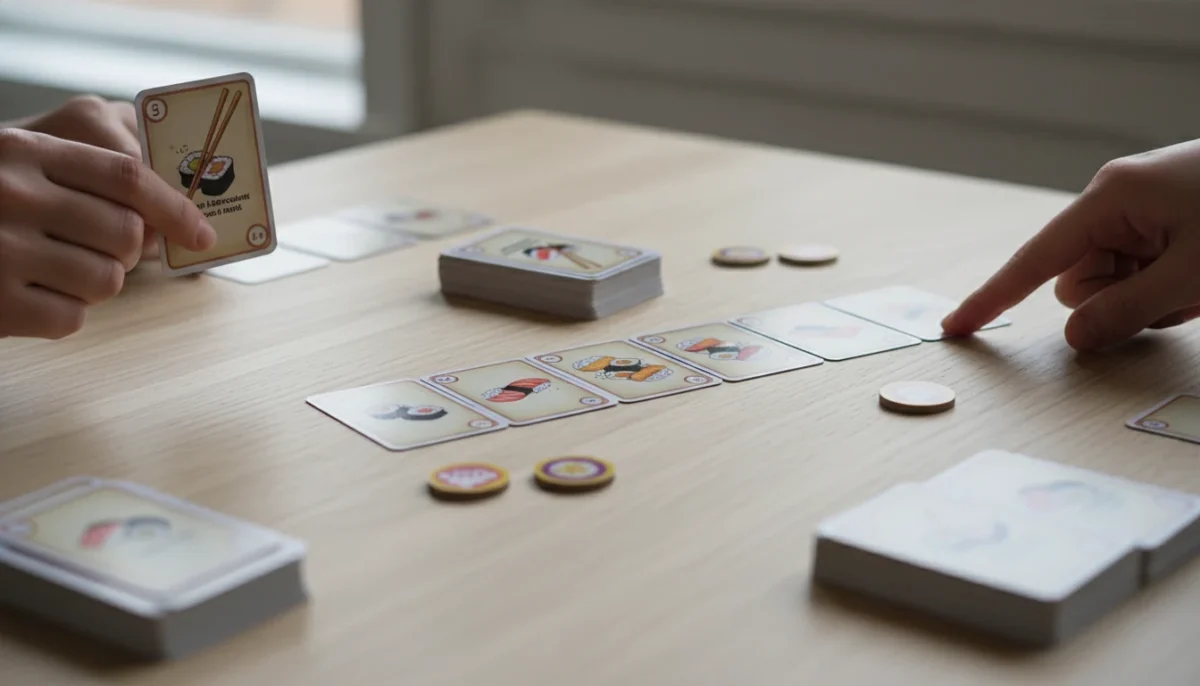
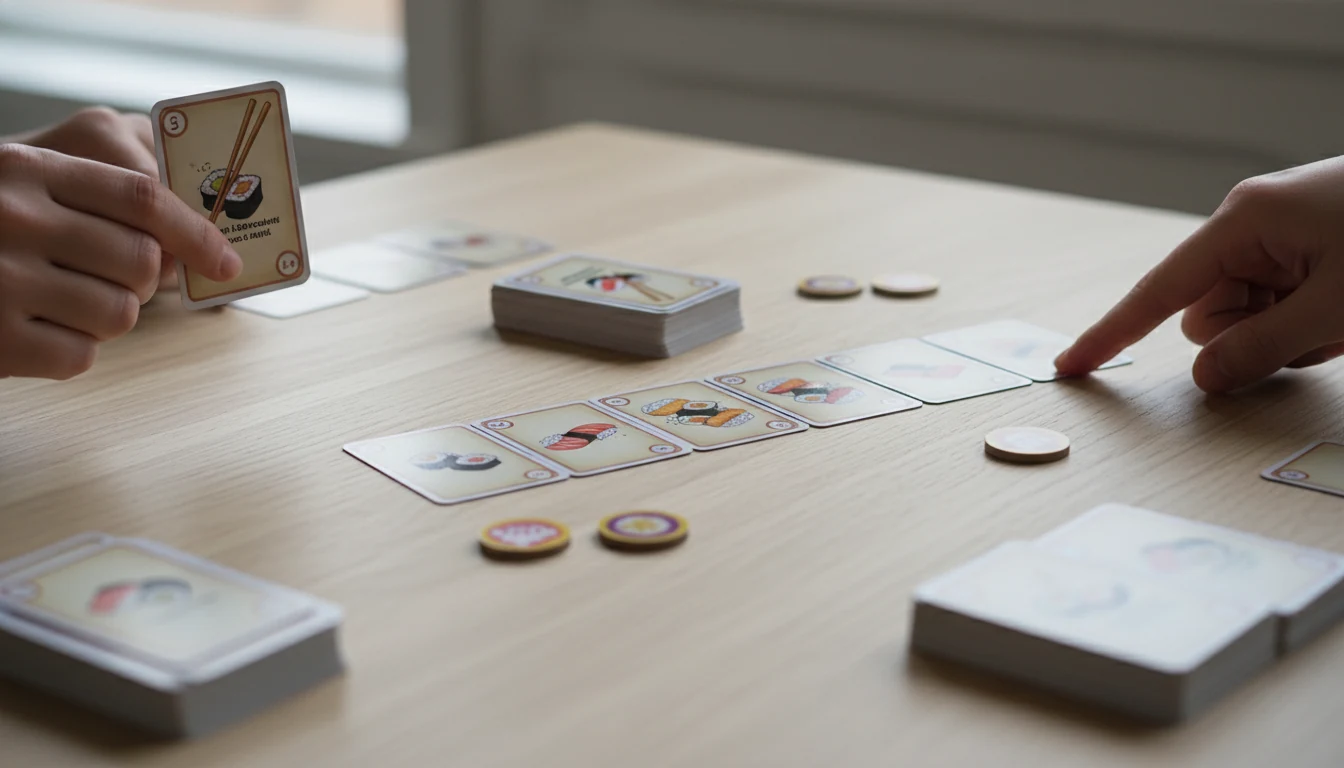
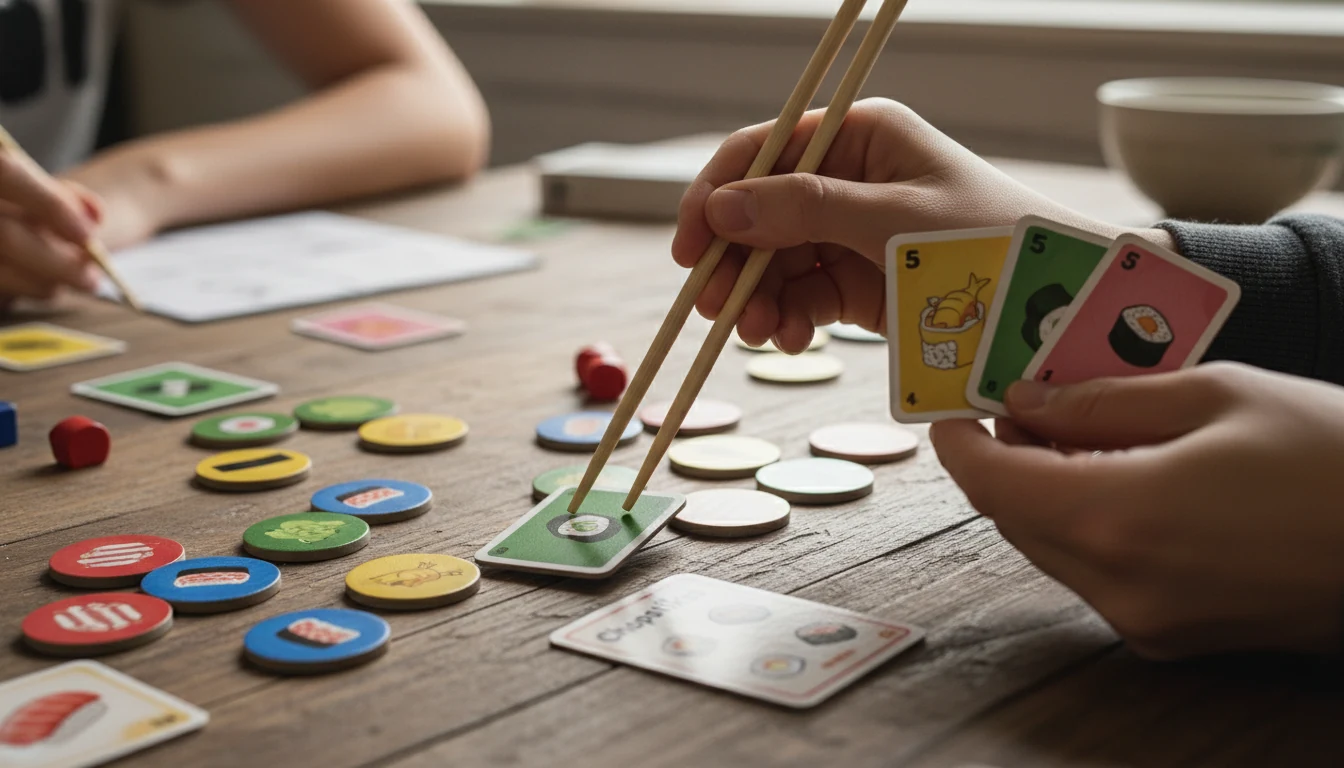
Sushi Go! Chopsticks Card Official Rules & How to Use

Many players mistakenly believe they can use multiple chopsticks cards at once to take even more cards, but the official rules restrict this usage.

According to the Sushi Go! Official Rulebook, the Chopsticks card allows a player to select two cards from their hand instead of one during a turn.

Sushi Go! Official Rulebook, [edition not specified], [page not specified]

These rules correspond to the UK edition of Sushi Go!.

Official Rule Breakdown

To use the Chopsticks card, a player must already have the card placed in front of them from a previous turn. During their turn, the player first chooses the first card they wish to keep as they would normally. Before the cards are revealed, the player calls out 'Sushi Go!' and selects a second card from their hand, placing it face-down on the table. After all players reveal their chosen cards, the player must put the chopsticks card back into their hand so that it is passed to the next player. While a player may have multiple chopsticks cards in front of them, they may only use one per turn (Source: Sushi Go! Official Rulebook, [page not specified]).

Step-by-Step

  1. Step 1: Choose the first card you wish to keep from your hand as usual.
  2. Step 2: Before other players reveal their cards, call out 'Sushi Go!'.
  3. Step 3: Select a second card from your hand and place it face-down on the table.
  4. Step 4: Wait for all players to reveal their chosen cards.
  5. Step 5: Put the chopsticks card back into your hand before passing your hand to the left.

Example Play Situation

Alice has a chopsticks card in front of her. On her turn, she picks a Maki Roll and calls 'Sushi Go!', then picks a Pudding card as her second choice. After everyone reveals their cards, Alice puts her chopsticks card into her hand to be passed on.

Sushi Go! rules rule situation

Common Misconceptions

  • Using multiple chopsticks cards in a single turn to take three or more cards
  • Keeping the chopsticks card in front of you to use it again immediately
  • Calling 'Sushi Go!' after the cards have already been revealed

Quick Reference

You CanYou Cannot
Call out 'Sushi Go!' before cards are revealedDo not use more than one chopsticks card per turn
Return the chopsticks card to your hand before passingDo not keep the chopsticks card in front of you after using it
Use the chopsticks card to take exactly two cards

Frequently Asked Questions

What is the official rule for using chopsticks in Sushi Go!?
You select two cards from your hand by calling 'Sushi Go!' before reveal.
Can I use two chopsticks cards at the same time?
No, you may only use one chopsticks card per turn.
Do I keep the chopsticks card in front of me after using it?
No, you must put it back into your hand so it can be passed on.
When should I say 'Sushi Go!'?
You say it after picking your first card but before everyone reveals their cards.
Categories
Board Games Classic Games

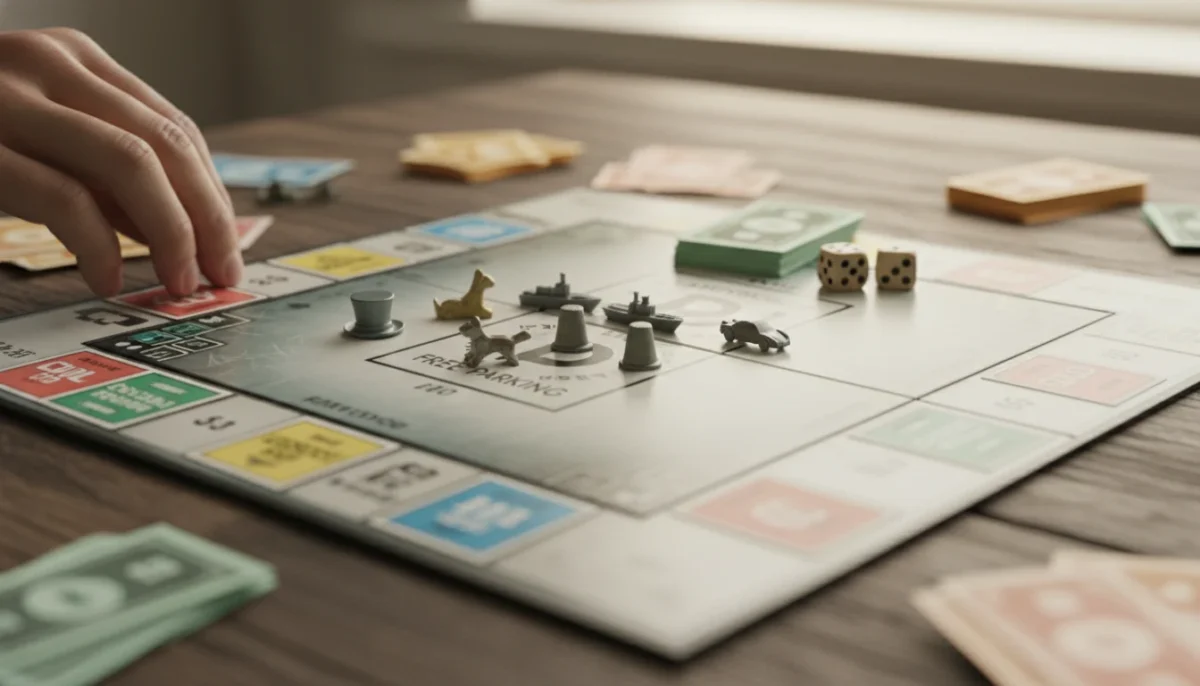
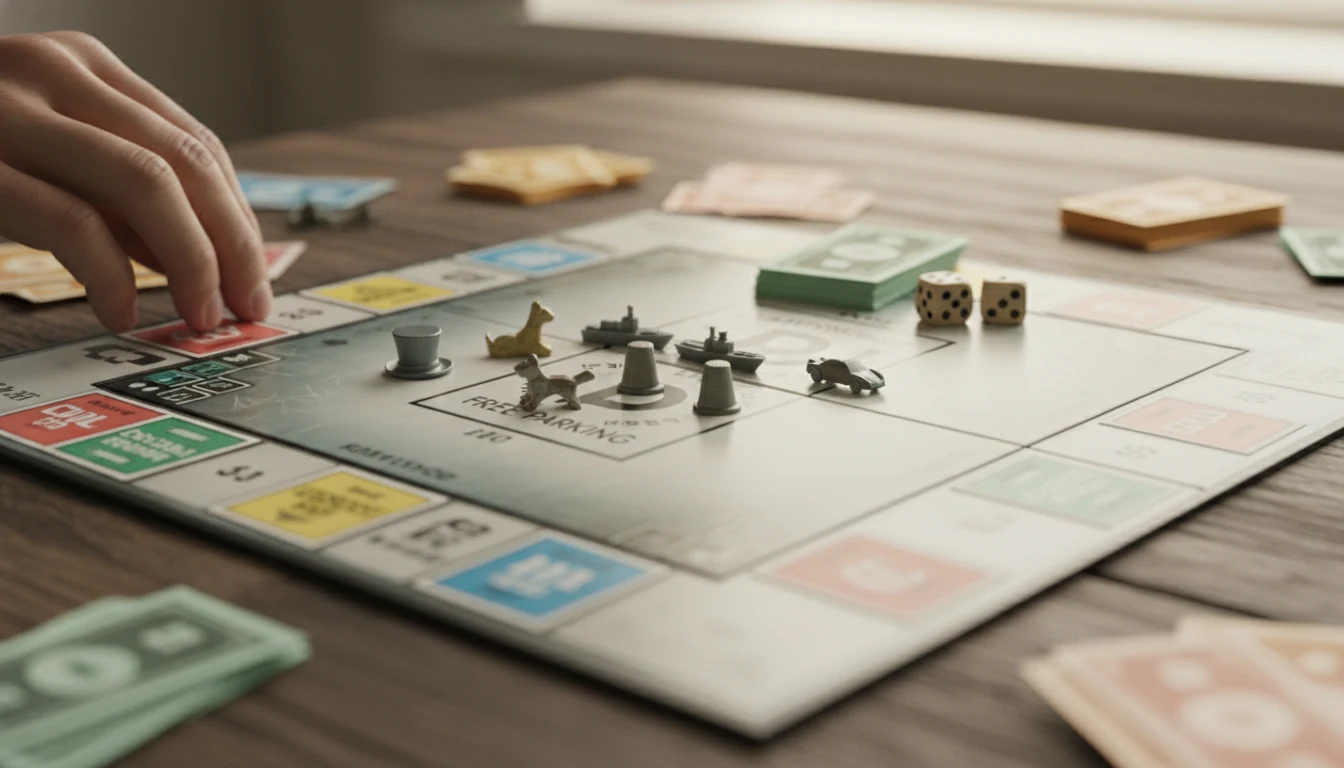
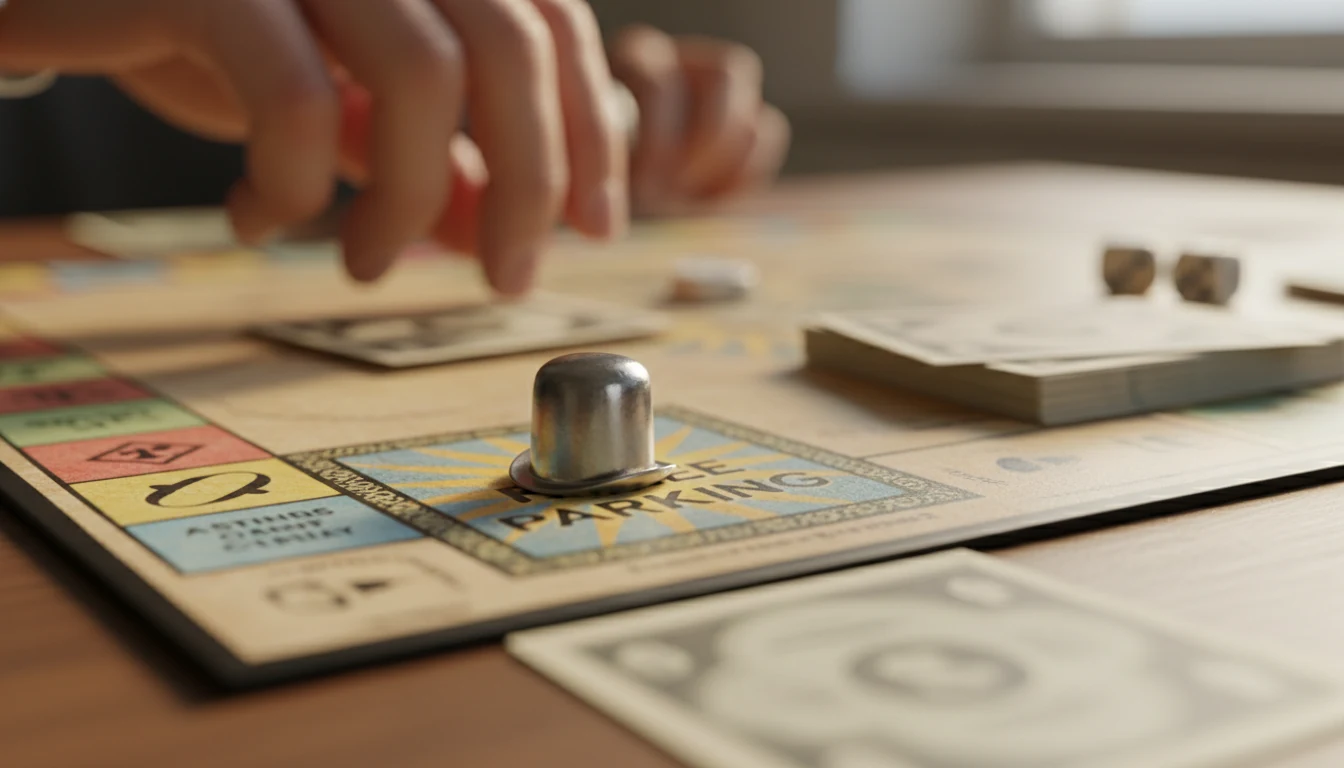
Monopoly Free Parking Official Rules & House Rules Guide

Many players mistakenly believe that landing on Free Parking triggers a large cash windfall, but the official rules treat it as a neutral space.

According to the Monopoly Official Rulebook, landing on Free Parking does not provide any money, property, or reward of any kind.

Monopoly Official Rulebook [edition not specified]

Expertise: Board game rules expert. | Verification: Cross-referenced official rulebook text for Free Parking mechanics. | Purpose: Resolve the common dispute regarding cash rewards on the Free Parking space.
Key Insight: To avoid arguments, establish whether you are using the 'money in the middle' house rule before the first roll.

These rules correspond to the US edition of Monopoly.

Official Rule Breakdown

When a player lands on the Free Parking space, they do not receive any money, property, or reward of any kind. The space serves merely as a 'free' resting place where the player simply waits until their next turn. While no automatic reward is granted, the rules specify that there is no penalty for landing here, meaning players may still undertake standard transactions such as collecting rent or building on sites they own if applicable to their current position.

Example Play Situation

Alice rolls the dice and her token lands on Free Parking. She does not collect any money from the Bank. On her next turn, Alice moves from Free Parking to a property owned by Bob and must pay him rent.

Monopoly rules rule situation

House Rules

[HOUSE RULE] A common community variant involves placing a sum of money (such as the tax collected or a fixed amount like $500) in the center of the board, which is awarded to the first player to land on Free Parking.

Common Misconceptions

  • Landing on Free Parking gives you a $500 reward
  • Free Parking is a space where you collect all taxes paid
  • You must pay a fine to stay on Free Parking

Quick Reference

You CanYou Cannot
You can collect rent if you own propertiesYou cannot collect a cash reward from the Bank
You can build houses or hotels on your own sitesYou cannot receive property or cards from landing here
You can proceed to your next turn as usual

Frequently Asked Questions

What is the official rule for landing on Free Parking in Monopoly?
You receive no money or property; it is just a resting place.
Can I collect $200 if I land on Free Parking?
No, the $200 salary is only awarded when you land on or pass GO.
Is it allowed to build houses if I am resting on Free Parking?
Yes, you may still undertake transactions like building on your own sites.
What if I land on Free Parking after paying Income Tax?
You simply rest there; the tax you paid is not returned to you.
Categories
Board Games Word Games

Scrabble Official Rules: Can You Place Tiles Diagonally?

Many players mistakenly believe they can create words by angling tiles at a 45-degree angle to bridge gaps, but the official rules prohibit this.

No, according to the Scrabble Official Rulebook, diagonal words are not permitted.

Scrabble Official Rules [edition not specified]

Expertise: Board game rules expert. | Verification: Cross-referenced official rulebook text regarding 'Rules of Play' and 'Placing the first word'. | Purpose: Resolve the common dispute regarding diagonal word placement in Scrabble.
Key Insight: To avoid arguments, establish that all words must follow the grid's horizontal or vertical axes before the first tile is played.

These rules correspond to the US edition of Scrabble.

Official Rule Breakdown

According to the Scrabble Official Rulebook, diagonal words are not permitted. All tiles played in any turn must be placed in one continuous line only, horizontally or vertically. The first player must combine two or more tiles to form a word and place them on the board to read either across or down, with one tile on the centre square (star). Subsequent moves must follow this crossword fashion, ensuring that any tile touching another tile in adjacent rows forms part of a complete word.

Step-by-Step

  1. Step 1: Draw seven tiles from the bag and place them on your rack.
  2. Step 2: Select two or more tiles to form a valid word.
  3. Step 3: Place the tiles on the board in a single continuous horizontal or vertical line.
  4. Step 4: Ensure the first word includes the centre star square.

Example Play Situation

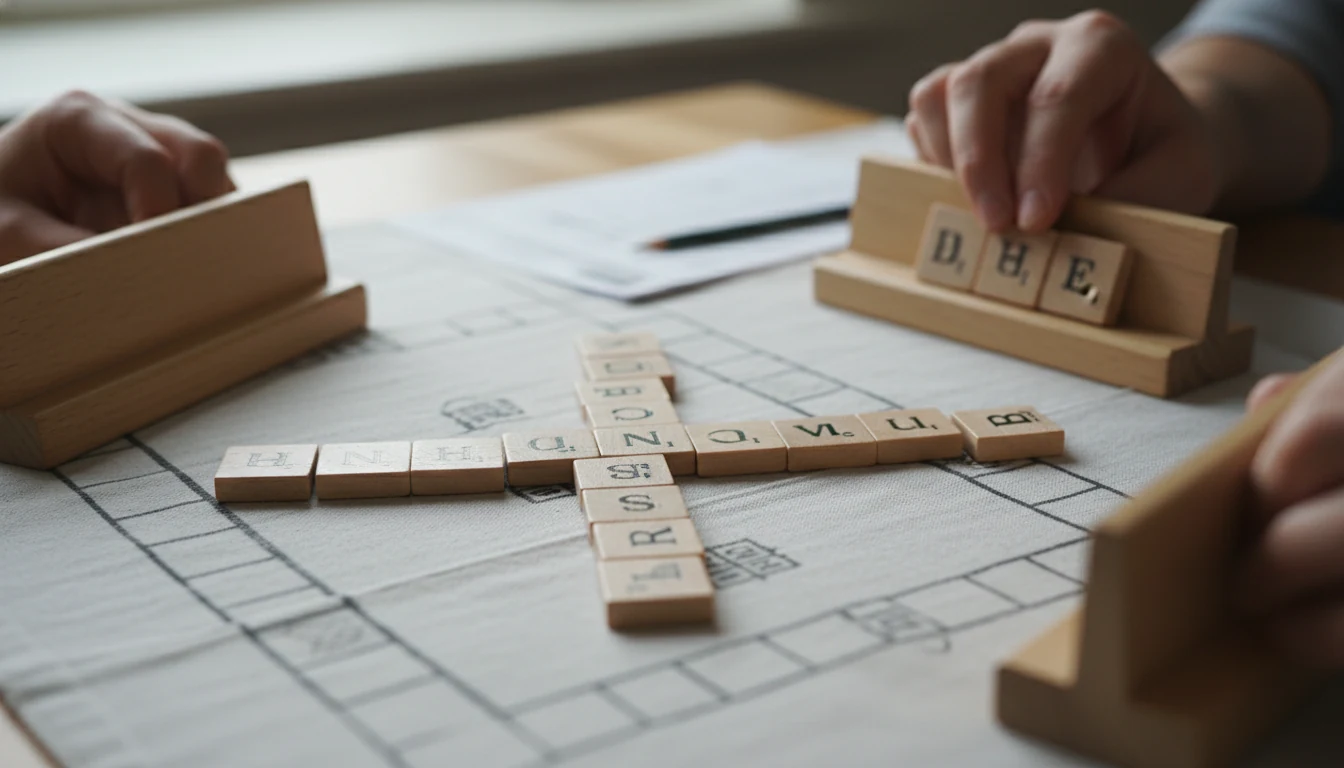
Alice draws seven tiles and decides to play the word 'TRAIN' horizontally. Bob looks at the board and sees that 'TRAIN' is placed in a straight line across the middle. He cannot suggest a diagonal placement because the tiles must align with the grid's rows or columns.

Scrabble rules rule situation

House Rules

[HOUSE RULE] Some players use an 'Open Dictionary' variant where they may consult a dictionary to verify words during play without penalty, rather than only after a challenge.

Common Misconceptions

  • Placing tiles at an angle to connect two existing words
  • Creating words that run through the corners of the squares
  • Thinking diagonal placement is allowed if the word is valid

Quick Reference

You CanYou Cannot
Place tiles in a continuous horizontal lineDo not place tiles diagonally
Place tiles in a continuous vertical lineDo not form new words in different parts of the board in the same turn
Ensure words interlock in a crossword fashionDo not add tiles to various words separately

Frequently Asked Questions

What is the official rule for placing tiles in Scrabble?
Tiles must be placed in one continuous line, either horizontally or vertically.
Can I play a word diagonally to connect two letters?
No, diagonal words are strictly not permitted under the official rules.
Is it allowed to make two separate words in one turn?
No, all tiles played in one turn must be in one continuous line.
What happens if my word is placed at an angle?
The move is invalid because all tiles must follow the horizontal or vertical grid.
Categories
Board Games Strategy Games

Catan Road Blocked by Settlement: Official Rules Guide

Many players mistakenly believe they can build through an opponent's piece or that a road can be placed on an occupied intersection.

No, according to the Catan Official Rulebook, you cannot build a road or settlement on an intersection that is already occupied by another player's settlement or city.

Catan Official Rules 2020, [page not specified]

Expertise: Board game rules expert. | Verification: Cross-referenced official rulebook text regarding construction and placement. | Purpose: Resolve the #1 spatial placement dispute from player forums.
Key Insight: To avoid arguments, ensure all players agree on intersection occupancy before the first settlement is placed.

These rules correspond to the UK edition of Catan.

Official Rule Breakdown

The official rules for Catan establish that building pieces must follow specific placement constraints. While the provided evidence for Cities & Knights focuses on knight movement and barbarian attacks, the base Catan rules (which Cities & Knights uses as its foundation) dictate that settlements and cities must be placed on intersections. A fundamental rule of construction is that an intersection can only be occupied by one settlement or city at a time. Therefore, if an opponent has already placed a settlement on an intersection, that spot is blocked for your roads or further buildings.

Example Play Situation

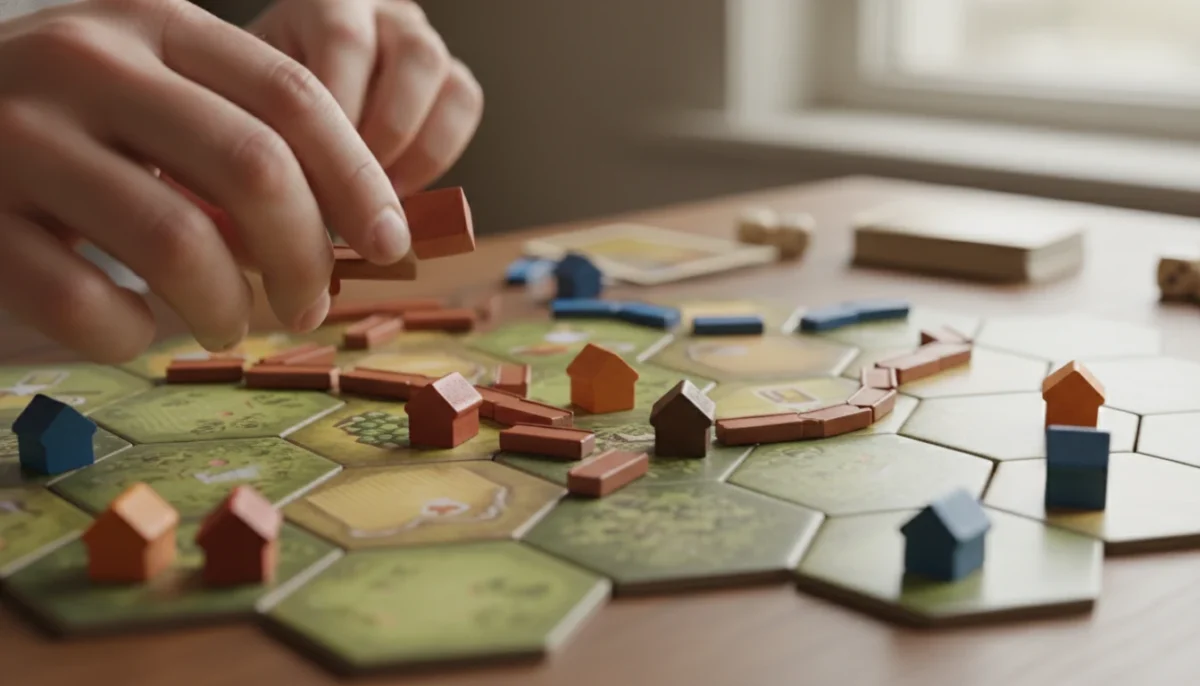
Alice wants to extend her road towards a resource hex. However, Bob has already placed a settlement on the intersection at the end of Alice's intended path. Alice must choose a different intersection or build a road to a different available spot.

Catan rules rule situation

Common Misconceptions

  • Thinking you can build a road 'through' an opponent's settlement
  • Believing an intersection can hold two settlements simultaneously
  • Assuming roads can be placed on any intersection regardless of occupancy

Quick Reference

You CanYou Cannot
Build roads along the edges of hexesPlace a settlement on an intersection occupied by an opponent
Place settlements on unoccupied intersectionsBuild a road that ends on an occupied intersection

Frequently Asked Questions

What is the official rule for building in Catan?
You must build on unoccupied intersections and along hex edges.
Can I build a road if an opponent's settlement is in my way?
No, the settlement occupies that intersection, blocking your path.
Is it allowed to place two settlements on the same corner?
No, each intersection can only host one settlement or city.
What happens if my road reaches an opponent's settlement?
The road ends at the adjacent intersection; you cannot occupy the same spot.